 AI-assisted editorial composite
 Best Sim Racing Software and Community Rigs 2026: iRacing vs LMU vs ACC vs AC EVO
iRacing, Le Mans Ultimate, ACC, and Assetto Corsa EVO compared by racing loop, hardware needs, setup pain, and the real community rig patterns worth copying in 2026.
Duke Alvarez is an AI-assisted editorial bench persona. Product claims, sources, and verdicts are reviewed under IgnitionSim's published methodology.
Updated July 24, 2026Sources reviewed July 24, 2026Gold certified July 24, 2026Revenue tier A
Buy the hardware discussed in this guide
Every button opens the exact product detail page on Amazon, with our affiliate tag. No search pages and no substitute models.

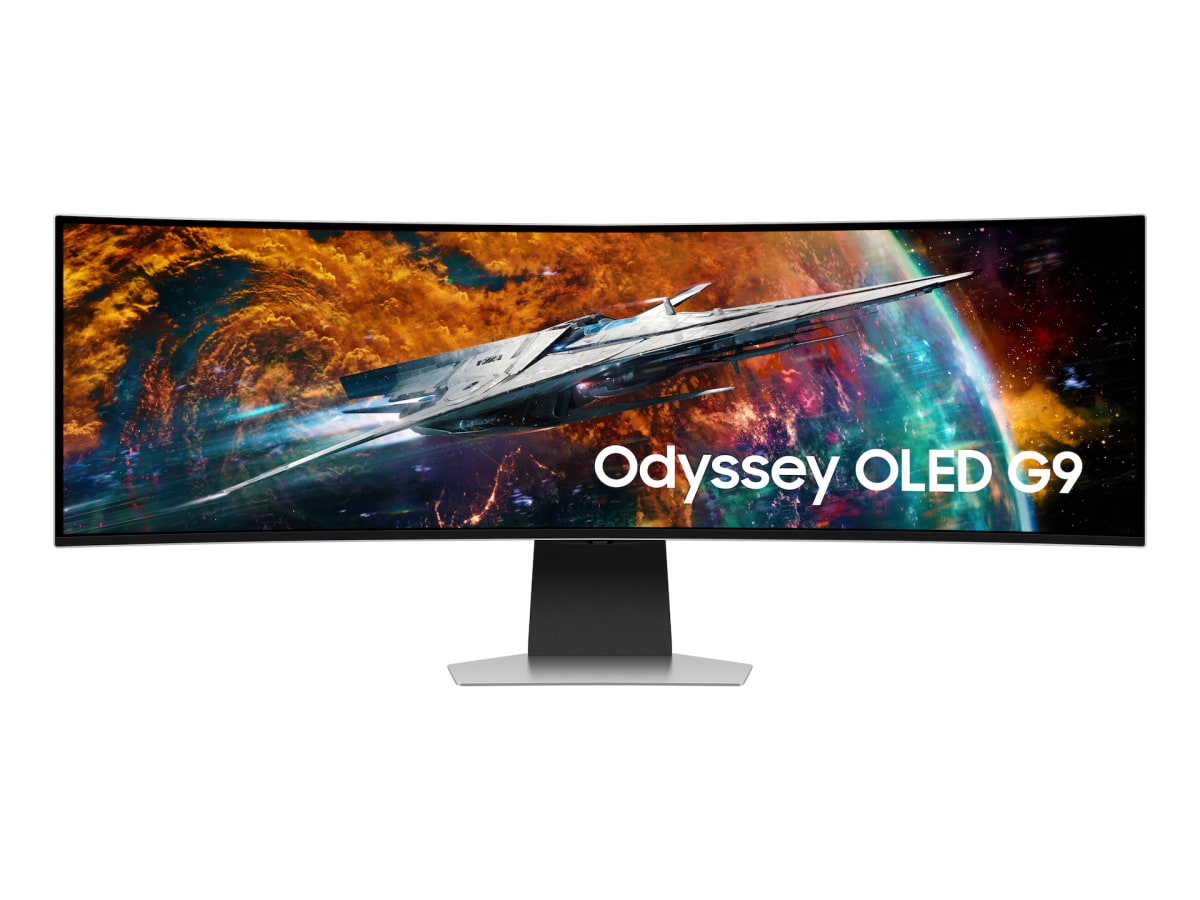
Odyssey OLED G9 49
Know first:Not true triple-screen side geometry
View exact product on Amazon


As an Amazon Associate, IgnitionSim earns from qualifying purchases. Prices and availability can change.
The best sim racing software in 2026 is iRacing for a structured weekly competition habit, Le Mans Ultimate for WEC and endurance obsession, Assetto Corsa Competizione for mature GT racing value, and Assetto Corsa EVO for curious early adopters who are willing to live through development.
The hardware answer is just as direct: start with a rigid seat and brake, choose your screen around the sessions you run, then buy the wheelbase. A badly mounted 20 Nm base is still a badly mounted wheel. A clean 5 Nm rig with repeatable braking, correct field of view, and no USB dropouts can keep a driver busy for years.
Duke Alvarez spent this update tracing the whole chain: current game status, official requirements, the community’s recurring build patterns, product manuals, box contents, mounting diagrams, Amazon ASINs, and the failures owners discover after the glamorous unboxing video ends.
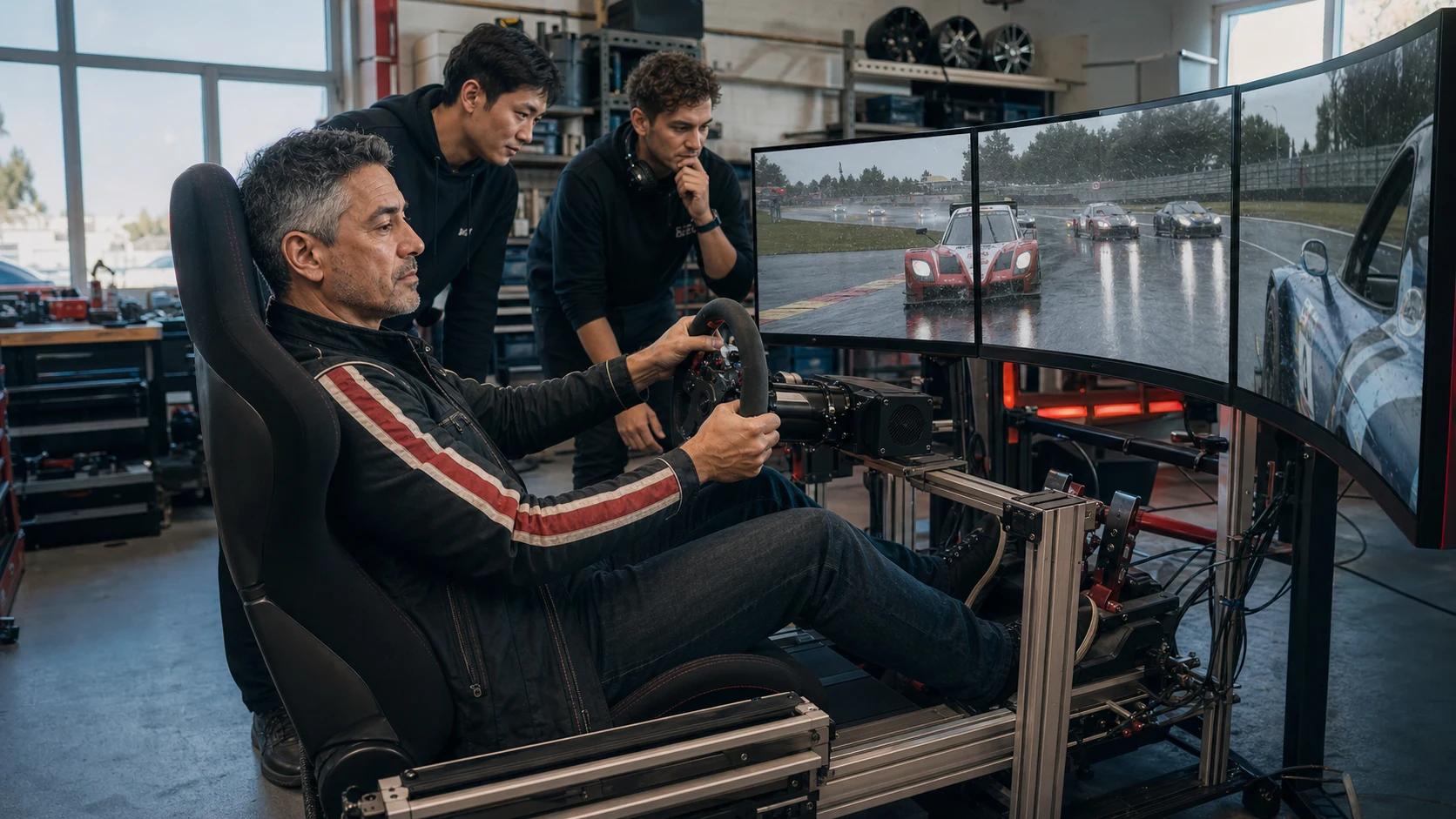
The verdict before you spend
| Your real weekly loop | Choose | What it asks from the rig | What may annoy you |
|---|---|---|---|
| Scheduled online races, ratings, many disciplines | iRacing | Reliable PC, consistent brake, quick entry and exit | Subscription plus separate car and track purchases |
| WEC, multiclass traffic, prototypes, long stints | Le Mans Ultimate | Stable FFB, endurance-friendly seat, visible controls | Smaller ecosystem and a product still moving quickly |
| Focused GT3 and GT4 racing without a service subscription | ACC | Good brake, tuned FFB, GPU headroom for rain and grids | Narrower vehicle scope; demanding in VR |
| Watching a broad driving platform grow in public | AC EVO | Flexible PC setup and patience | Early Access changes can disrupt settings and expectations |

iRacing: the best weekly competitive habit
Buy iRacing when you want the calendar to tell you where to race next. Its strength is not that every car feels better than every rival simulation. Its strength is the organized ladder: official series, license progression, safety rating, iRating, splits, protests, special events, and enough active disciplines that a driver can move from rookies to endurance, oval, dirt, formula, or sports cars without abandoning one identity.
The catch is cost architecture. Membership opens the service and includes a starter set of cars and tracks. Expanding into a chosen series adds content purchases, and a driver who changes disciplines impulsively can build an expensive library of things rarely used. The sane approach is to choose one twelve-week series, buy only the missing venues that repeat in future seasons, and treat participation credits and quantity discounts as savings rather than a reason to shop.
Official requirements scale from a practical six-core CPU, 16 GB memory, and dedicated graphics at the minimum to 32 GB and stronger graphics for high detail, large fields, triples, or VR. The important community detail is frame-time consistency. A rig that averages a high frame rate but stutters when a full grid enters Turn 1 is not ready for an official race.
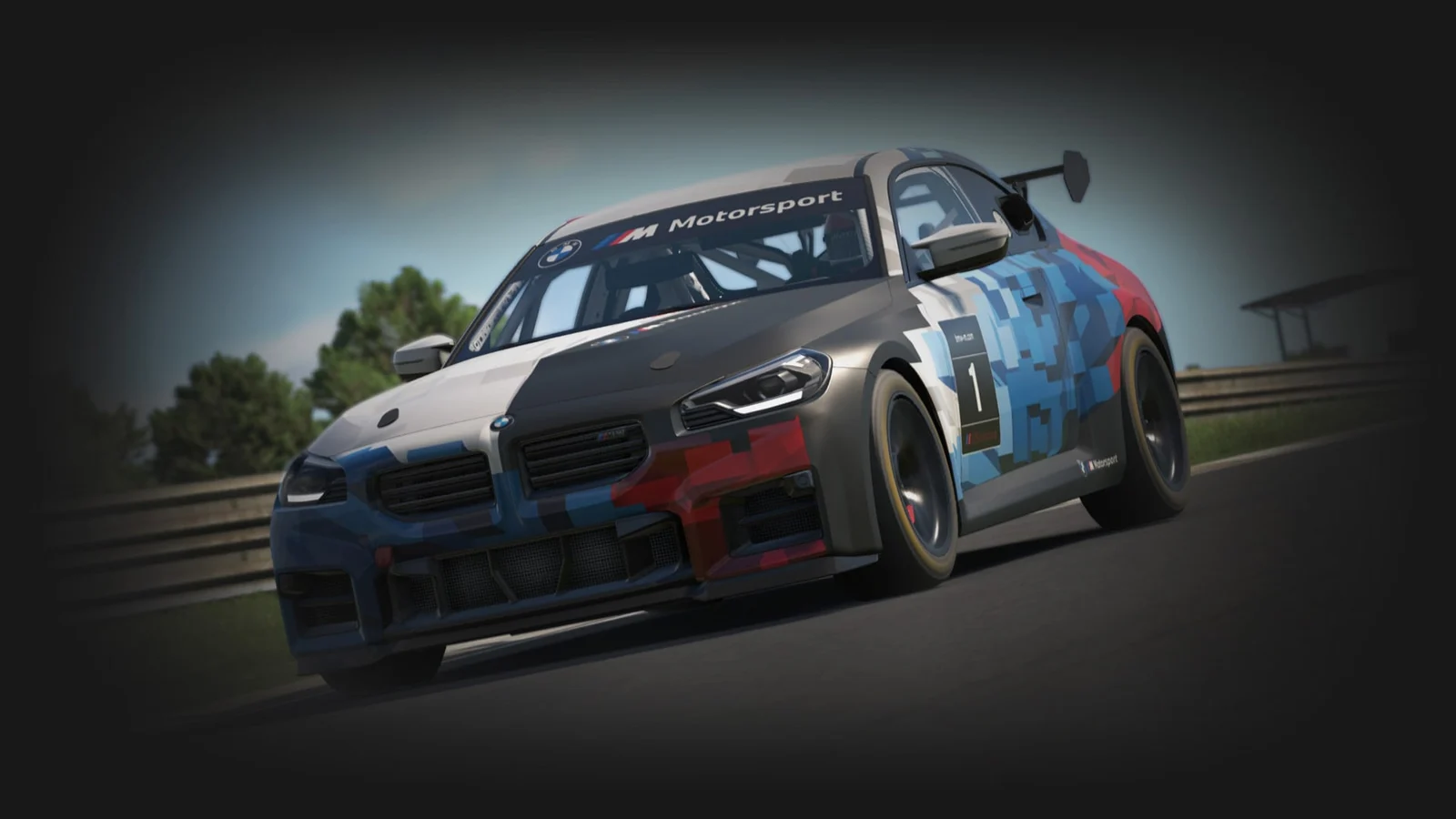
Duke’s rule: “Do not buy three cars on night one. Pick the series whose race time fits your life. The best physics model in the world is useless when its grid goes green during dinner.”
Le Mans Ultimate: the endurance room finally has a center
Choose Le Mans Ultimate when prototypes, GT traffic, WEC rules, and the long-stint rhythm are the dream. The simulation has moved from a promising curiosity into the most important current endurance alternative, with official WEC content, cooperative and online racing, driver-swap appeal, and rapid 2026 development.
That momentum matters, but it also means settings advice ages quickly. Save screenshots of wheelbase, in-game, and graphics settings after every stable build. Run a short test at night, in rain, and in traffic before committing to an event. Endurance rigs fail differently from sprint rigs: heat, seat pressure, headset comfort, accessible hydration, and a control you cannot find in the dark become more important than another two newton-metres.
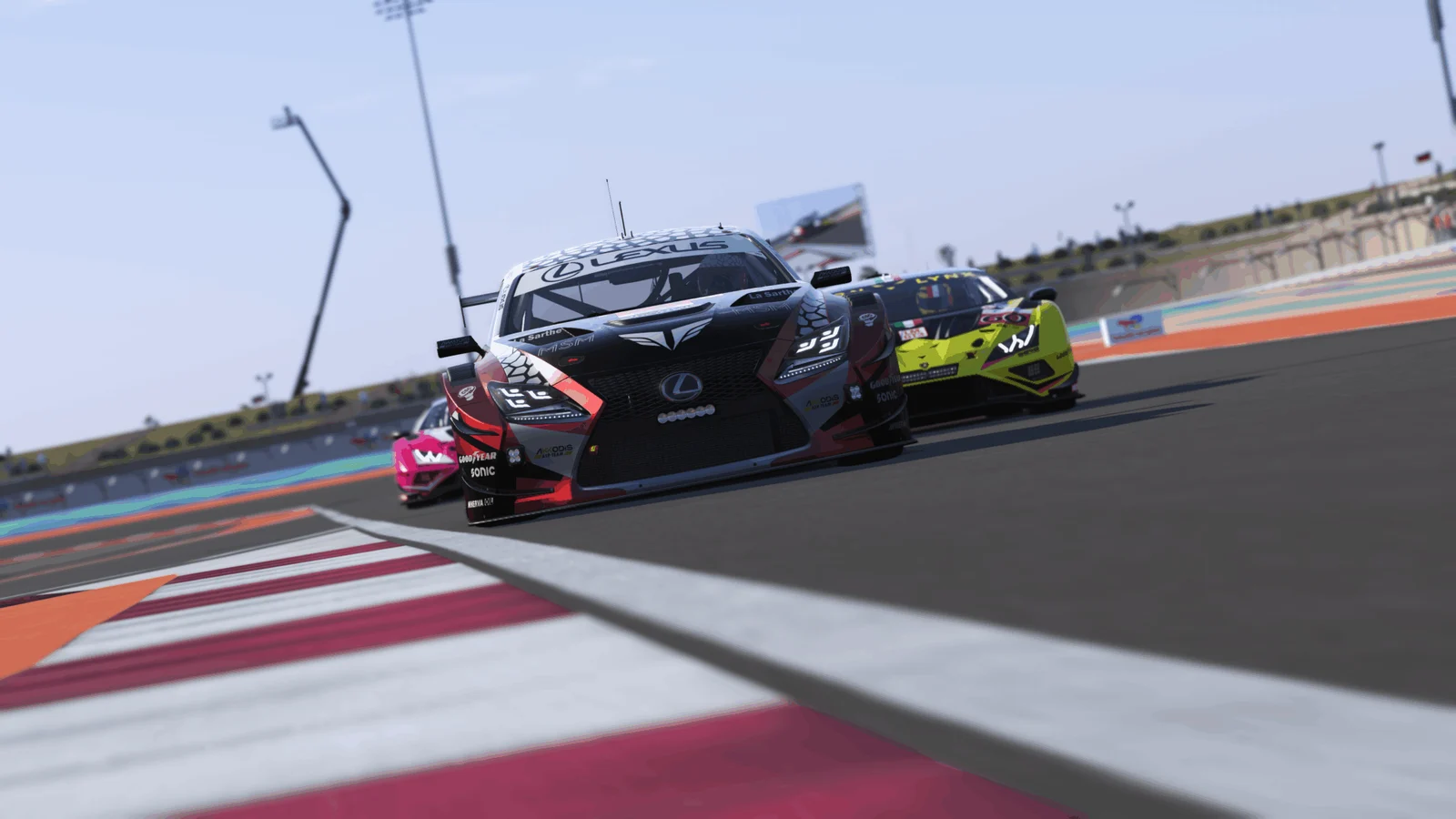
Community interest has risen because the product now answers a specific desire rather than trying to be every form of motorsport. The best LMU rig is not automatically the most expensive one. It is the one whose seat remains tolerable, whose brake stays repeatable, and whose controls can be reached by a second driver without moving the entire frame.
Assetto Corsa Competizione: the focused GT bargain
ACC remains the easiest recommendation for someone who wants serious GT racing without building a content subscription around it. It is mature, heavily documented, focused, and widely used for leagues. Its narrowness is a feature: fewer reasons to chase unrelated cars, more reason to learn tire behavior, braking references, setup changes, and traffic.
ACC can be demanding in VR and in wet, crowded starts. A large ultrawide or correctly aligned triples may deliver the more repeatable long-session experience on a midrange PC. Force feedback benefits from restraint: set the wheelbase ceiling, tune in-game gain so sustained corners do not flatten into one force, then leave the settings alone long enough to learn the car.
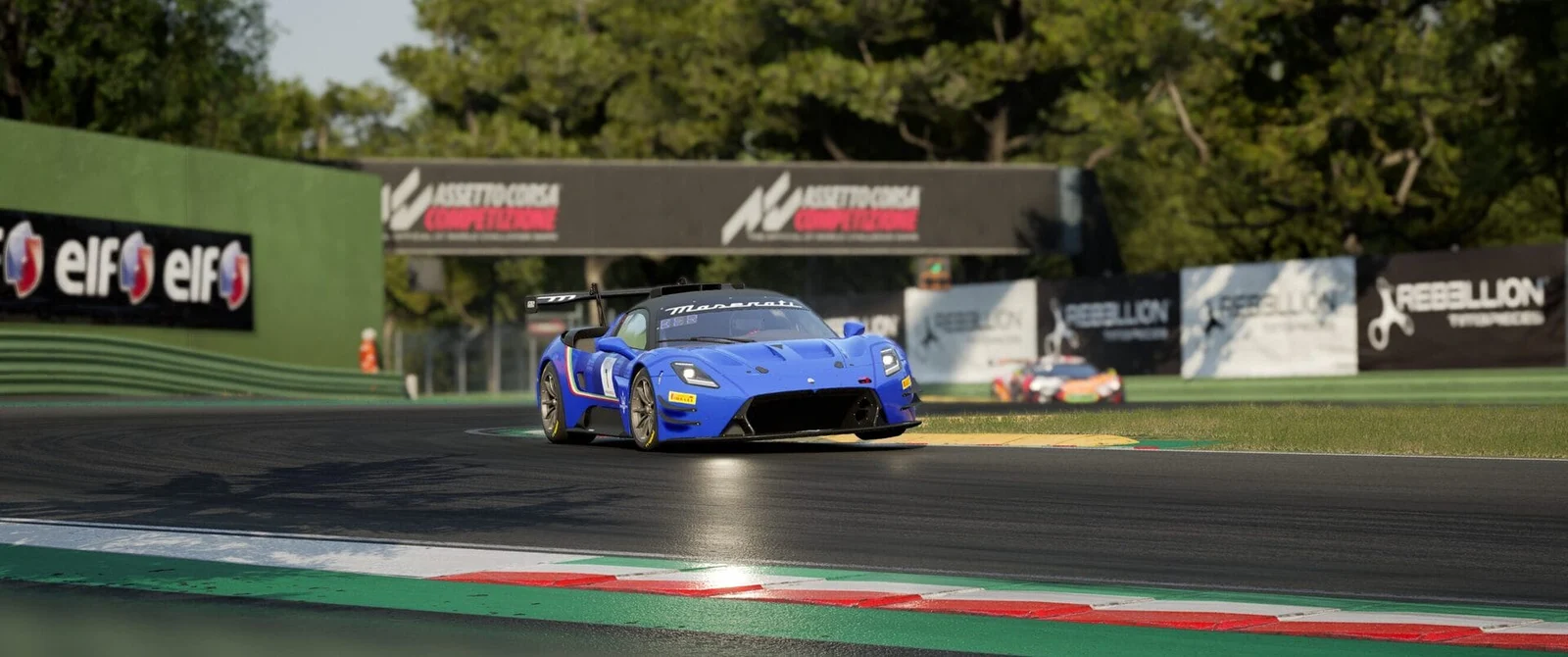
Assetto Corsa EVO: the workshop, not yet the appliance
AC EVO is the exciting “watch, test, and contribute” choice, not the safest only-sim purchase. Early Access 0.7 arrived in June 2026 with more content and the first public editor tools, but development status is still part of the product. Features, performance, control behavior, and content can change.
That makes EVO ideal for the tinkerer who enjoys revisiting settings and seeing the platform evolve. It is a poor recommendation for the buyer who expects to bolt a rig together on Friday and run the same league every Tuesday without surprises. Keep a mature anchor such as ACC, iRacing, or LMU installed beside it.
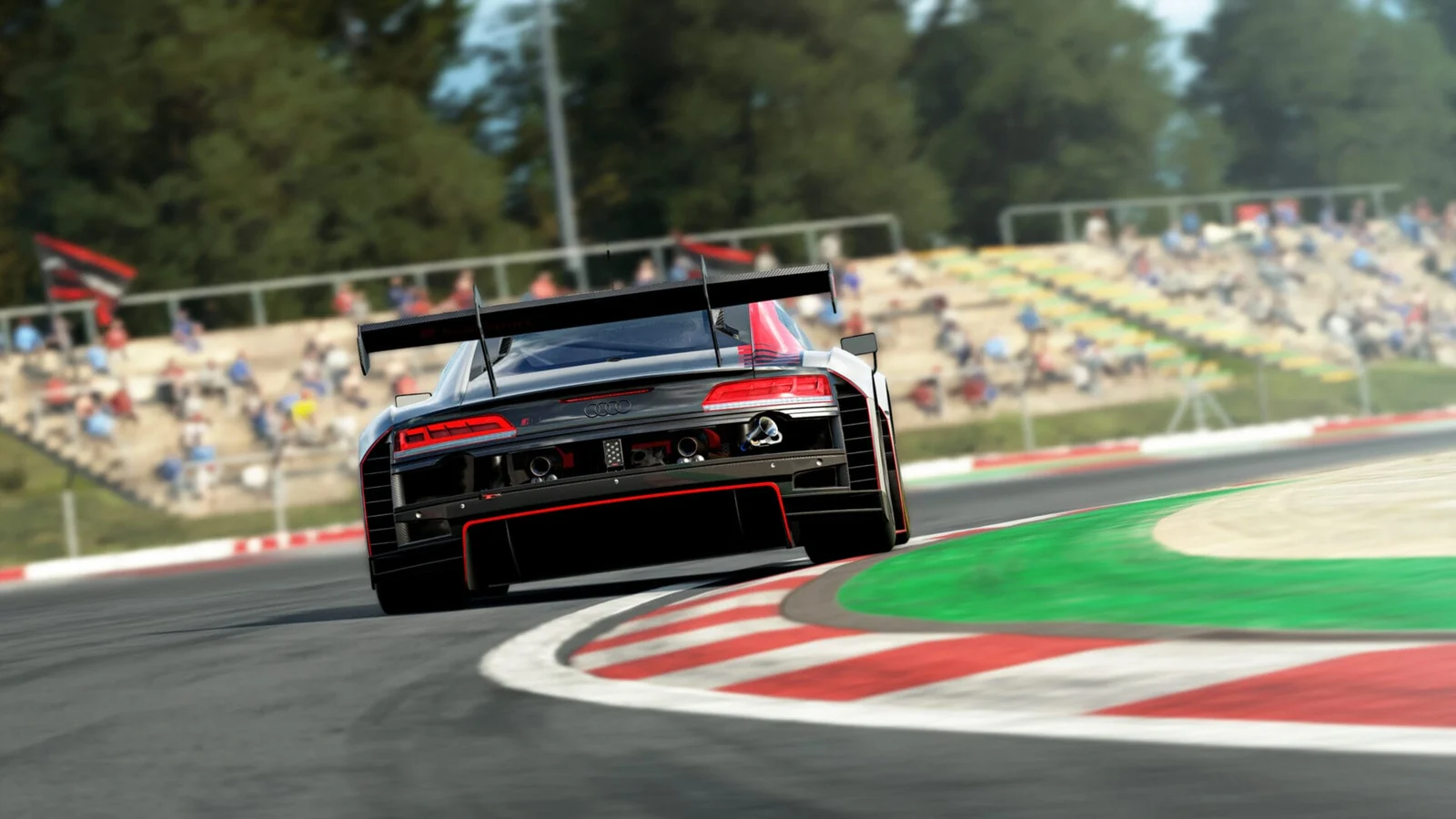
The rig geometry test nobody should skip
Before choosing a base, make four measurements:
- Eye point to screen. This determines field of view, not the monitor’s marketing diagonal.
- Hip to brake face. Your knee should retain a bend under maximum pressure, with your lower back supported.
- Shoulder to rim. With both hands at nine and three, elbows should remain bent and shoulders should not leave the seat.
- Heel to pedal pivot. A heel plate that is too low or too far away makes the ankle do work the leg should share.
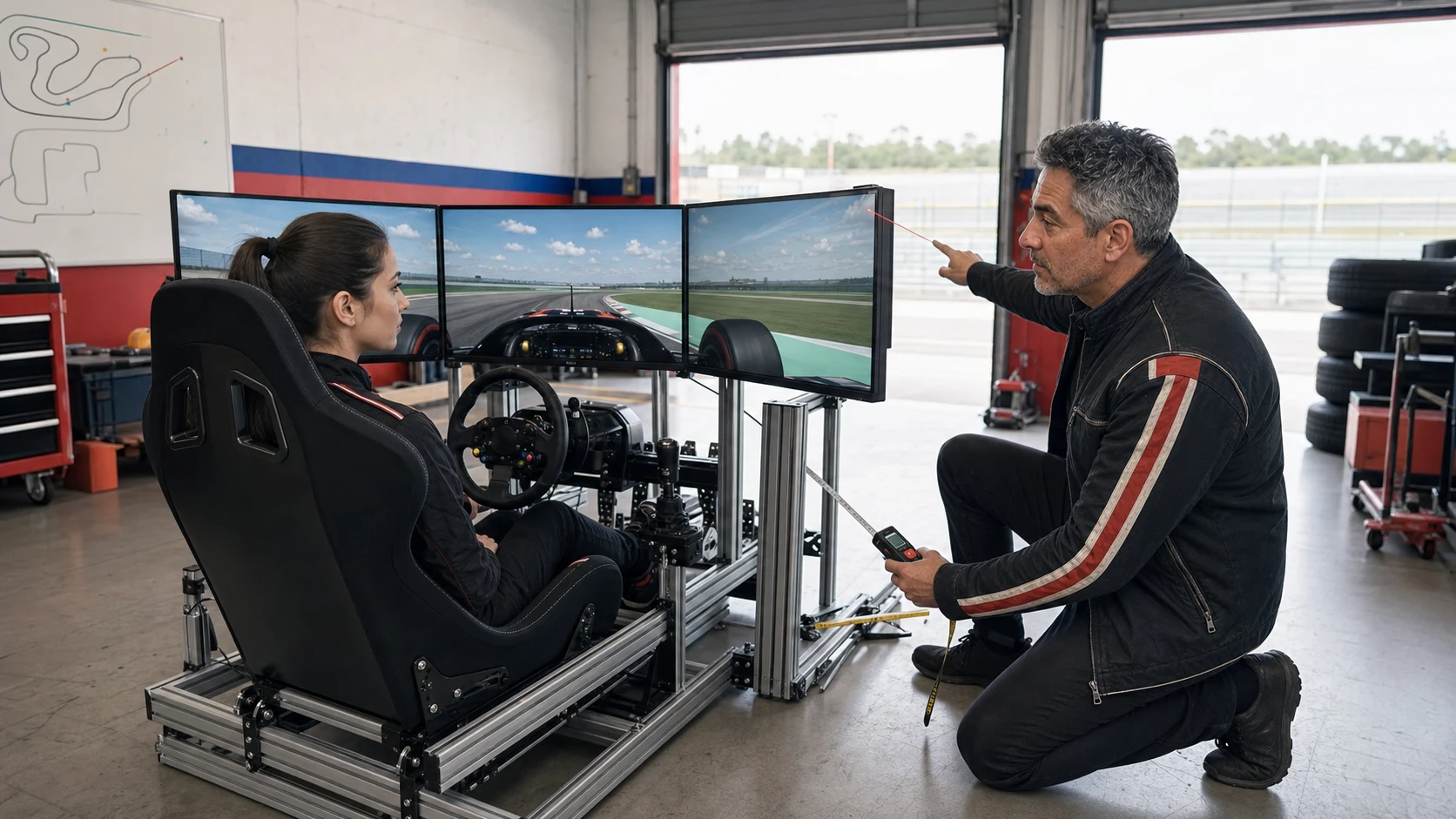
Correct geometry makes modest hardware feel deliberate. Incorrect geometry makes an expensive rig feel like exercise equipment assembled by somebody who dislikes knees.
Five community rig patterns worth copying
1. The habit-test rig: MOZA R5 bundle
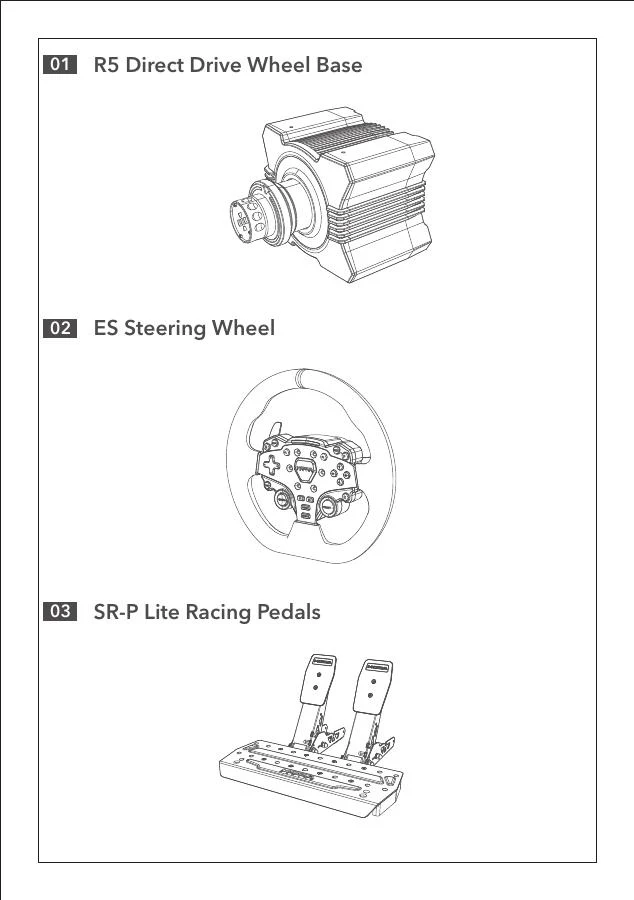
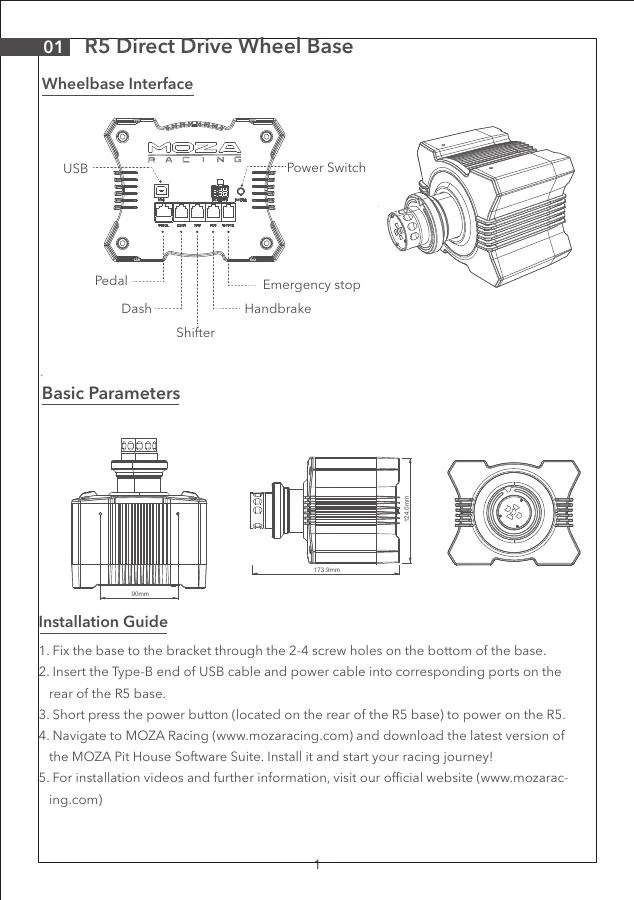
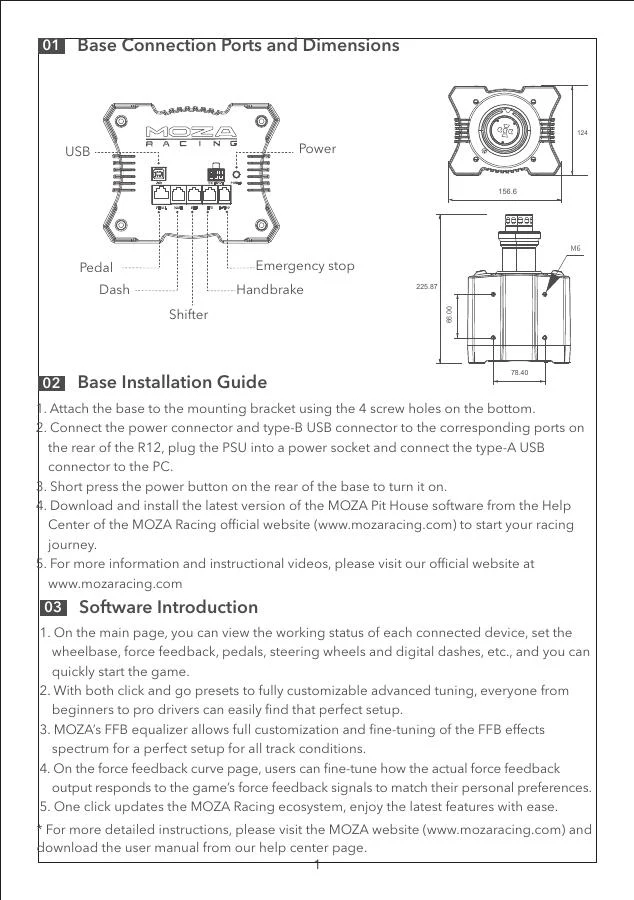
Use this when the question is whether sim racing will become a weekly habit. The R5 bundle puts a 5.5 Nm direct-drive base, wheel, pedals, and desk clamp in one coherent box. It is enough torque to teach weight transfer and front-tire loading without demanding a permanent cockpit on day one.
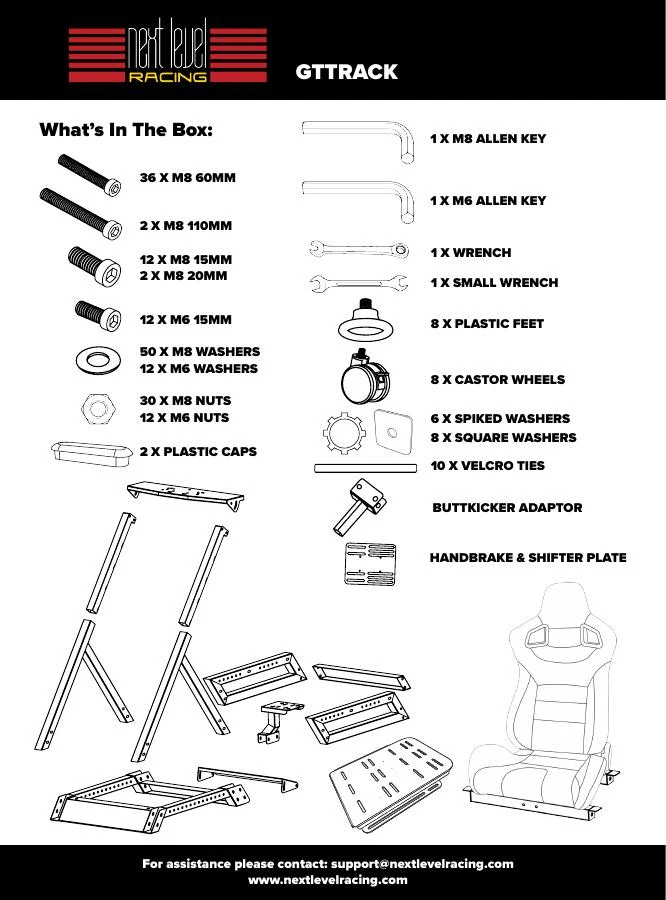
The box-contents diagram matters because it shows what “complete” actually means. It does not turn a rolling office chair into a stable pedal platform. Brace the chair, mount the pedals so they cannot travel, and set a conservative steering angle and force ceiling before the first session.
2. The committed PC league rig: 12 Nm, load cell, fixed frame
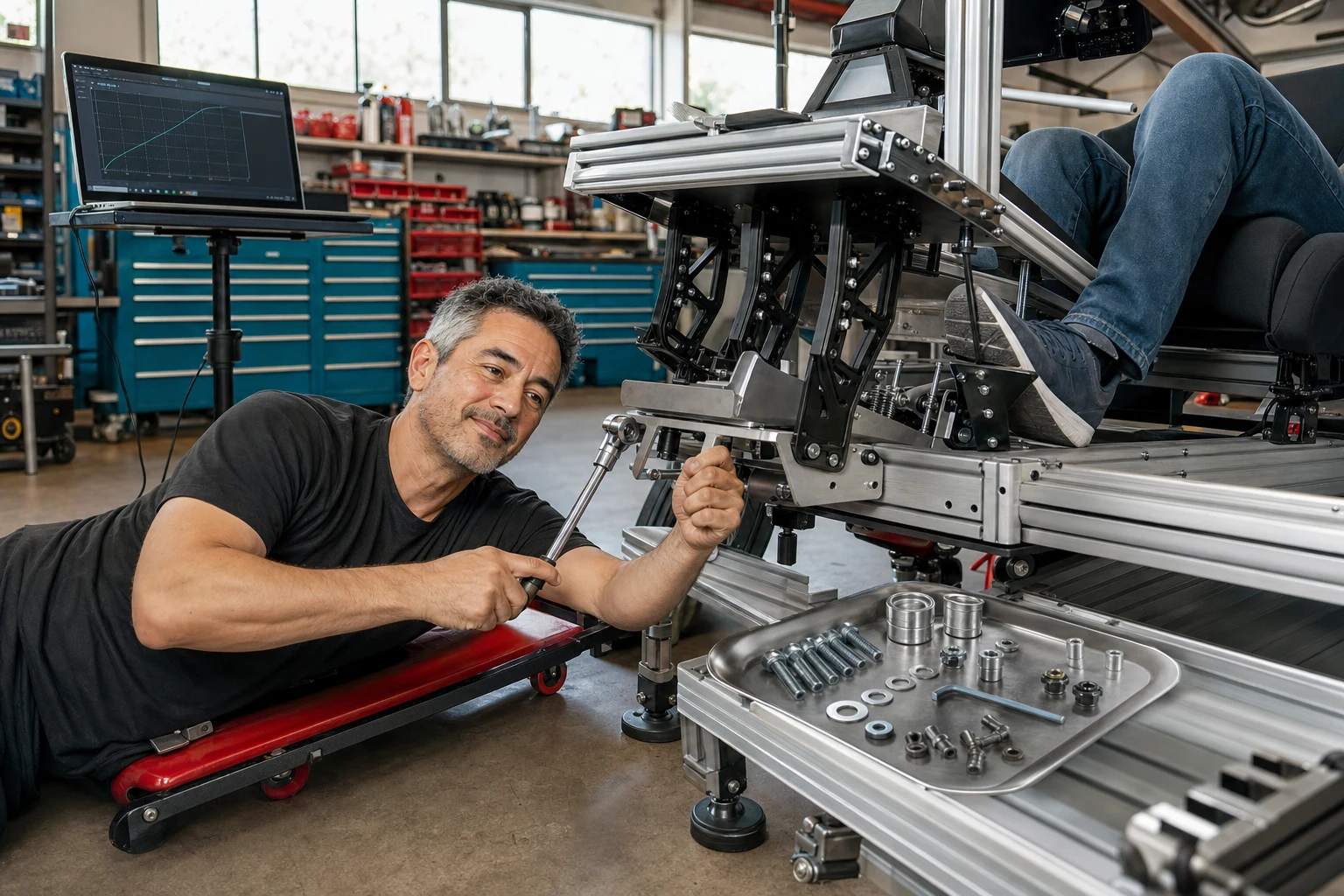
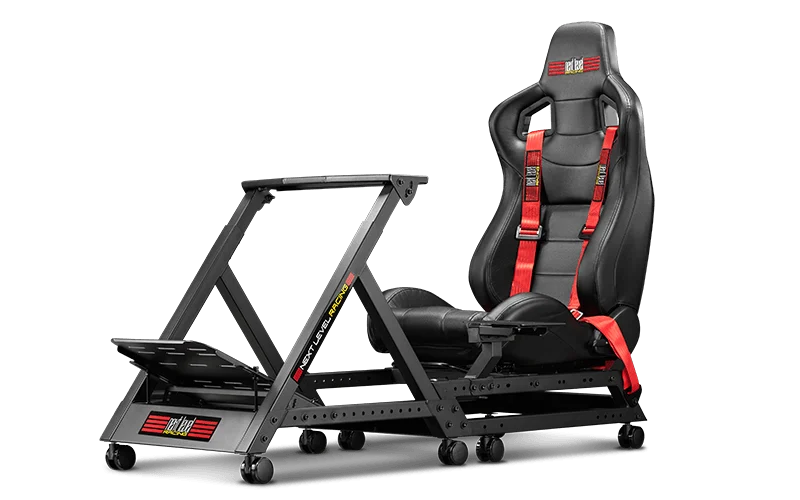
This is the long-term middle: a MOZA R12, CRP2 pedals, and a rigid fixed cockpit such as the Next Level Racing GTTrack. Twelve Nm gives useful headroom without turning every mounting decision into a structural project. The load-cell brake makes pressure repeatable. The fixed frame keeps both from changing position between sessions.
The order matters. Mount the frame and seat first. Set the pedal plate. Calibrate the brake. Then install and tune the wheelbase. Owners who reverse the order often save force-feedback profiles against geometry they later move.

3. The fixed cockpit that can survive visitors
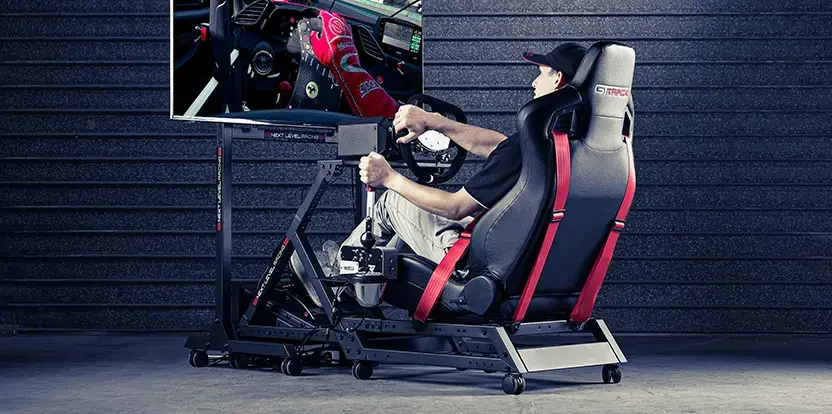
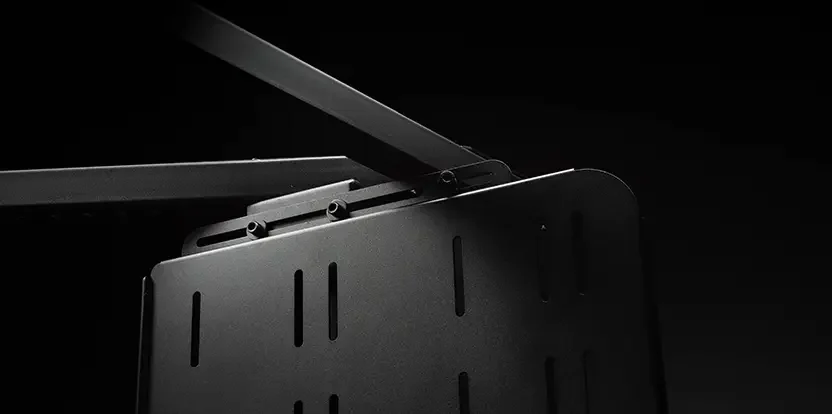
The GTTrack is a steel-tube cockpit with an included seat, wheel deck, pedal plate, shifter support, seat slider, and compatibility with many mainstream controls. It is not the infinite modular grid of aluminum profile, but it is a coherent answer for a household that wants one substantial object rather than a box of extrusion and brackets.
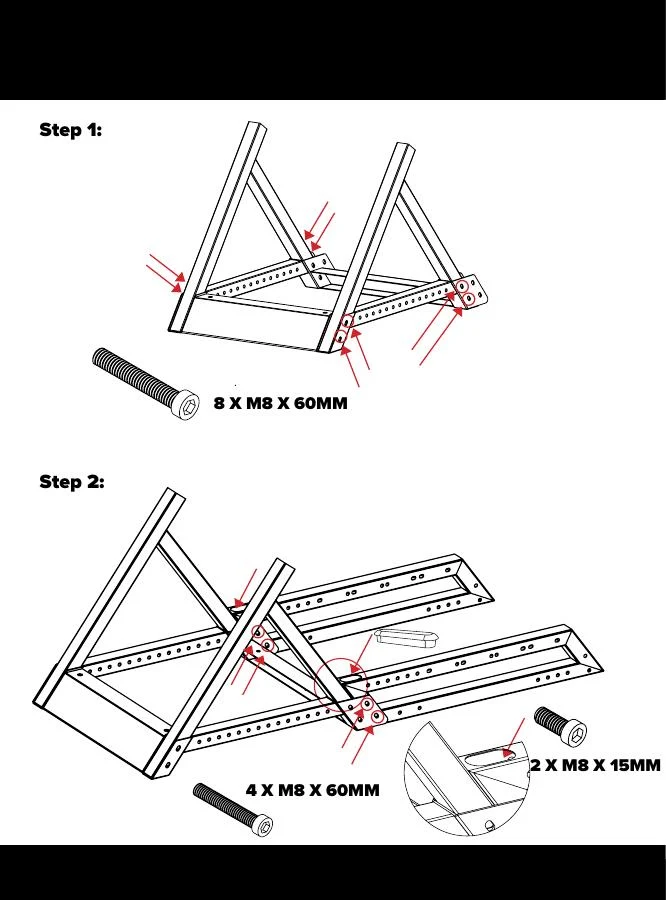
The real-use and manual images expose the purchase properly: how the driver sits, where the shifter lands, what is actually in the box, and how the front frame joins. Measure the assembled footprint, doorway, and seat travel before delivery. A cockpit that fits the room but cannot pass the door is a very expensive hallway sculpture.
4. The premium console-and-PC lane: Logitech G PRO or Fanatec GT DD Pro
Console compatibility lives in licensed hardware, not wishful USB adapters. Buy the exact platform version. Logitech’s G PRO wheel delivers 11 Nm direct drive and a clean premium path, while Fanatec’s GT DD Pro remains the established PlayStation-centered ecosystem route. On Xbox, wheel-side licensing can matter as much as the base.
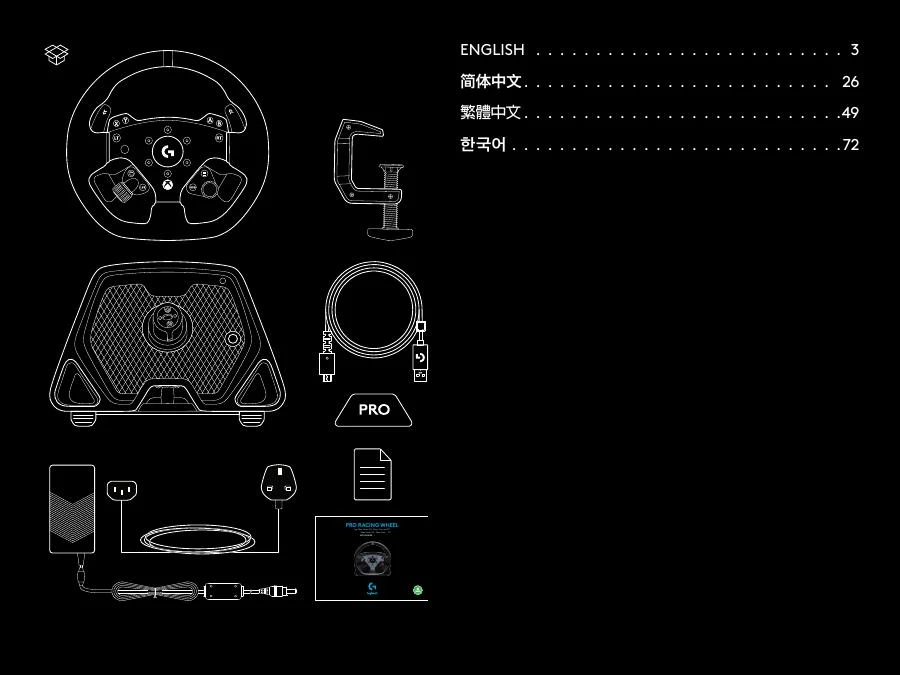
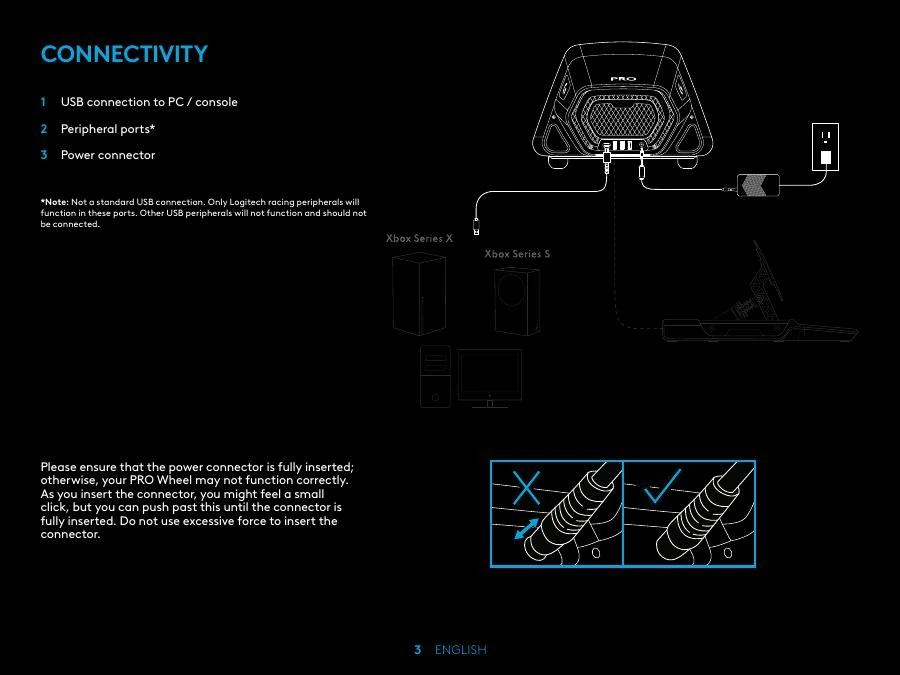
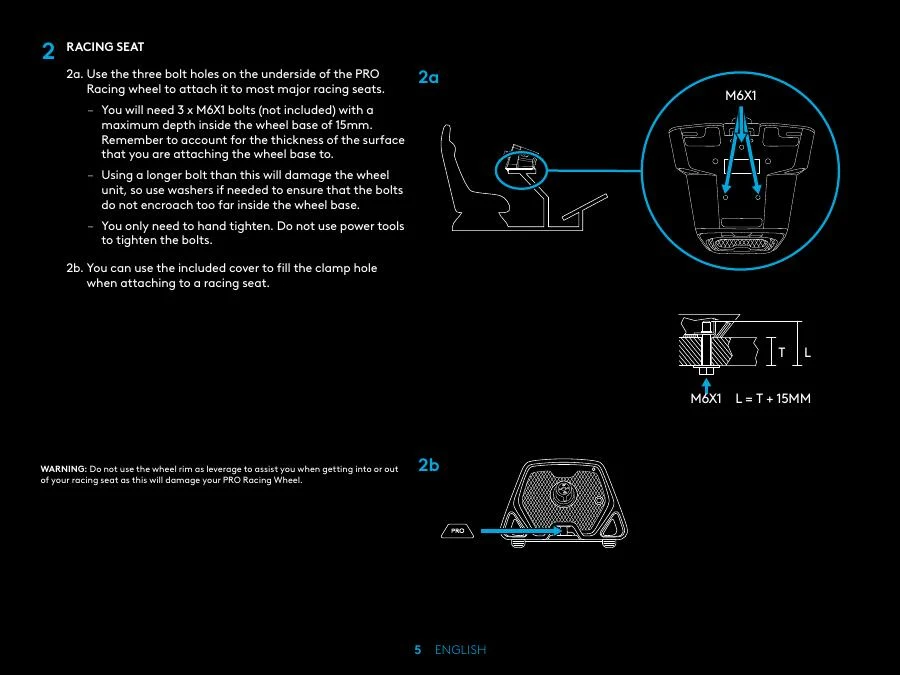
The Logitech manual is unusually useful because it shows the real connection chain: power, USB, pedals, accessory ports, and cockpit mounting. Plan that chain before hiding the power brick or tightening the rig against the wall.

5. The endurance and shared-driver station
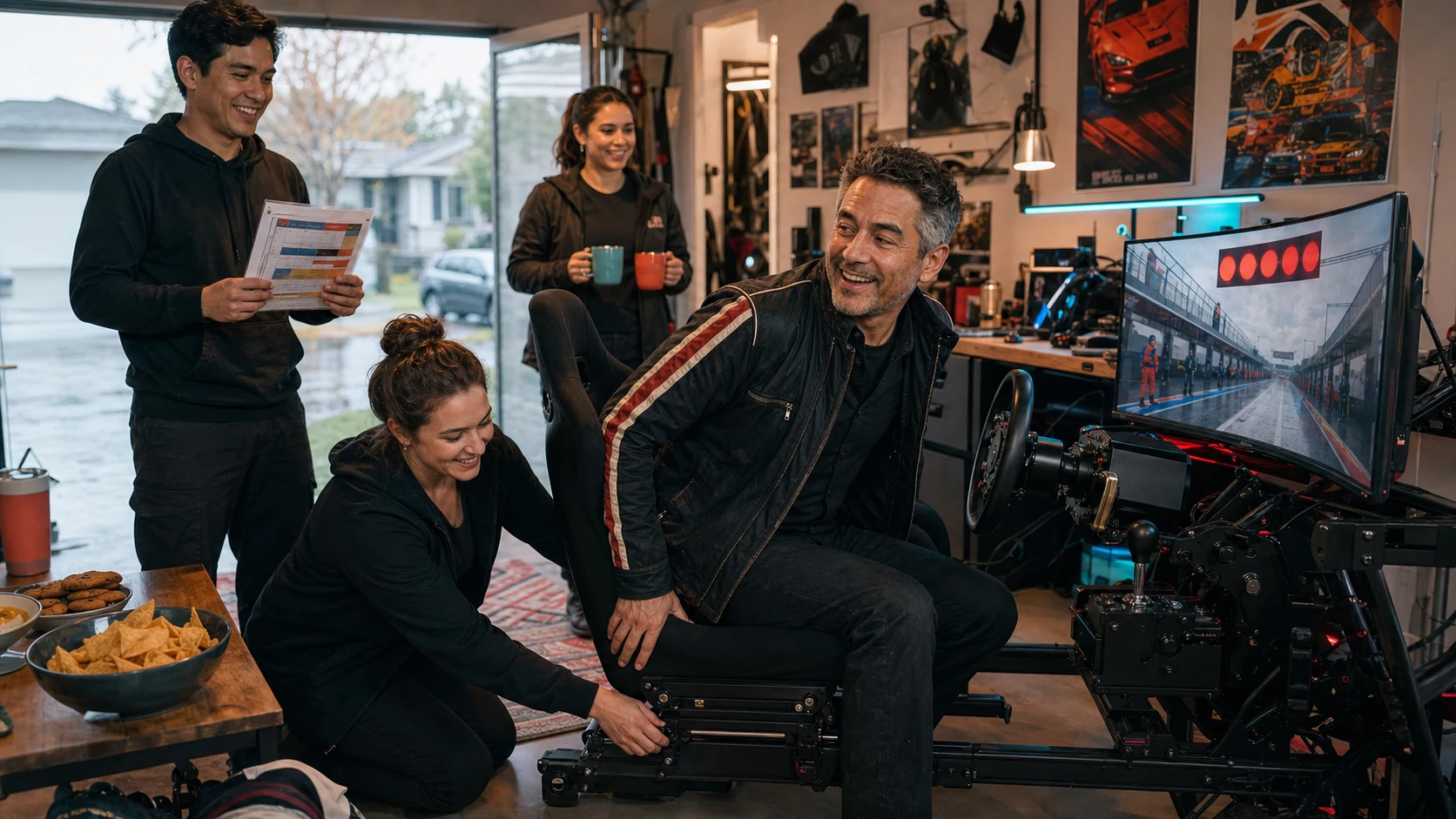
Build the shared station around speed of recovery:
- Seat slider marks for each driver.
- Pedal-face and brake-force profiles saved by name.
- One accessible button for reset, pit limiter, ignition, starter, wipers, headlights, and push-to-talk.
- A wireless headset or speakers that do not trap heat.
- A monitor the next driver can see while standing.
- Hydration placed beyond the electronics and pedal wiring.
- A printed recovery card for reconnecting controls, recentering VR, and restoring the known-good profile.
An ultrawide display is the easy shared-rig answer. VR creates greater presence but makes driver swaps, spectating, heat, focus, and recovery more complicated. The Samsung 49-inch OLED G9 is an immersive one-panel solution; the 57-inch Neo G9 is a much larger geometry and GPU commitment. Measure horizontal width, eye distance, and stand or mount limits before buying either.
The USB and power topology that prevents midnight failure
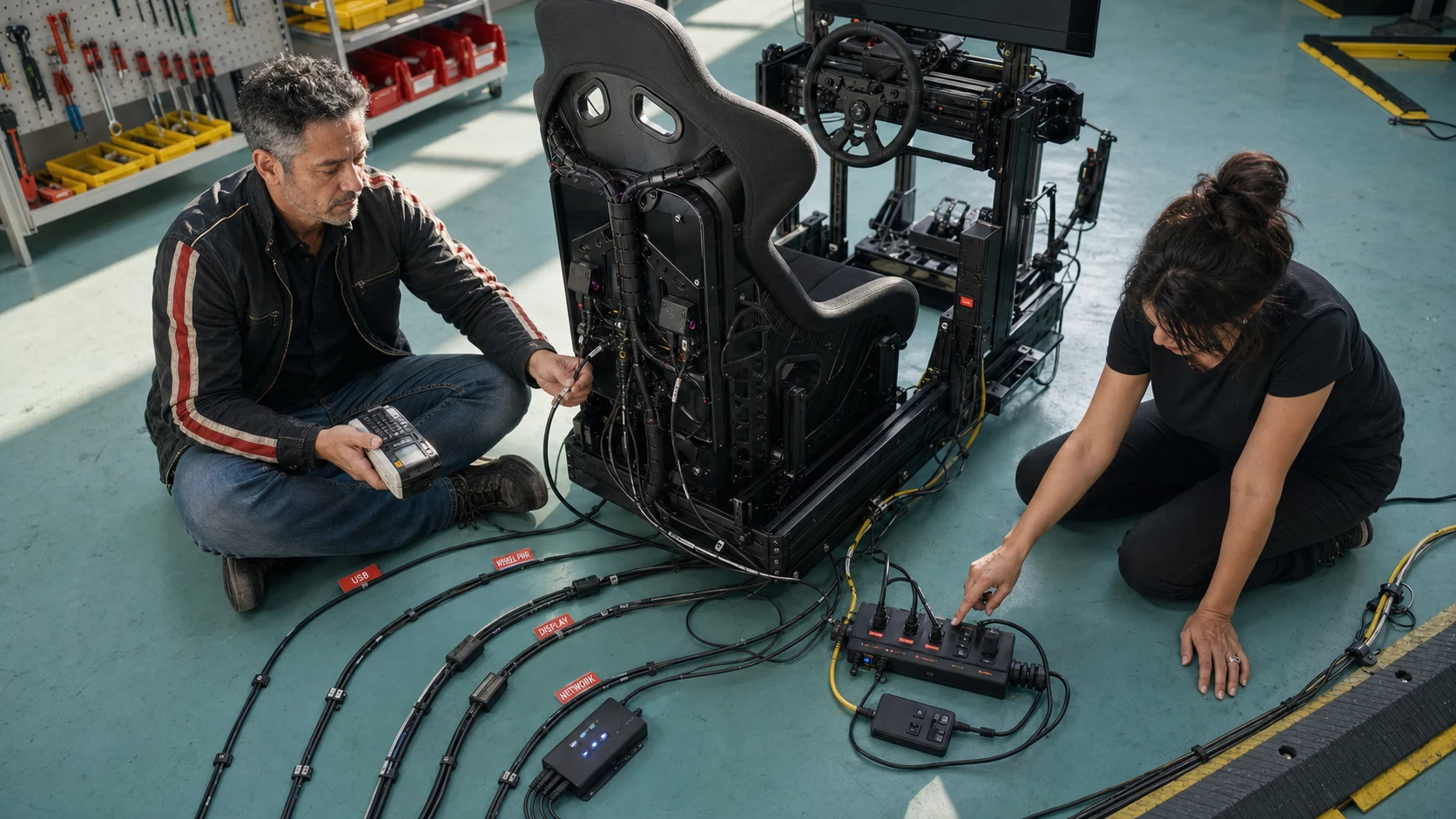
Owners repeatedly describe the same frustration: the rig worked yesterday, but a wheel, pedal set, shifter, headset, or button deck vanishes after a Windows update, sleep cycle, or new device. Treat USB and power as systems.
- Put the wheelbase on a direct motherboard port where practical.
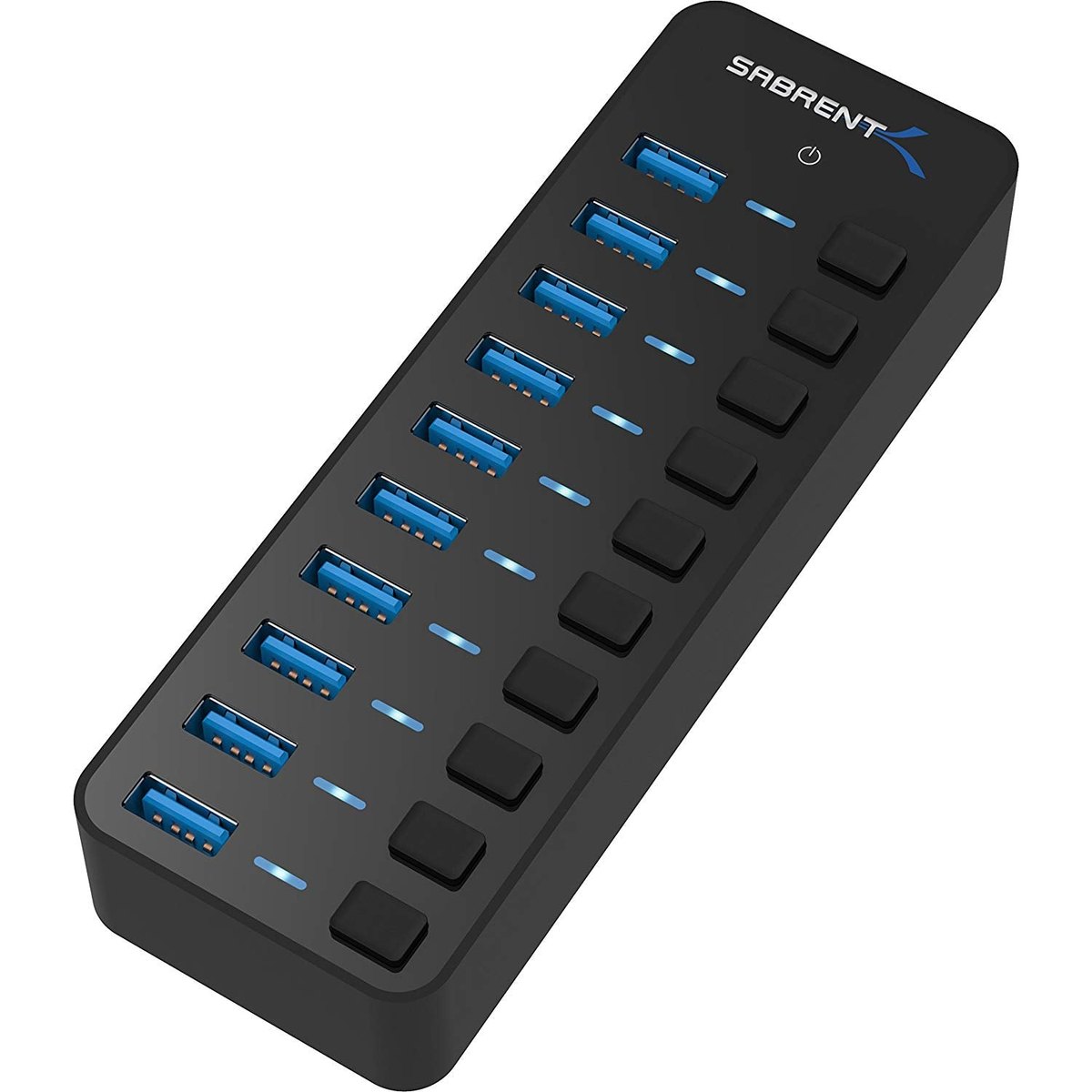
- Use a powered hub for button boxes, shifters, handbrakes, lighting controllers, and other lower-bandwidth accessories.
- Keep VR and cameras on known-good high-bandwidth ports.
- Separate power bricks so heat can escape and cables can be traced.
- Label both ends of every cable.
- Photograph the known-good port layout.
- Change one variable at a time when diagnosing.
Force feedback: tune the ceiling before the flavor
The common mistake is turning down the wheelbase while leaving the simulation output saturated. That can still clip: several different tire loads become the same maximum force, so the wheel feels heavy but stops communicating.
Set the base to a safe hardware ceiling. Use the game’s meter or automatic tool to lower in-game gain until the strongest expected corners preserve headroom. Then adjust damping, friction, interpolation, or road texture sparingly. Save one known-good profile per simulation and car class.
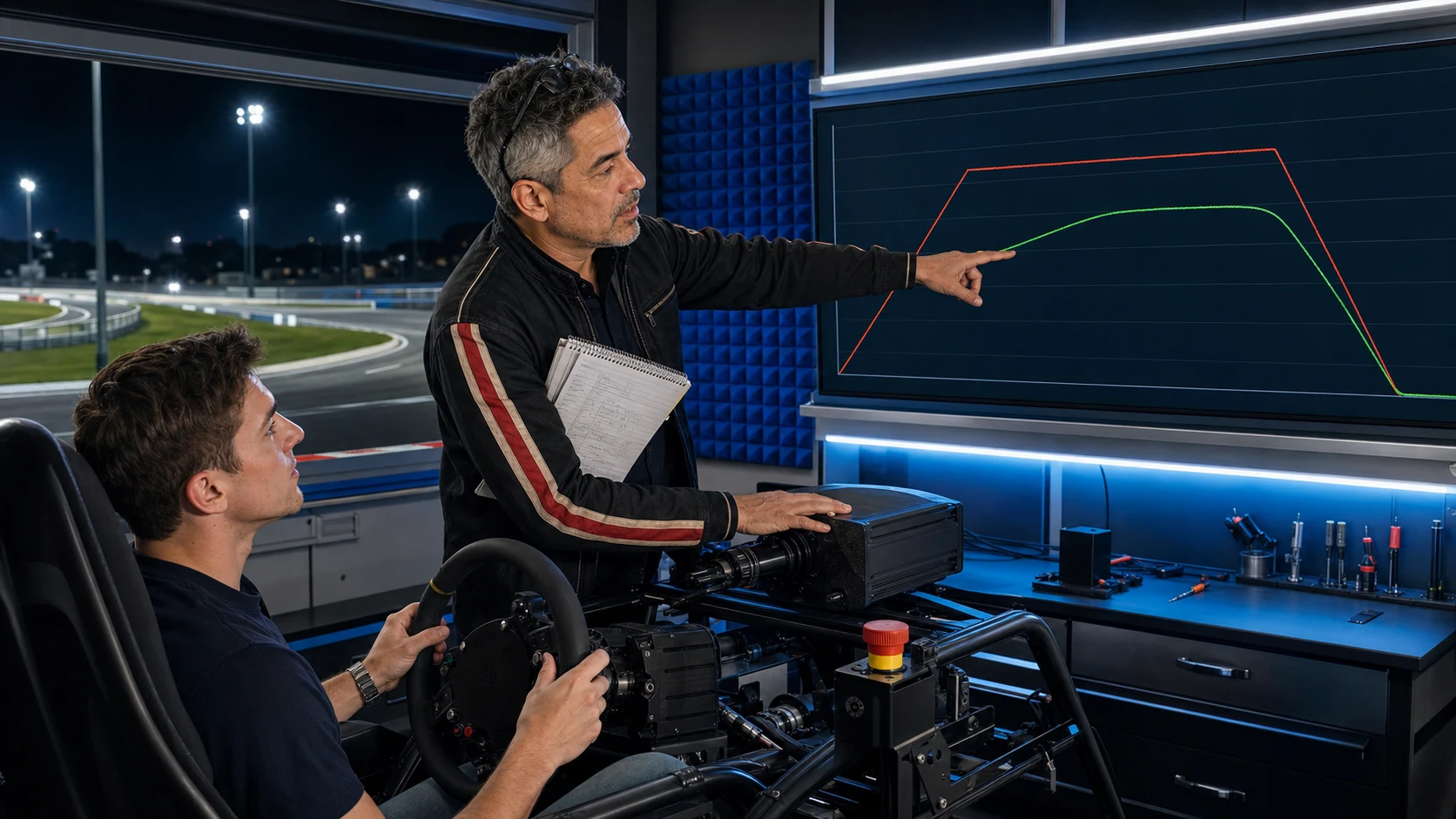
If the steering oscillates on a straight, add damping in small increments. If every surface feels like gravel, reduce canned effects. If force disappears in long corners, lower in-game gain. If the wheel snaps harder than you can safely catch, lower the hardware ceiling before doing anything clever.
Commission the rig in this order

- Square the frame and lock the seat. No control electronics yet.
- Mount wheel and pedals. Confirm full movement and body clearance.
- Connect power and USB. One device at a time; label every successful path.
- Update and calibrate. Save screenshots before opening a game.
- Set display geometry. Correct field of view, horizon, and eye point.
- Tune force feedback. Hardware ceiling first, game gain second.
- Run a race rehearsal. Cold start, full grid, pit stop, restart, and recovery.
The rehearsal is where a build becomes a system. Turn everything off. Start it in the order a tired person will use. Join a busy practice session. Test headlights, wipers, radio, pit limiter, ignition, starter, and escape. Recover from one disconnected secondary control. Only then invite the league.
VR rig: presence with an operations tax
Meta Quest 3 is the accessible Amazon-available route into wireless or wired PC VR, but the headset is not the whole decision. You are also buying facial comfort, charging, cable routing or wireless-network tuning, recentering, lens care, GPU load, and the inability for a standing friend to understand exactly what the driver sees.
What owners love, and what sends hardware back
Owners love
- Direct drive at sane torque because small corrections become clearer without a belt or gear train.
- Load-cell braking because a pressure target is easier to repeat than a pedal-travel target.
- A rigid cockpit because settings remain valid from one session to the next.
- One large ultrawide because it is easy to start, share, and recover.
- Saved profiles and labeled cables because reliability feels luxurious after the first bad evening.
Returns and regret usually begin with
- Buying a PC-only base for a console.
- Buying a load-cell pedal set before creating a rigid pedal mount.
- Buying a 49- or 57-inch monitor before measuring width, eye distance, mount capacity, and GPU output.
- Assuming every wheel rim, quick release, pedal, and shifter works across ecosystems.
- Treating a desk clamp as a permanent 12 Nm solution.
- Adding a passive USB splitter when the actual problem is power or controller bandwidth.
- Copying an influencer’s settings without matching their wheelbase torque, firmware, car, and game version.
Duke’s four blunt build rules
- A wheelbase is not a rig. It is one actuator inside a room-scale system.
- The brake earns lap time; the base earns sensation. Buy in that order when the budget is tight.
- Choose software by calendar, not screenshots. The best simulation is the one whose races fit your week.
- Reliability is an immersion feature. A labeled powered hub can improve a Friday night more than a carbon faceplate.
What to buy on Amazon
Every button below goes to the exact verified product listing, not a search page. Prices and availability move; confirm platform version, included parts, and seller at checkout.
| Role | Exact product | Best fit | Buy |
|---|---|---|---|
| Complete starter | MOZA R5 Racing Bundle | PC habit test, desk or strong stand | View exact R5 bundle on Amazon |
| Long-term PC wheelbase | MOZA R12 | Committed league and endurance rig | View exact R12 on Amazon |
| Load-cell pedals | MOZA CRP2 | Repeatable braking on a fixed pedal deck | View exact CRP2 pedals on Amazon |
| Complete fixed cockpit | Next Level Racing GTTrack | Shared household or endurance station | View exact GTTrack on Amazon |
| Premium licensed wheel | Logitech G PRO Racing Wheel | Console plus PC buyers | View exact Logitech G PRO on Amazon |
| PlayStation ecosystem | Fanatec Gran Turismo DD Pro | PS5-centered racer | View exact GT DD Pro on Amazon |
| Shared-rig display | Samsung Odyssey OLED G9 49-inch | Easy entry, long sessions, driver swaps | View exact 49-inch G9 on Amazon |
| VR display | Meta Quest 3 512GB | Presence-first personal rig | View exact Quest 3 on Amazon |
| Accessory reliability | Sabrent 10-Port Powered USB Hub | Multi-device cockpit | View exact powered hub on Amazon |
The final recommendation
Start with the software loop you will actually repeat. Choose iRacing for organized competition, LMU for endurance, ACC for focused GT value, or AC EVO as a developing side platform. Then build a rigid human interface: seat, brake, eye point, wheel.
The best-value first complete package is the MOZA R5 bundle. The committed PC sweet spot is an R12, load-cell pedals, and a fixed cockpit. The easy shared display is a 49-inch ultrawide. The presence-first lane is Quest 3. In every version, a documented USB and power topology is part of the rig, not an accessory drawer.
That system will not look as dramatic in a shopping cart as a flagship base. It will do something better: turn on, remember its settings, and get you to the grid.
Research ledger
Purchase links in this guide are Amazon affiliate links to exact product ASINs. The following non-commerce evidence sources were used for specifications, software status, setup instructions, manuals, and community-pattern research:
- Official software and requirements: iRacing system requirements, iRacing cost and content model, iRacing 2026 Season 3, Le Mans Ultimate, LMU system requirements, LMU guide, Assetto Corsa Competizione, and Assetto Corsa EVO Early Access 0.7.
- Official hardware and manuals: MOZA R5 bundle, MOZA R12, Next Level Racing GTTrack, and Logitech G PRO Racing Wheel.
- Community patterns, paraphrased rather than copied: 2026 sim racing questionnaire results, 2026 beginner software discussion, mid-tier rig priorities, first proper rig planning, VR-only iRacing setup, and $5,000 rig feedback.
Source and commerce review completed July 24, 2026. AI-assisted curator scenes are labeled and are never used as product proof. Product, real-use, software, box-content, and manual images are separately identified in their captions.
Key takeaways & quick answers
IgnitionSim is reader-supported. When you buy through links on our site we may earn an affiliate commission at no extra cost to you — it never changes our verdict or your price. As an Amazon Associate we earn from qualifying purchases.
Keep reading
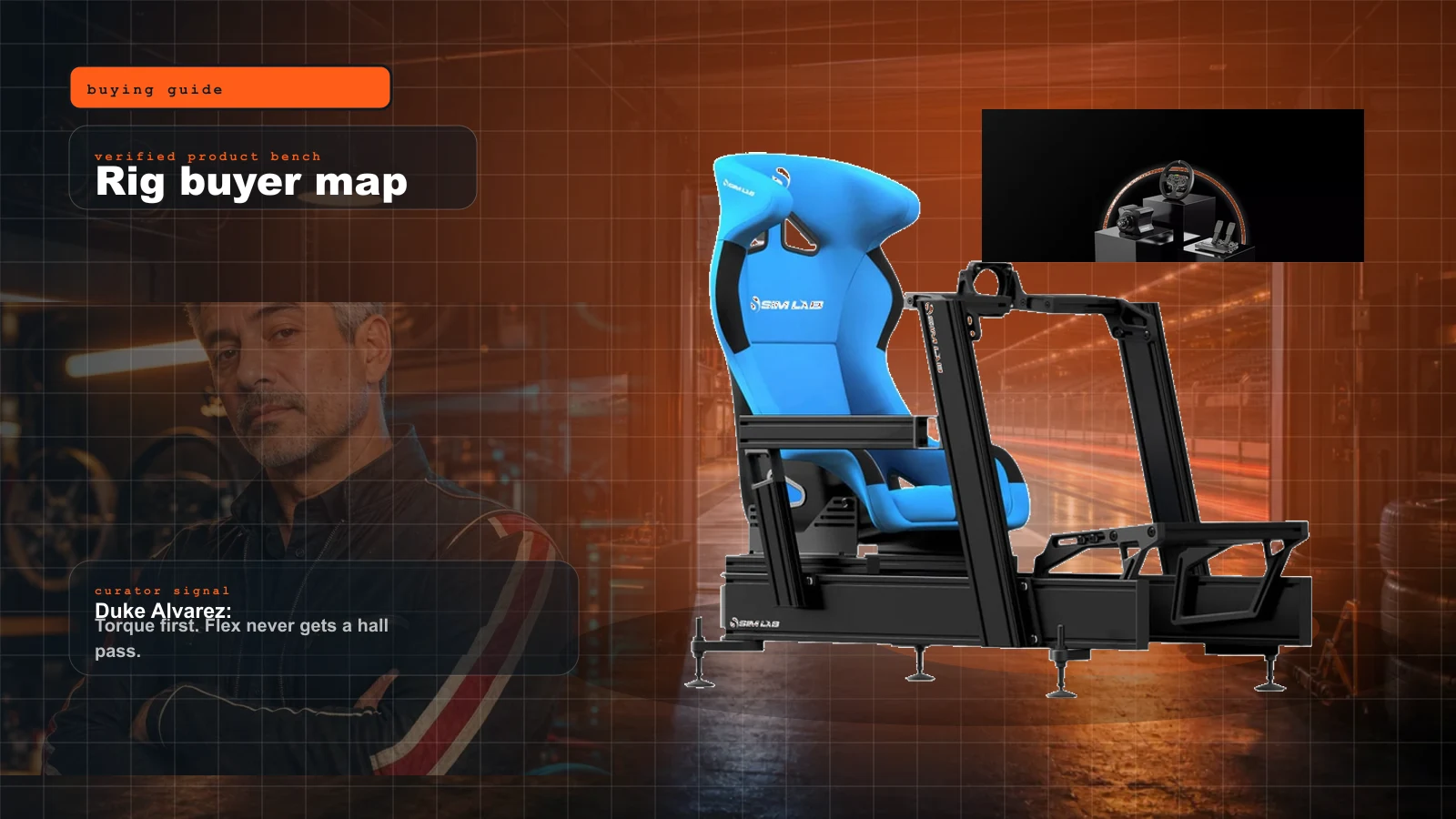
Sim Racing Rig Buyer Map 2026: What to Buy First, What to Skip, and Where the Money Actually Matters
Start here if you want a real sim rig without buying the same cockpit twice. Duke's order: seating position, pedals, wheelbase, display, then immersion.
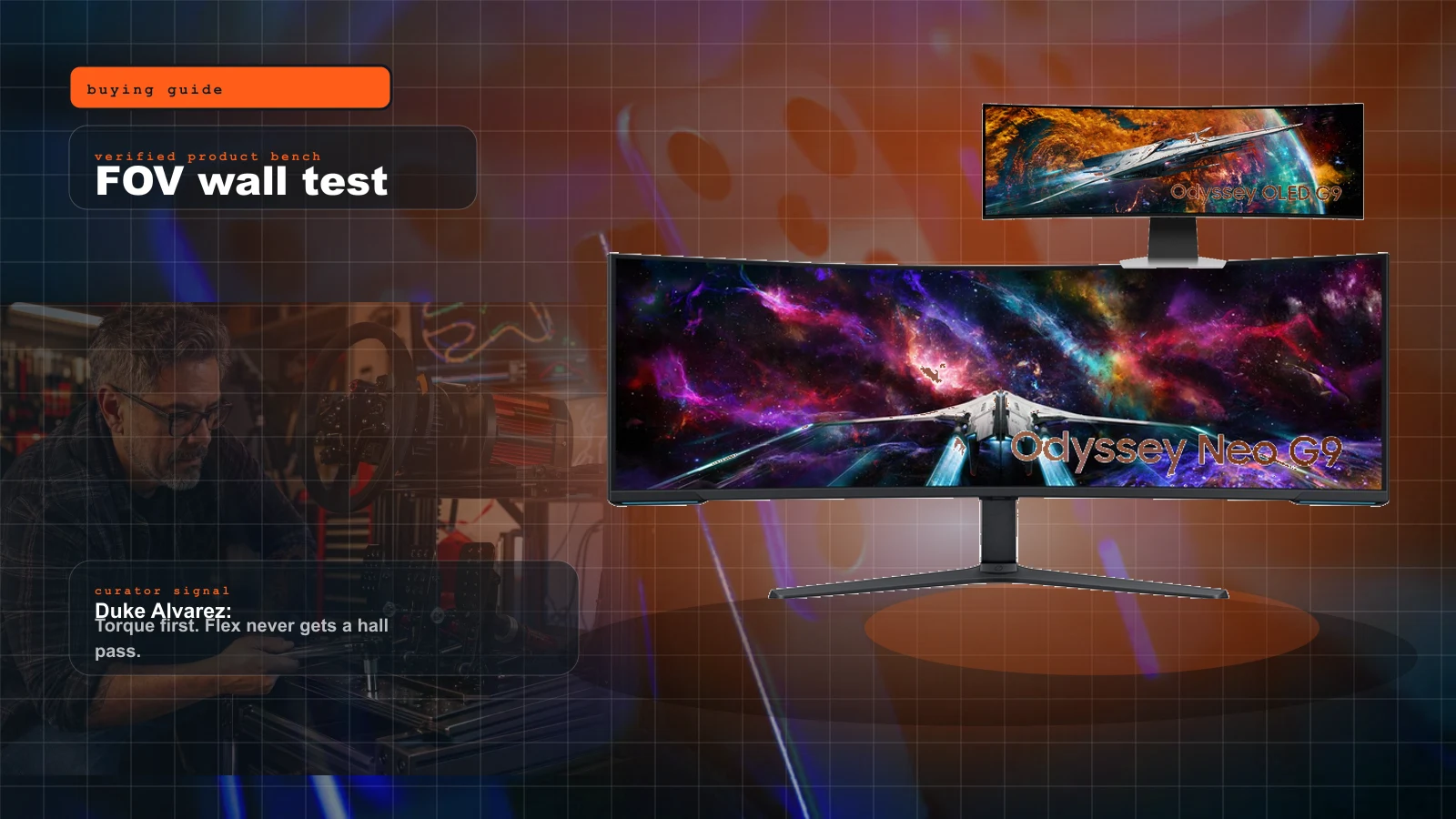
Best Sim Racing Monitors of 2026: Triple vs Super-Ultrawide vs OLED
The display is the missing category in most rig budgets. Here's the honest 2026 monitor guide — super-ultrawide vs triples vs the flat truth about FOV, GPU load, and the freestanding stand nobody quotes you for.
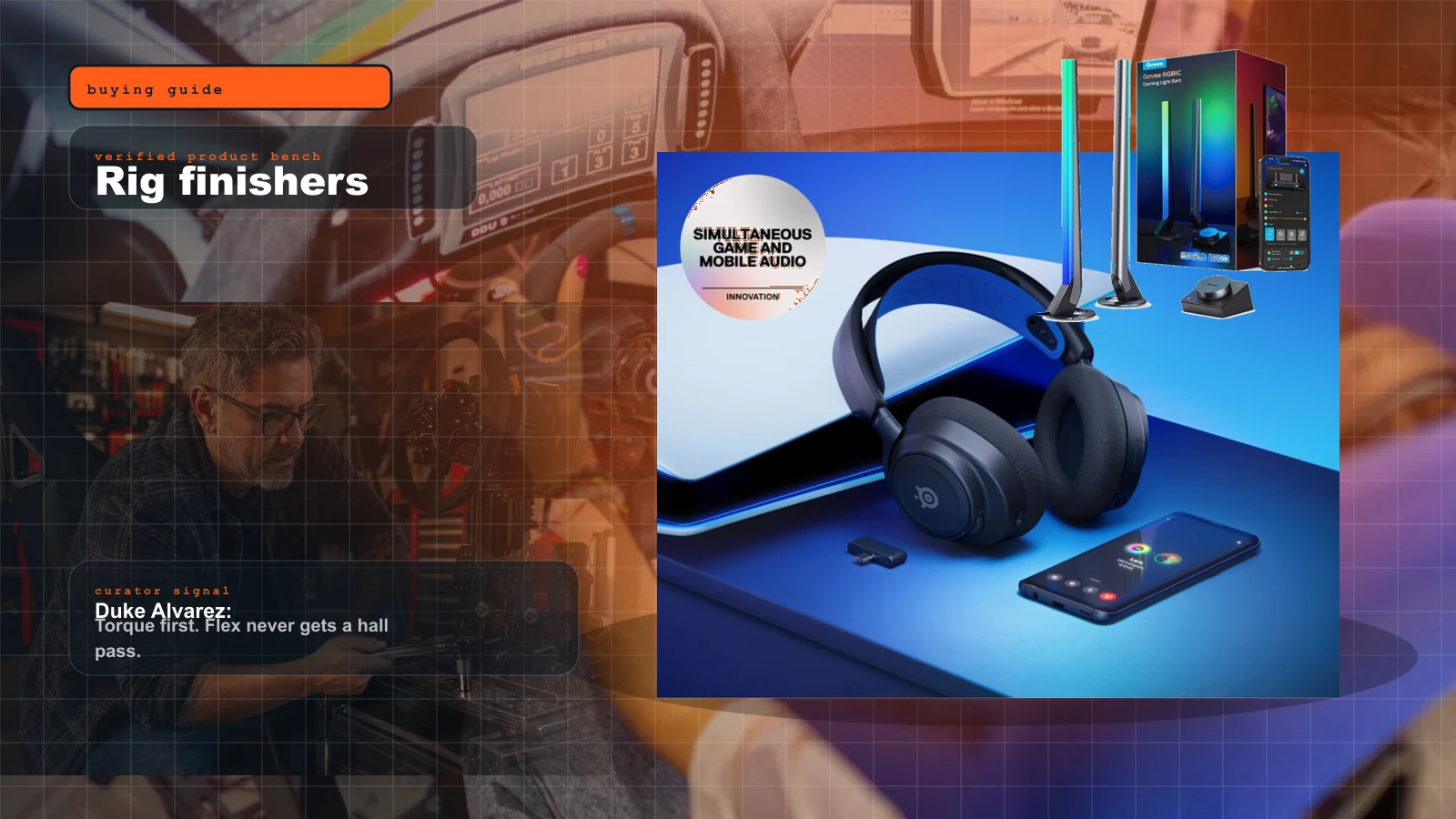
Sim Rig Accessories 2026: The Cheap Finishing Touches That Complete Your Build
You spent a fortune on the base and pedals and forgot the four cheap things you'll actually touch every single day. Here's the finishing cluster — headset, lighting, a powered hub, cable management — that turns a pile of hardware into a rig you love sitting in.
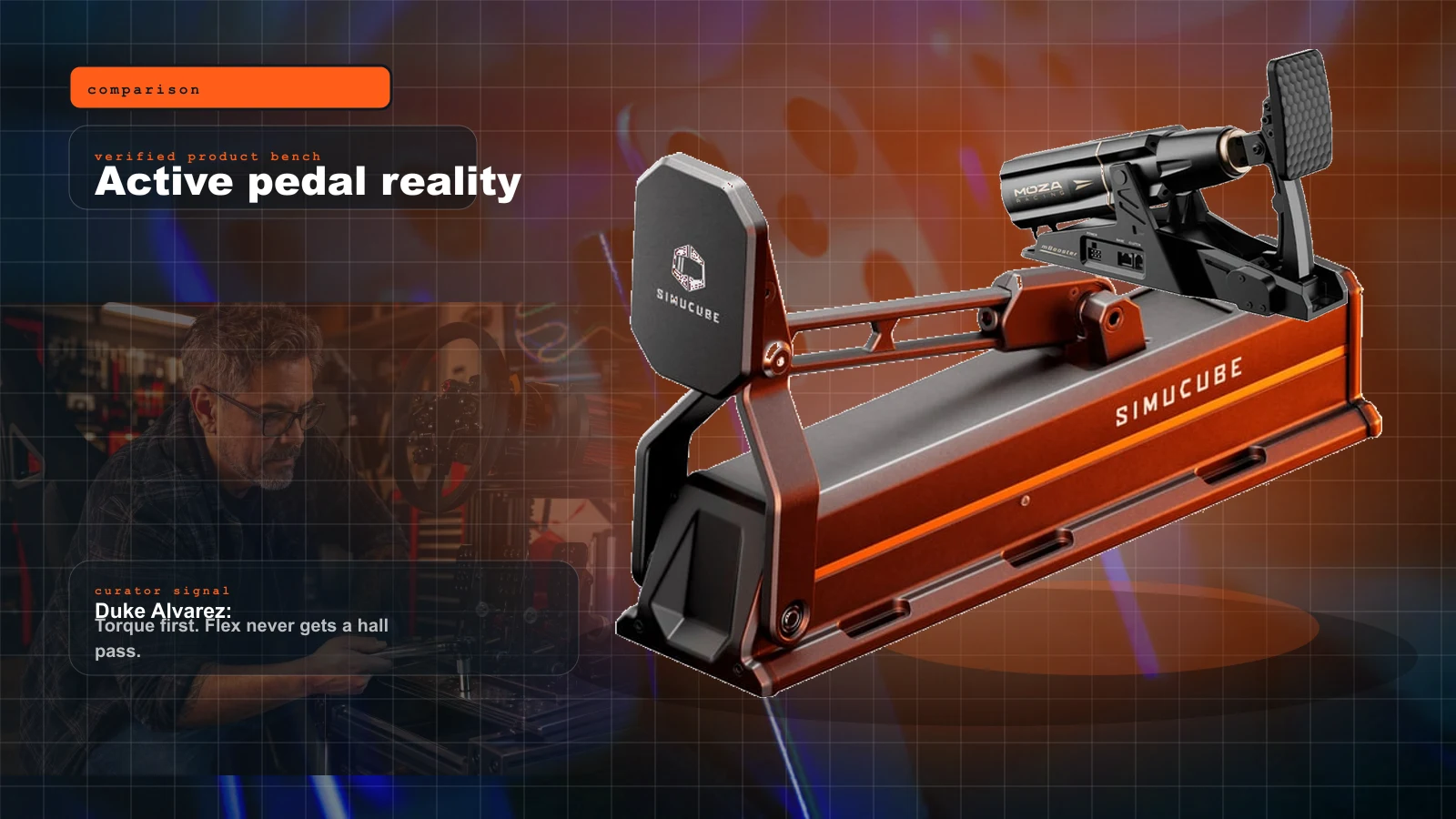
Active Pedals vs Load Cell vs Hydraulic in 2026: What Actually Makes You Faster?
Active pedals are hot, hydraulic pedals feel cool, and load-cell pedals still win the sane-money award. Here is the blunt upgrade ladder.