Room geometry
Ceiling, width, depth, handedness, and tee lineMeasure the golfer's real driver swing, not an optimistic rectangle on graph paper.
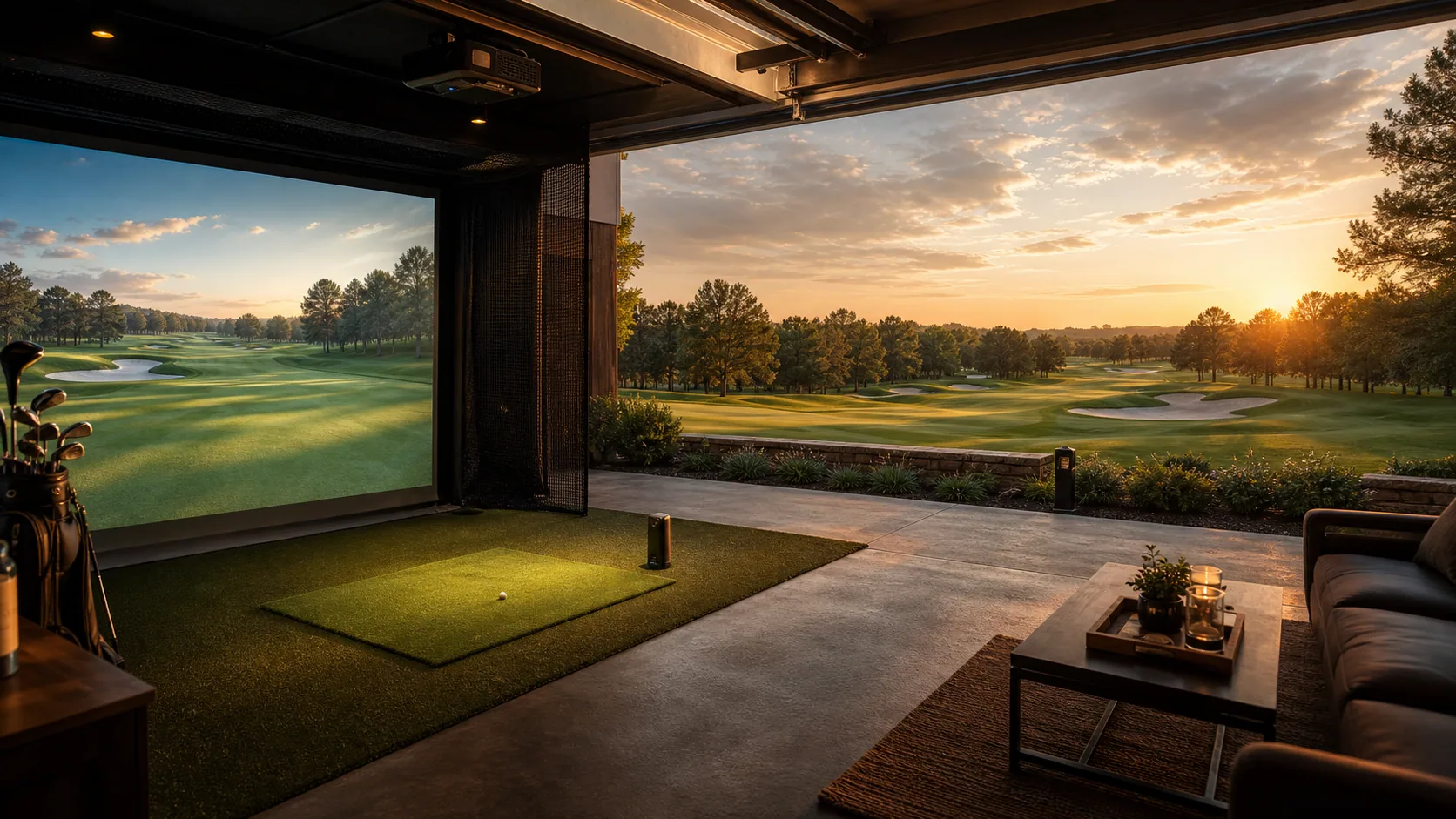
Ceiling, swing width, tee depth, projector throw, screen buffer, and subscription cost all get veto power.
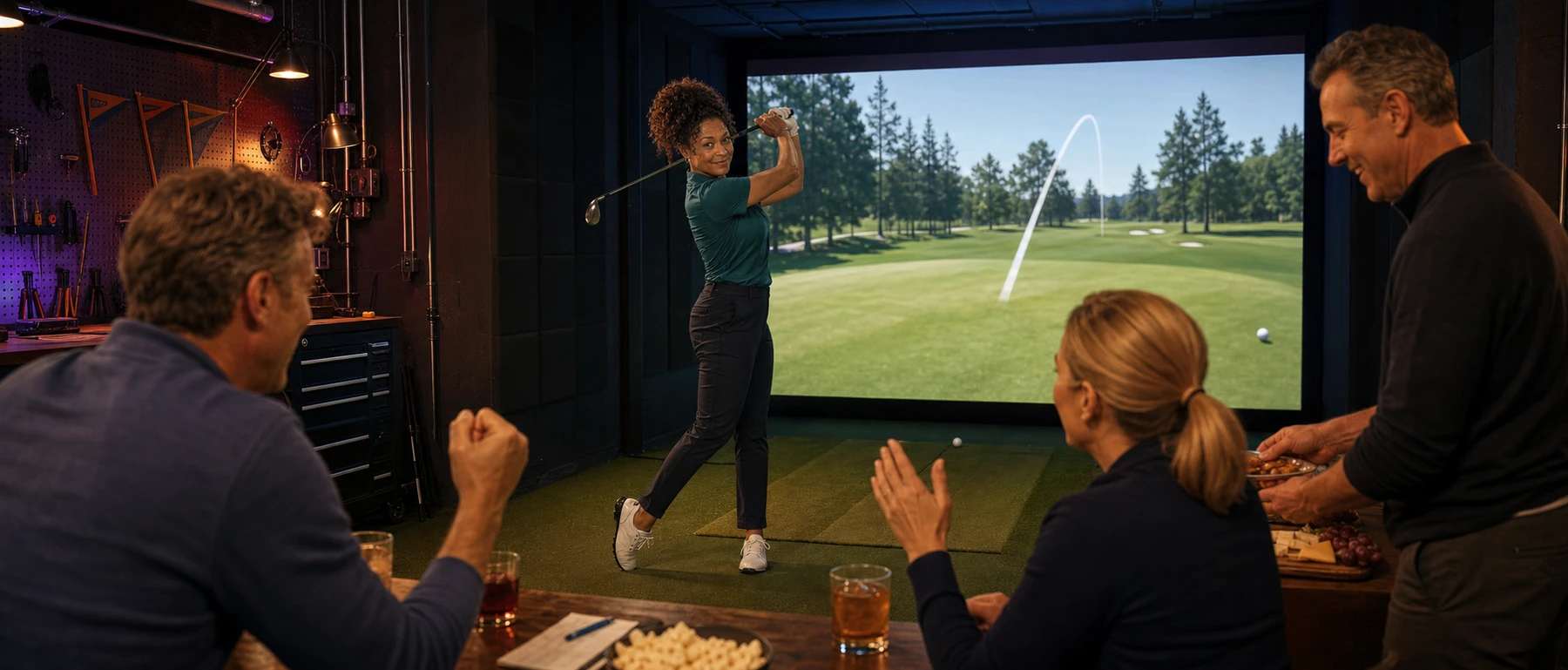 AI editorial scene
“A cheap mat saves money once and annoys you every swing after.”
Every stage is a dependency. Buying stage three before stage one is how boxes become expensive shelf decor.
Measure the golfer's real driver swing, not an optimistic rectangle on graph paper.
The room chooses the sensor technology before reviews choose the brand.
The mat protects joints and the enclosure protects everything else.
Throw geometry and software lock-in can cost more than the launch monitor discount saved.
Nina caught the bug the winter a SkyTrak showed up at her club's off-season practice bay and she realized she could keep her swing over the cold months at home — if she could just fit a bay in the garage. Her first build was a comedy of errors: a driver clipped a rafter on day one, and the projector she'd already bought threw a giant shadow of her own head across every shot. She spent the next year obsessively re-measuring, and somewhere in there discovered she was better at fitting the room to the golfer than she'd ever been at breaking 80.
“Ceiling height is the first spec, not the launch monitor — 9 feet lets you fake it with wedges, but you need a true 10 to swing driver without editing your swing, and no gadget buys back a rafter.”Open Nina Brooks's current rig journal →
 AI editorial scene
Only guides clearing the stronger discovery gate appear here. The full archive remains available without hijacking this page.
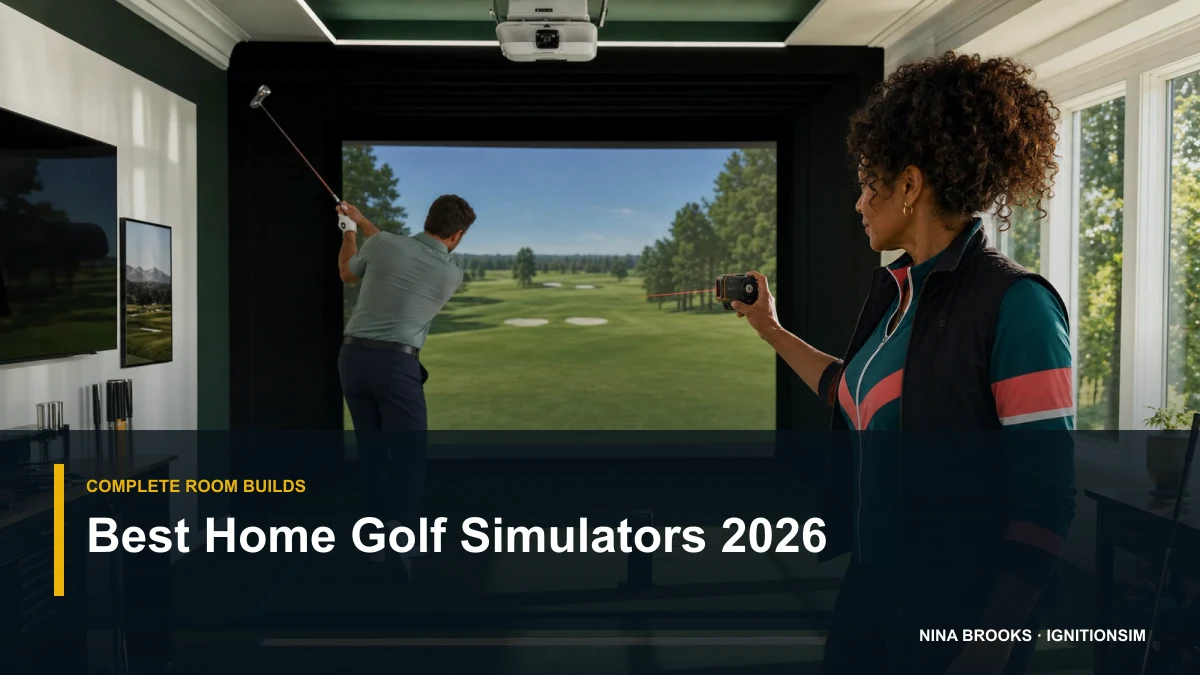
You don't buy 'a golf simulator,' you build one — and the launch monitor decides everything else. Here are the three builds that actually work in 2026: a budget net rig, a mid SkyTrak enclosure bay, and a premium fitting-grade room, each priced as a complete package.
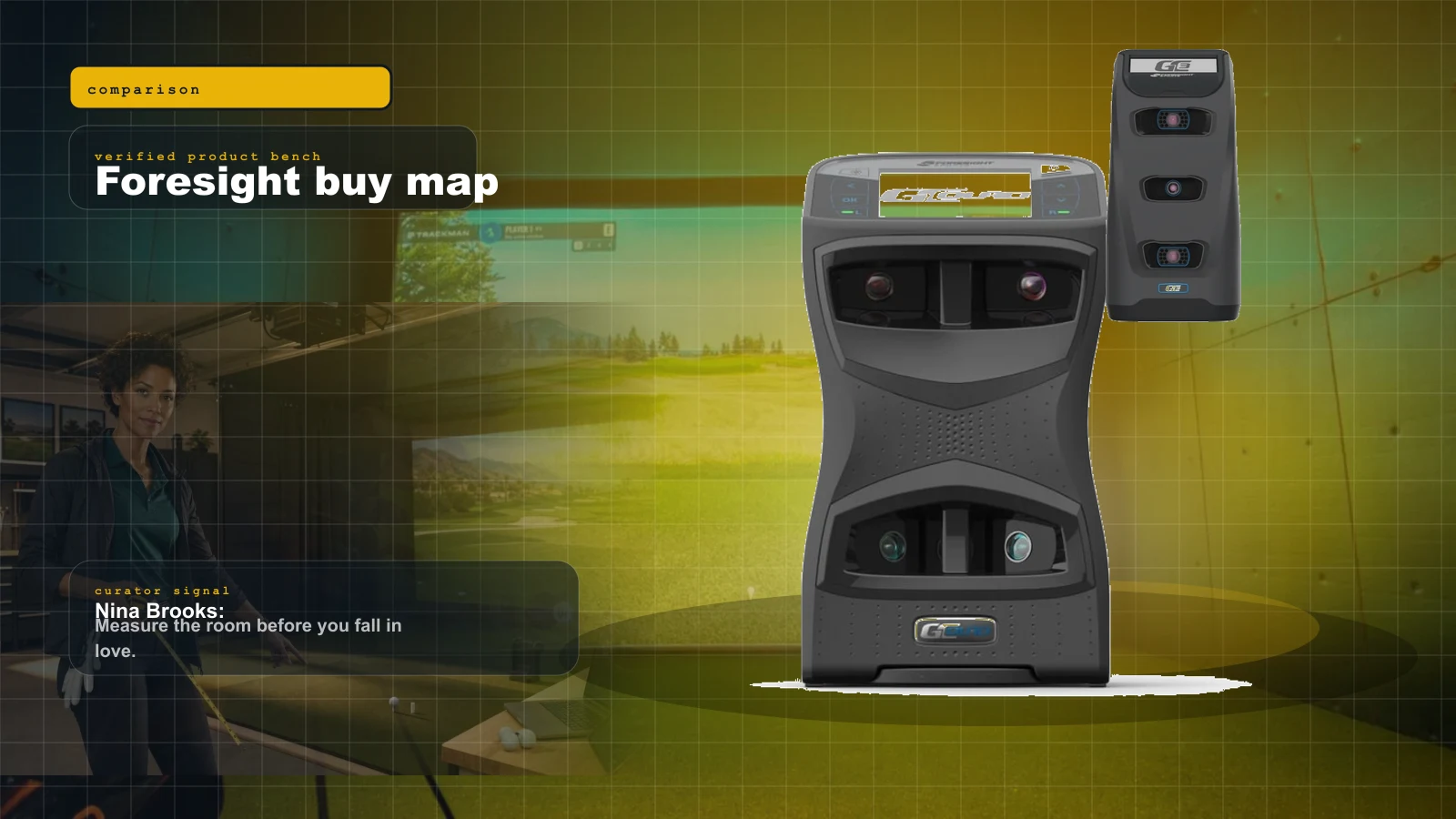
The Foresight family is not one ladder. GC3 is the serious home value, GCQuad is the fitting reference, and Falcon is the overhead-room play. Nina turns the five-figure fog into a buy map.
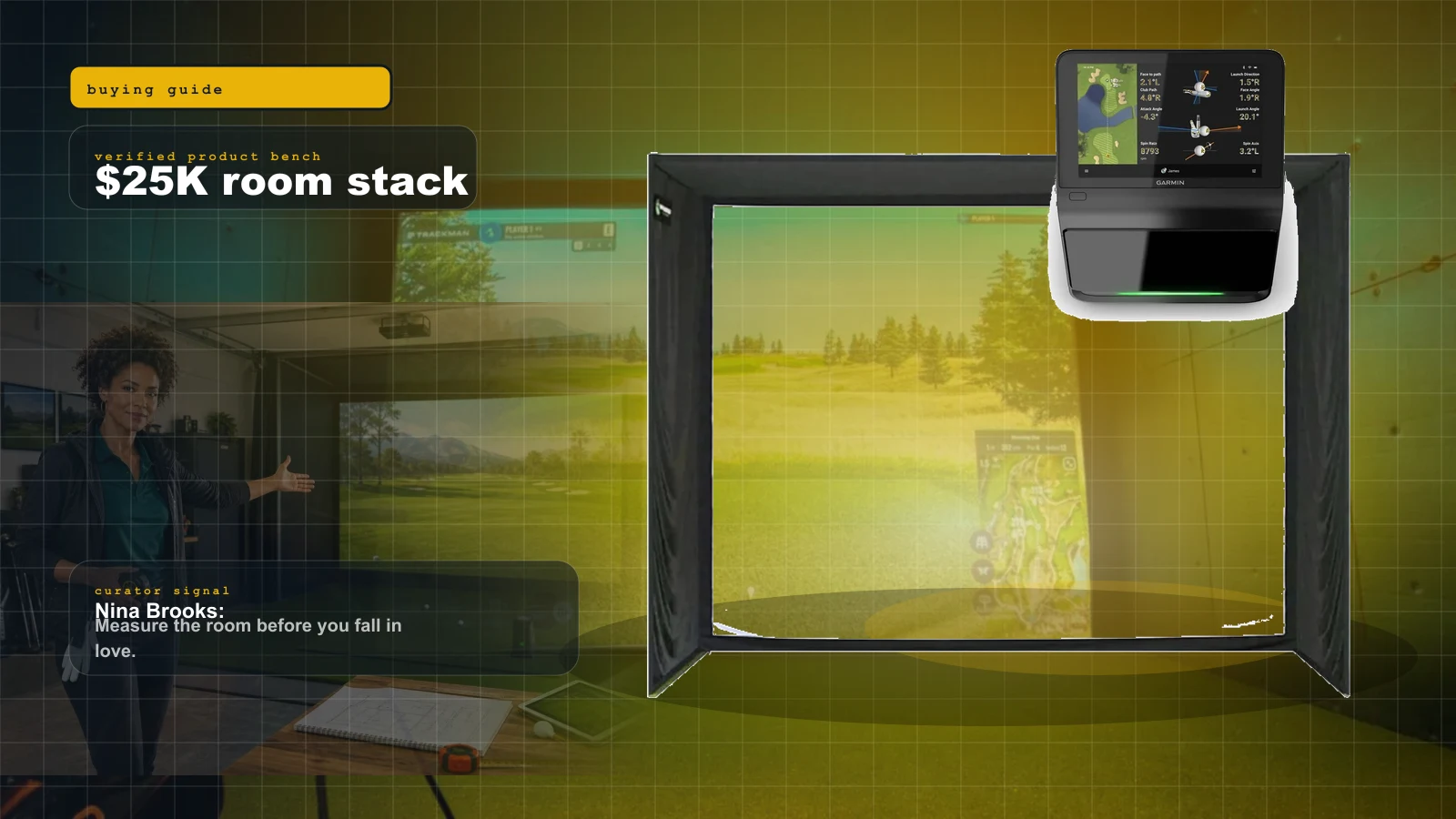
A luxury golf room is not a launch monitor with accessories. It is a room system. Nina maps the $15K, $25K, and $50K paths that feel expensive for the right reasons.
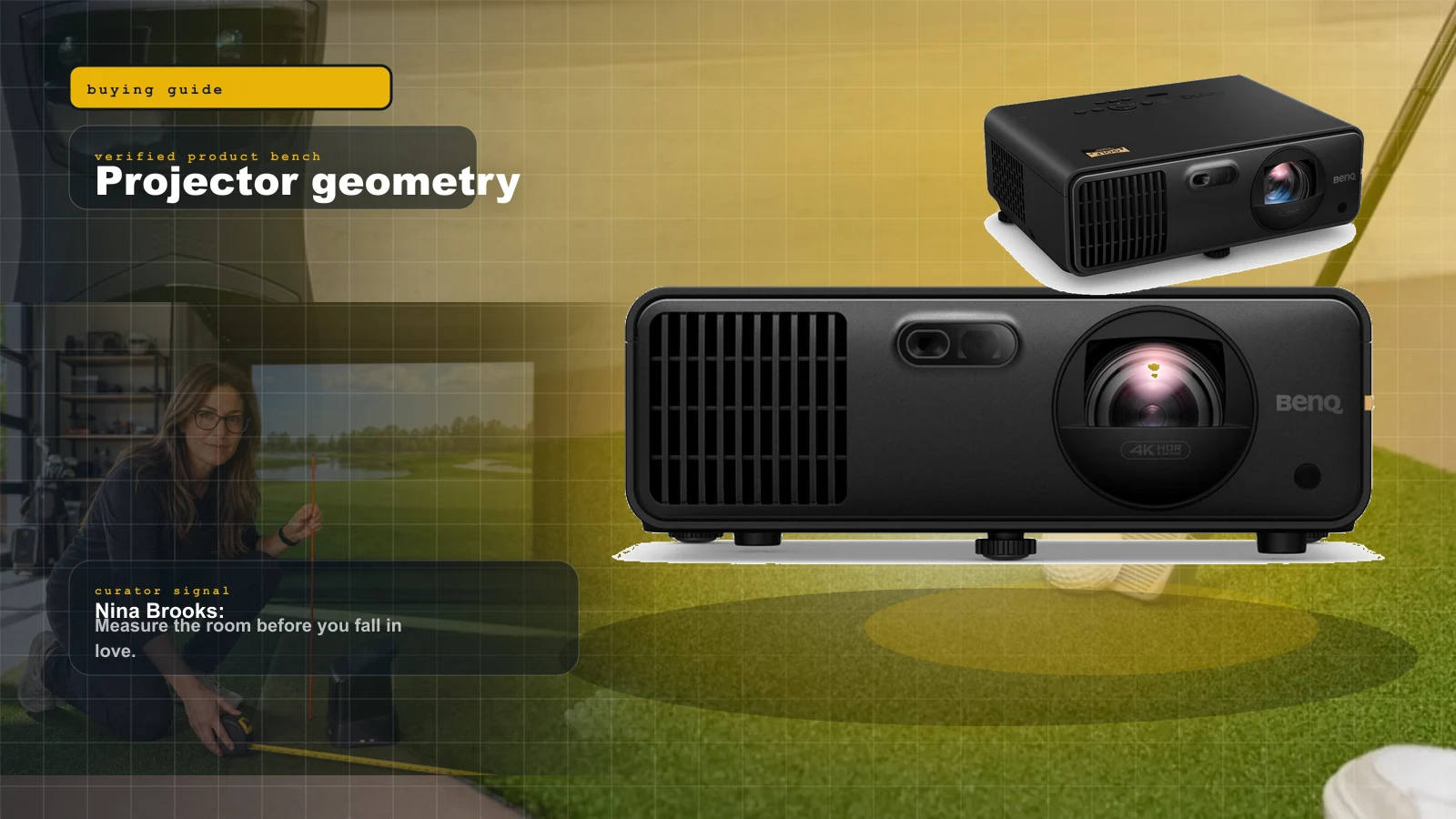
Projectors are geometry purchases. Nina ranks the BenQ AK700ST, AH700ST, LK936ST, and Optoma GT2100HDR by room depth, 4K value, and shadow risk.
Paraphrased patterns from builder conversations, never anonymous theater dressed up as a quote.
Ceiling height is the make-or-break spec people most regret ignoring. Around 10 feet is the commonly cited 'magic number' that lets most golfers swing a driver freely; under 9 feet, taller players or upright swings get cramped and may be limited to irons.
The single most repeated planning warning, because it is a structural constraint you cannot fix after the build.Match the launch monitor to your room, not just to the reviews. Camera-based photometric units sit beside the ball and work in shallow garages and basements, while radar units need several feet behind the golfer and ample ball flight in front, or their spin and curve data gets shaky.
A costly mistake buyers describe: picking a top-rated monitor that then needs more room than they have.Budget radar monitors are praised as great value once dialed in, with the honest caveat that they are not as consistent as five-figure units. Owners report they get reliable for practice after some setup and calibration, especially in space-limited rooms.
Tempering of expectations for the popular sub-$1,000 monitors that dominate first-time buyer questions.Isolated product views belong here, where ports, prices, mounting, and direct purchase paths are the point.

Premium-bay builders who want the brightest, sharpest 4K image and a forgiving ceiling-mount install, and will pay for it.

Budget and tight-space builders who want a bright, low-lag short-throw laser projector that fits a shallow room.

The default $3K pick for home builders who want camera-grade accuracy, broad software freedom, and no recurring fees.

Serious players and fitters who want tour-grade club data in a portable unit and don't need overhead mounting.

Builders who want a durable, joint-friendly, real-tee-capable mat at a value price.
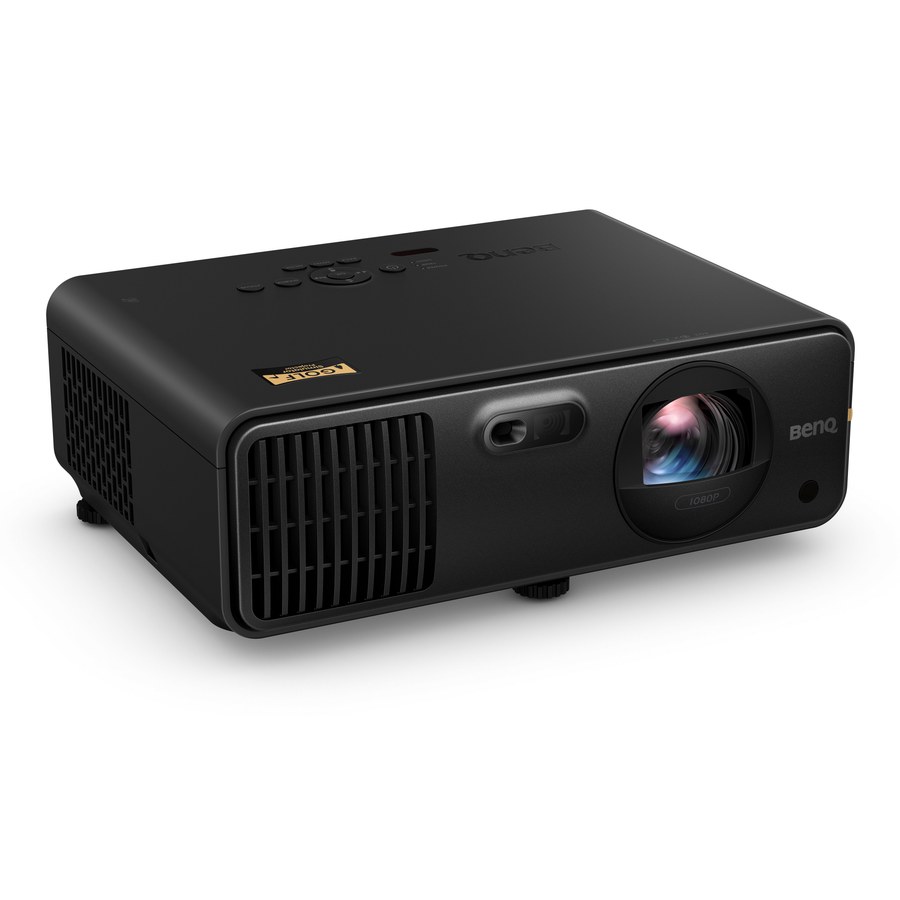
Builders who want the BenQ golf-projector experience and would rather spend the 4K premium on the launch monitor, screen, or mat.

Budget-minded golfers who want real data and entry-level sim play and have room depth behind the hitting area.

Buyers who will pay a premium for a no-PC, touchscreen-first premium launch monitor and want less room-depth drama than rear radar.