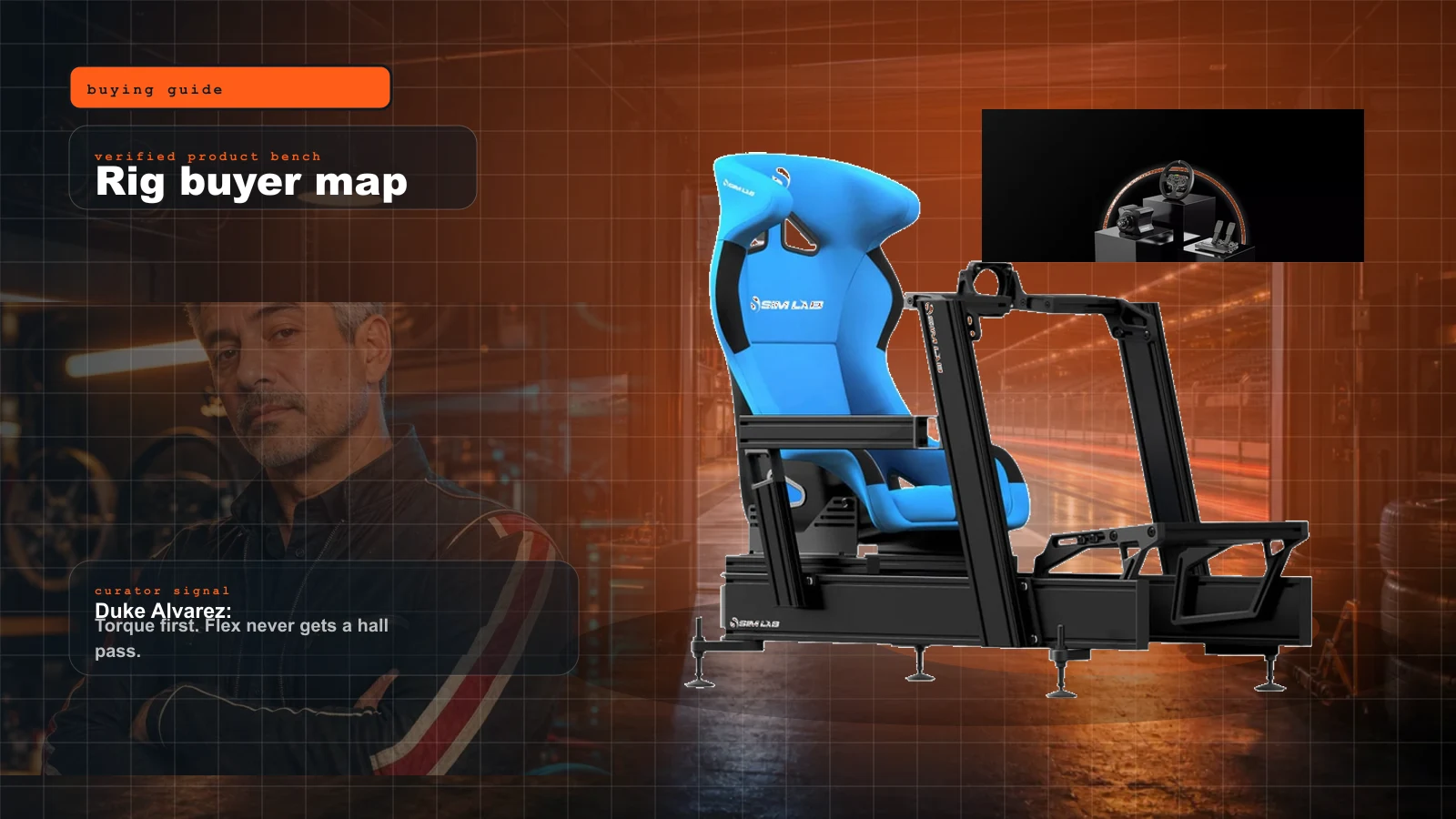
 AI-assisted editorial composite
 Sim Racing Rig Buyer Map 2026: What to Buy First, What to Skip, and Where the Money Actually Matters
A no-drama sim racing build order for 2026: pedals, direct drive, cockpit rigidity, monitors, tactile feedback, and the expensive mistakes to dodge.
Duke Alvarez is an AI-assisted editorial bench persona. Product claims, sources, and verdicts are reviewed under IgnitionSim's published methodology.
Updated July 17, 2026Sources reviewed July 17, 2026Gold certified July 17, 2026Revenue tier A
Buy the hardware discussed in this guide
Every button opens the exact product detail page on Amazon, with our affiliate tag. No search pages and no substitute models.


Apex Cockpit
Know first:Steel tube less rigid than 8020 at high torque
View exact product on Amazon
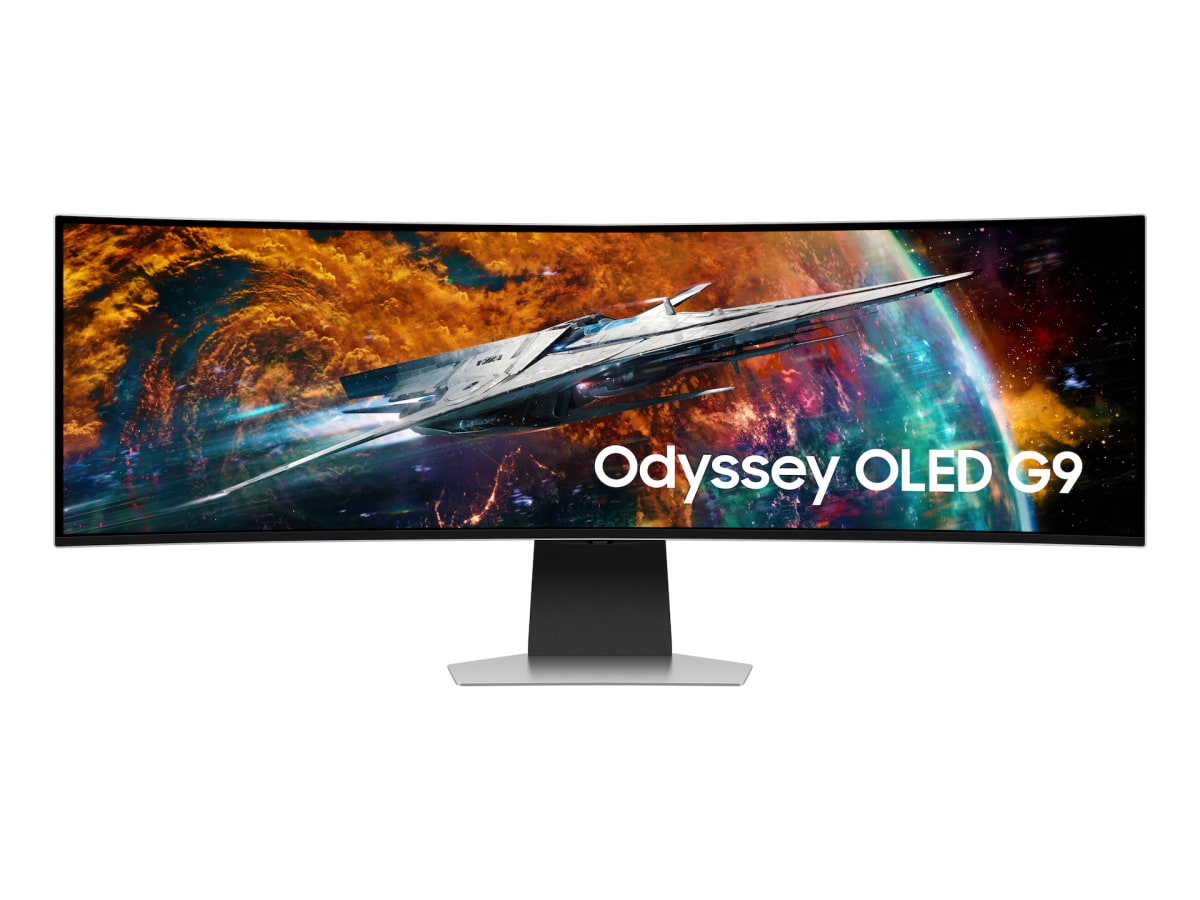
Odyssey OLED G9 49
Know first:Not true triple-screen side geometry
View exact product on Amazon

As an Amazon Associate, IgnitionSim earns from qualifying purchases. Prices and availability can change.
If you are new to sim racing, the internet will try to sell you torque first. Torque is fun. Torque is also the easiest number for marketers to wave around like a gas-station katana.
The actual order is less glamorous and far more useful: stable seating position, pedals, wheelbase, display, then immersion. If the pedal deck flexes, your brake muscle memory is trash. If the wheel stand walks across the floor, your 12 Nm base is just a very expensive desk-clamp stress test. If your monitor is wrong, you drive by vibes. Vibes belong in synthwave, not braking zones.
The short 2026 verdict: the Logitech G923 remains the sale-price starter; the MOZA R5 is the cleaner PC direct-drive entry; the Turtle Beach VelocityOne Race is the most complete Xbox direct-drive box; and the Next Level Racing Victory is the compact cockpit that makes those midrange systems behave. None of them fix a bad driving position. That is why the tape measure appears before the torque number in this guide.
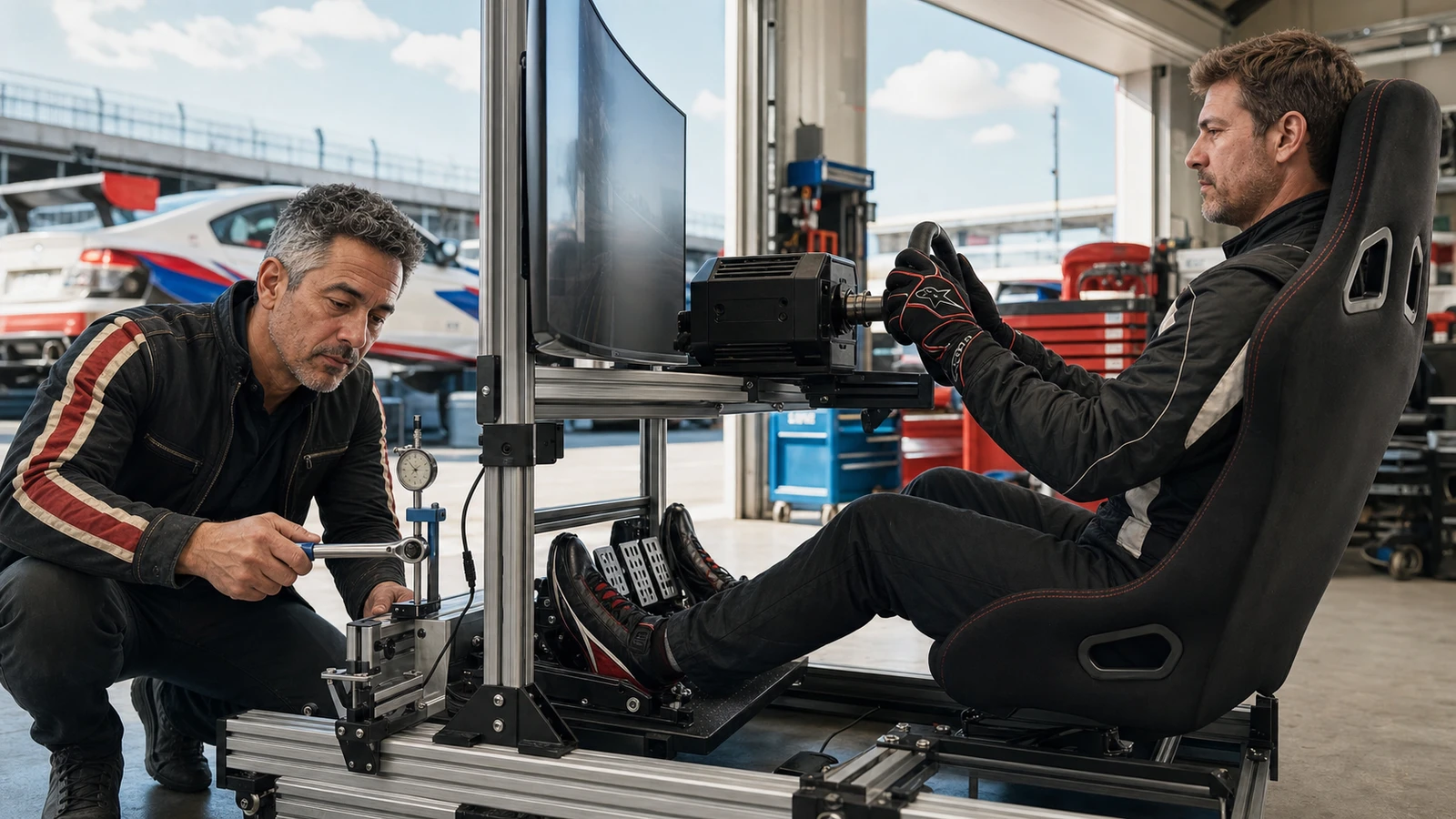

The Buy Order
| Phase | Buy | Why it matters | Skip for now |
|---|---|---|---|
| 1 | Stable mount or cockpit | Makes every input repeatable | Carbon rims |
| 2 | Load-cell pedals | Braking by pressure, not travel | 20+ Nm bases |
| 3 | 5-12 Nm direct drive | Detail, response, no belt mush | Motion |
| 4 | Display and FOV | Lets you place the car correctly | Decorative dashboards |
| 5 | Tactile feedback | Tire slip, kerbs, shifts, ABS | Full motion if budget is tight |
The r/simracing beginner consensus is brutally consistent: do not build a tower on a noodle. The community buying guide starts with sensible wheels and pedals, but every veteran thread eventually becomes a sermon about rigidity, braking, and not panic-buying peak torque.
Phase 1: Lock Down the Driving Position
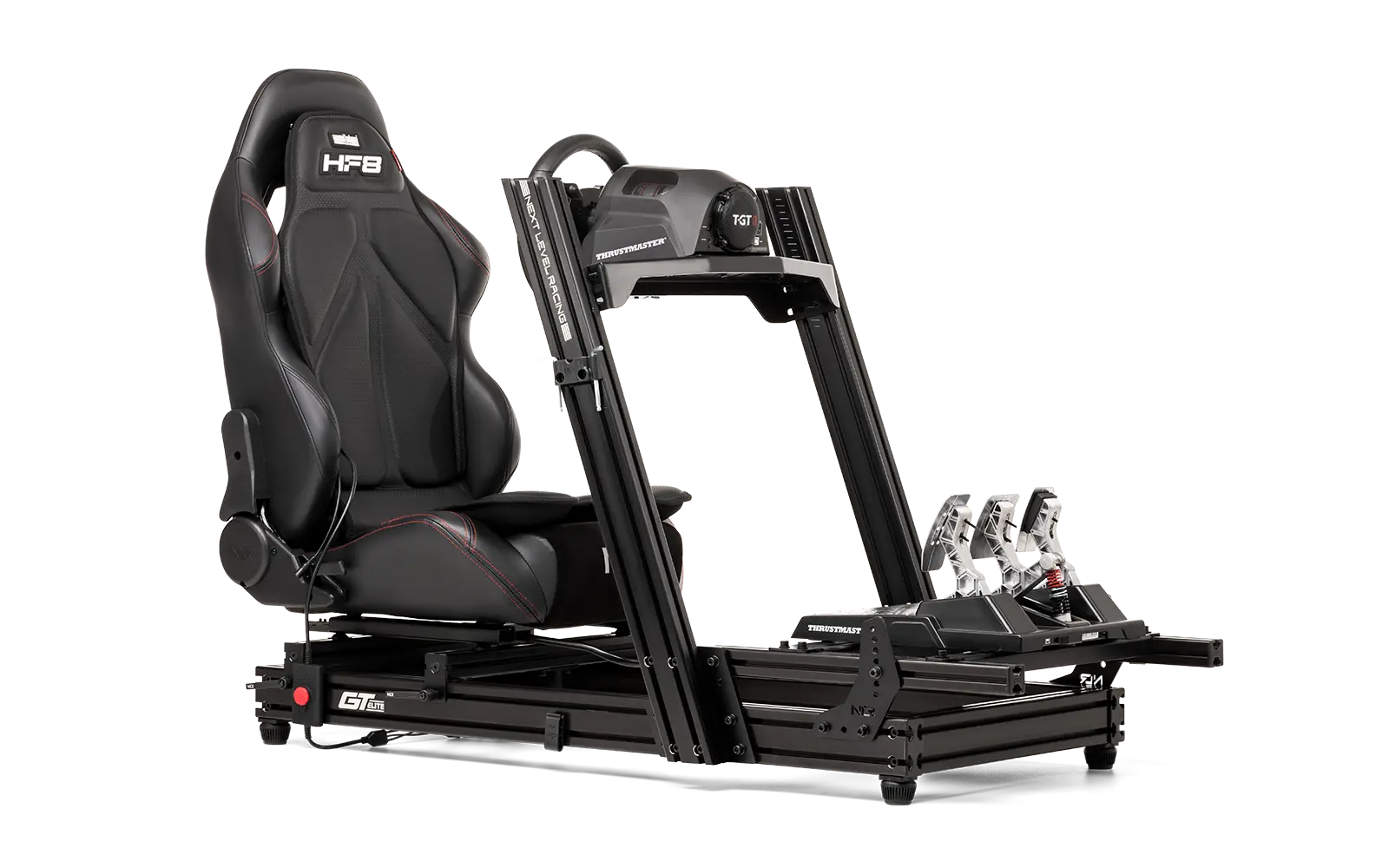
Your first rig does not have to be a monument. It does have to keep the wheel, seat, and pedals in the same place from lap to lap. A solid wheel stand like the GT Omega Apex is enough for a 5-8 Nm base if space is tight. A fixed cockpit like the Next Level Racing GTTrack is the clean console-friendly option. An aluminum profile cockpit like the Trak Racer TR80 or Sim-Lab P1X is the no-apology path if you know this hobby has already eaten your weekends.
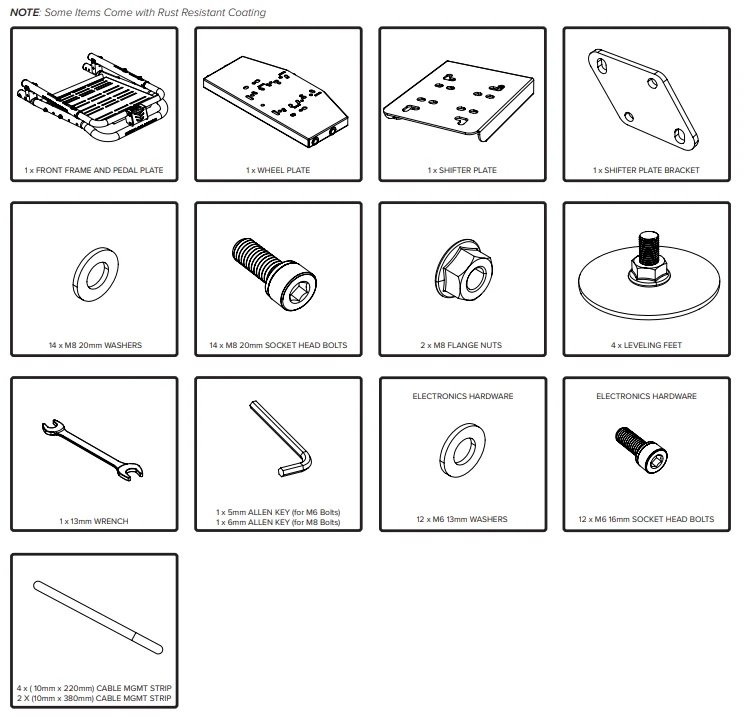
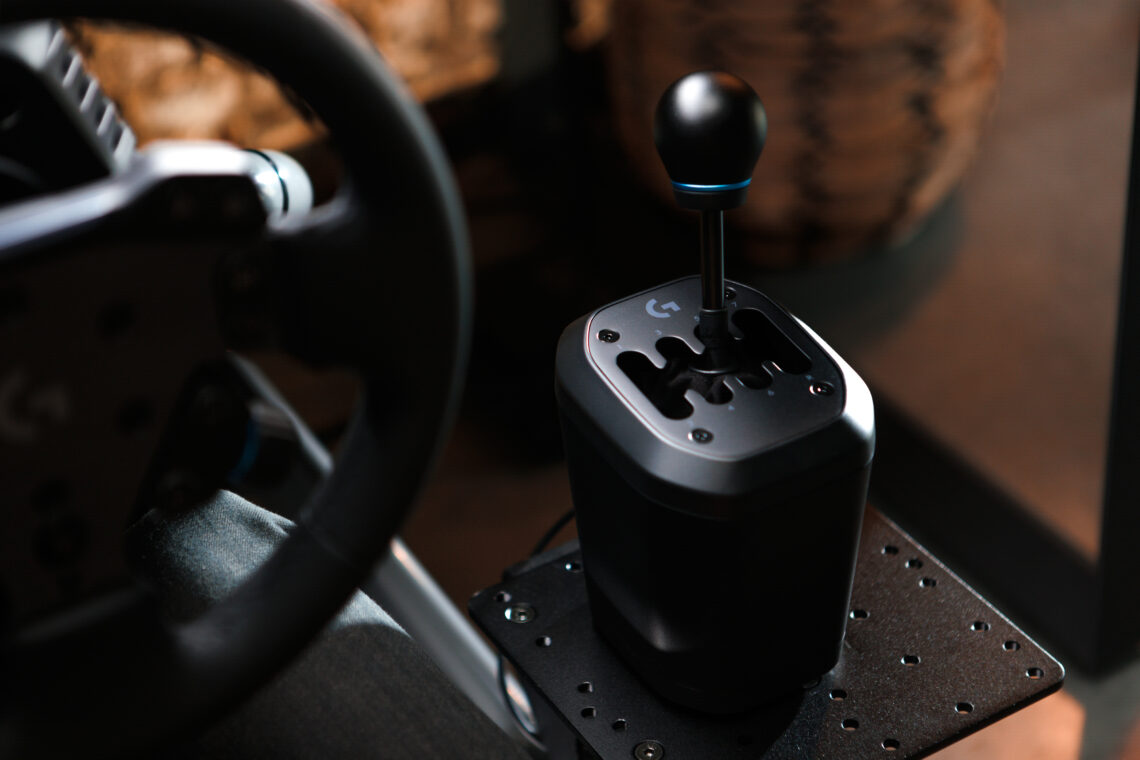
The mainstream 2026 middle is the Next Level Racing Victory{:target=“_blank” rel=“sponsored nofollow noopener” data-buy-product=“Next Level Racing Victory Simulator Cockpit”}. Next Level Racing rates it for wheelbases up to 10 Nm and publishes a compatibility list that includes the MOZA R3/R5/R9, Fanatec CSL DD, Simagic Alpha Mini, Logitech G923, and Turtle Beach VelocityOne Race. That makes the limit unusually clear: it is a compact GT cockpit for current entry and midrange direct drive, not a disguised platform for 20 Nm or motion.
The official dimensions are roughly 59.8 inches long, 20.5 inches wide, and 40 inches high, with a 65.5-pound boxed weight. Measure the delivery path as well as the finished footprint. The seat slider and adjustable wheel, pedal, and shifter plates make it easier to share than a fixed DIY frame, but the included seat is part of the structure; it is not a universal bucket-seat platform.
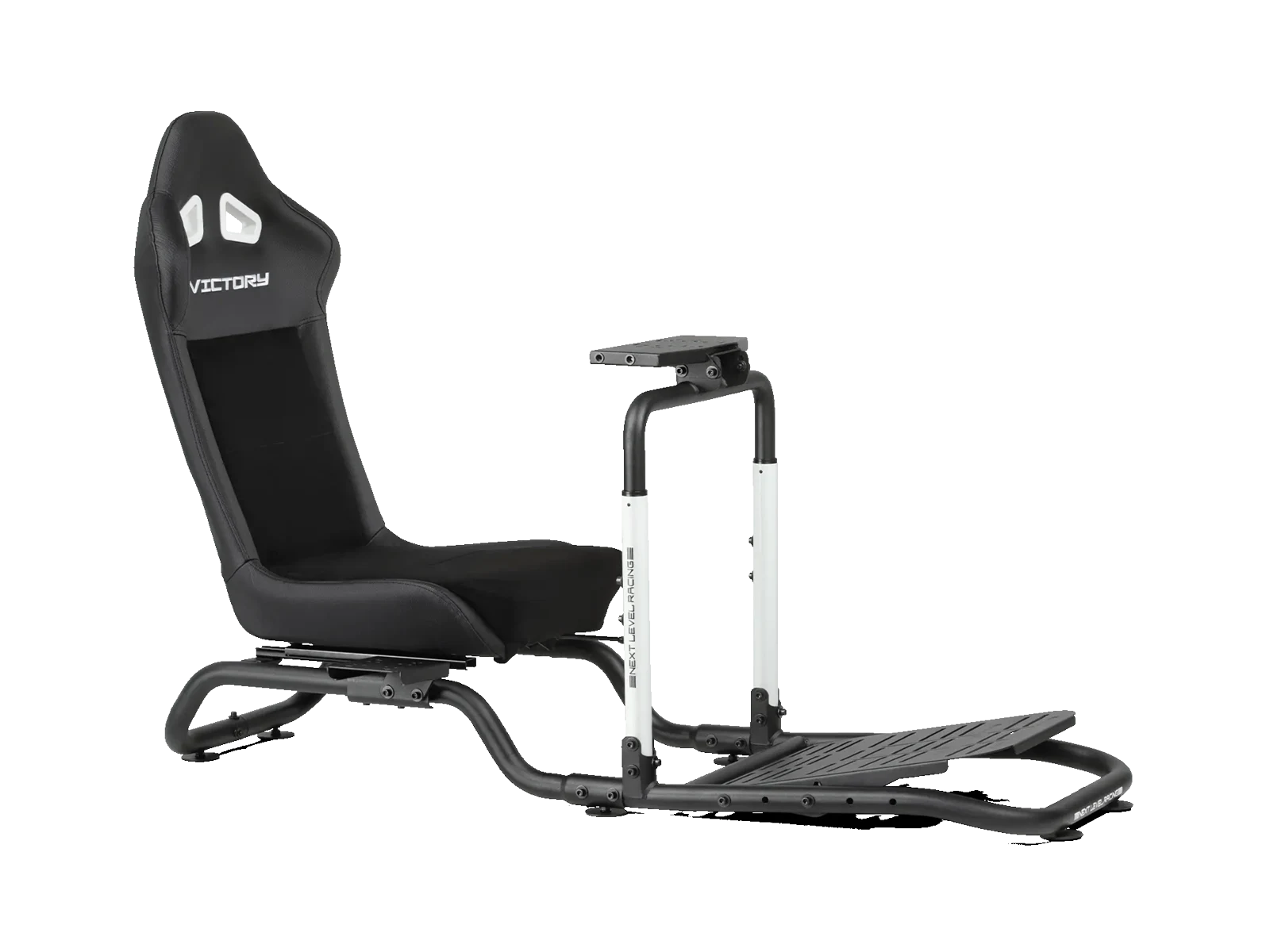
Put one hand on the wheel plate, press the brake as hard as you expect to use it, and watch the relative movement between seat, pedal deck, and wheel. A few millimeters at the wrong joint changes the braking reference every lap. Film the test in slow motion if your eyes cannot isolate the movement.
Phase 2: Buy the Brake You Can Repeat
The load-cell brake is the “oh, I get it now” upgrade. Potentiometer pedals measure pedal travel. Load cells measure pressure. Your leg remembers pressure better than millimeters of travel, especially when you are trail-braking into a corner and trying not to become abstract art.
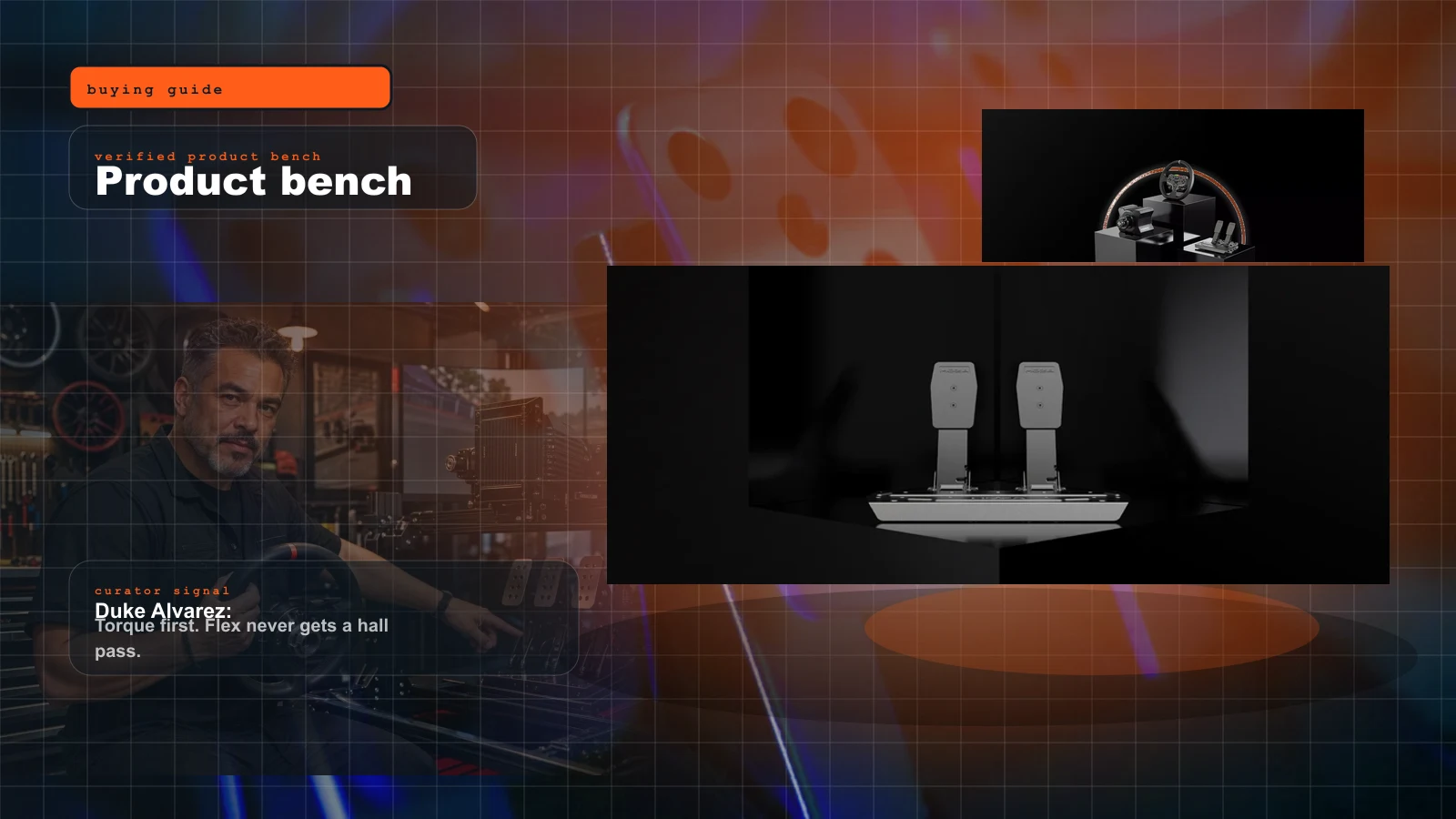
Budget path: Fanatec CSL LC or MOZA SR-P Lite with brake upgrade. Mid-tier path: MOZA CRP2. Serious path: Heusinkveld Sprint. If you race mostly GT, formula, iRacing, ACC, or Le Mans Ultimate, pedals will cut more lap time than a bigger wheelbase.
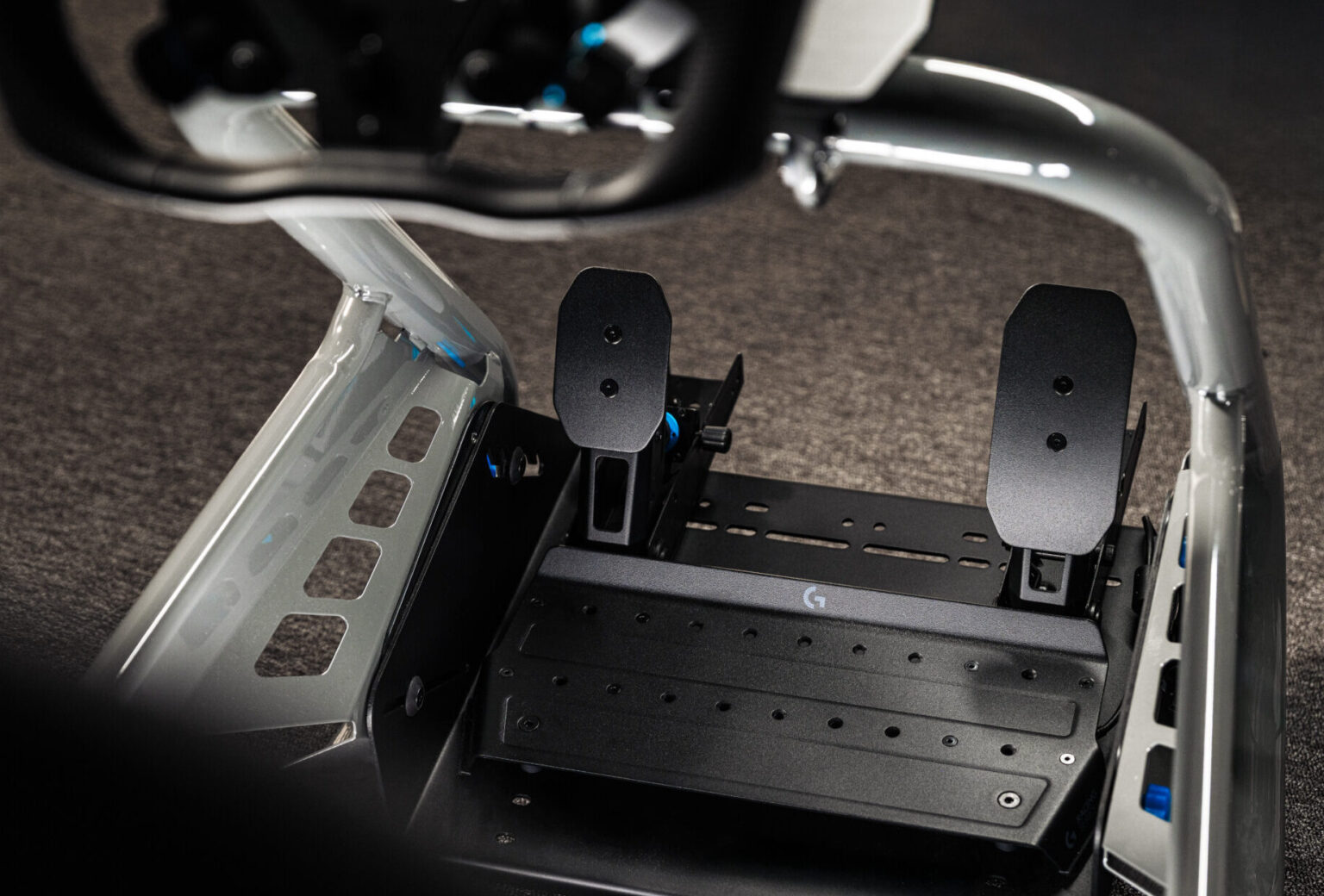
The installation detail people miss is not sensor technology; it is leverage. A load-cell brake is supposed to resist your leg. If the pedal plate bends, the seat rolls, or the whole stand lifts, part of the pressure goes into moving furniture instead of becoming a repeatable brake signal. Mount the pedals first, calibrate the maximum force you can apply without straining, then adjust elastomers and travel. Do not set a heroic 100-kilogram brake because a forum signature says so.
Phase 3: Pick an Ecosystem, Not Just a Wheelbase
MOZA, Fanatec, Simagic, Logitech, Asetek, Simucube - they all have good hardware. The question is whether the rims, quick release, pedals, console support, and software fit your next three upgrades.
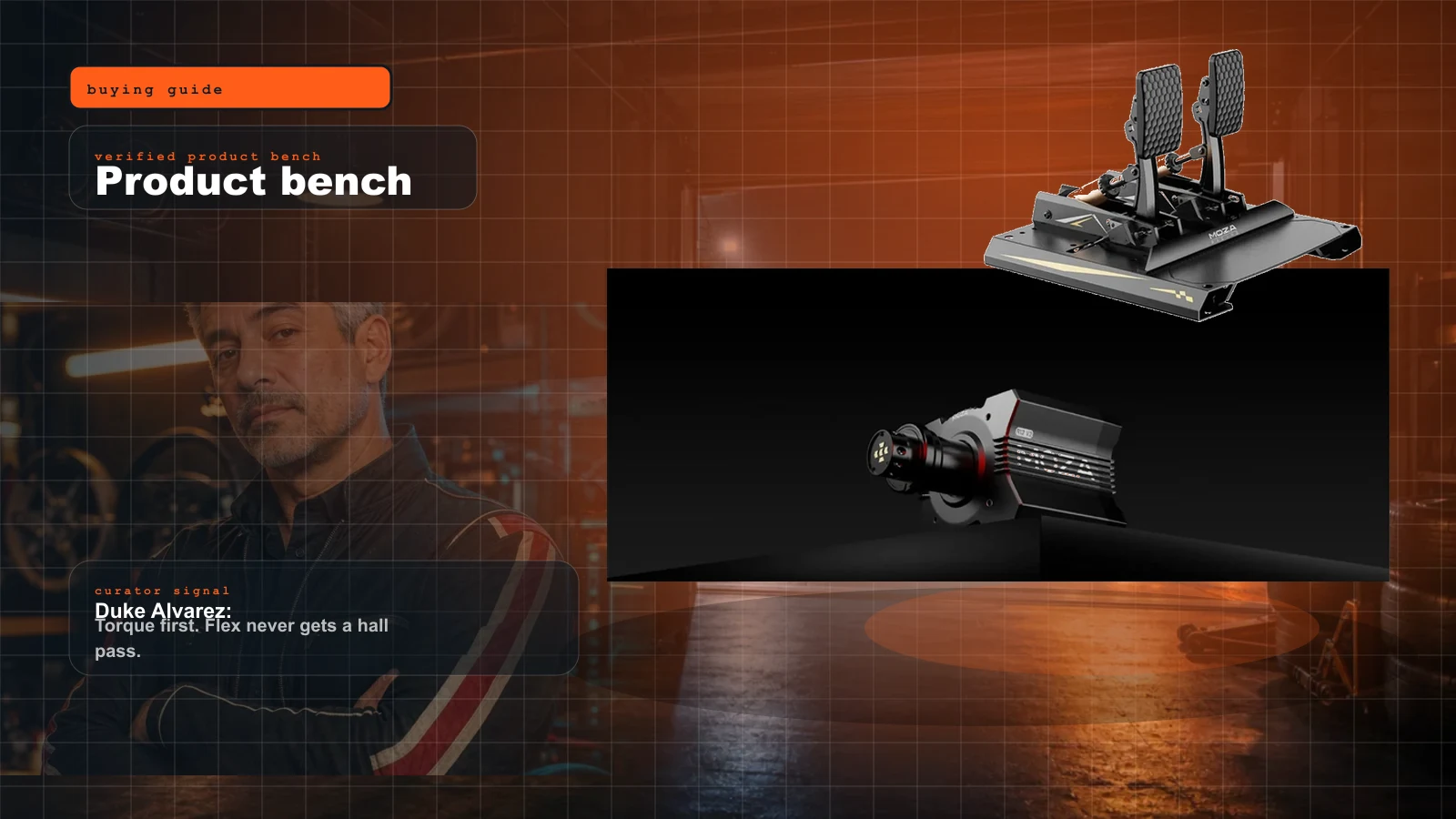
For most PC buyers in 2026, the sweet spot is 5-12 Nm. The MOZA R5 is the clean value bundle. The MOZA R12 hits the 12 Nm middle. The Simagic Alpha Evo line is the feel-per-dollar disruptor. Fanatec still matters hard for PS5. Logitech G PRO is the polished one-box console/PC route.
The sale-price starter: Logitech G923
The Logitech G923{:target=“_blank” rel=“sponsored nofollow noopener” data-buy-product=“Logitech G923”} remains the low-risk first wheel when it is on a serious sale. You get wheel, three pedals, mature console and PC support, desk clamps, bolt points, and years of setup knowledge. Its dual-motor gear drive is noisier and less detailed than direct drive, and the brake measures travel rather than load. That is acceptable for a habit test; it is not a reason to pay direct-drive money for it.
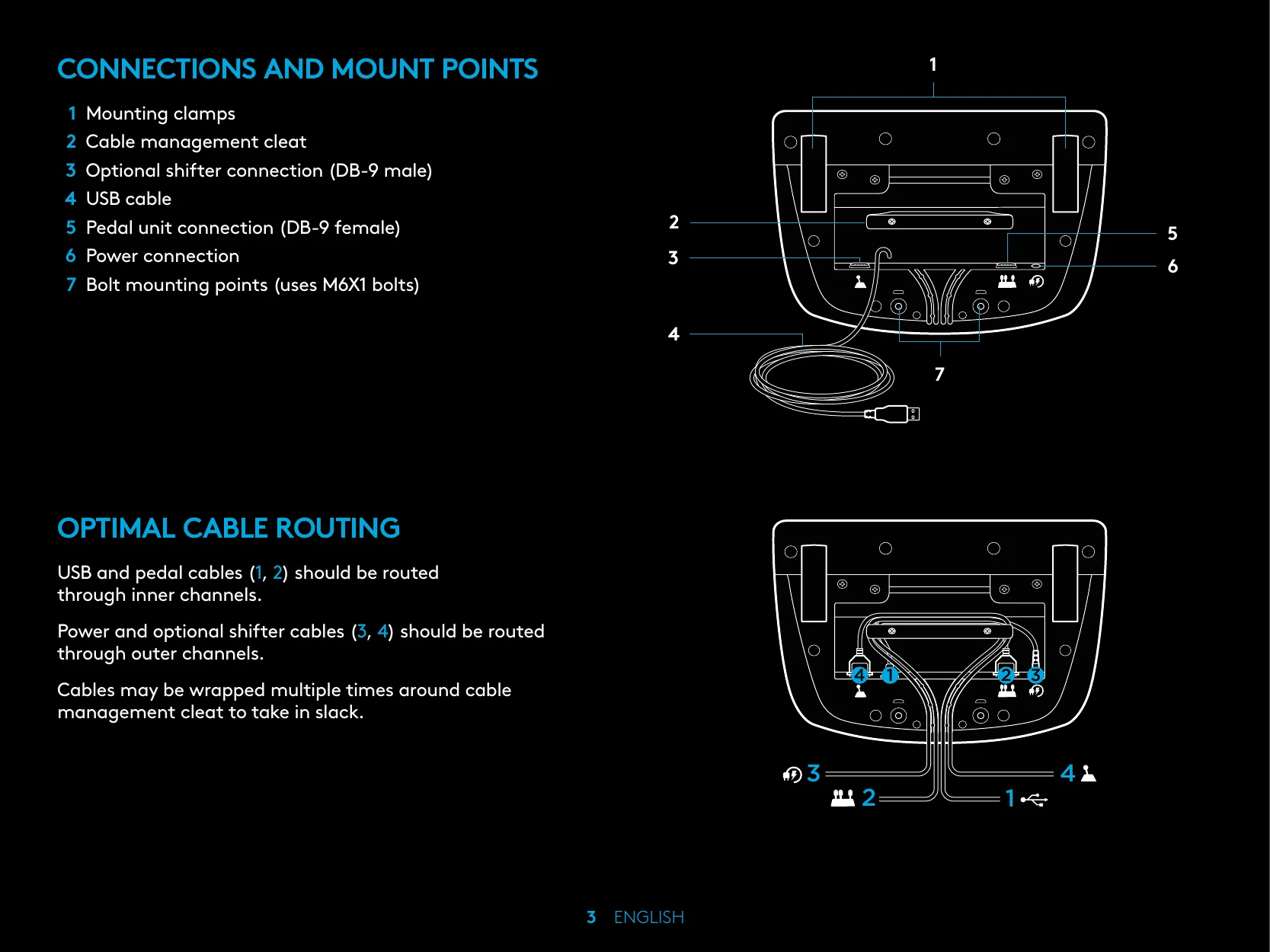
The official manual is better than most listings. It shows separate inner cable channels for USB and pedals, outer channels for power and the optional shifter, M6 mounting points, the automatic lock-to-lock calibration sequence, and the G HUB requirement for PC force feedback and RPM features. It also warns that TrueForce depends on game integration. That last sentence matters: a logo on the wheel does not guarantee the same effect in every title.
The complete Xbox direct-drive box: VelocityOne Race
The Turtle Beach VelocityOne Race{:target=“_blank” rel=“sponsored nofollow noopener” data-buy-product=“Turtle Beach VelocityOne Race”} is compelling because the box is unusually complete: a 7.2 Nm direct-drive base, wheel, load-cell three-pedal set, Race Management Display, and separate control unit. For an Xbox owner who wants one order to create a serious step up, that completeness can be worth more than the component-by-component purity of a PC ecosystem.
The caveat is software and title support. Turtle Beach publishes a current game-compatibility matrix that separates force feedback, live display telemetry, control profiles, and control-unit behavior. Read the row for the game you actually play. Then update firmware before tuning. Owner sentiment is split for a reason: the in-game experience can be excellent, while the full-price value and early software friction remain legitimate objections.
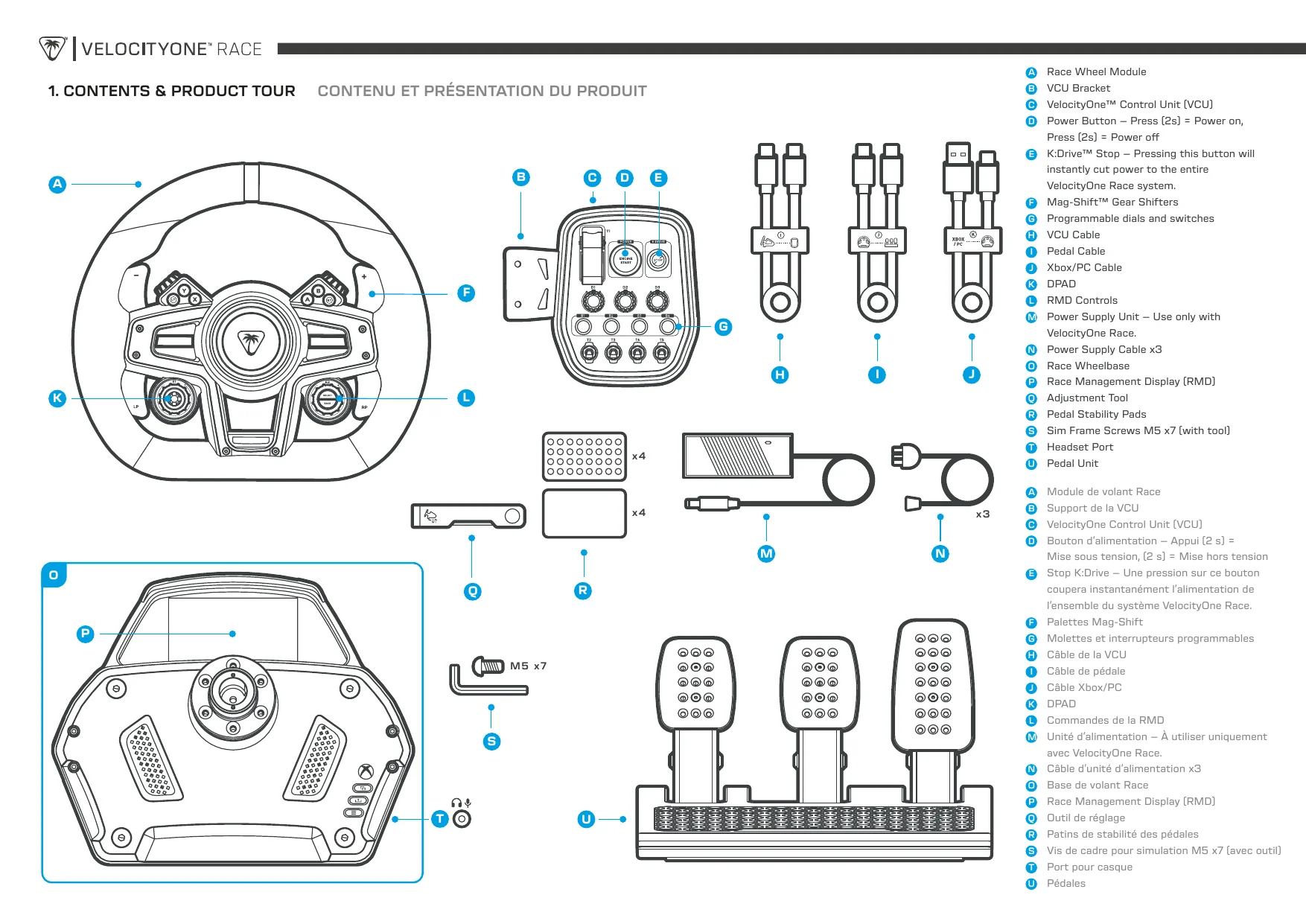
The quick guide also exposes the installation load: wheel module, control-unit bracket, control unit, wheelbase, display, adjustment tool, pedal cable, PC/Xbox cable, power supply, pedal stability pads, frame screws, and the three-pedal unit. This is not one USB cable wearing a dramatic product photo.
Phase 4: Fix the Picture
Single ultrawide, triples, or VR all work. The crime is spending $2,000 on hardware and then running a field of view that makes every apex look like it lives in another county. If you want repeatable driving, configure real FOV, get the monitor close, and mount it so the wheelbase does not slowly migrate it into a modern art exhibit.
Triples are still the king for awareness. Ultrawide is cleaner and easier. VR is magic when your PC and stomach agree to the treaty. Read the triple vs ultrawide vs VR guide before buying a display that does not fit your room.
Phase 5: Add Tactile Before Motion
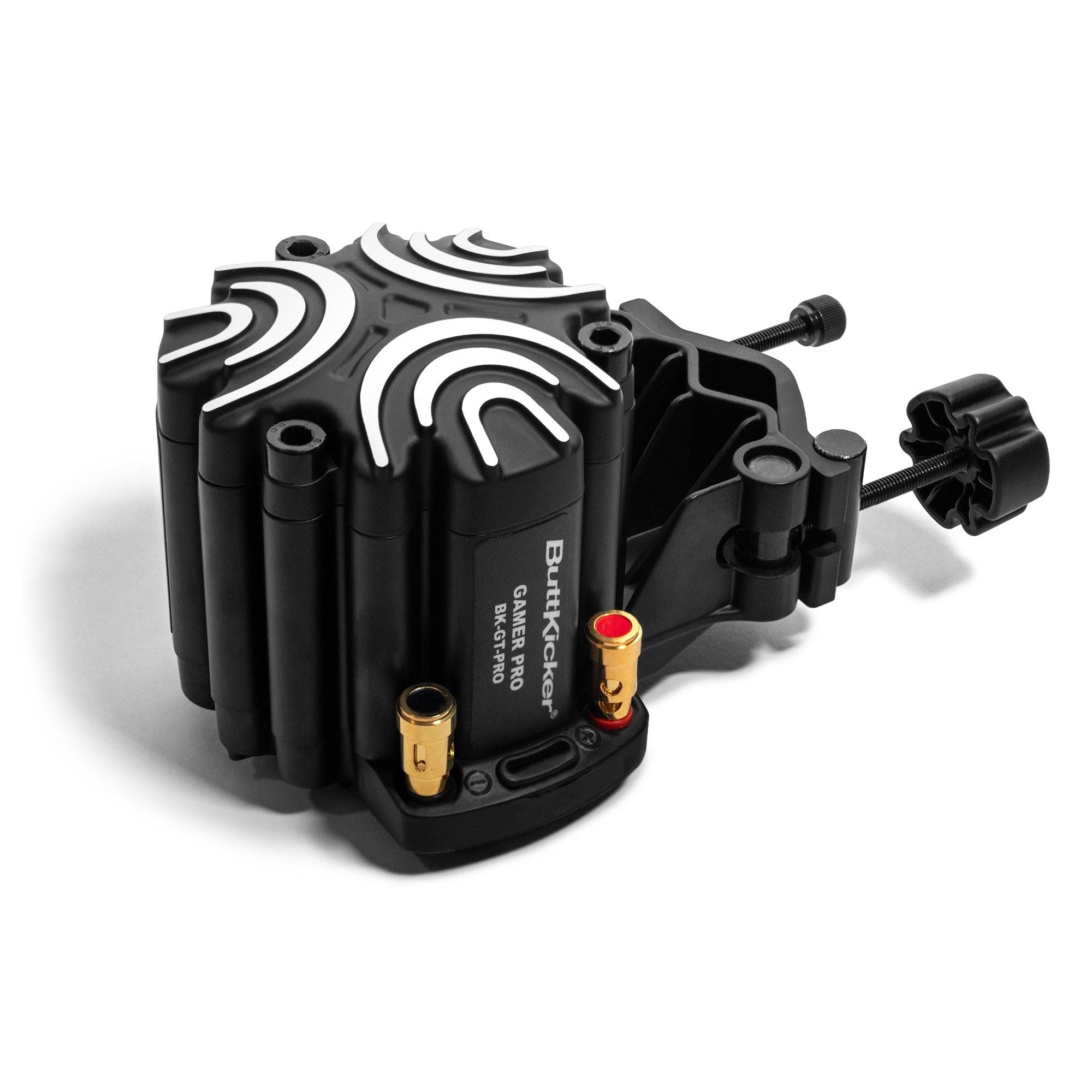
A single seat shaker or pedal shaker can give you kerbs, engine vibration, shifts, ABS, and tire slip through SimHub. It is not “real motion.” It is also wildly high ROI. Full motion is brilliant, but it amplifies every weakness in the cockpit, cable routing, and safety plan.
Start with fewer effects than you think. Put the useful information on separate channels when possible: front tire lock and ABS near the pedal deck, rear slip and shift impact near the seat. Engine vibration can make a demo feel alive while masking the events that actually help the driver. A disciplined profile is quieter and more informative than the carnival setting.
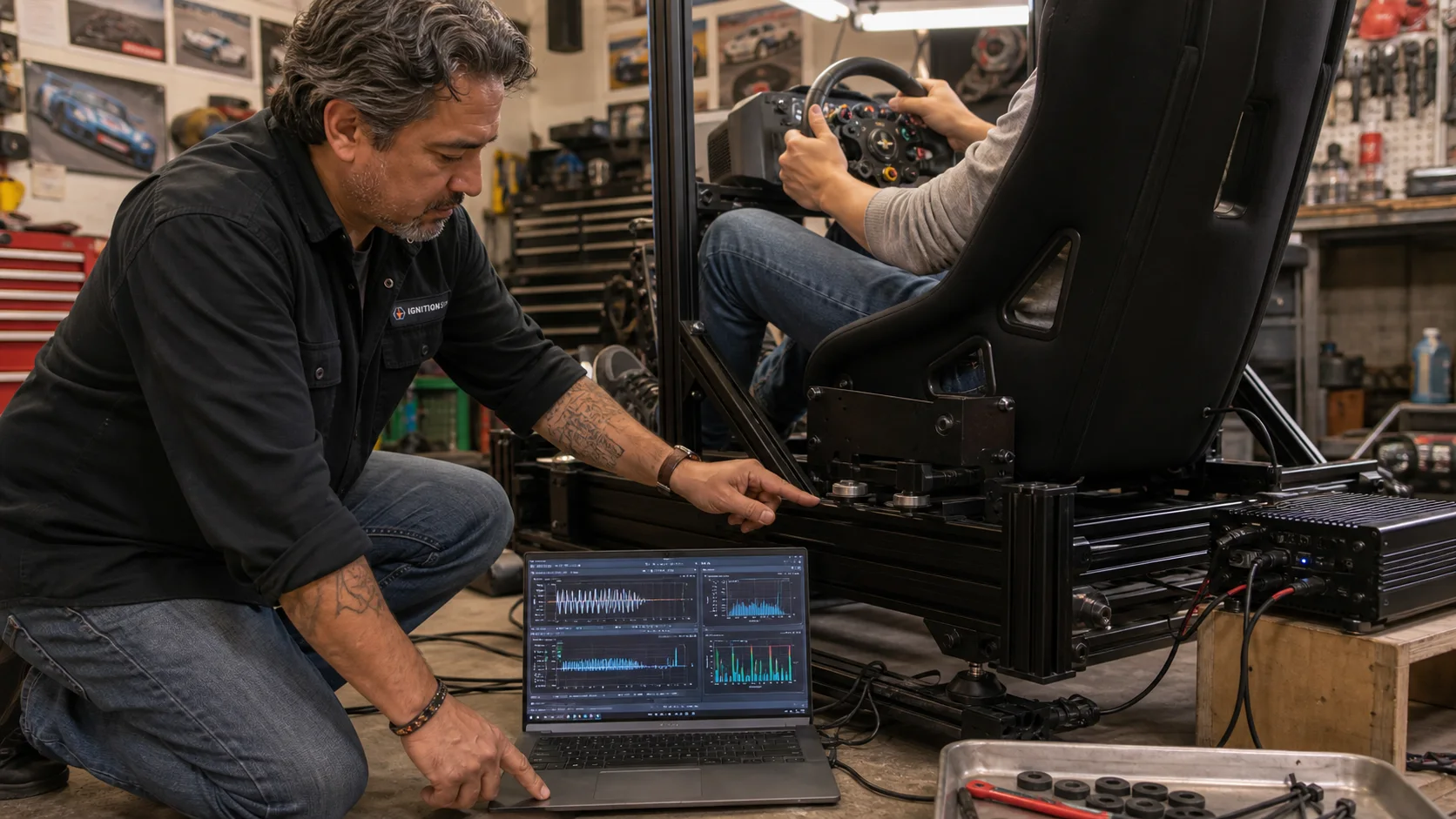
The Three Smart Carts
Apartment build: GT Omega Apex, MOZA R5 bundle, load-cell brake upgrade, single ultrawide, one seat shaker.
Serious PC build: Trak Racer TR80, MOZA R12 or Simagic Alpha Evo, MOZA CRP2 or Heusinkveld Sprint pedals, triples or 49-inch ultrawide, two-channel tactile.
No-regrets long game: Sim-Lab P1X, Simagic/Simucube/Asetek tier base, Heusinkveld or hydraulic pedals, triples, button box, shifter/handbrake only if your discipline uses them, tactile first, motion last.

Commission the rig before chasing lap time
Use one short test car and track while the hardware is changing. Update firmware with the base connected directly to the PC. Confirm wheel center, full pedal travel, and emergency-stop behavior before launching a race. Set the game’s steering lock correctly, then lower force-feedback strength until clipping disappears. Only after the mechanical layer is stable should you adjust damping, friction, road effects, or per-car profiles.
For pedals, calibrate in the manufacturer’s software first and the sim second. Wear the shoes or socks you normally drive in. Press the brake ten times without watching the input bar; if the peaks wander wildly, the problem is more likely seating, deck movement, or an unrealistic force target than the sensor.
Finally, export the working profile and photograph every cable path. A rig without a recovery plan is one operating-system update away from becoming furniture.
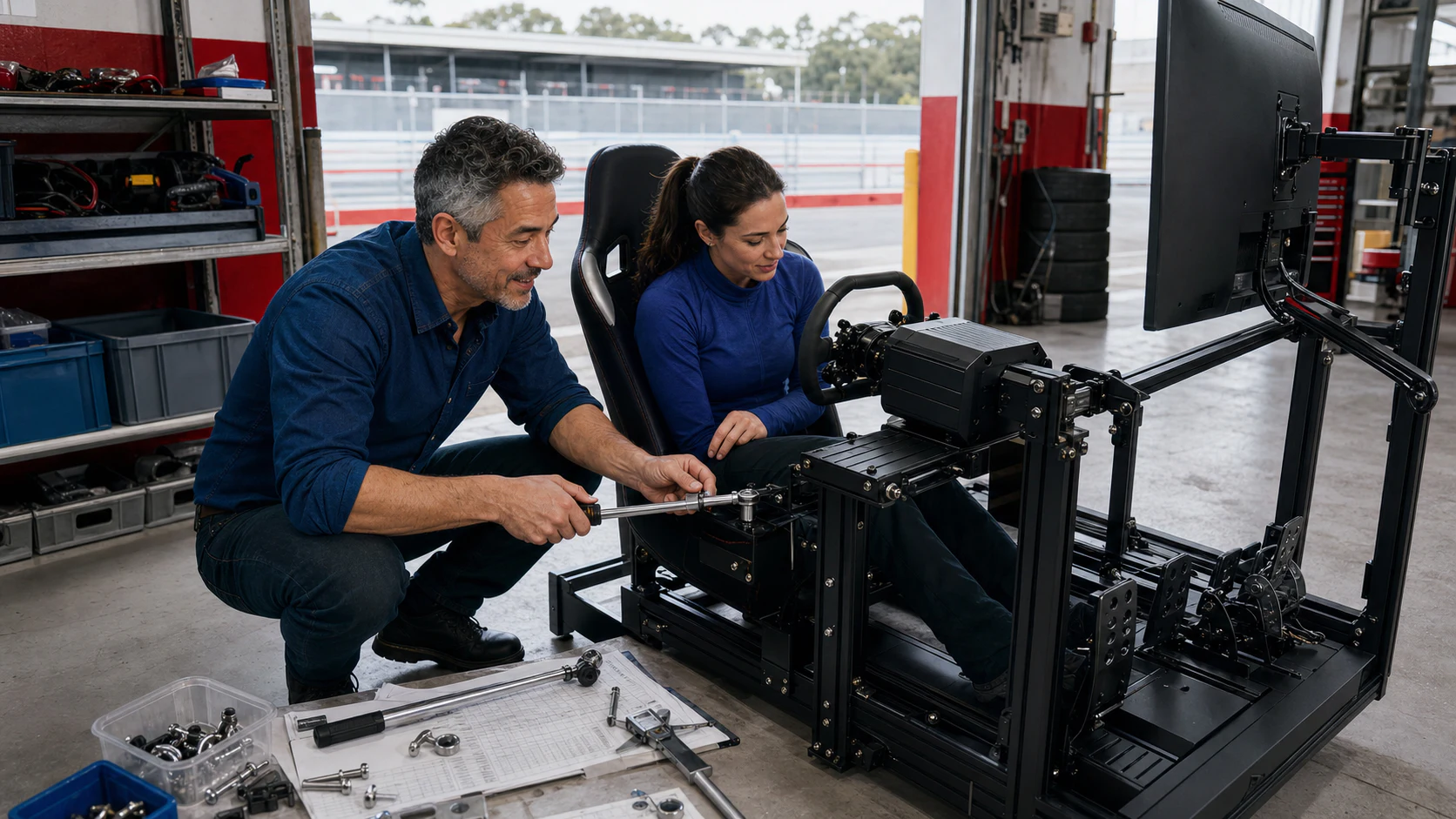
Exact Amazon picks
Bottom Line
Duke’s rule is boring because it works: rigidity, pedals, wheelbase, picture, immersion. If you follow that order, every upgrade makes the last one better. If you buy peak torque first, the next sound you hear may be your desk developing opinions.
Sources checked
Source review date: July 17, 2026. Exact Amazon ASIN pages were opened before publication. Community observations are paraphrased into IgnitionSim’s voice; product specifications and setup sequences are anchored to current manufacturer material.
- Logitech G923 official setup guide - mount points, cable routing, calibration, G HUB, TrueForce support, and pedal configuration.
- Turtle Beach VelocityOne Race product page - 7.2 Nm base, load-cell pedals, included control unit, mounting and platform support.
- Turtle Beach VelocityOne Race quick guide - package contents, connections, power, safety stop, and first setup.
- VelocityOne Race game compatibility guide - title-by-title profiles, force feedback, telemetry and control-unit support.
- Next Level Racing Victory support page - dimensions, 10 Nm rating, hardware compatibility, package contents, and assembly material.
- MOZA R5 support page - current software, firmware, manuals and troubleshooting.
- MOZA R12 wheelbase - current midrange ecosystem specifications.
- Fanatec direct-drive range explainer - ecosystem and console distinctions.
- Simagic Alpha Evo lineup - current direct-drive family and upgrade context.
- Playseat Trophy product and support - fixed-frame fit and product-class comparison.
- r/simracing buying guide - recurring beginner path and ecosystem context.
- r/simracing monthly setup discussions - current cockpit rigidity, pedal, direct-drive and ownership complaints.
- Sim Racing Cockpit pedal guides - pedal technology and upgrade context.
- Boosted Media hardware reviews - current wheelbase, cockpit and pedal testing context.
Key takeaways & quick answers
IgnitionSim is reader-supported. When you buy through links on our site we may earn an affiliate commission at no extra cost to you — it never changes our verdict or your price. As an Amazon Associate we earn from qualifying purchases.
Keep reading
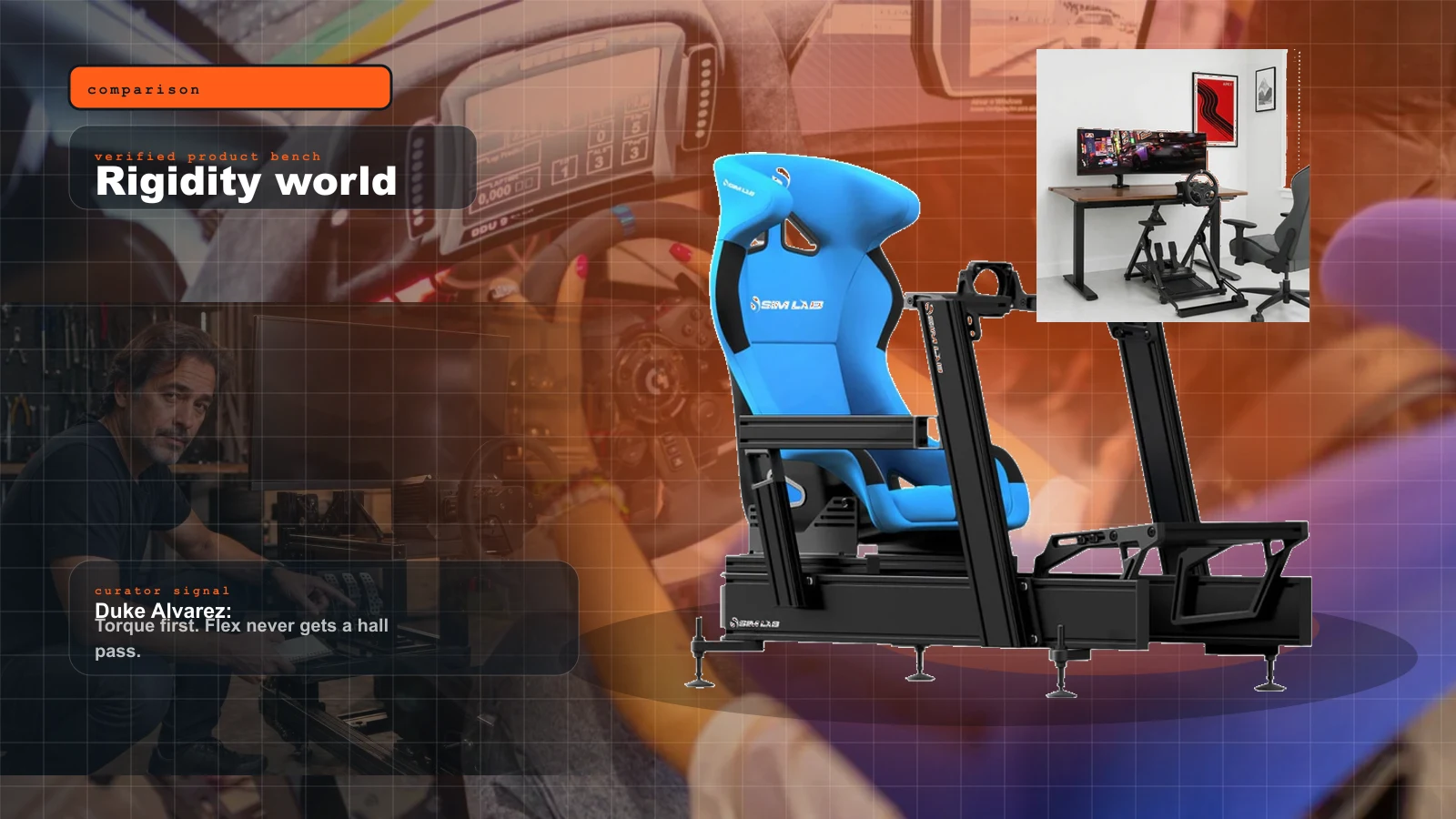
Wheel Stand vs Fixed Cockpit vs 8020 Rig: The 2026 Rigidity Guide for Direct Drive and Load Cells
A stronger wheelbase does not fix a weak frame. This is the cockpit decision that decides whether your pedals, torque, and future motion upgrades behave.
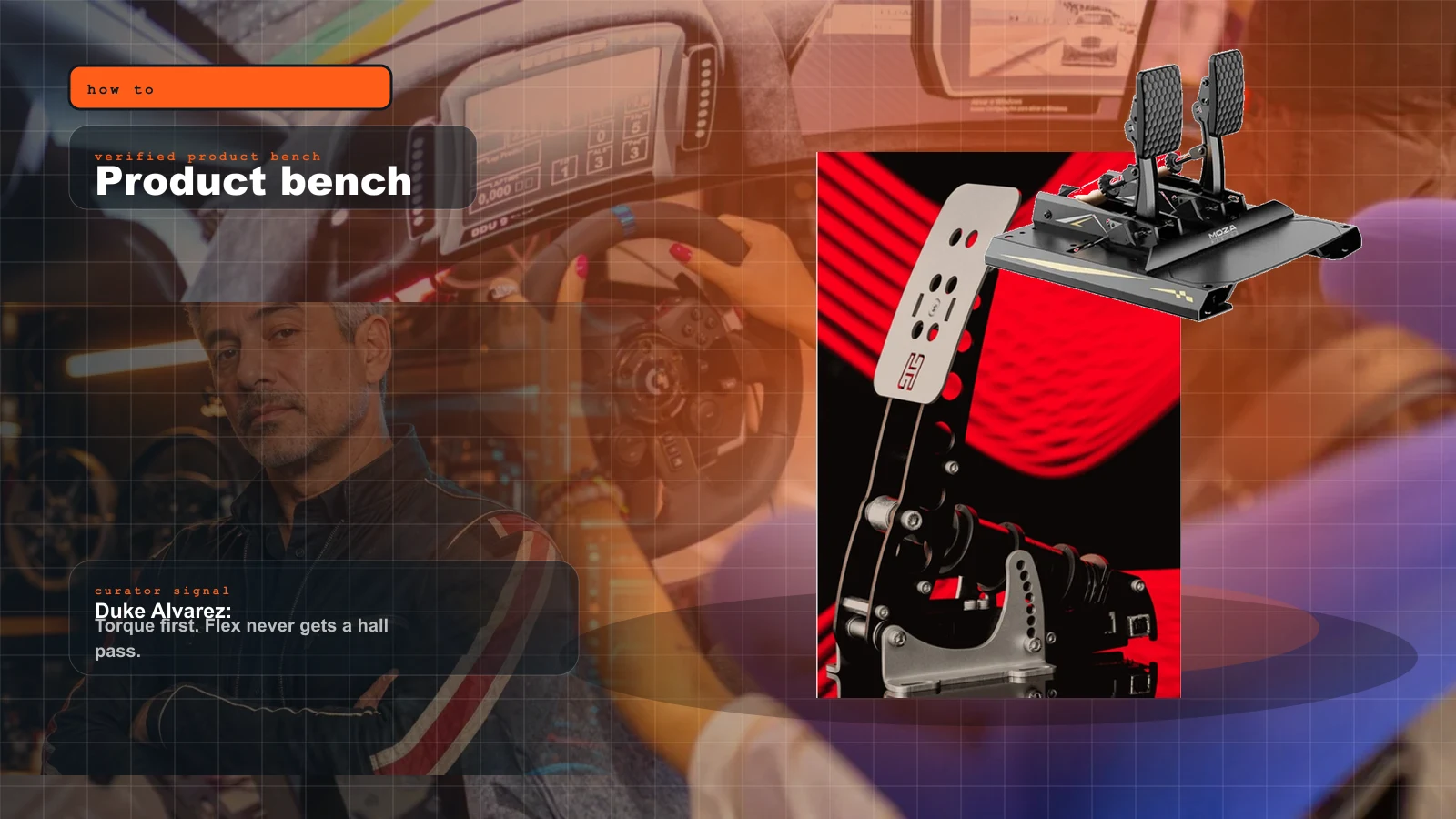
Pedals Over Power: Why Load-Cell Pedals Beat a Stronger Wheelbase in 2026
A consistent brake wins more lap time than raw torque. The load-cell pedal path from budget to luxury, how to set the brake, and when hydraulic or active is worth it.
The Best Sim Racing Setup Under $1,000 in 2026 (Full Rig)
$1,000 buys a genuine direct-drive rig in 2026 — a 12Nm base, a load-cell brake and a rigid mount you won't outgrow in a year. Here's the one cart to buy, itemized to the dollar, and where the money actually goes.
The Cheapest Direct Drive in 2026: Where Real DD Starts, and the Value Sweet Spot Just Above
Real direct drive now starts under $300. Here's what the cheapest bases actually cost, exactly what you give up at the bottom, and the value sweet spot one rung up that most racers should stretch for.