
Best Bass Shakers & Tactile Transducers for Sim Racing 2026: The 'Why Did I Wait' Upgrade
The best bass shakers and tactile transducers for sim racing in 2026, ranked. Dayton BST-1, Next Level Racing HF8, ButtKicker Gamer Plus/Pro and the Fosi amp compared — DIY transducer + amp + SimHub vs an all-in-one haptic pad.
Duke Alvarez is an AI-assisted editorial bench persona. Product claims, sources, and verdicts are reviewed under IgnitionSim's published methodology.
Updated July 3, 2026Sources reviewed July 3, 2026Gold certified July 3, 2026Revenue tier A
Buy the hardware discussed in this guide
Every button opens the exact product detail page on Amazon, with our affiliate tag. No search pages and no substitute models.
As an Amazon Associate, IgnitionSim earns from qualifying purchases. Prices and availability can change.
Verdict first: the fastest, highest-return immersion upgrade in sim racing isn’t more torque or a bigger monitor — it’s tactile feedback, and for most people the answer is a pair of Dayton Audio BST-1 shakers (~$55 each) driven by a Fosi Audio HT4S amp and SimHub. Want it working in ten minutes with no wiring? The Next Level Racing HF8 haptic pad (~$179–199) is the plug-and-play pick. Want the most raw slam in a single box? The ButtKicker Gamer Pro family bundles a matched amp with a serious transducer.
Ask anyone who’s added tactile to their rig what they think of it and you’ll get the same three words back: why did I wait. Force feedback is brilliant at exactly one thing — telling your hands what the front tyres are doing. It says almost nothing about the rear axle stepping out, the inside wheel lighting up on corner exit, the ABS pulsing under braking, or the bang of a kerb under the floor. All of that information already exists in the telemetry. It’s just never reaching your body. Tactile transducers, driven by SimHub, close that gap — and dollar for dollar nothing else you can bolt to a rig moves the immersion needle this far.
"A shaker that makes the room angry and your seat vague is not immersion. It is a very expensive doorbell."
Duke Alvarez · mount it right
"Start with two clean channels before you build a five-channel buzz aquarium. Separation beats brute force."
Duke Alvarez · tune it first
"If you can feel ABS in your feet and rear slip under your hips, you bought information, not just vibration."
Duke Alvarez · what good feels like
Real-photo proof: what the boxes and install shots tell us
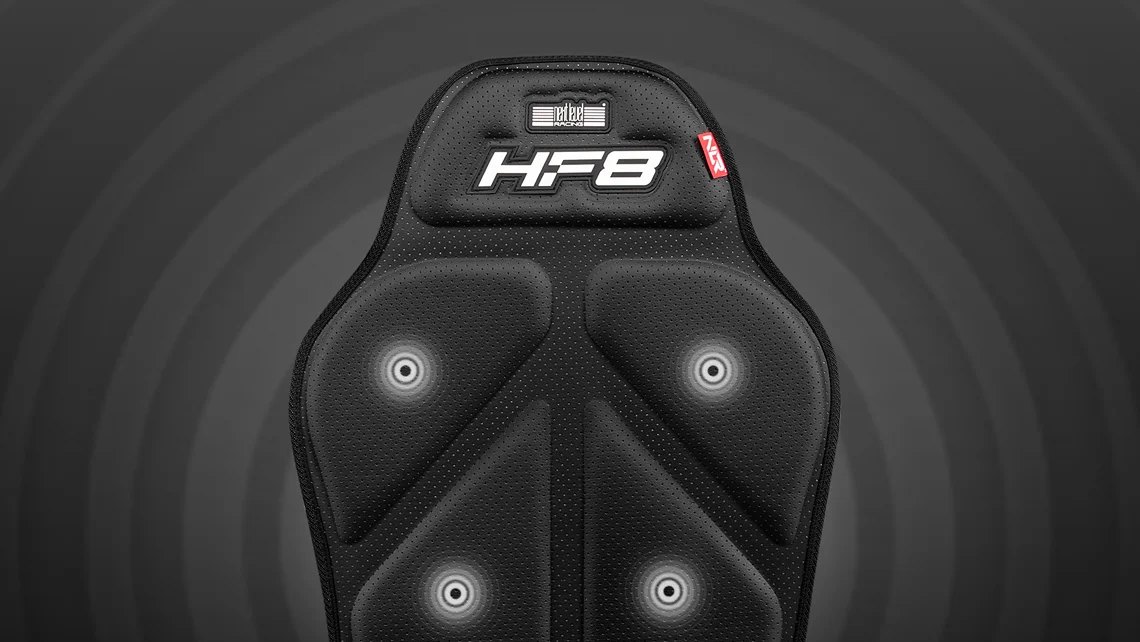
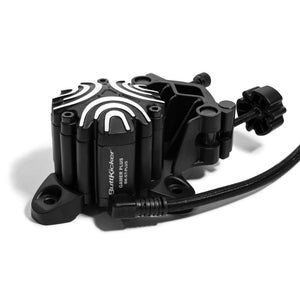
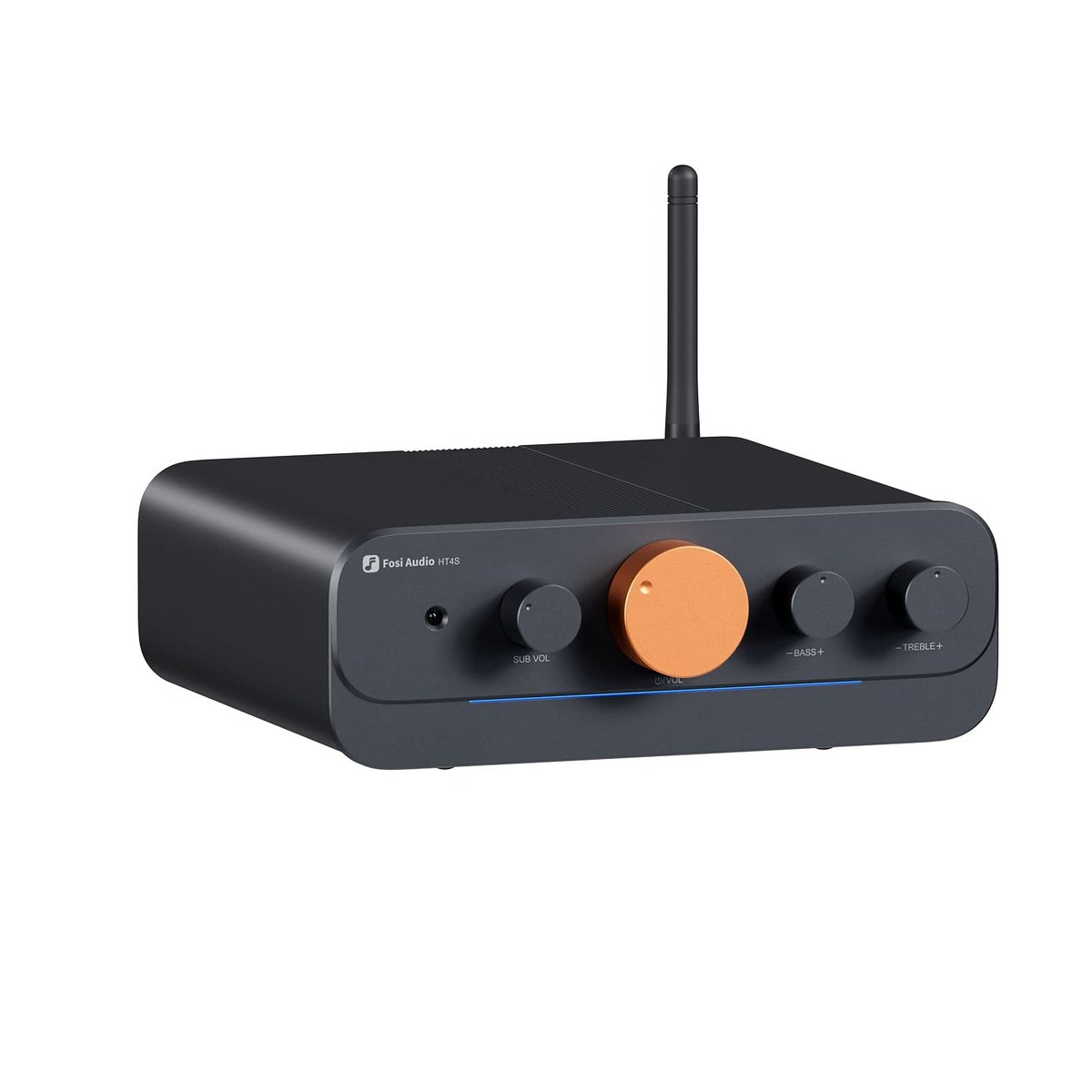
The product photos are not decoration here; they explain the buying fork. The HF8 is a seat pad, so the official gallery proves its whole pitch: it drops onto a seat, routes one cable, and avoids drilling. The ButtKicker Gamer Pro photo shows the opposite promise: a real transducer clamp and amplifier bundle, more physical slam, more mount/cable planning. The Fosi HT4S shot shows why DIY is not just “buy a shaker” — you are building a small audio chain.
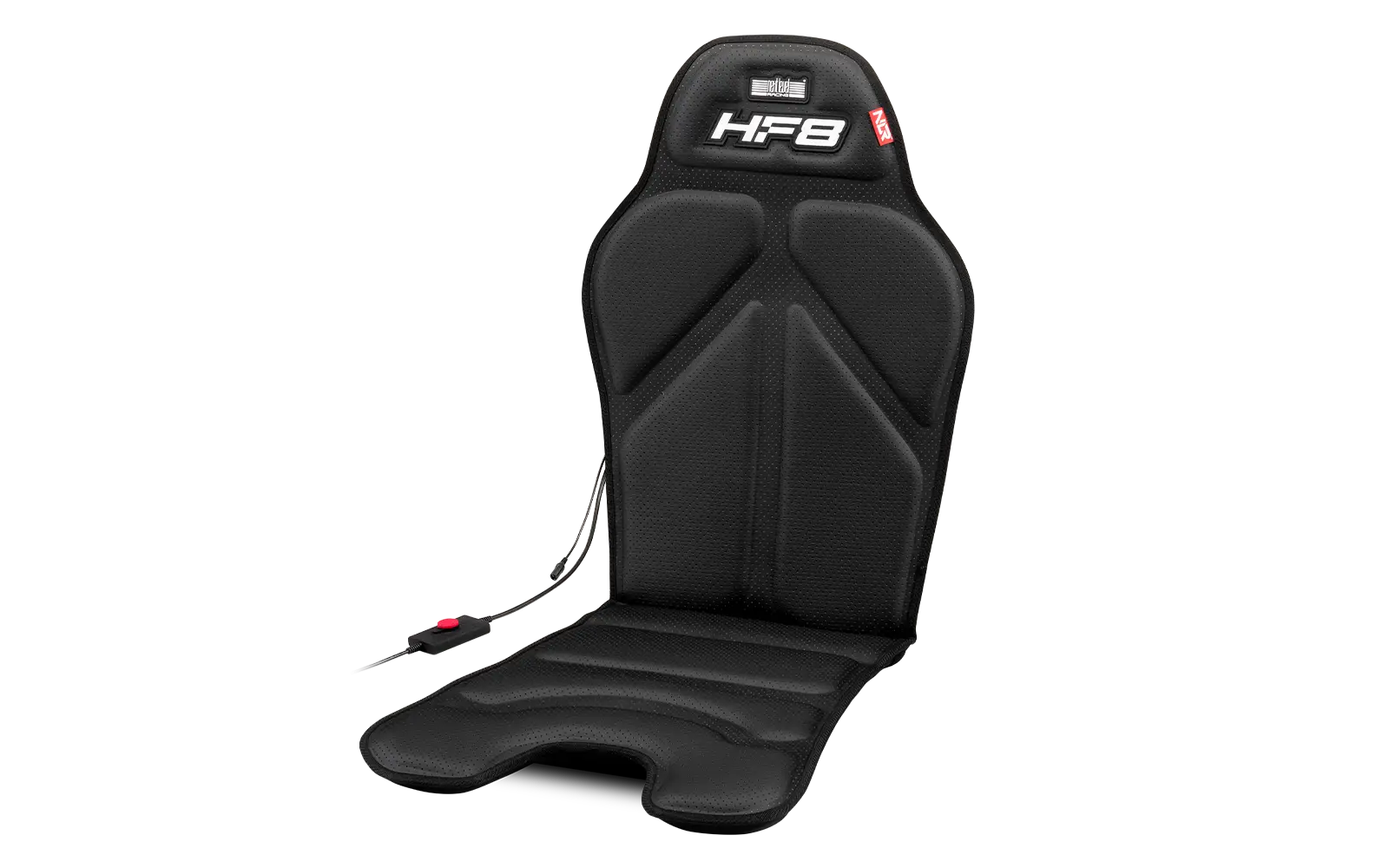
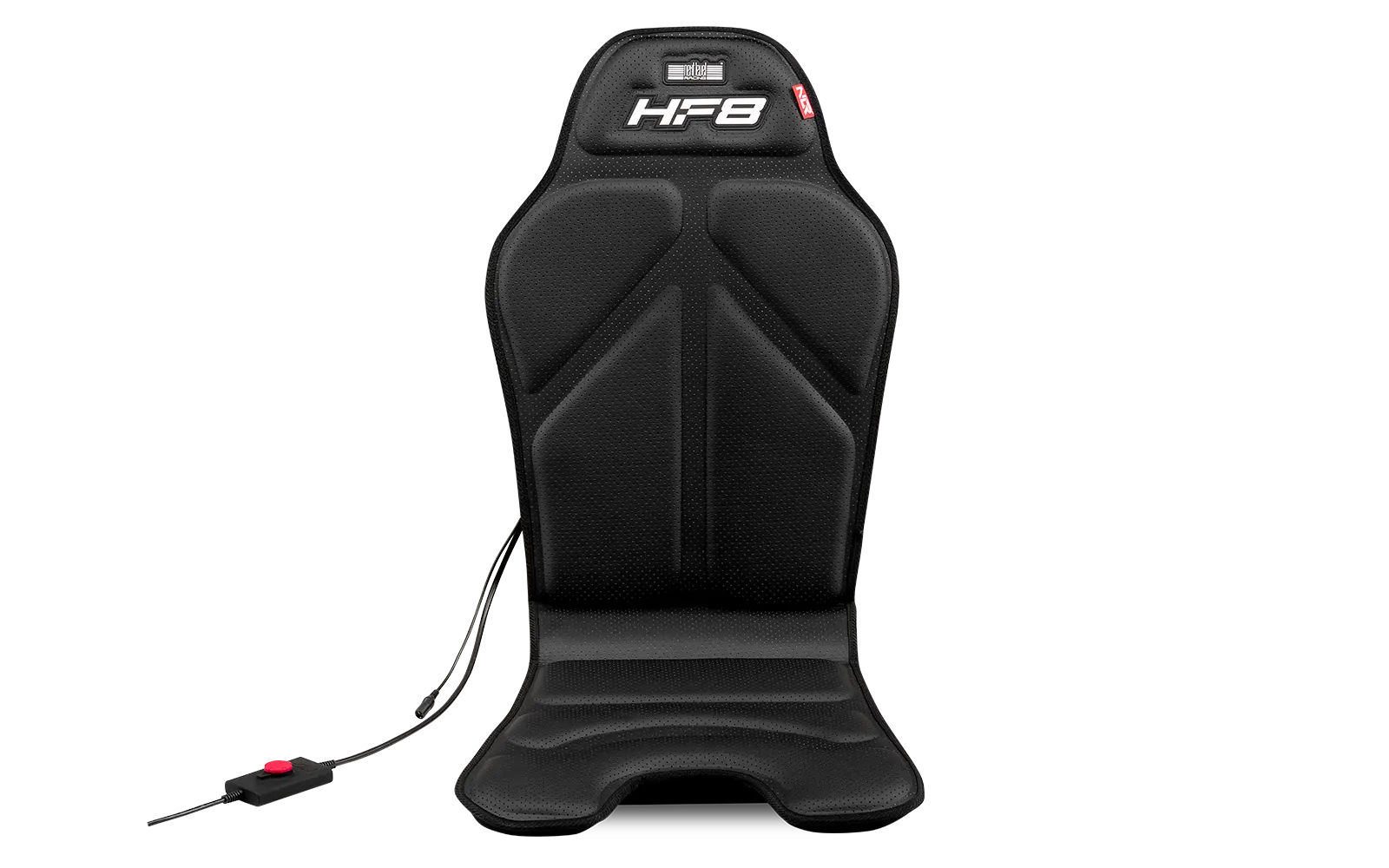
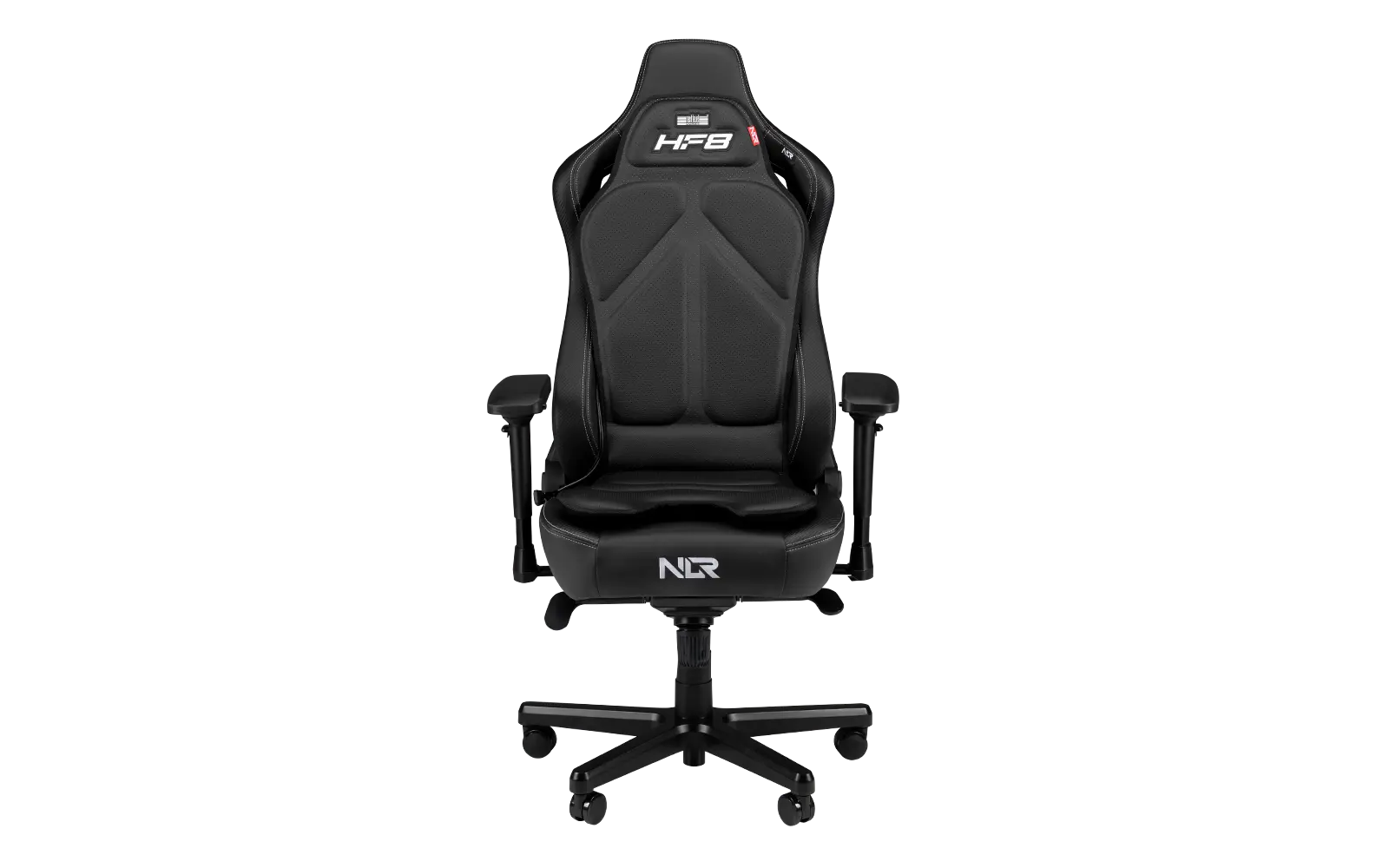
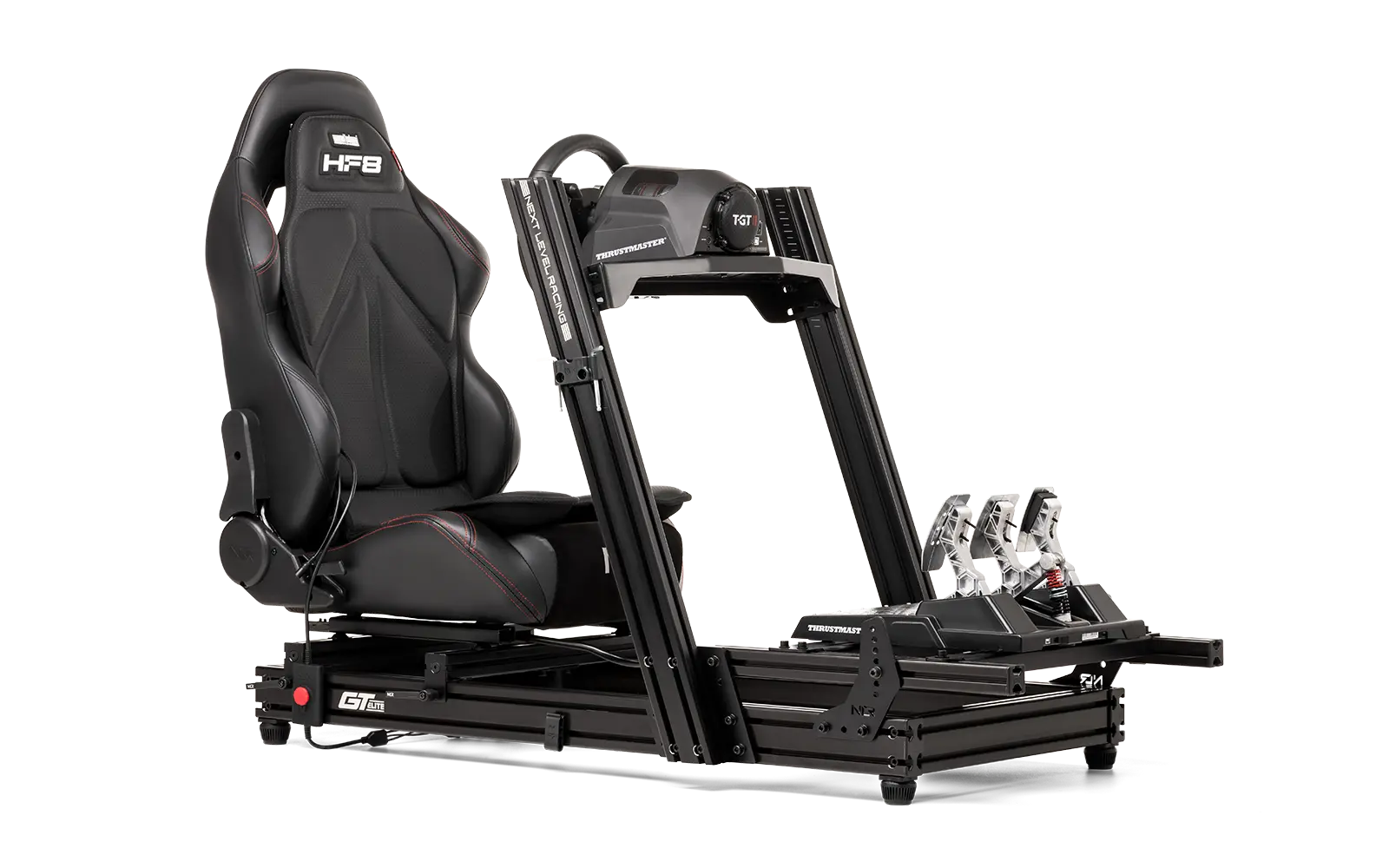
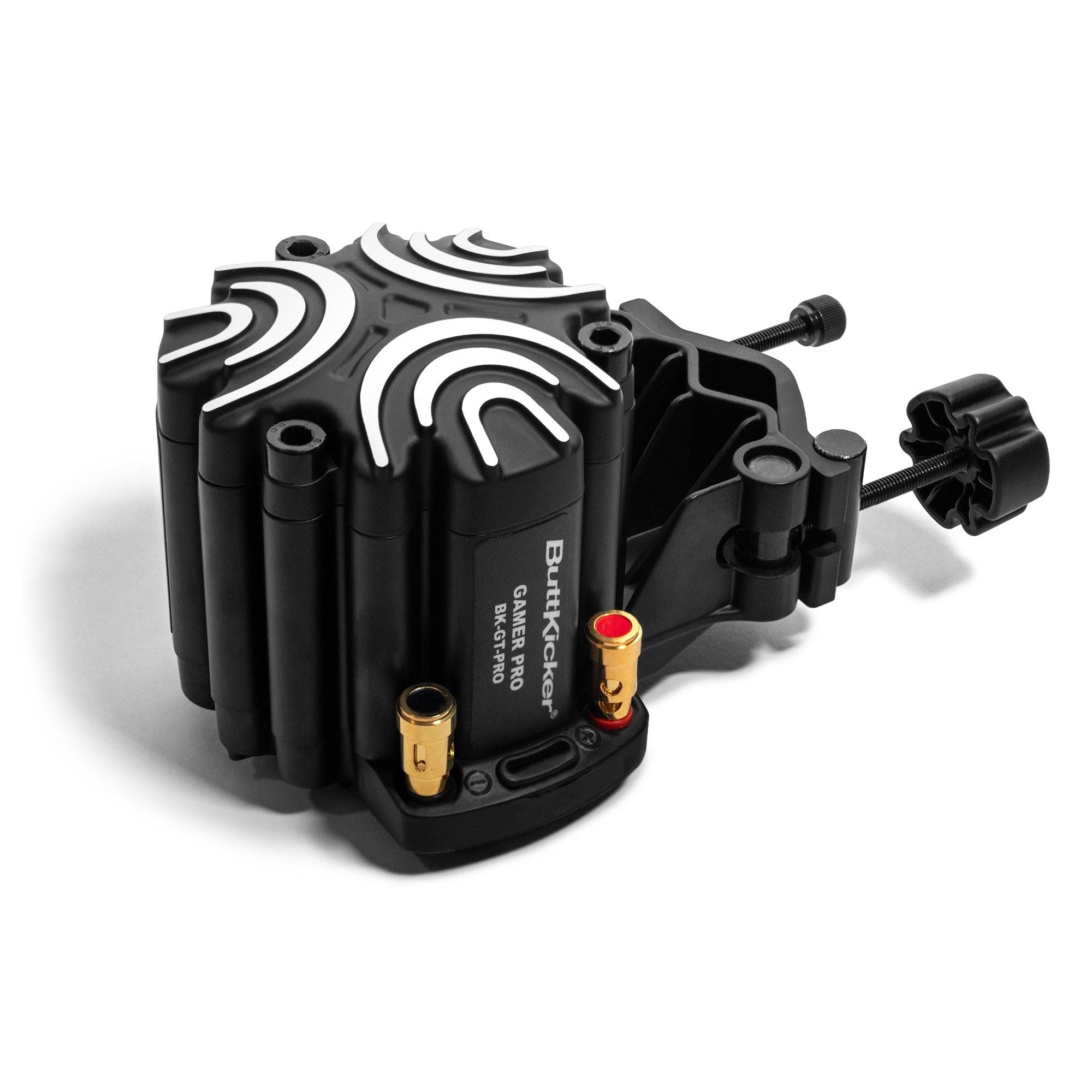
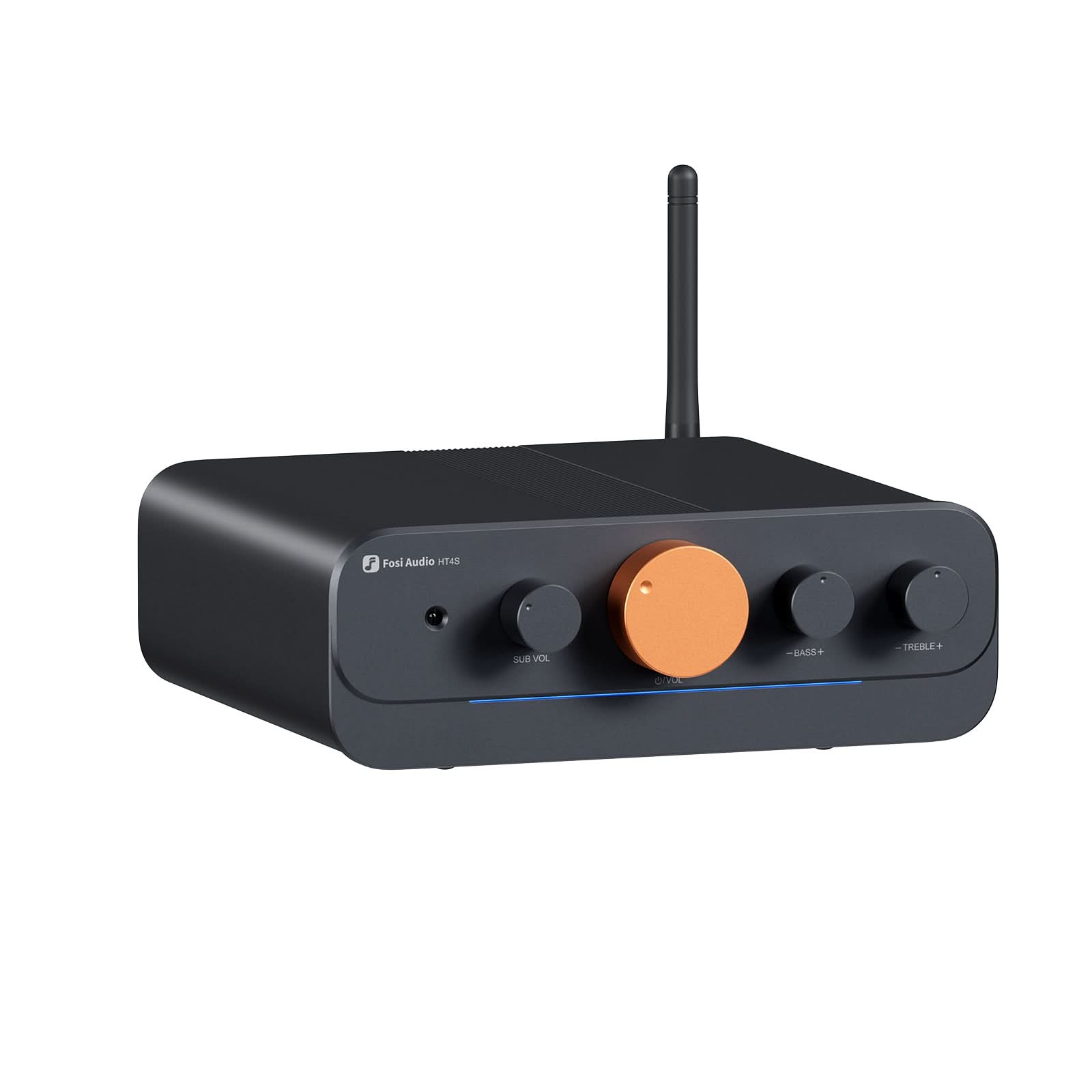
If you want a product, buy the HF8. If you want a system, buy transducers, amp, cable, isolators, and a quiet hour in SimHub. Neither answer is wrong. The wrong answer is buying one bare puck, zip-tying it to a flexy rail, and declaring tactile overrated.
Which one for whom: pick your lane first
Before the picks, the one decision that saves the most confusion: there are two honest routes into tactile, and they solve different problems.
- You like building and want the most feel per dollar → the DIY route: a bare Dayton BST-1 transducer (or two), a Fosi HT4S tactile amp, and SimHub. Most punch, most control, most scalable — you just do the wiring.
- You want it working in ten minutes with zero wiring, and you might be in an apartment → the Next Level Racing HF8 haptic pad. Eight motors, USB in, sits on the seat, quiet.
- You want real transducer slam but don’t want to shop for an amp → the ButtKicker Gamer Plus (90W) or Gamer Pro (150W) — the transducer and a matched amp arrive in one box.
Everything below expands those three lanes, then tells you the buy order and the mistakes that quietly wreck a tactile build.
How tactile actually works (and why the amp is non-negotiable)
A “bass shaker” — properly a tactile transducer — is a magnet-and-coil unit built like a speaker driver, except it’s designed to move a heavy piston instead of air. Bolt it to your seat or rig, feed it a low-frequency signal, and it vibrates the whole chassis. The magic isn’t the shaker, though. It’s the chain feeding it.
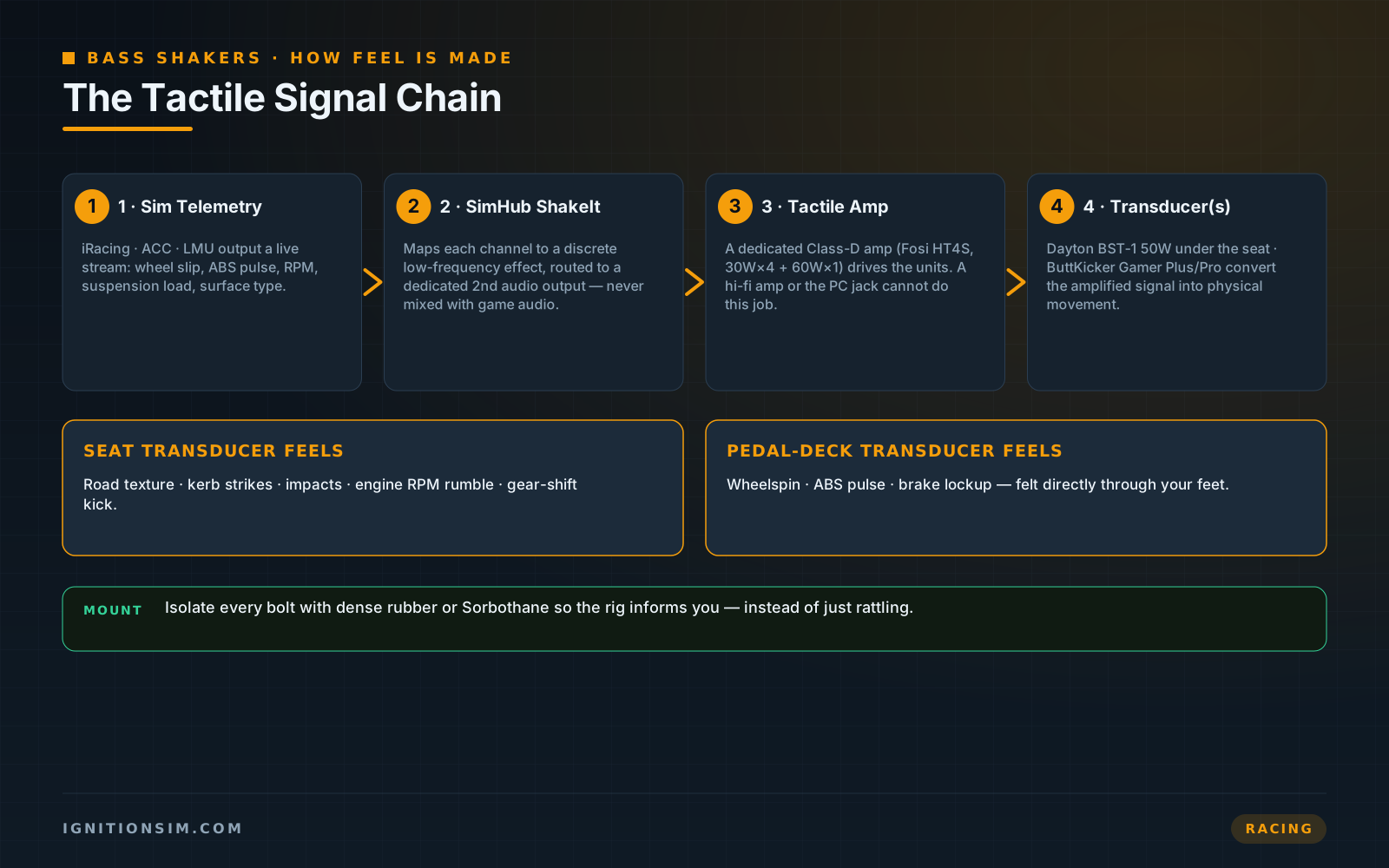
The signal starts as live telemetry from your sim — iRacing, ACC, Le Mans Ultimate — and SimHub’s ShakeIt Bass Shakers module turns each channel (wheelspin, ABS, kerbs, RPM) into a specific frequency, routed out a second, dedicated audio output so it never mixes with your headset. That output feeds a dedicated Class-D amplifier, and that drives the transducer. Skip the amp and nothing works: your PC’s audio jack can’t power a transducer, and a normal hi-fi amp cooks itself under the constant low-frequency load. This is the single most common newbie mistake — buying a bare shaker and expecting the motherboard to drive it.
Best first shaker: Dayton Audio BST-1
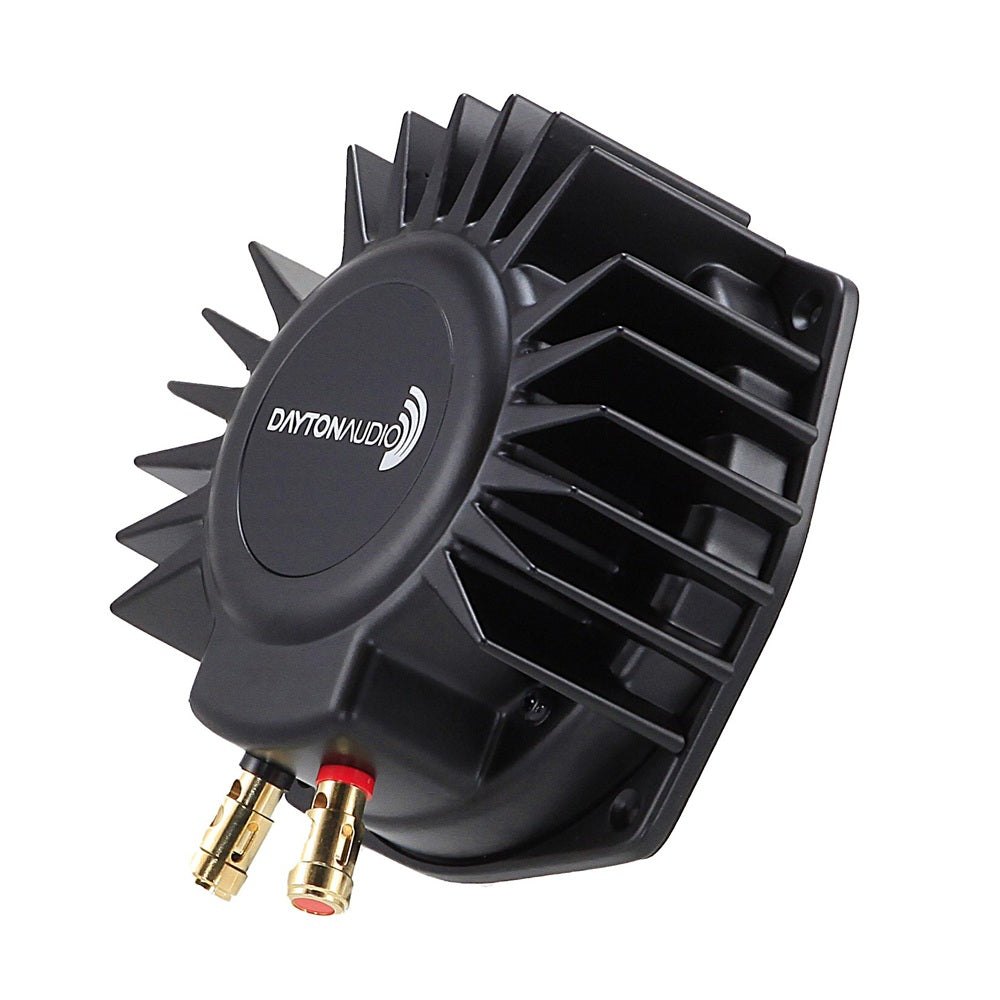
If you’re building the DIY route, start with the Dayton Audio BST-1 (~$55, 50W RMS, 4Ω). It’s the unit every sim-racing guide names as the best-value entry point, and for good reason: 50 watts of clean low-end punch, a compact footprint that tucks under almost any seat, and a price low enough that buying a pair — one per seat rail — is an easy call. A single BST-1 under the seat already delivers the broad effects that carry most of the payoff: road texture, kerbs, impacts and engine rumble.
The catch is the one every bare transducer shares: it does nothing on its own. You supply the amp (see the Fosi below), a second audio output, and ten minutes in SimHub’s ShakeIt tab. Do that, and a two-BST-1 build punches so far above its ~$110-in-shakers price that it embarrasses hardware costing five times as much. Who it’s for: the builder who wants maximum feel per dollar and doesn’t mind wiring an amp.
The amp you cannot skip: Fosi Audio HT4S
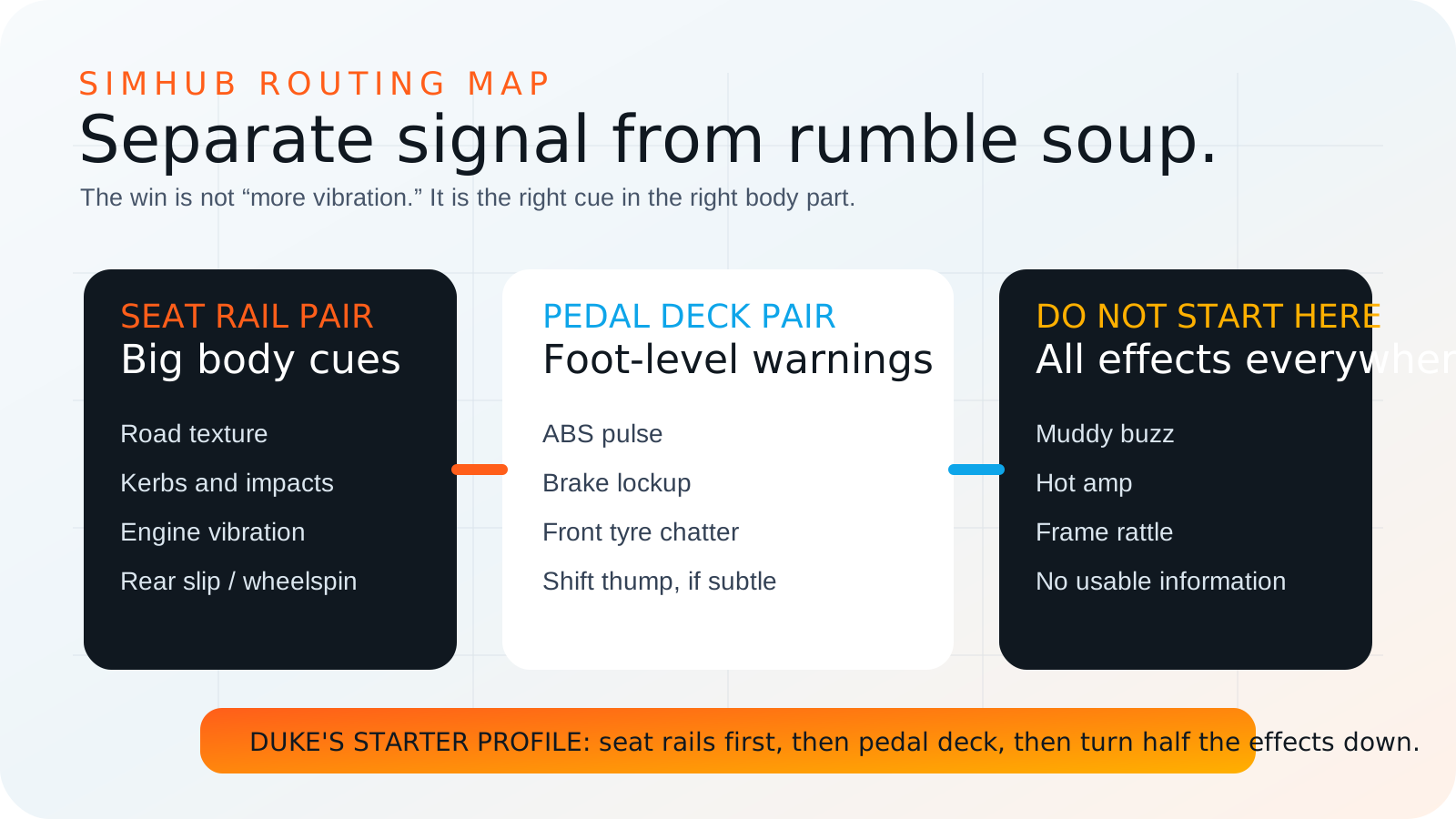
Every DIY tactile build lives or dies on the amplifier, and in 2026 the recurring community answer is the Fosi Audio HT4S (~$145). It’s a multi-channel Class-D amp — 30W×4 plus a 60W channel — with a built-in bass-boost circuit that pairs almost suspiciously well with tactile transducers. The four channels are the real story: you can drive front and rear seat shakers plus a pedal-deck pair independently, which is exactly the front/rear separation that makes wheelspin feel different from a kerb strike.
The amp is the piece nobody sells sim racers as part of a bundle, and the piece that turns a bare Dayton or ButtKicker Mini into an actual effect instead of a buzz. Buy it once, wire it once, and it drives your whole tactile ambition — one shaker today, four next month. Who it’s for: anyone going the transducer route who wants room to grow past a single shaker.
The most-repeated regret in every tactile thread isn't which shaker someone bought — it's that they tried to run a bare transducer off the PC audio jack or a random hi-fi amp, got a weak buzz, and assumed tactile was overhyped. The people who bought a dedicated amp first are the ones posting "why did I wait." Buy the amp with the shaker, not three frustrated weeks later. (Paraphrased from recurring sim-racing bass-shaker guides — see Sources.)
Best plug-and-play: Next Level Racing HF8
Not everyone wants to wire an amp and drill mounts — and if you rent, run a bare transducer at 11pm and you’ll meet your downstairs neighbour. The Next Level Racing HF8 haptic pad (~$179–199) is the answer to both problems. It’s a seat pad with eight vibration motors, positioned front/rear/left/right, that installs in about ten minutes: lay it on the seat, plug in USB, run it through SimHub. No amp, no impedance math, no bolts — and crucially, it’s quiet, so apartment racers who literally can’t run bass shakers still get real telemetry-driven feedback.
The honest trade is punch. Eight small motors give you position — you can feel which corner lost grip — but not the chest-thumping low-end slam of a bolted transducer. That’s the deal: you swap ultimate feel for zero-hassle install and apartment-friendly volume. For a huge number of buyers that’s exactly the right trade. Who it’s for: apartment/quiet-house racers and anyone who wants tactile working today, not next weekend.
The bundled middle path: ButtKicker Gamer Plus & Pro
ButtKicker pioneered this whole category, and its Gamer line is the answer for people who want a real transducer’s punch but don’t want to shop for an amp and match impedance. Each unit ships as a matched transducer-plus-amplifier kit in one box, so you get big-shaker slam without the component homework.
The ButtKicker Gamer Plus (~$280) pairs a compact transducer with a 90W RMS amp — plenty for a single-seat build and a clean step up from the pad route. The ButtKicker Gamer Pro (~$380) steps the transducer up and bundles a beefier 150W RMS amp, which is the one you want if your seat is heavy or your rig is a big 8020 frame that eats energy before it reaches your body. Both still run through SimHub for the good telemetry effects. Who they’re for: buyers who want transducer-grade feel with bundle simplicity, and don’t mind paying a premium over the raw-Dayton route for it.
DIY transducer vs all-in-one pad: the real decision
Almost every “which tactile should I buy” question comes down to one fork: build it from components, or buy a pad that just works. Here’s the whole trade laid out.
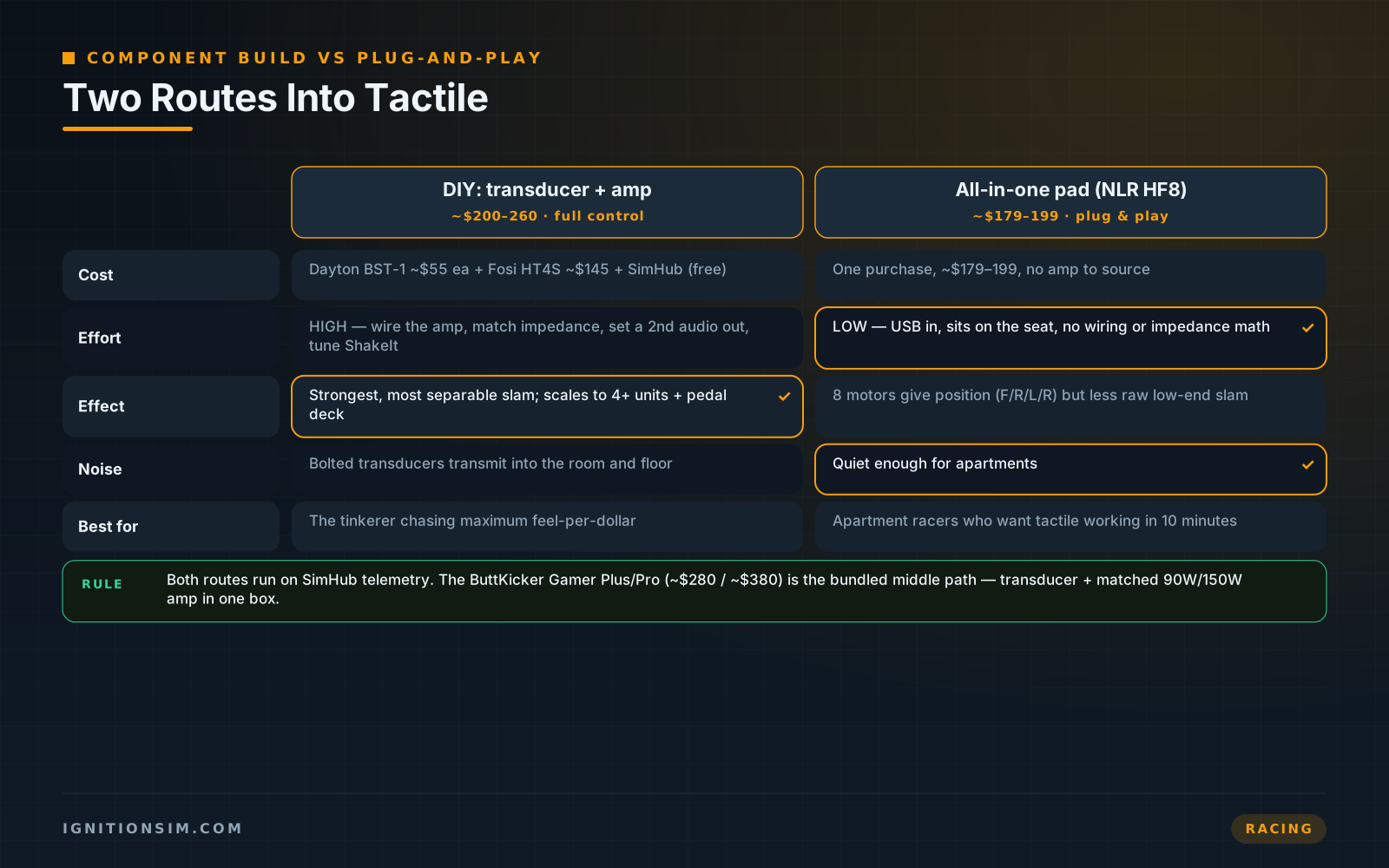
Neither lane is “better” — they’re aimed at different people. The DIY route wins on ultimate punch, scalability and cost-per-effect; the pad wins on install time, silence and zero risk of buying the wrong amp. The ButtKicker bundles sit between them: transducer feel, bundle simplicity, a price premium.
The 2026 tactile shortlist at a glance
| Product | ~Price | What it is | Verdict |
|---|---|---|---|
| Dayton Audio BST-1 | $55 ea | 50W bare transducer | Best first shaker — needs an amp |
| Fosi Audio HT4S | $145 | 4-channel tactile amp | The amp you can’t skip |
| Next Level Racing HF8 | $179–199 | 8-motor haptic pad | Best plug-and-play — quiet, no wiring |
| ButtKicker Gamer Plus | $280 | Transducer + 90W amp | Bundled real-transducer slam |
| ButtKicker Gamer Pro | $380 | Transducer + 150W amp | Most punch in one box |
The setup tax nobody quotes you
- The amp is not optional. A bare Dayton or ButtKicker transducer cannot be driven by your PC’s audio jack, and a normal hi-fi amp overheats under constant low-frequency load. Budget a dedicated Class-D tactile amp (the Fosi HT4S) with the shaker, not after.
- You need a second audio output. Your headset/game audio and your shaker signal must be on separate outputs, or SimHub’s clean telemetry effects get muddied with generic game bass. A cheap USB audio adapter counts.
- Isolate every mounting bolt. Bolt a transducer straight to a metal rig and it transmits as rattle instead of feel. Dense rubber washers or Sorbothane pads between the shaker and the frame are the difference between information and noise.
- Impedance matters on DIY builds. Match the amp’s rated output to the transducer’s impedance (the BST-1 is 4Ω). The ButtKicker bundles and the HF8 remove this worry entirely — that convenience is part of what you’re paying for.
- Big transducers want cooling and headroom. The classic ButtKicker Mini LFE, for instance, overheats without a genuinely beefy 200W+ amp. Don’t under-amp a hungry shaker.
Community install evidence we are not stealing
Forum and Reddit build photos are gold because they show the ugly truth: where cables run, where clamps actually fit, how much metal a shaker has to excite, and how fast “one more effect” turns into a rattly mess. We do not copy those photos into the site without permission, but we do use them as evidence and send readers to the original builders.
The builder pattern we trust
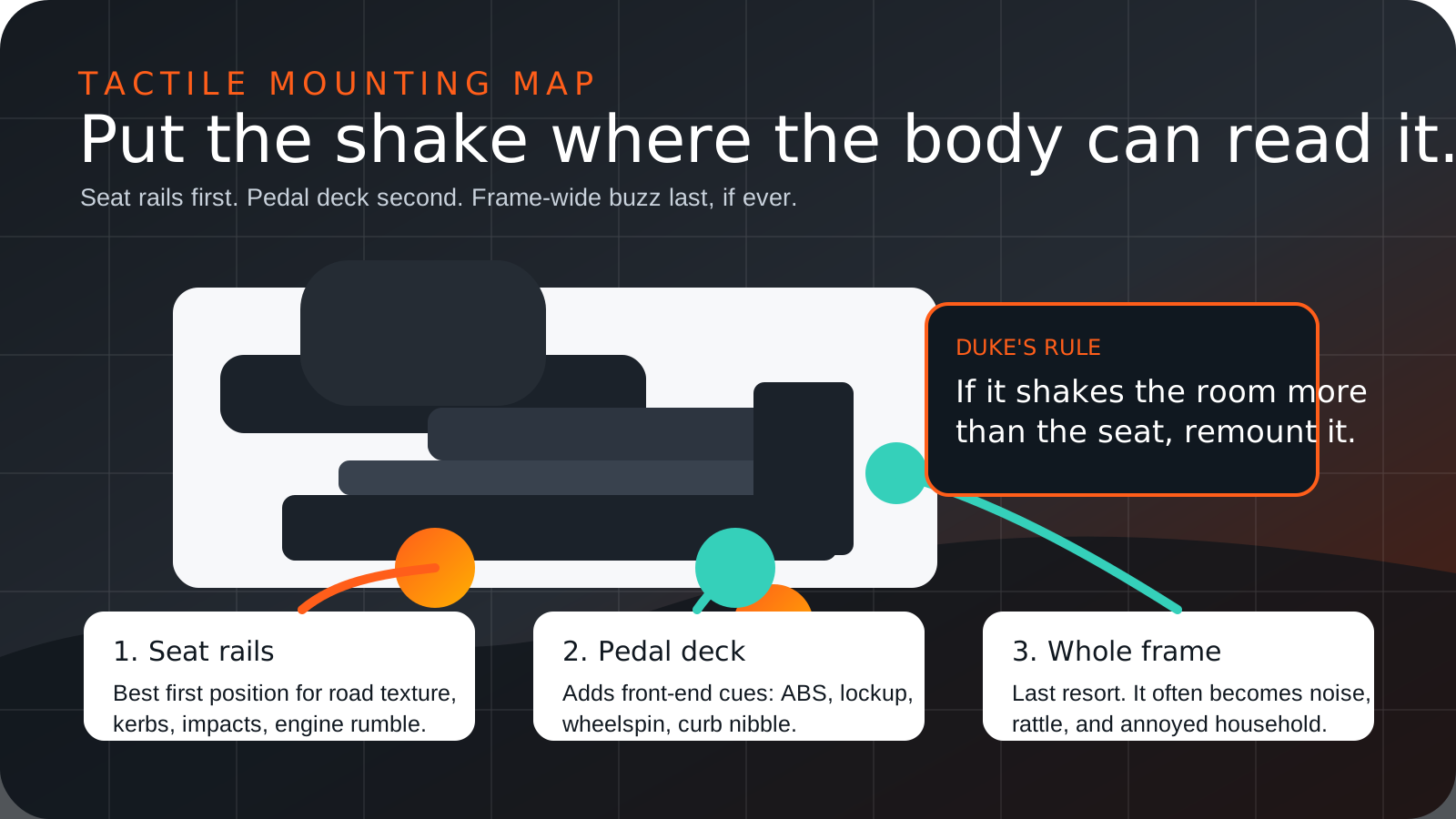
After reading the same tactile threads, rig photos, and post-mortems until the coffee got personal, Duke’s rule is simple: build for signal separation before violence. The rigs people keep loving are usually not the loudest. They are the ones where a seat-rail pair handles chassis texture and rear slip, a pedal-deck pair handles ABS and front lock, and the whole thing is isolated enough that the driver feels the car before the floor hears it.
Green flag: two shakers near the seat, one dedicated amp, a second USB audio device, clean SimHub effects, and rubber isolation where metal would otherwise buzz.
Yellow flag: one monster transducer bolted to a flexy cockpit, every SimHub effect turned on, engine rumble drowning out tyre information, and the owner calling that "immersion."
Red flag: buying the transducer first, then discovering you still need an amp, wire, mounts, a sound output, and patience. That's not a dealbreaker; it's just the hidden bill.
The buy order
- Decide your lane using the fork above — DIY transducer, ButtKicker bundle, or HF8 pad. This is 90% of the decision.
- If DIY: buy the Fosi HT4S amp and one or two Dayton BST-1 shakers together — never a shaker alone.
- Add a cheap second audio output (USB adapter) so game audio and shaker signal stay separate.
- Mount under the seat first for the broad effects; get that dialed before adding a pedal-deck pair.
- Set up SimHub’s ShakeIt Bass Shakers module and start from a community profile, then tune to taste. Our full SimHub tactile build guide walks the wiring step by step.
- Only then consider a second pair on the pedals for front/rear separation.
- Map the whole rig in the racing configurator before you check out.
Who should skip the DIY route
If you rent, race late at night, or simply don’t want to wire anything, skip the transducers and buy the HF8 — the punch you lose is worth the peace you keep. If you want transducer slam but the phrase “match the impedance” makes you tense up, buy a ButtKicker bundle and let the box do the matching. The raw-Dayton route wins “best value” because it’s the right answer for the builder — not for every person.
What to buy
Research receipts (evidence, not shopping links)
Source review date: July 3, 2026. We checked official product/spec pages and current retail pricing rather than repeating box specs, and paraphrased community consensus in our own words.
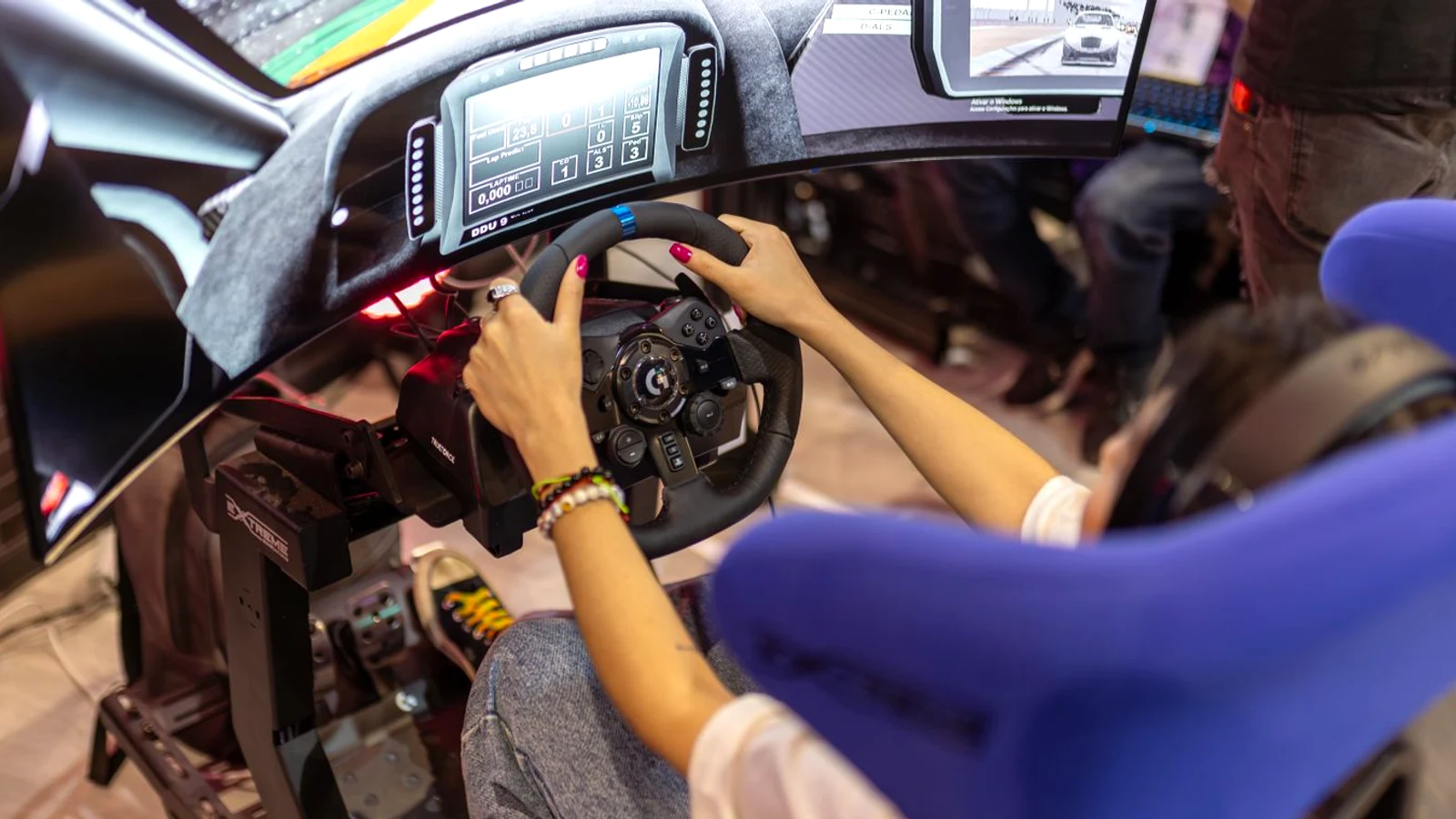
Official pages and image media: Dayton Audio BST-1 (50W), Dayton BST-1 at Parts Express, Fosi Audio HT4S, Next Level Racing HF8, ButtKicker Gamer Plus, ButtKicker Gamer Pro. Official gallery/product images from Next Level Racing, ButtKicker, and Fosi are used above as product proof; the real driver-at-rig context photo is by Matheus Bertelli on Pexels. Community/reviewer install photos are linked and paraphrased unless explicitly licensed.
Community + review reads (paraphrased in our voice): r/simracing bass-shaker install searches, OverTake / RaceDepartment bass-shaker search, Narcosis best bass shakers for sim racing seats, Sabertooth Games best bass shakers for sim racing, Boosted Media HF8 review, SimRacingCockpit ButtKicker Gamer Plus review, and the SimRace-Blog Fosi HT4S for simracing writeup.
Key takeaways & quick answers
IgnitionSim is reader-supported. When you buy through links on our site we may earn an affiliate commission at no extra cost to you — it never changes our verdict or your price. As an Amazon Associate we earn from qualifying purchases.
Keep reading
Sim Racing Rig Buyer Map 2026: What to Buy First, What to Skip, and Where the Money Actually Matters
Start here if you want a real sim rig without buying the same cockpit twice. Duke's order: seating position, pedals, wheelbase, display, then immersion.
DIY Motion vs Bass Shakers in 2026: The Immersion Upgrade Path That Does Not Start With Four Actuators
Mac's rule: tactile first, motion later. Bass shakers teach the car's texture; motion moves the chassis; bad wiring ruins both.
Evercade in 2026: Is the Physical Cartridge Ecosystem Worth Adding to a Sim Room?
Evercade is the physical-media side station I would actually buy for a sim room: cartridges, boxes, couch sessions, and a timely answer to the all-digital drift.
Best Simulation Gaming Gear of 2026: The Cross-Sim Room Parts Worth Buying Once
Before the wheel, yoke or launch monitor, build the room that can keep them alive. Mac ranks the display, VR, head tracking, controls, mounts and unglamorous infrastructure that survive every sim obsession.