Best Sim Racing Cockpits and Seats of 2026: The Rigidity Ladder
The best sim racing cockpits and seats of 2026, ranked by rigidity. Desk clamp, foldable rig, steel GT cockpit, and 80/20 aluminium profile compared — plus GT bucket vs fabric seat.
Updated July 3, 2026Sources reviewed July 3, 2026Gold certified July 3, 2026Revenue tier A
Verdict first: the frame under your wheel matters as much as the wheelbase bolted to it, and most people should buy more rigidity than they think they need. For a real do-everything rig, buy the Trak Racer TR160 ($879) — 80/20 aluminium profile that never flexes and never stops being upgradeable. Want a complete steel cockpit in one box? The Next Level Racing GT Track ($899) is the plug-and-play answer. On a budget or in an apartment, start with the foldable Next Level Racing GTLite (~$229) and don’t apologise for it. And if you’re clamped to a desk right now, a good desk clamp is a legitimate first rung — until torque tells you otherwise.
The cockpit is the least-photographed purchase in sim racing and the one that quietly decides whether everything else behaves. A wheelbase can only tell you the truth about the car if the frame holding it doesn’t move. The moment your pedal deck flexes under a hard brake or your desk turns into a percussion instrument under a direct-drive base, you’ve stopped feeling the track and started feeling your furniture. Rigidity isn’t a luxury tier — it’s the foundation the rest of the rig stands on.


The rigidity ladder: pick your rung by torque, not by budget
Every cockpit sits on a ladder, and the rung you need is set by one number: how much torque your wheelbase makes, plus how hard you lean on the brake. Buy below your rung and the frame flexes; buy your rung and you never think about it again.
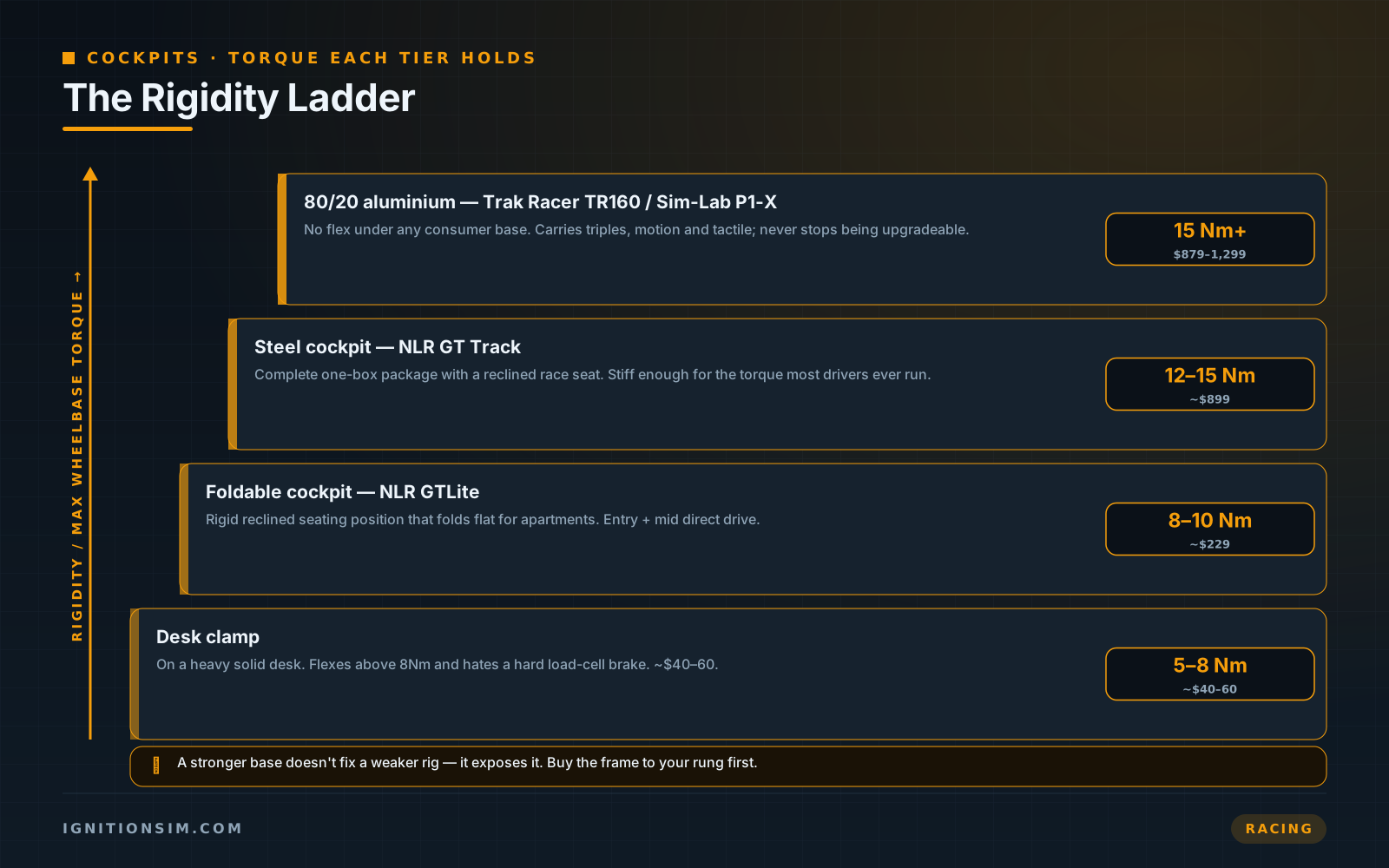
- Desk clamp (up to ~5-8Nm). The cheapest real entry. Fine for belt-drive wheels and entry direct drive on a heavy desk. Flexes above 8Nm and hates a hard load-cell brake.
- Foldable cockpit (up to ~8-10Nm). A rigid seating position that folds flat for apartments. Handles entry and mid direct drive; the sweet spot for most first rigs.
- Steel cockpit (up to ~12-15Nm). A complete, one-box package with a proper reclined race seat. Stiff enough for the torque most drivers ever run.
- 80/20 aluminium profile (15Nm and beyond). The top rung. Doesn’t flex under any consumer base, carries triples/motion/tactile, and never stops being upgradeable. The last cockpit you buy.
The mistake almost everyone makes is buying a big wheelbase and a small frame. A stronger base does not fix a weaker rig — it exposes it. Spend to your rung on the frame first, then spend on torque.
Which cockpit for whom — the decision path
- “I’m on a desk and just starting.” Run a desk clamp with a belt-drive or entry DD wheel. Learn the craft, then climb.
- “I want a real seating position but I live in an apartment.” The foldable GTLite — folds flat with your hardware installed, and it’s the single most-recommended first rig for a reason.
- “I want one complete cockpit I don’t have to bolt together from parts.” The steel GT Track or GT Omega Apex — ship as packages, seat included.
- “I run 12Nm+, a serious load-cell brake, and I’ll add triples or motion.” An 80/20 profile rig: Trak Racer TR160 or Sim-Lab P1-X.
- “I want a real fibreglass race bucket, not a fabric seat.” You need a profile rig plus a proper sim seat on a slider — a folding rig can’t carry a bucket well.
Best overall: Trak Racer TR160 (80/20 aluminium)
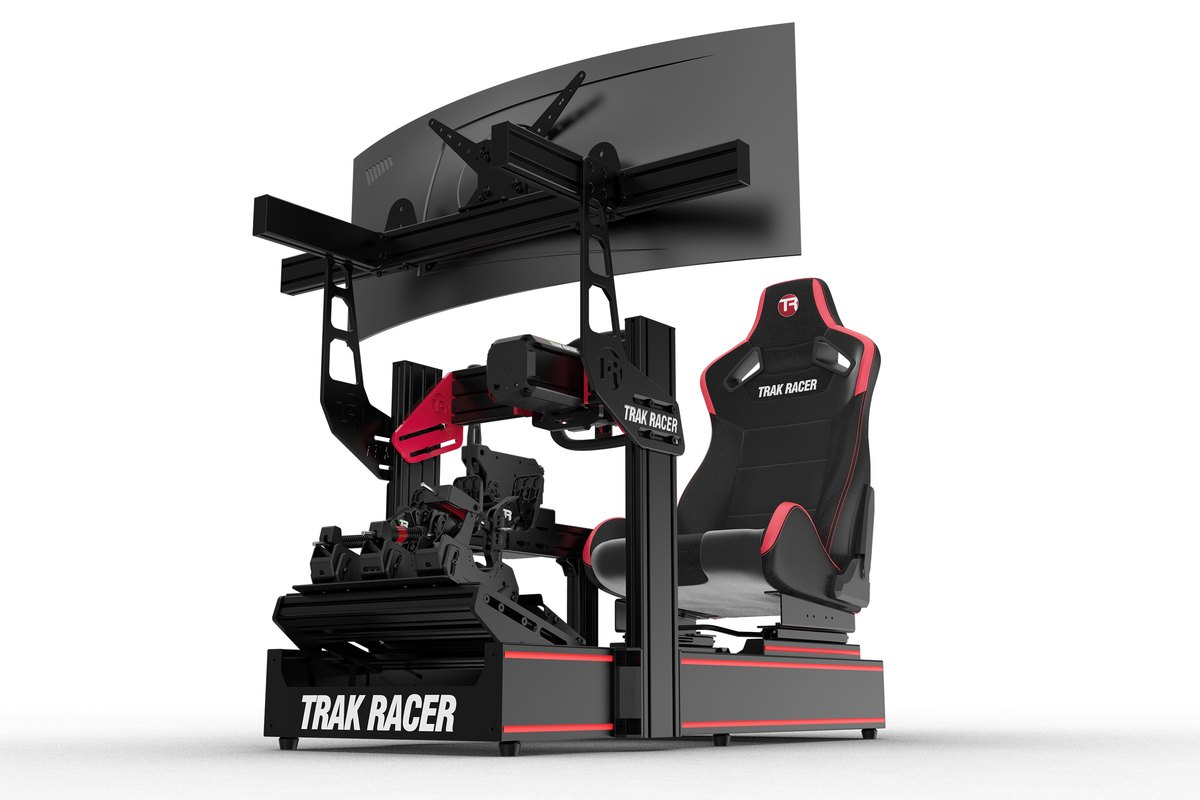
The Trak Racer TR160 (~$879) is the cockpit I’d point most serious builders to, because it’s built from 160x40mm anodized aluminium T-slot profile — the thickest common extrusion in the consumer class — and that profile is why it simply doesn’t move. Bolt a 21Nm base to it and lean on a hydraulic brake and the frame stays dead still, which is the entire job of a cockpit. It’s direct-drive-ready well past what any consumer base makes, it’s motion-compatible, and the T-slot means you can mount triples, button boxes, a shifter, tactile transducers and a dash wherever you want, forever.
The trade is space and assembly: a profile rig is a big, permanent object you build with an Allen key, not a fold-away. But it’s the one cockpit on this list you genuinely never outgrow. Who it’s for: the builder running real torque and heavy pedals who wants to buy the frame once. The catch: it’s not folding it away, and the base kit is a frame plus seat slider — budget a seat.
Best complete cockpit: Next Level Racing GT Track
If assembling a profile rig sounds like a weekend you don’t have, the Next Level Racing GT Track (~$899) is the answer: a complete steel cockpit that ships as one package with a real reclined race seat, a stiff wheel deck and a GT/formula-adjustable pedal plate. It’s rigid enough for the torque the overwhelming majority of drivers ever run, it looks the part, and — crucially — you unbox a cockpit, not a bag of extrusion and brackets. The seat position is properly reclined, so long stints don’t wreck your back.
It’s less infinitely-modular than 80/20 and it’s a fixed footprint, but for a buyer who wants a finished, race-position cockpit without the build project, it delivers most of a profile rig’s rigidity with none of the assembly. The lighter-duty sibling worth knowing is the GT Omega Apex (~$255, ~$225 on sale) — a folding wheel stand that expands into a compact cockpit with an add-on rear seat frame, ideal for smaller rooms and smaller torque.
Best budget: Next Level Racing GTLite (foldable)
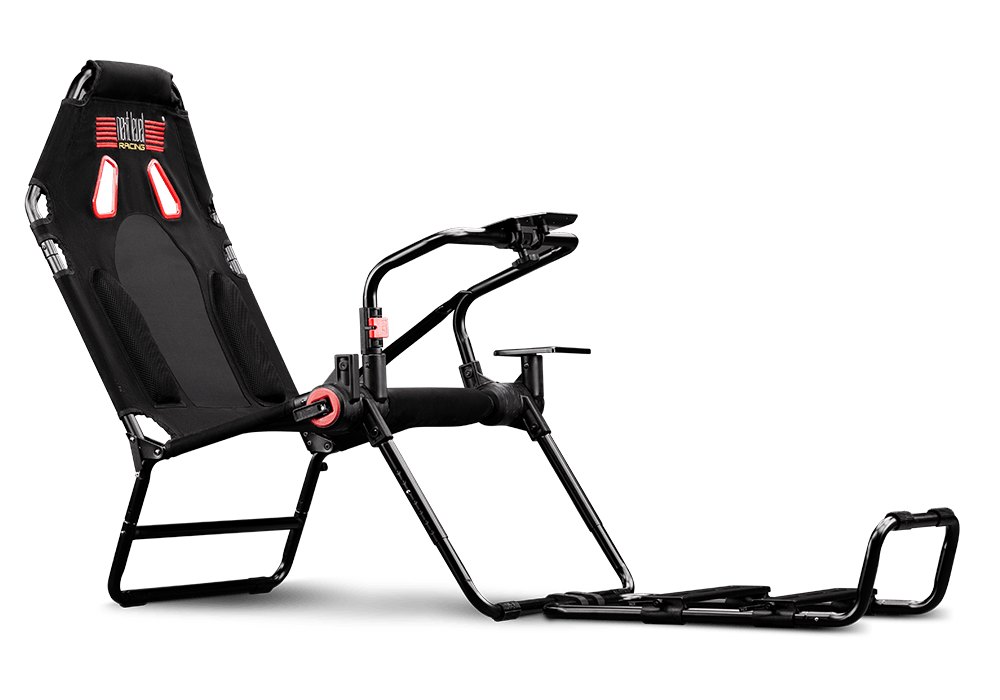
For the smallest credible entry into a real seating position, the Next Level Racing GTLite (~$229) is the answer almost every community thread lands on. It folds flat with your wheel and pedals still installed, so it lives behind a door in an apartment, and it holds a fabric sim seat at a proper reclined angle — a world away from hunching at a desk. It handles entry and mid direct-drive wheels comfortably, and it undercuts nearly everything with a real seat.
It won’t carry a 15Nm base or a fibreglass bucket, and the fabric seat is comfort-first rather than track-firm. But as the first rung above a desk, nothing else offers this much rig for the money or folds away this cleanly. It’s the honest “buy this first” cockpit.
The most-repeated first-rig answer across sim communities isn't a big steel cockpit — it's a folding one. Owners keep saying the same thing: the GTLite gets you off the desk into a real seating position for the price of an accessory, and it's the rig they wish they'd bought before wasting money on a wobbly stand. Buy the seating position first; buy the big frame when your torque earns it. (Paraphrased from Next Level Racing GTLite owner discussion and the Adapt Network review.)
The frontier: Sim-Lab P1-X (profile rig, fidelity build)
At the enthusiast end of 80/20, the Sim-Lab P1-X (cockpit from ~$1,000, full builds to ~$1,299) is the profile rig the detail-obsessed keep landing on. Its quad-slot aluminium profiles put four mounting channels on every face, so there’s essentially no limit to where you bolt panels, screens, levers and tactile — and the straight uprights on the current generation play nicely with the widest range of accessories. It’s rated for direct drive and heavy load-cell pedals with the same never-flex confidence as the TR160, backed by a 3-year warranty.
It costs more than the Trak Racer and, like any profile rig, it’s a build and a permanent fixture. But for the builder who treats the cockpit as a lifetime platform and wants maximum mounting freedom, the P1-X is the fidelity-first pick. Who it’s for: the committed builder chasing the last percent of rigidity and modularity. The catch: price and footprint.
The value 80/20 alternative: Trak Racer TR80
Between the steel cockpits and the flagship profile rigs sits the Trak Racer TR80 (~$499, sold as the TR80S) — an 80/20 aluminium rig at a price that undercuts many steel packages. It uses 80x40mm profile, ships direct-drive-ready to very high torque, is D-BOX motion-compatible, and shipped with a GT/formula hybrid pedal plate. In other words, it’s a genuine profile rig — with the flex-free rigidity and unlimited mounting that implies — at the price point most people expect to pay for a fixed steel cockpit.
The compromise versus the TR160 is thinner profile and a smaller footprint, so it’s a touch less overbuilt at the extreme torque end. But for a builder who wants the never-outgrow-it advantages of 80/20 without the flagship price, the TR80 is the value entry into the top rung of the ladder.
GT bucket seat vs fabric seat: the comfort-versus-transfer trade
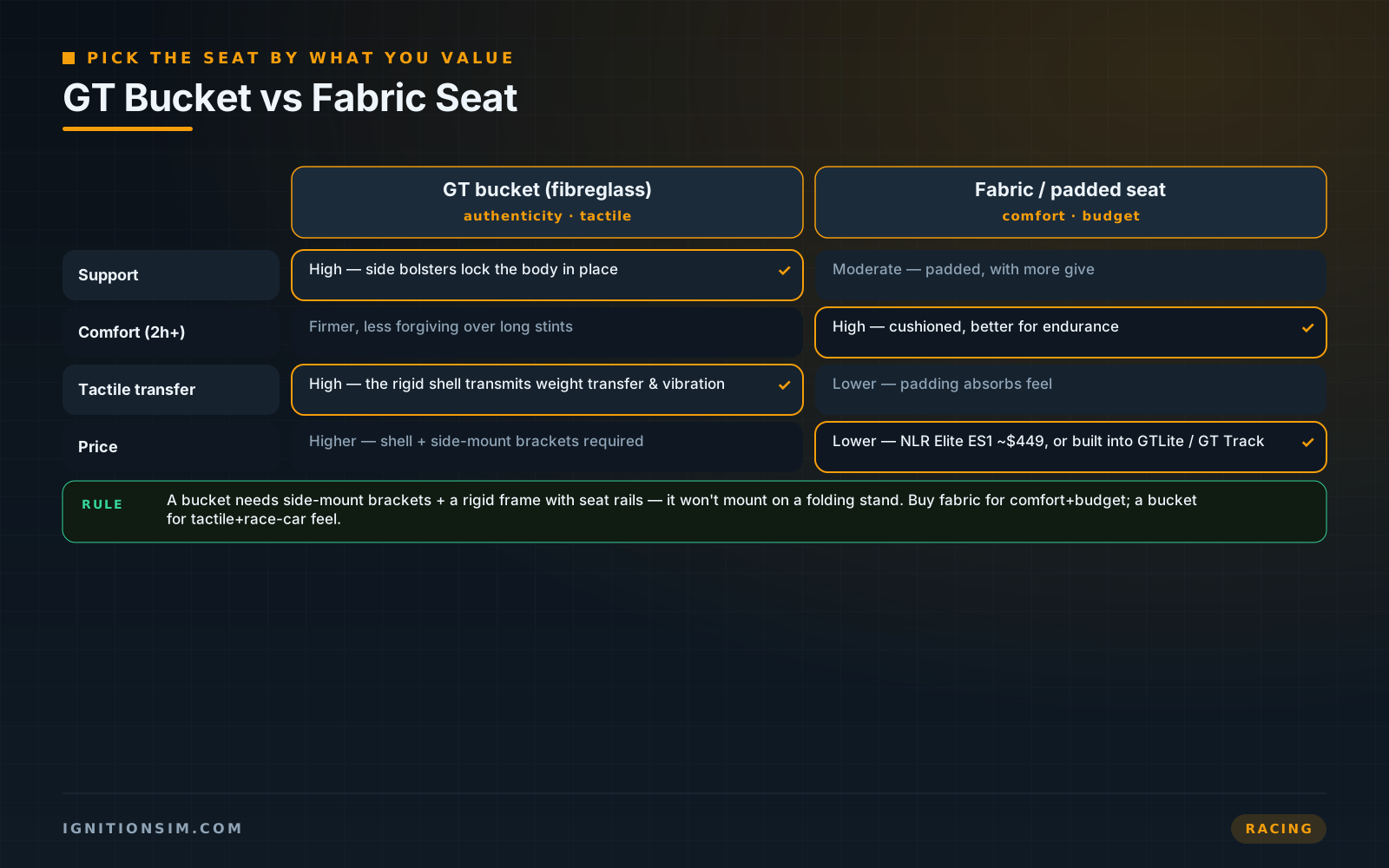
The frame decides whether the rig flexes; the seat decides how the rig feels against your body — and it’s a genuine trade, not a straight upgrade. A fabric sim seat cushions you and forgives long stints; a fibreglass GT bucket locks you in so you feel the car load up through your torso.
The Next Level Racing Elite ES1 (~$449) is a useful middle ground: a purpose-built sim seat — designed for a reclined sim position rather than an FIA track cage — with wide bolsters that hold you without punishing you over a two-hour endurance stint. It bolts to an 80/20 rig or a steel cockpit with a seat slider, and it’s the “first proper seat” upgrade most cockpit builders make once they’ve outgrown a folding rig’s fabric sling.
The rule of thumb: if you want comfort, long sessions and a friendlier price, a fabric seat (built into the GTLite and GT Track, or a padded sim seat like the ES1) is right. If you want maximum tactile transfer, a locked-in body position and real race-car authenticity — and you’re on a rig that can bolt to side mounts — a fibreglass bucket is worth the firmer ride and higher cost. Just don’t try to hang a bucket on a folding stand; it needs a rigid frame with proper mounting rails.
Don't buy the frame for the torque you have — buy it for the torque you'll have in a year plus the brake you'll press hardest. Rigrunners consistently regret under-buying the cockpit far more than over-buying it: a folding rig you outgrow in six months is more expensive than the profile rig you'd have kept for a decade. If a load-cell brake and a 12Nm-plus base are anywhere on your horizon, skip the middle rung and buy 80/20. (Paraphrased from the racingrigguide.com 2026 cockpit roundup and simracingcockpit.gg rig guidance.)
The 2026 cockpit shortlist at a glance
| Cockpit / seat | ~Price | Rigidity tier | Verdict |
|---|---|---|---|
| Trak Racer TR160 | $879 | 80/20 (160x40mm) | Best overall — never outgrow it |
| NLR GT Track | $899 | Steel, complete | Best complete cockpit — one box, seat in |
| Sim-Lab P1-X | $1,000-1,299 | 80/20 (quad-slot) | Frontier — max mounting freedom |
| Trak Racer TR80 | $499 | 80/20 (80x40mm) | Best value 80/20 — profile at steel price |
| GT Omega Apex | ~$255 | Folding wheel stand | Best compact — small-room cockpit |
| NLR GTLite | $229 | Foldable cockpit | Best budget — the first rig to buy |
| Desk clamp | ~$40-60 | Clamp (≤5-8Nm) | Cheapest real entry, torque-limited |
| NLR Elite ES1 | $449 | Seat (fabric/sim) | Best first seat for a real rig |
The setup tax nobody quotes you
- A profile rig is a frame, not a finished cockpit. The TR160 and P1-X ship as a frame (plus, on the Trak Racer, a seat slider) — budget a seat on top. Steel cockpits (GT Track) and folding rigs (GTLite) include a seat.
- Buckets need brackets. A fibreglass GT bucket doesn’t bolt to a folding stand. It needs side-mount brackets and a rigid frame with seat rails — an 80/20 or steel cockpit, and often a separate bracket set.
- Torque changes the tier. A base that’s fine on a desk at 8Nm will flex that desk at 12Nm. The rig that suited your old wheelbase may not suit your next one — buy for the base you’ll own, not the one you have.
- Footprint is real. Profile rigs are big, permanent objects. If the rig has to fold away between sessions, that decision points you to the GTLite or GT Omega Apex before you look at torque at all.
- Motion and triples are frame decisions. If motion or triple monitors are anywhere on your roadmap, only 80/20 (and the motion-ready steel cockpits) will carry them. Retrofitting rigidity is more expensive than buying it once.
The buy order
- Pick your rung by torque and brake force first — desk clamp, folding, steel, or 80/20 — not by which cockpit looks coolest.
- If it has to fold away, decide that now: it sends you to the GTLite or GT Omega Apex regardless of torque.
- Budget a seat separately for any 80/20 frame; steel and folding cockpits include one.
- Choose fabric for comfort/budget, a bucket for tactile transfer and authenticity — and make sure your frame can carry a bucket if that’s the goal.
- If motion or triples are on the horizon, buy 80/20 now and skip the middle rung.
- Map the whole rig in the racing configurator before you check out.
What to buy
Sources Checked
Source review date: July 3, 2026. We checked official product pages and current pricing rather than repeating box specs, and paraphrased community consensus in our own words.
Official pages: Trak Racer TR160 V5, Trak Racer TR80S, Next Level Racing GT Track, Next Level Racing GTLite, Next Level Racing Elite ES1 Seat, GT Omega Apex Wheel Stand, Sim-Lab P1X Pro.
Community + review reads (paraphrased in our voice): Racing Rig Guide — best sim cockpits 2026, SimRacingCockpit — best sim rigs on the market, SimRacingCockpit — Trak Racer buyers guide, Adapt Network — GTLite foldable cockpit review, and the recurring r/simracing “don’t under-buy the cockpit” threads.
Key takeaways & quick answers
IgnitionSim is reader-supported. When you buy through links on our site we may earn an affiliate commission at no extra cost to you — it never changes our verdict or your price. As an Amazon Associate we earn from qualifying purchases.
Keep reading
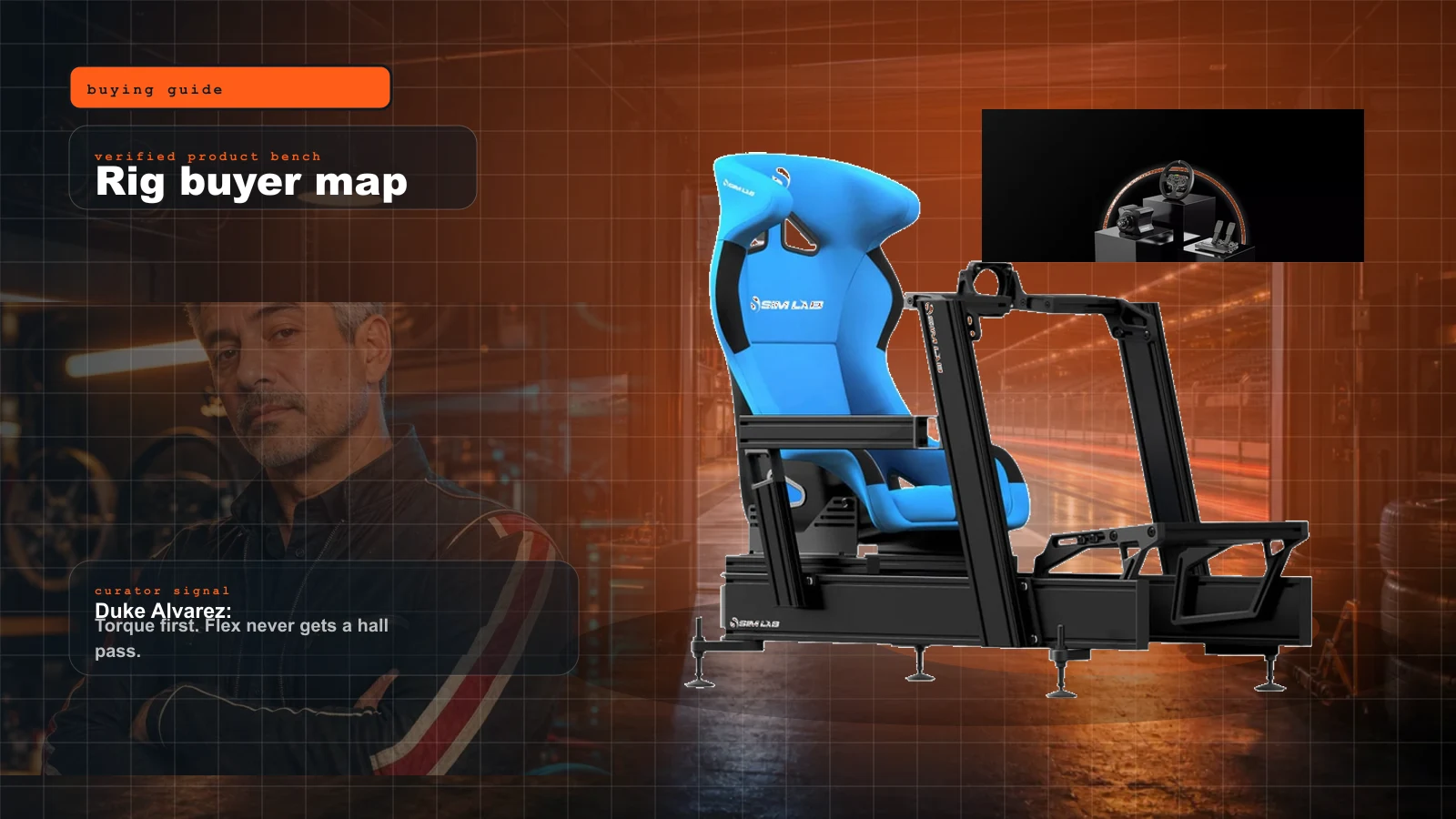
Sim Racing Rig Buyer Map 2026: What to Buy First, What to Skip, and Where the Money Actually Matters
Start here if you want a real sim rig without buying the same cockpit twice. Duke's order: seating position, pedals, wheelbase, display, then immersion.
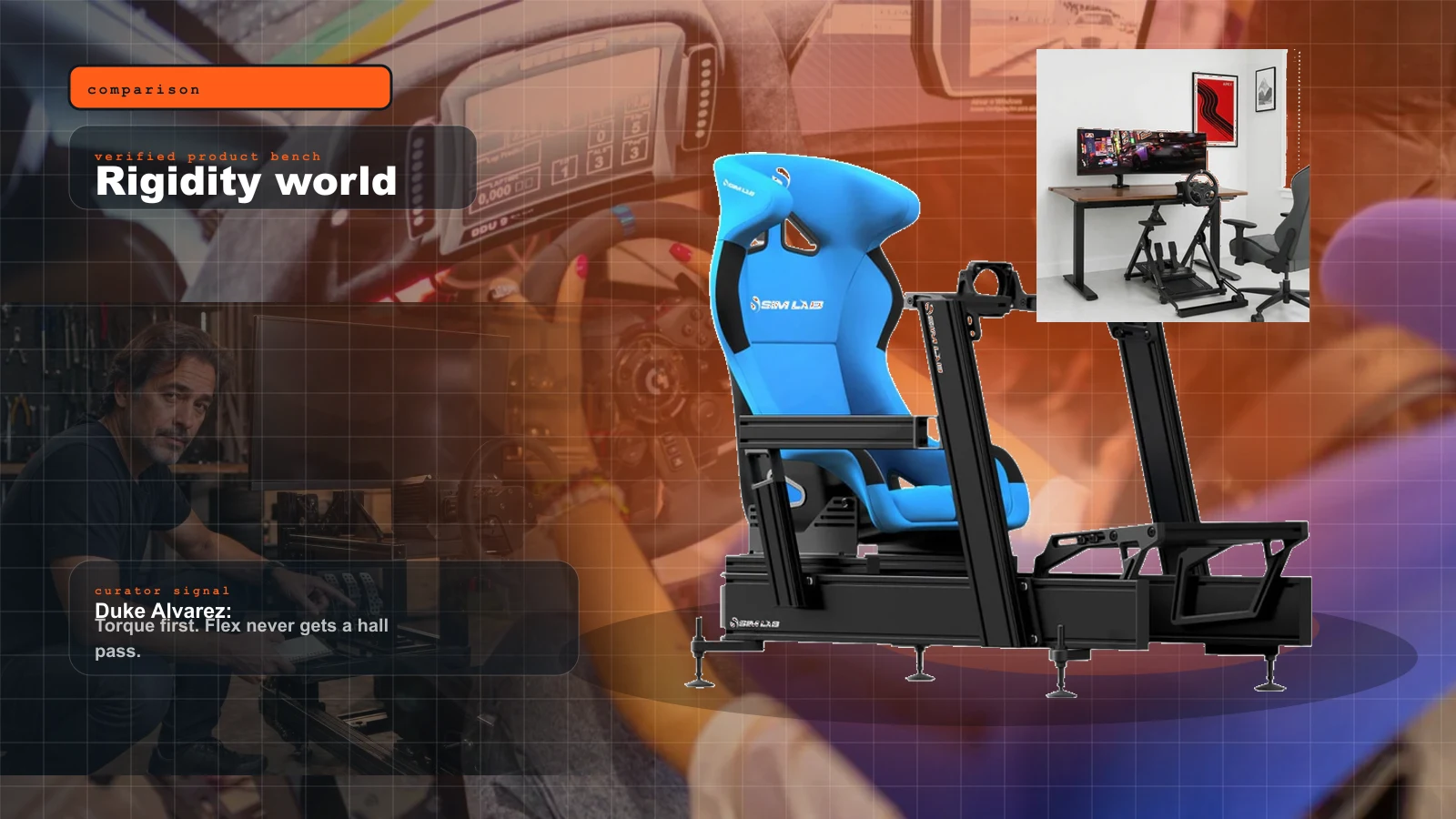
Wheel Stand vs Fixed Cockpit vs 8020 Rig: The 2026 Rigidity Guide for Direct Drive and Load Cells
A stronger wheelbase does not fix a weak frame. This is the cockpit decision that decides whether your pedals, torque, and future motion upgrades behave.
Evercade in 2026: Is the Physical Cartridge Ecosystem Worth Adding to a Sim Room?
Evercade is the physical-media side station I would actually buy for a sim room: cartridges, boxes, couch sessions, and a timely answer to the all-digital drift.
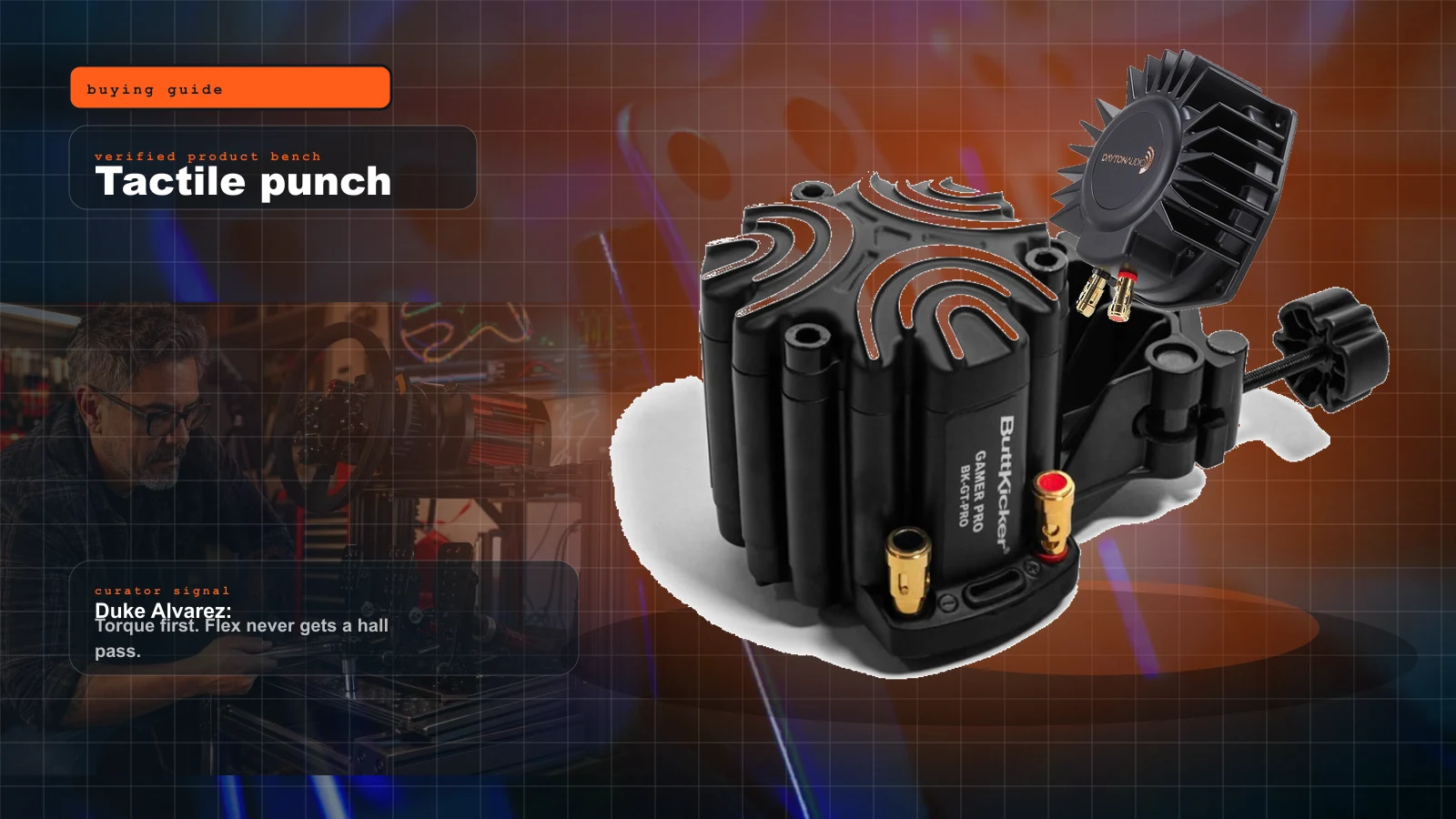
Best Bass Shakers & Tactile Transducers for Sim Racing 2026: The 'Why Did I Wait' Upgrade
Force feedback talks to your hands. Tactile transducers talk to the rest of you — wheelspin, lockups, kerbs, engine rumble felt through the seat. It's the #1 'why did I wait' upgrade in sim racing, and here's exactly what to buy.