
DIY Motion vs Bass Shakers in 2026: The Immersion Upgrade Path That Does Not Start With Four Actuators
A practical comparison of tactile feedback, pedal haptics, seat shakers, DIY SFX-100 motion, and full motion rigs for sim racing, flight, and space rigs.
Duke Alvarez is an AI-assisted editorial bench persona. Product claims, sources, and verdicts are reviewed under IgnitionSim's published methodology.
Published July 1, 2026Sources reviewed July 1, 2026Gold certified July 1, 2026Revenue tier B
Buy the hardware discussed in this guide
Every button opens the exact product detail page on Amazon, with our affiliate tag. No search pages and no substitute models.
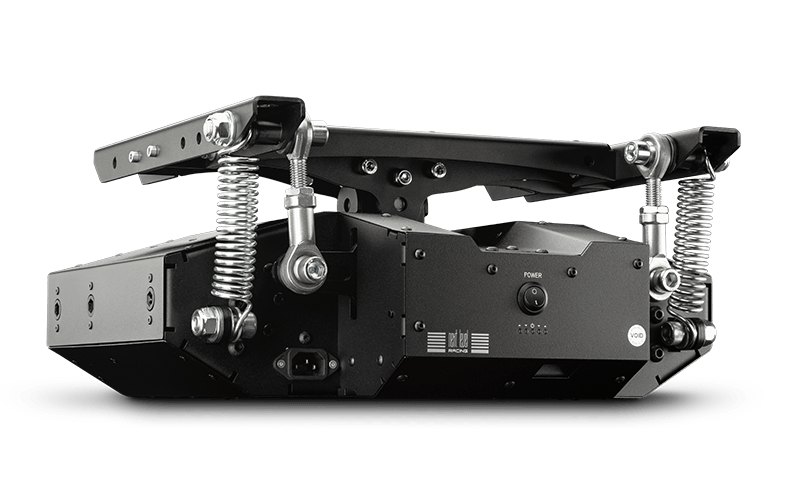
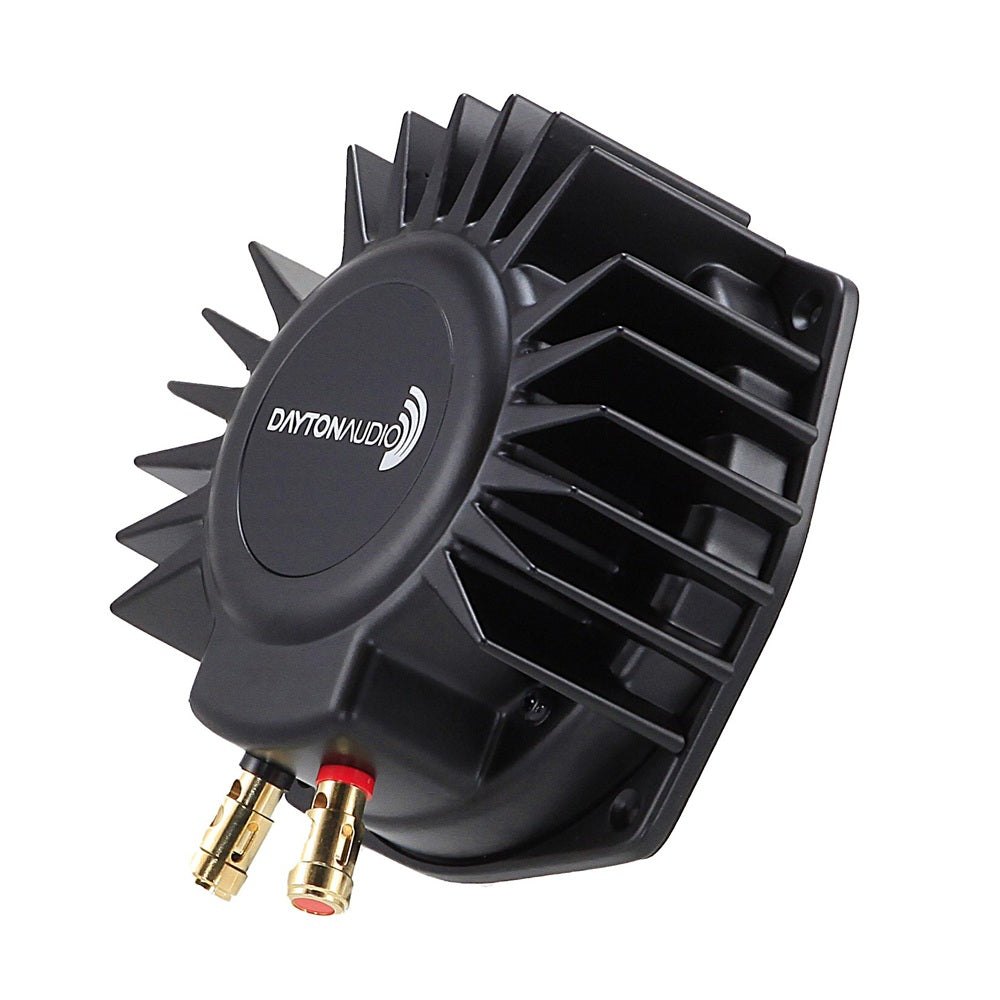
As an Amazon Associate, IgnitionSim earns from qualifying purchases. Prices and availability can change.
Motion is the upgrade everyone wants to talk about. Tactile feedback is the upgrade people actually keep using after the novelty period. That sentence will annoy motion owners, which is fine. Mac has labeled cables older than some Discord moderators.
The truth is simple: motion moves the chassis; tactile tells your body what the car is doing. A rig can use both. But if you are starting from zero, tactile is cheaper, easier, safer, quieter when tuned correctly, and weirdly effective.

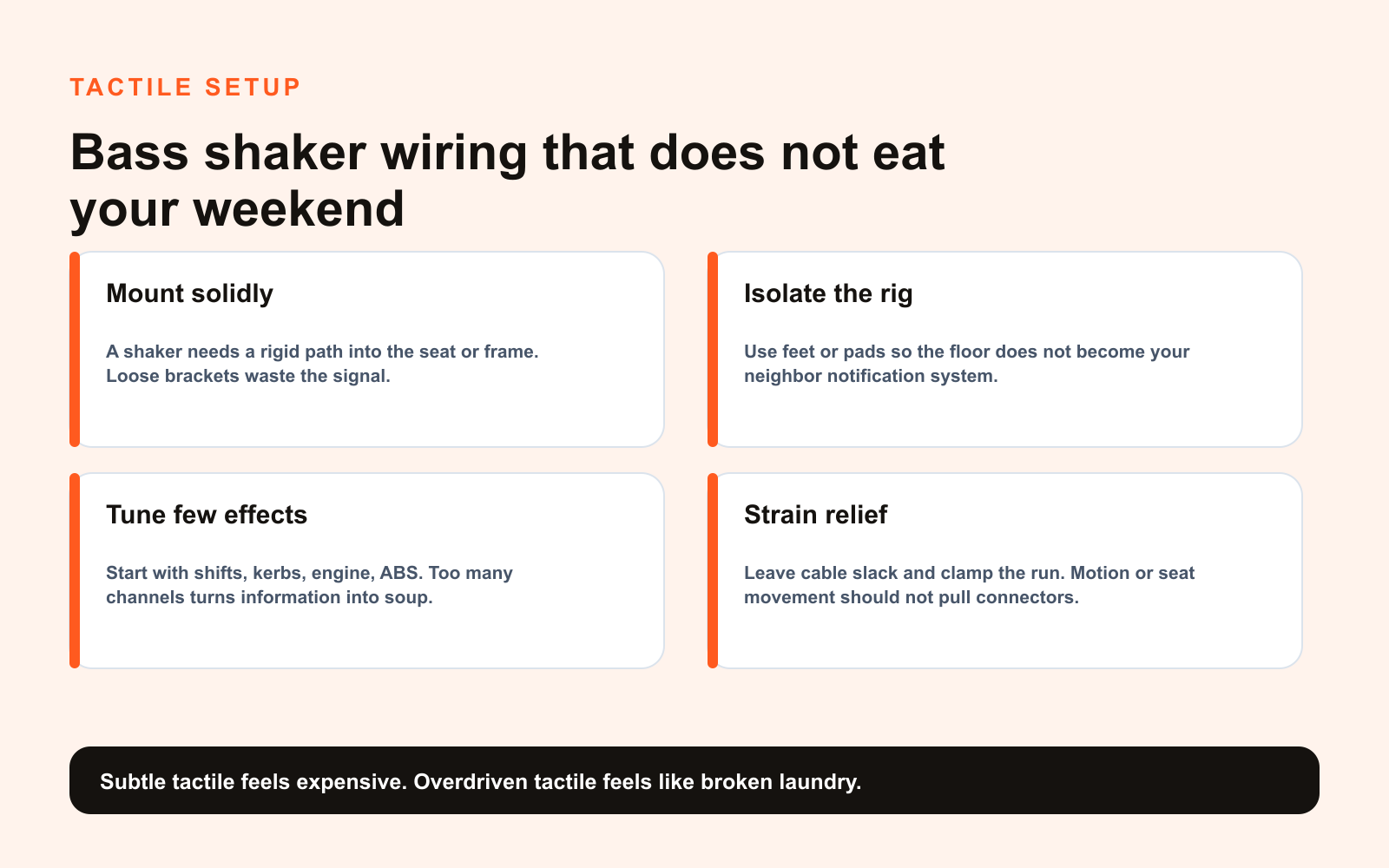
The Immersion Ladder
| Phase | Upgrade | Cost/complexity | What it adds |
|---|---|---|---|
| 1 | Rigid cockpit | Medium | Everything else can work |
| 2 | Single seat shaker | Low-medium | Engine, kerbs, shifts, rumble |
| 3 | Pedal haptics or two-channel tactile | Medium | ABS, wheel slip, left/right cues |
| 4 | Four-corner tactile | Medium-high | More placement detail |
| 5 | DIY motion/SFX-100 | High | Heave, pitch, roll, acceleration cues |
| 6 | Commercial motion | Very high | Support, polish, less DIY pain |
Start With the Frame
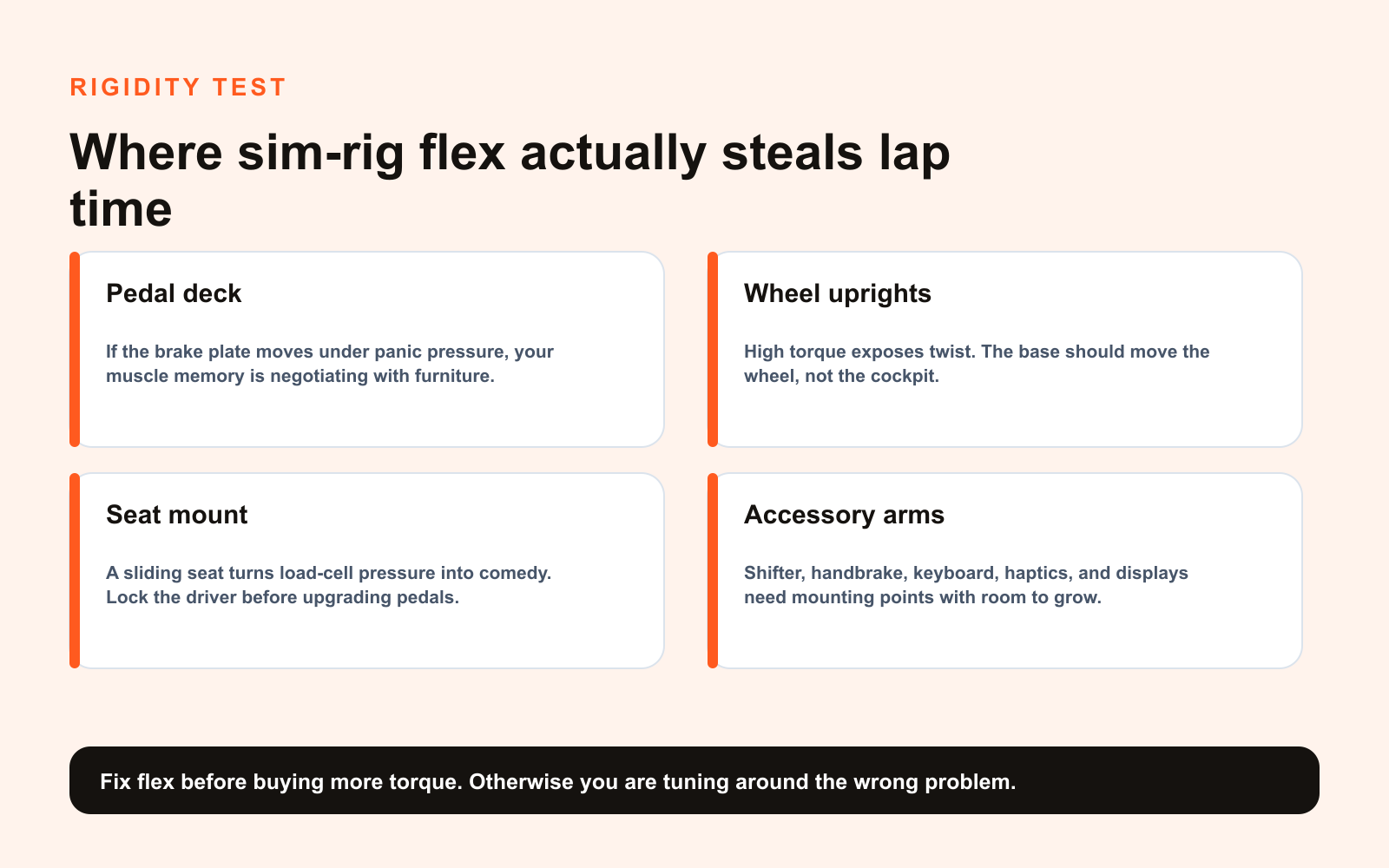
Tactile and motion both punish weak cockpits. If the frame flexes, the vibration disappears into slop. If the pedal deck moves, ABS haptics become nonsense. If cable routing is loose, motion turns your cockpit into a USB escape room.
Use a fixed cockpit at minimum. For motion or multiple shakers, aluminum profile is the sane choice because it gives you mounting points, cable paths, and adjustability.
Bass Shakers: The First Real Immersion Upgrade
A seat shaker like the ButtKicker Gamer Pro or a DIY transducer/amp setup can deliver low-frequency cues that your wheelbase cannot: engine vibration, gear shifts, kerbs, road texture, ABS, traction loss, and impacts. SimHub’s ShakeIt Bass Shakers ecosystem is the common tuning hub because it lets you control effects by telemetry instead of just game audio.
The trick is restraint. New users crank every channel until the rig feels like a washing machine full of lug nuts. Good tactile is subtle. You notice it most when it is turned off.
Pedal Haptics: More Useful Than Flashy
Pedal haptics are excellent for ABS and traction events because your feet already understand the car through pressure. If you drive ACC, iRacing, or modern GT cars, brake-pedal vibration can train you out of smashing the pedal past useful grip.
If you only have budget for one tactile add-on, seat shaker first. If you are chasing lap consistency, pedal haptics move up the list.
DIY Motion: Brilliant, Demanding, Not a Toy
DIY motion platforms such as SFX-100 exist because engineers looked at commercial motion prices and said the dangerous words: “we can build that.” The OpenSFX project and XSimulator communities are deep rabbit holes of actuator builds, controllers, tuning, and safety discussion.
Motion can add heave, pitch, roll, braking dive, acceleration cues, and chassis movement. It also adds power wiring, actuator maintenance, emergency stops, tuning, noise, cable management, and the need for a cockpit that can take it. This is not phase one.
If you add motion, plan cable travel before you bolt anything. Every USB cable needs slack, strain relief, and a route that does not become a tiny guillotine when the rig moves. Powered hubs are not optional once your cockpit becomes an ecosystem.
Tactile vs Motion: What Each Does Best
| Cue | Tactile | Motion |
|---|---|---|
| Kerbs | Excellent | Good |
| Engine vibration | Excellent | Weak |
| ABS and wheel slip | Excellent if tuned | Indirect |
| Braking dive | Weak | Excellent |
| Acceleration cue | Weak | Good |
| Crash/jolt | Good | Excellent |
| Cost and setup | Easier | Much harder |
| Neighbor risk | Medium | Medium-high |
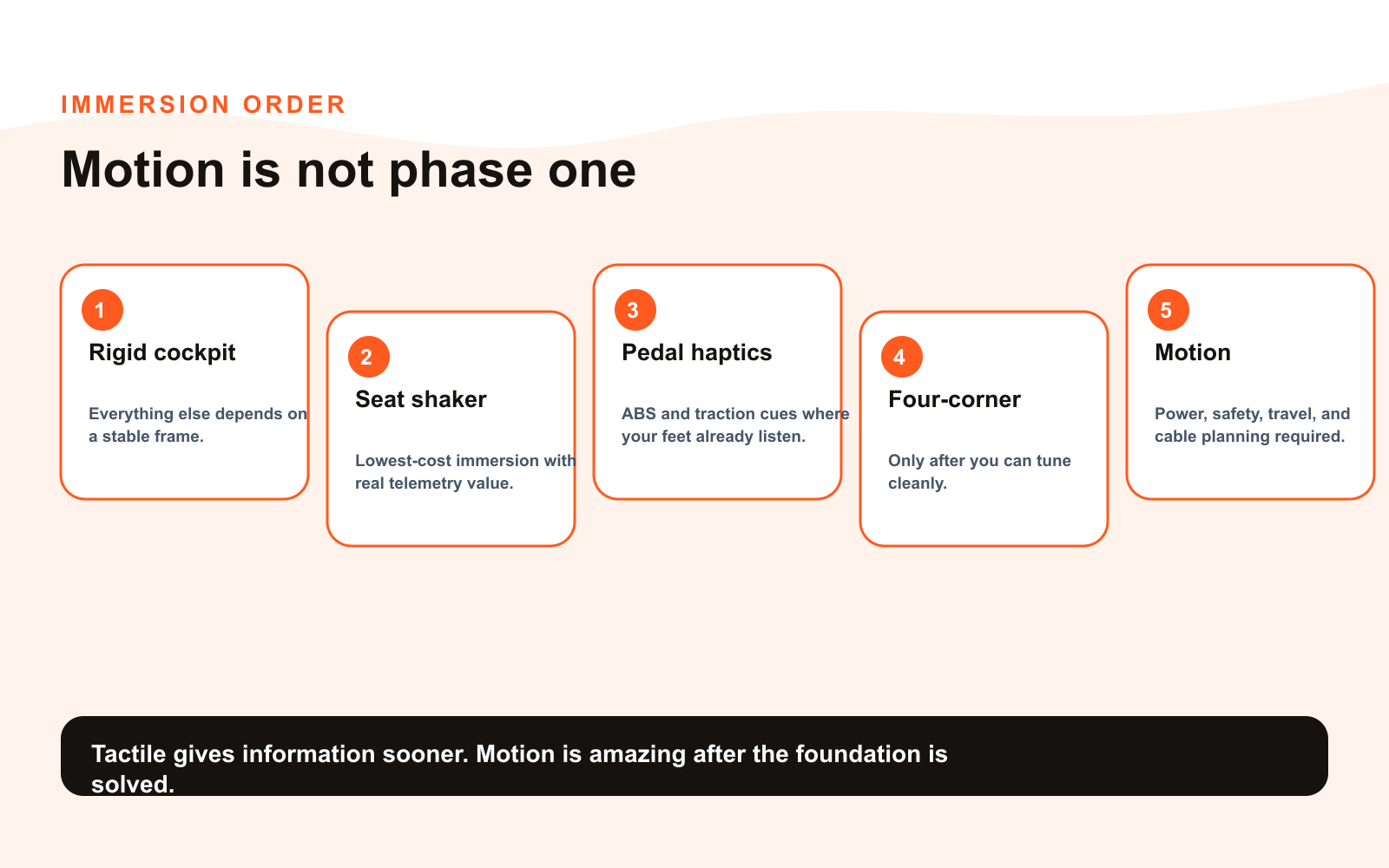
The Smart Upgrade Path
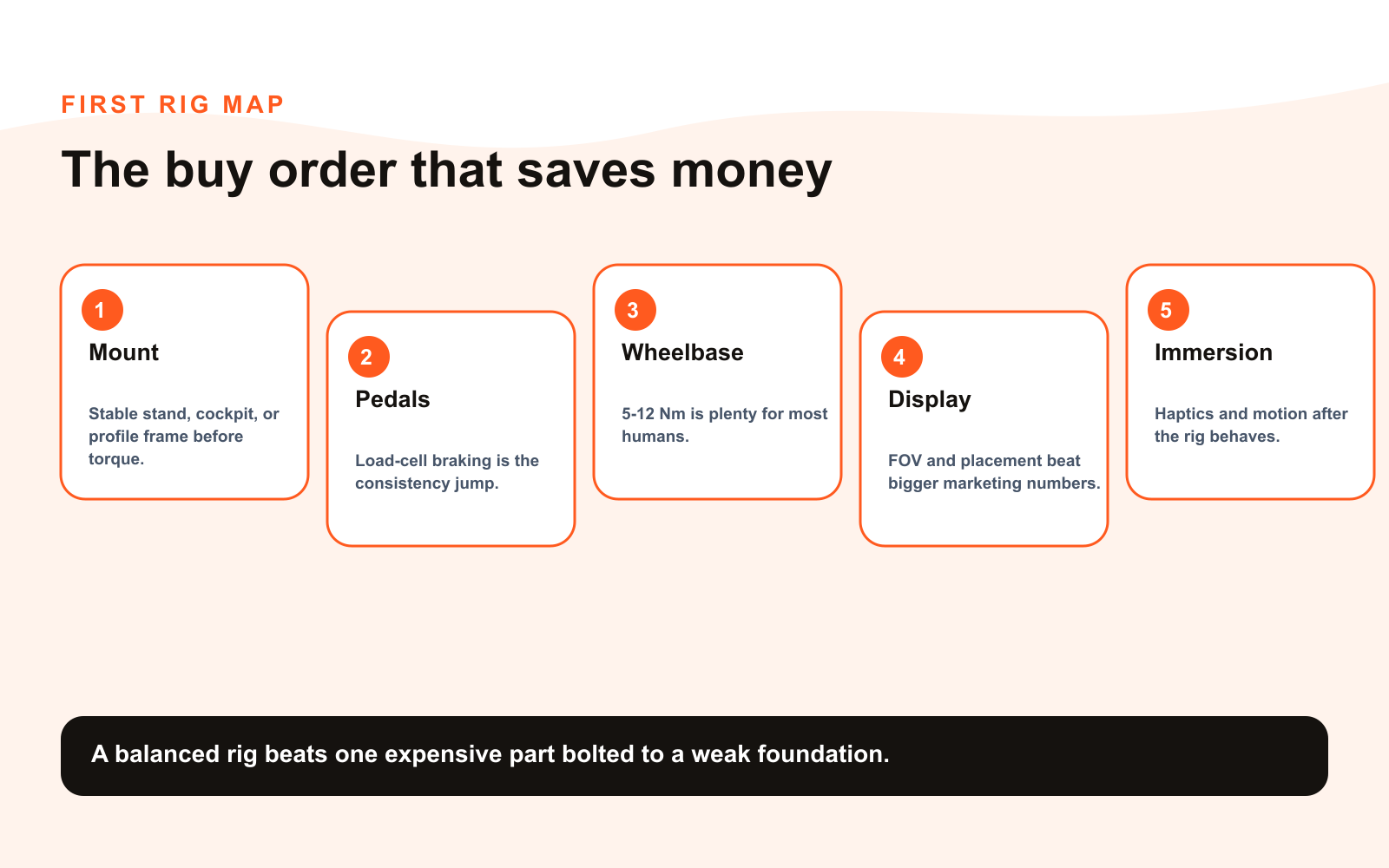
- Rigid cockpit.
- One seat shaker.
- SimHub tune with only a few effects.
- Add pedal haptics if you race ABS cars.
- Add left/right or four-corner tactile only if you can tune it cleanly.
- Consider motion after the rig, wiring, and room are ready.
Research Notes
This guide cross-checks the official ButtKicker Gamer Pro positioning, the OpenSFX/SFX-100 DIY motion hub, XSimulator’s SFX-100 forum tag, and community tactile discussion from r/simracing. Community advice varies because floors, frames, and tolerance for vibration vary wildly.
Verdict
For most rigs: cockpit, tactile, pedals, display, then motion. Full motion is awesome when the foundation is right. Bass shakers are awesome sooner. That is the path that keeps your rig exciting without turning setup night into a cautionary electronics seminar.
Key takeaways & quick answers
IgnitionSim is reader-supported. When you buy through links on our site we may earn an affiliate commission at no extra cost to you — it never changes our verdict or your price. As an Amazon Associate we earn from qualifying purchases.
Keep reading
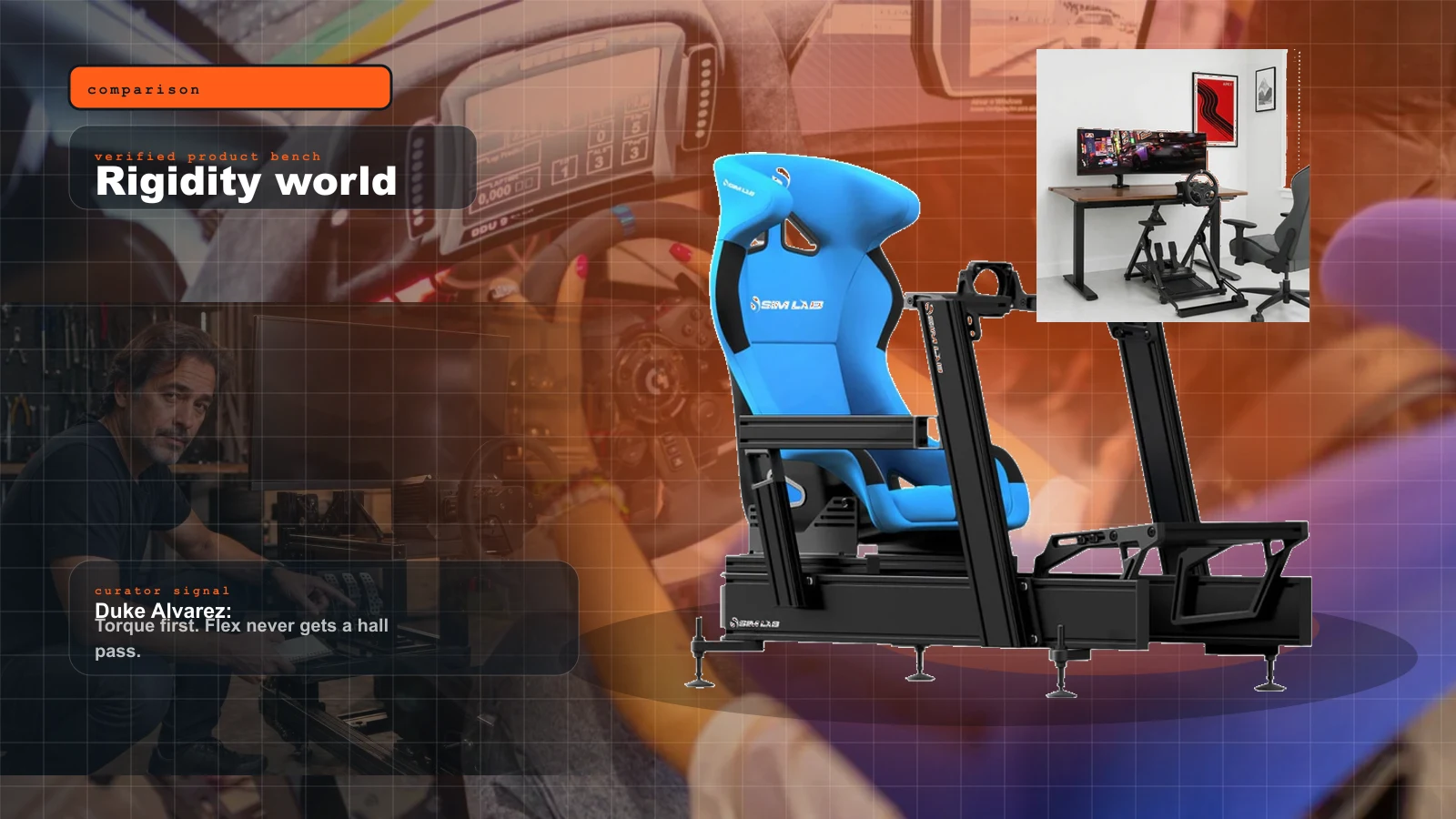
Wheel Stand vs Fixed Cockpit vs 8020 Rig: The 2026 Rigidity Guide for Direct Drive and Load Cells
A stronger wheelbase does not fix a weak frame. This is the cockpit decision that decides whether your pedals, torque, and future motion upgrades behave.
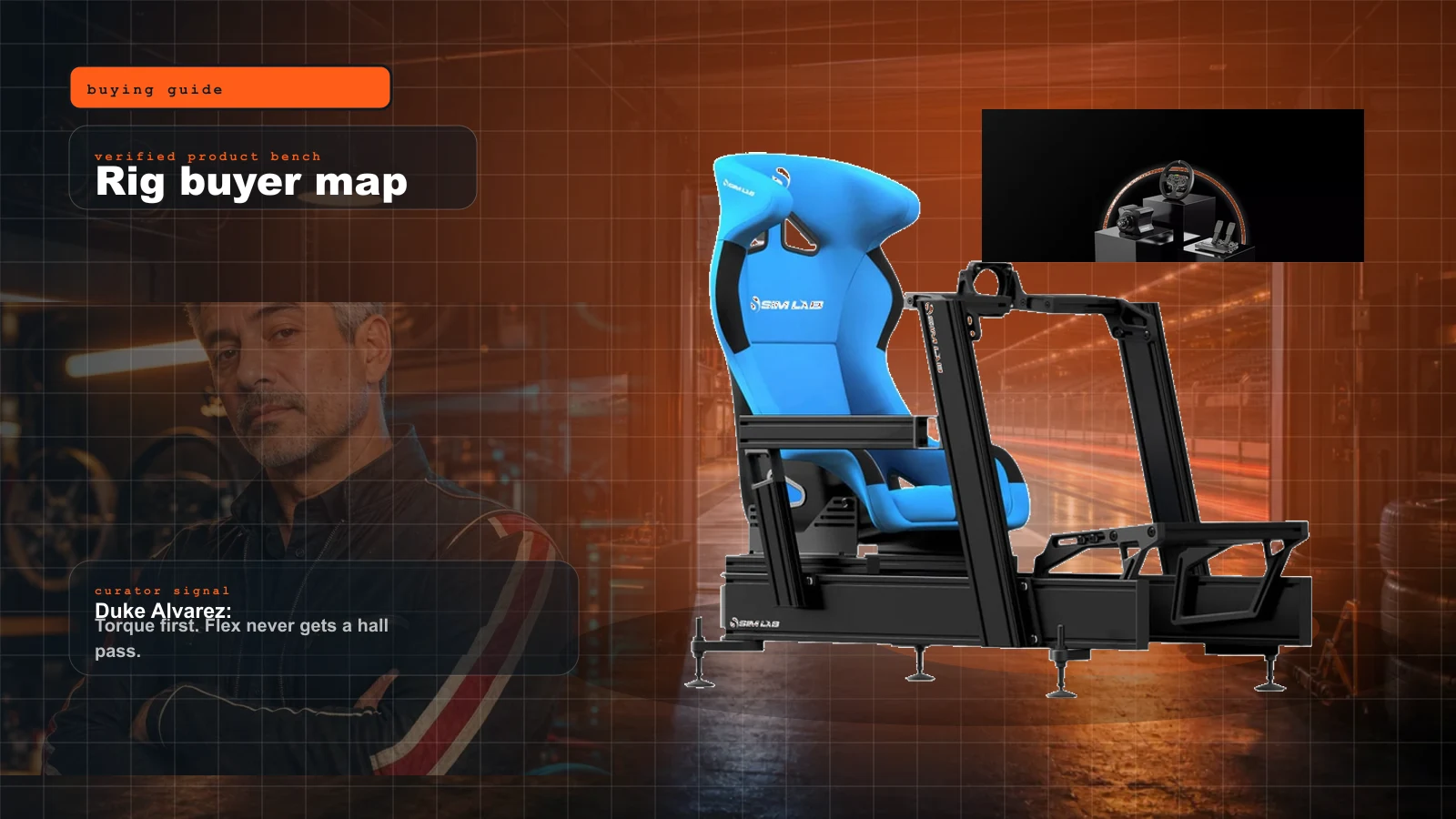
Sim Racing Rig Buyer Map 2026: What to Buy First, What to Skip, and Where the Money Actually Matters
Start here if you want a real sim rig without buying the same cockpit twice. Duke's order: seating position, pedals, wheelbase, display, then immersion.
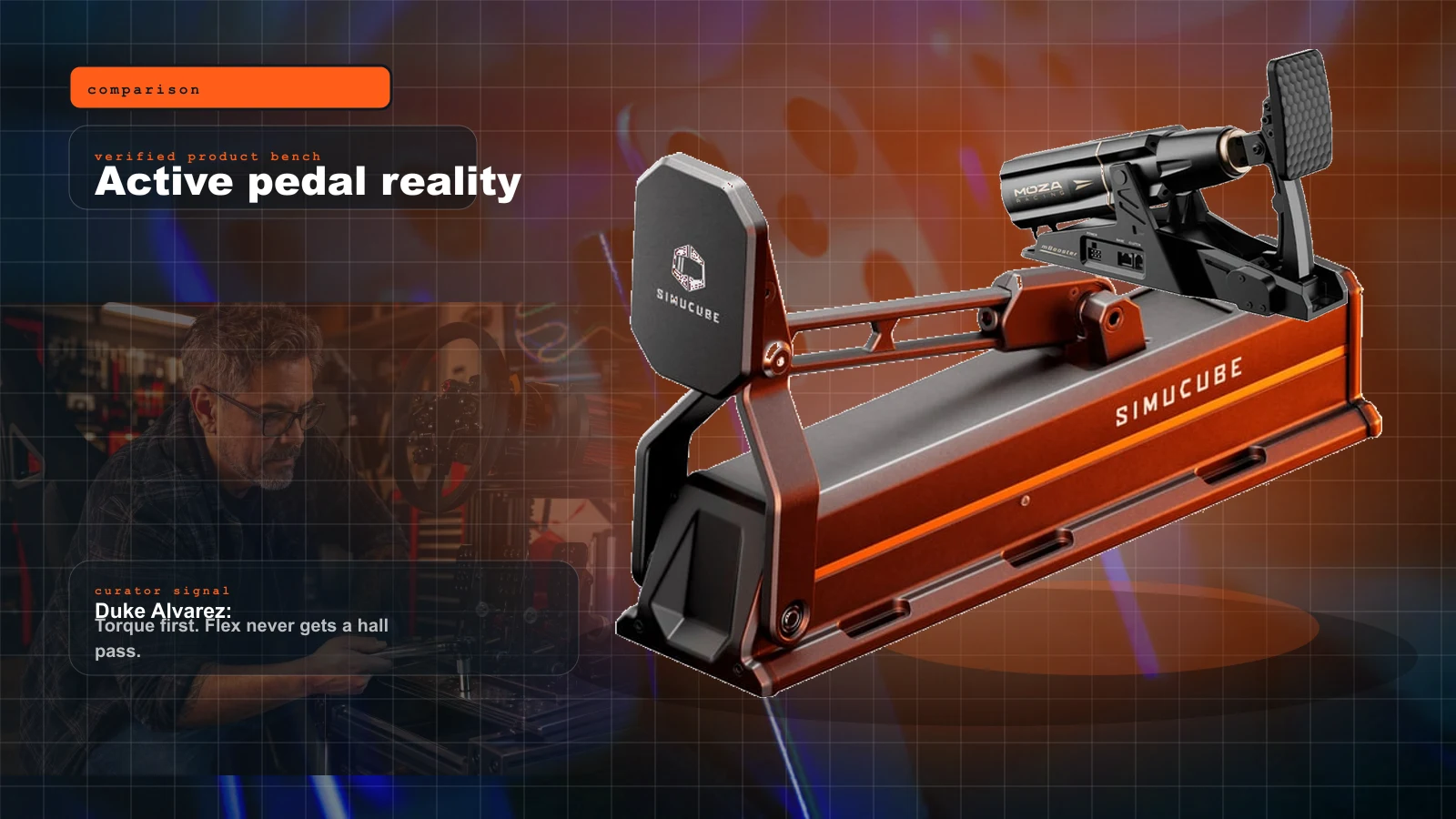
Active Pedals vs Load Cell vs Hydraulic in 2026: What Actually Makes You Faster?
Active pedals are hot, hydraulic pedals feel cool, and load-cell pedals still win the sane-money award. Here is the blunt upgrade ladder.
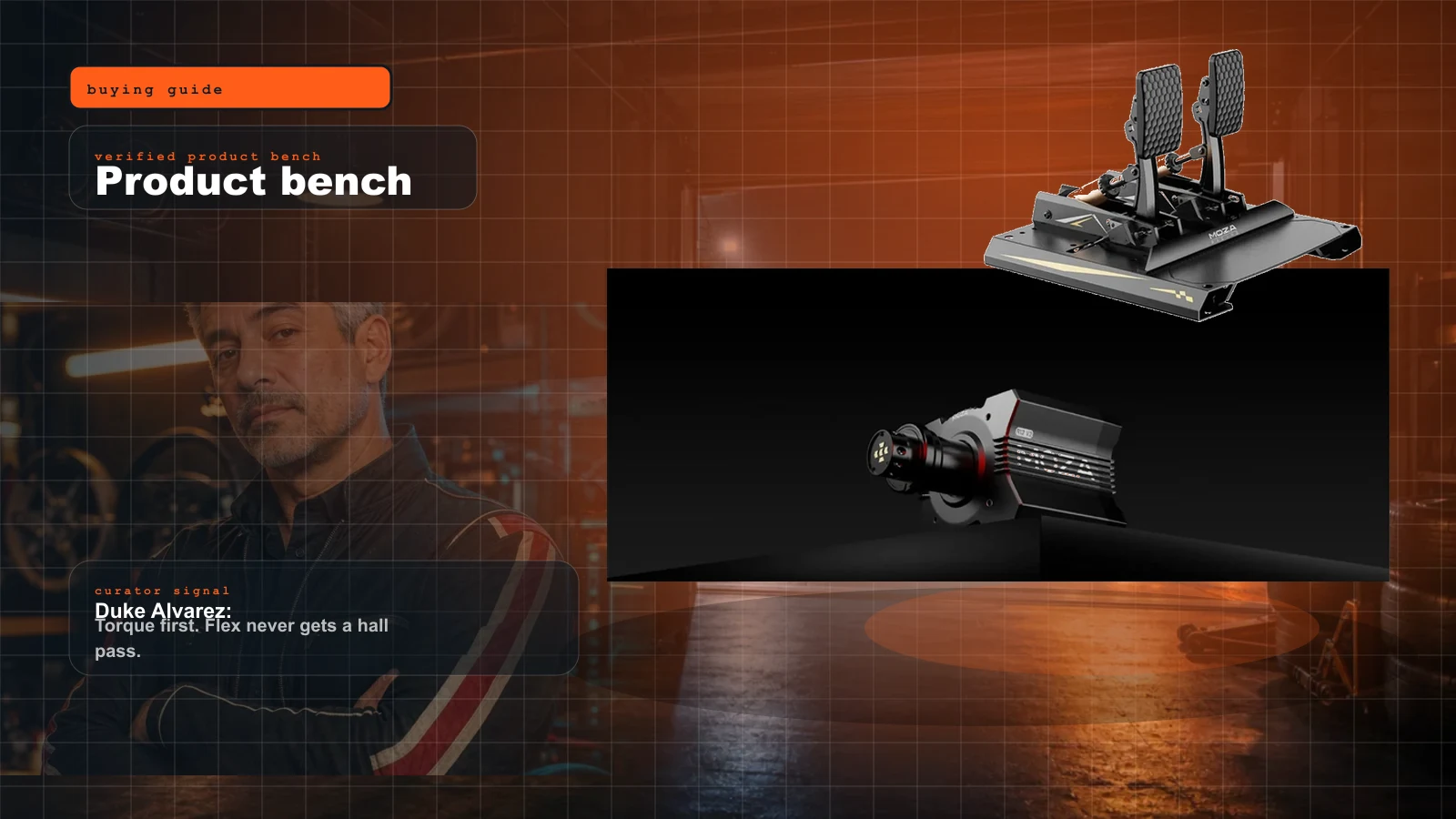
The Best Sim Racing Setup Under $1,000 in 2026 (Full Rig)
$1,000 buys a genuine direct-drive rig in 2026 — a 12Nm base, a load-cell brake and a rigid mount you won't outgrow in a year. Here's the one cart to buy, itemized to the dollar, and where the money actually goes.