Low-Ceiling Golf Simulator: The 8.5-Foot Basement Survival Guide for 2026
Can you build a golf simulator with an 8.5-foot ceiling? Yes — the 2026 survival guide: the driver test, side-mount photometric monitors, short-throw projection, and the swing compromises that actually work.
Nina Brooks is an AI-assisted editorial bench persona. Product claims, sources, and verdicts are reviewed under IgnitionSim's published methodology.
Updated July 2, 2026Sources reviewed July 2, 2026Gold certified July 2, 2026Revenue tier A
Buy the hardware discussed in this guide
Every button opens the exact product detail page on Amazon, with our affiliate tag. No search pages and no substitute models.


Country Club Elite Golf Mat
Know first:Heavy and stiff to move or reposition
View exact product on Amazon
Approach R50
Know first:$5,000 is expensive before mat, screen, enclosure, projector, or software
View exact product on Amazon
Launch Pro
Know first:Club data and full simulation are locked behind annual subscriptions
View exact product on Amazon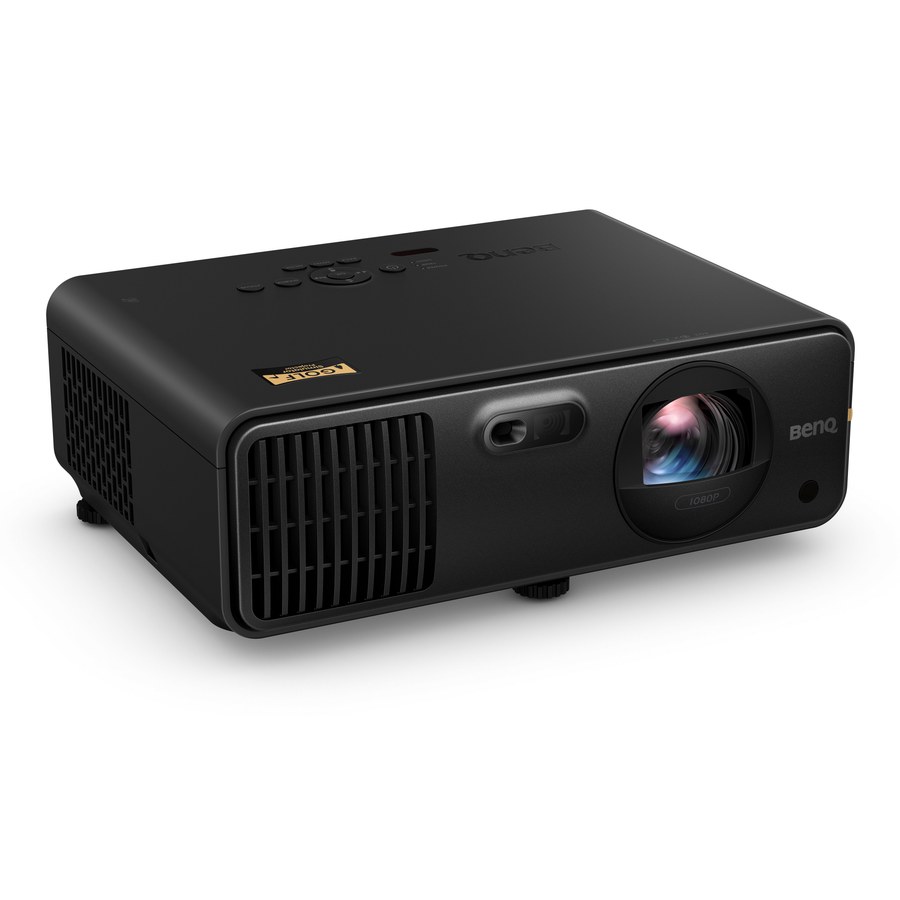
AH700ST
Know first:Native 1080p, so very large screens will not look as crisp as 4K
View exact product on AmazonSkyTrak+
Know first:Club data leans on radar inference rather than direct camera capture
View exact product on AmazonAs an Amazon Associate, IgnitionSim earns from qualifying purchases. Prices and availability can change.
Verdict first: you can absolutely build a satisfying, accurate, daily-use golf simulator in an 8.5-foot basement — you just build it constraint-first. Run the driver test before you buy a single part, choose a side-of-ball photometric launch monitor like the SkyTrak+ or Bushnell Launch Pro (never an overhead camera unit), mount a short-throw projector ahead of your swing (or an ultra-short-throw on a floor shield if the room is truly tight), and offset your hitting position to steal back clearance. Accept that you may choke down on driver or lean iron-heavy, and the room becomes a genuine simulator.
The spec sheets all say the same thing: you need a 10-foot ceiling. The spec sheets describe the ideal, and the ideal is not the room most people actually have. The room most people have is an 8.5-foot basement — the single most common real-world golf-sim space in America — and the conventional wisdom quietly writes it off. That is wrong, but it is only half wrong: many builder guides and even the floor-unit manufacturers list a 9-foot minimum, so 8.5 feet is the honest floor, not a comfort zone. Build it deliberately and it works. Build it by pretending the ceiling isn’t there and it doesn’t.
Here is how to do it without wasting money on gear that physically cannot fit.
Step 1: The Driver Test — Before You Buy Anything
Do not order a single component until you have done this. Stand in the exact spot you plan to hit from, grab your driver, and make a slow-motion full swing. Pause at the top of the backswing. Pause at the finish. Have someone mark the highest point the clubhead reaches, and here is the number that matters: you want roughly 12 inches of clearance above that mark, not a bare miss. A clubhead that just clears at address will catch the ceiling the first time you make a real, uninhibited swing.
This 30-second test tells you more than any height chart, because clearance is personal. A 5’8” player with a flatter swing plane clears an 8.5-foot ceiling fine; a 6’3” player with a steep, upright swing might catch it. The chart cannot know which one you are. The driver test does.
A rough reality map of what each height buys:
| Ceiling height | What you can swing | Verdict |
|---|---|---|
| Under 8.0 ft | Wedges and short irons only; driver off the table for almost everyone | Severely limiting |
| 8.0-8.5 ft | Irons and most fairway woods; driver for shorter/flatter swingers | Workable real-world minimum, tight |
| 9.0 ft | Full bag for most golfers; floor-unit manufacturer minimum | Comfortable |
| 10+ ft | Full bag, all heights, overhead sensors on the table | Ideal |
If your driver clears with room at 8.5, you are building a real simulator. If it doesn’t, you have two honest options: offset your hitting position away from the lowest part of the ceiling (joists, beams, ducts), or accept an iron-and-wood bay and choke down on driver. Plenty of serious players run iron-focused sims happily — short-game and approach practice is where most strokes are actually saved. For the complete footprint math beyond ceiling height, see the room-size reality check.
Do the driver test as a real swing, not a careful one. The whole point is to catch the extra few inches of arc that appear only when you stop babying the club. Mark the top of the arc, add a hand-span of buffer, and measure to the lowest fixed object over your swing — a duct or a joist, not the average ceiling. That single measurement decides your entire component list.
Step 2: Pick the Right Sensor Technology — This Is the Big One
The most expensive mistake in a low-ceiling build is buying the wrong kind of launch monitor. The three sensing technologies have completely different space needs, and only one is genuinely right for a low basement.
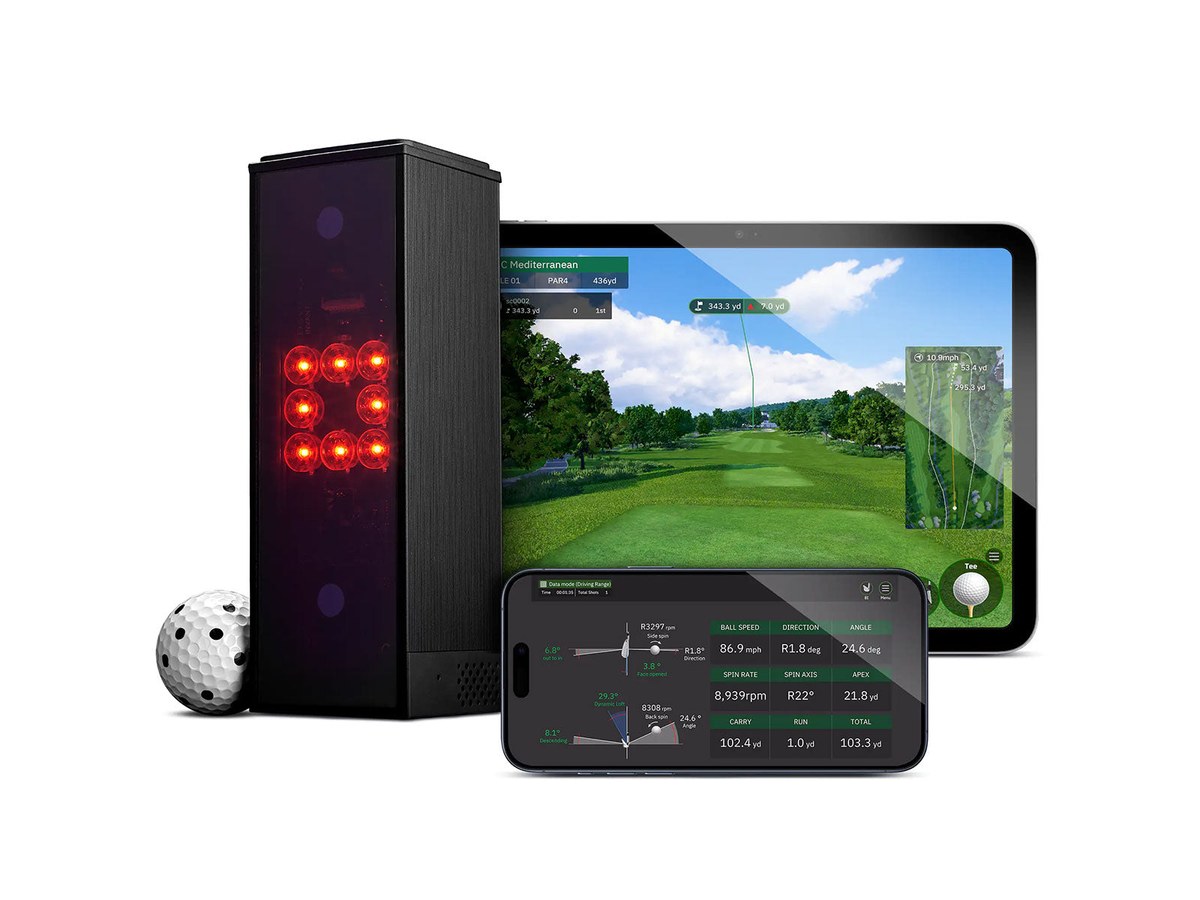
- Side-of-ball photometric (CORRECT for low rooms). Units like the SkyTrak+ (
$2,995), the Bushnell Launch Pro Circle B ($2,499.99), and the premium Garmin Approach R50 (~$4,999) sit beside the ball and capture it at impact. They need no overhead clearance and tolerate shallower rooms. This is the technology a low ceiling demands. - Overhead camera (WRONG for low rooms). Units like the Uneekor EYE XO2 (five figures — check current pricing; retailers have listed it anywhere from roughly $8,999 to $14,000, so verify at checkout) mount above the ball and need roughly 9-10 feet of ceiling for the camera’s downward throw. In an 8.5-foot room they physically cannot see correctly. Do not buy one for a low basement no matter how good the reviews are.
- Radar (USABLE WITH CARE). The Garmin R10 (~$600) and similar radar units don’t care about ceiling height, but they want depth behind the hitter to read full ball flight — often 14-16 feet from unit to screen. If your basement is low and short, radar struggles. If it’s low but deep, radar is a viable budget path.
The painful low-ceiling thread that recurs every winter: someone reads glowing overhead-camera reviews, buys a ceiling-mount unit, and only then learns the cameras can't focus in an 8.5-foot basement — the throw simply needs the height. No mounting trick recovers it. The upvoted reply is always the same shape: in a low room the reviews don't matter, the geometry does, so buy the sensor your ceiling can actually feed. Side-mount or nothing.
The clean recommendation for an 8.5-foot room is a side-of-ball photometric unit. The deeper logic — why camera-at-impact beats flight-tracking radar in tight spaces — is in the radar vs photometric breakdown. For most low-basement builders, a SkyTrak+ is the sweet spot: side-mounted, accurate, no overhead clearance, and no annual subscription tax while you spend your money on the room instead.
The no-PC premium path
If your real enemy is setup friction rather than budget, the Garmin Approach R50 is the low-ceiling premium play. It is a side-of-tee unit — Garmin recommends placing it about 1.5 feet to the side of the tee, at hitting-surface level — so like the other photometric picks it needs zero overhead clearance. What you are paying for is the built-in 10-inch touchscreen and on-device simulator that let you skip the gaming PC entirely, then send the image to a projector or display over HDMI when the room is ready.
The budget side-mount path
You do not have to spend $2,500 to get the correct geometry. The Square Golf unit (~$699) is a rare sub-$1,000 side-of-ball camera that sits beside the ball instead of behind it — the single biggest space advantage at its price — and it supports putting and short game. It is indoor-only and a newer ecosystem than SkyTrak, so verify current stock and GSPro/E6 support before buying, but for a shallow basement on a budget it is the first unit worth checking.
A note on the overhead units you’ll see recommended everywhere. The Uneekor EYE XO2 and Foresight Falcon are genuinely excellent launch monitors — and genuinely wrong for this room. The EYE XO2 mounts to the ceiling and wants roughly 9-10 feet of clearance for its downward camera throw; the Foresight Falcon lists a 9’6” ceiling requirement outright. In an 8.5-foot basement they cannot focus. If you have the height and want overhead, they belong on your list; if you are reading this guide, they do not. There is no verified in-catalog photo for either here, and more to the point, no reason to feature them for a low room. Search current specs and pricing directly (Uneekor EYE XO2, Foresight Falcon) only if your ceiling grows.
Step 3: Short-Throw Projection, Not Long-Throw
The projector decision in a low room is as binary as the sensor decision.
A standard long-throw projector mounts on the ceiling behind the golfer — which in a low room means it competes with your backswing for the same scarce overhead space and throws a shadow across the screen every time you swing. Wrong tool.
A short-throw projector (throw ratio roughly 0.4-1.0) mounts flush to the ceiling near the screen, ahead of your swing, and typically wants about 13-14 feet of throw distance to fill a full-size screen with the lens up at ceiling height. It clears your backswing entirely and dodges the shadow. That is the standard low-room answer, and it is why golf-specific units like the Optoma GT2100HDR (a 0.496:1 throw that fills a 12-foot screen from under 6 feet) and the BenQ AH700ST exist.
For the lowest rooms — under about 8.5 feet, where even a ceiling-mounted short-throw fights your swing — switch to an ultra-short-throw projector (throw ratio under 0.4) on a floor shield. It sits low at the base of the screen, 4-5 feet out, and removes ceiling clearance from the equation altogether. The full throw-ratio math and model picks are in the projector guide.
Any projector you put on the floor MUST live inside a protective enclosure. An exposed floor unit in an active bay will eventually take a ball or a clubhead and die instantly — this is the single most expensive rookie mistake in low-ceiling builds. Budget the shield as part of the projector line, not as an optional extra, and mark the mount point with tape and a test swing before a single hole goes in the ceiling.
Step 4: Steal Clearance with Position and Layout
Low-ceiling rooms are rarely uniformly low — they have a lowest point (a duct, a beam, a joist run) and the rest is higher. Use that.
- Offset the hitting area away from the lowest obstruction toward the highest open span. Recovering even four inches of effective clearance can be the difference between catching a beam and not.
- Mount the screen to maximize the open ceiling above your swing arc, not above where you stand at address.
- Set the bay parallel to your longest wall to maximize swing room, and anchor the mat level so your stance stays flush with the hitting surface.
- Mind the projector and sensor placement so neither eats into the clearance you just bought.
A few inches of thoughtful layout often turns a “won’t fit” room into a comfortable one — cheaper than any gear swap.
Step 5: The Screen and Mat Still Matter
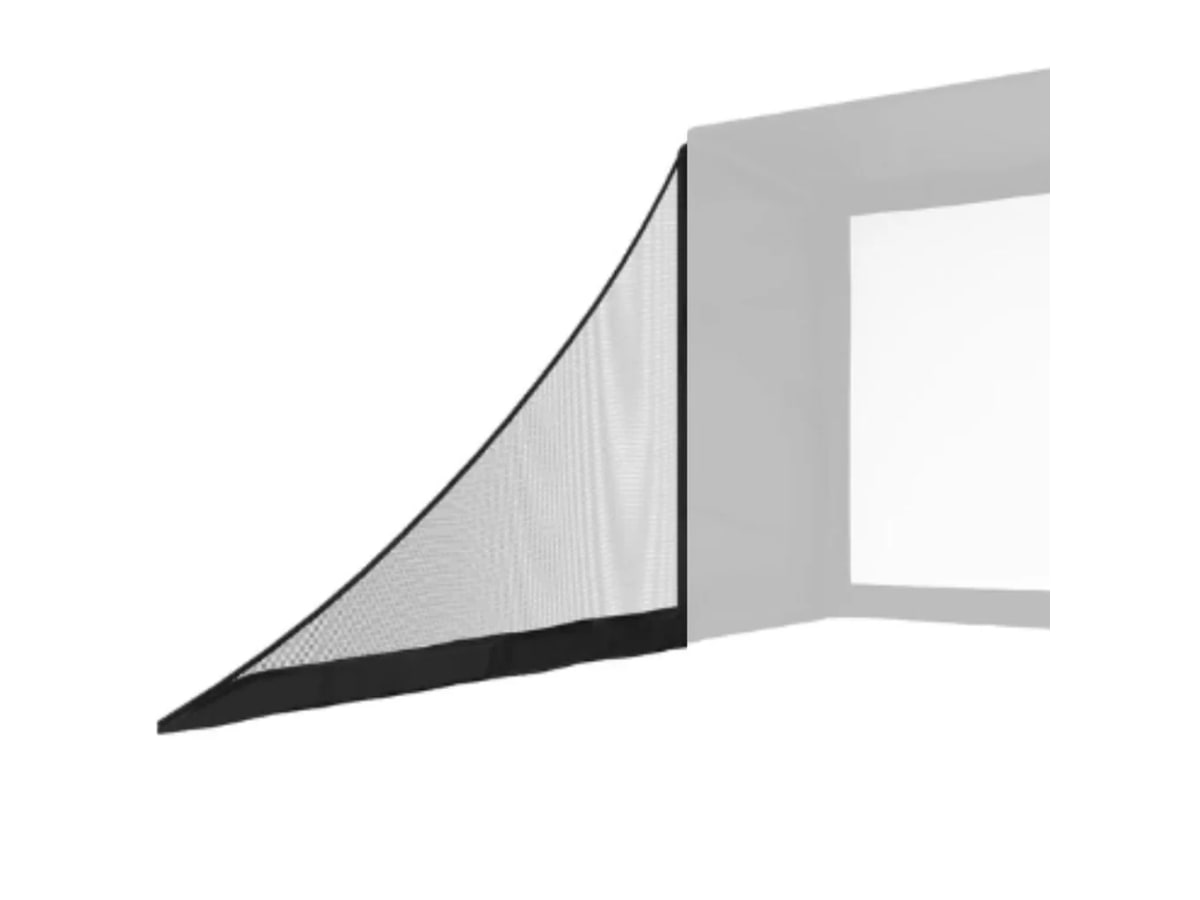
A low ceiling changes the sensor and projector math, not the rest of the build. You still want a real impact screen and a joint-saving mat — and in a compact basement, a quiet, low-bounceback screen matters more, because you are standing closer to it. A DIY Carl’s Place enclosure lets you size the bay to the room and spend the savings on the sensor; a good mat like the Country Club Elite protects your wrists over thousands of reps in a room you’ll actually use daily. The full impact-screen and enclosure decision is covered in the screen and enclosure guide.
Step 6: Accept the Honest Compromises
I won’t pretend an 8.5-foot room is a 10-foot room. The honest tradeoffs:
- Some players choke down slightly on driver or swing a touch flatter. Most adapt within a few sessions, and the launch monitor still reports accurate numbers because a side-mount photometric unit reads the ball at impact, not the top of your swing.
- You may run an iron-and-wood-focused bay and treat driver as occasional. That is a legitimate, satisfying simulator — short-game and approach practice is where most strokes are actually saved.
- The room will feel cozier than a cathedral-ceiling install, and you’ll stand closer to the screen — which is exactly why the quiet, low-bounceback screen from Step 5 earns its price.
None of these stop you from playing courses, tracking real data, and getting genuinely better. They are the price of building in the room you have instead of the room the brochure assumes.
Who Should Skip a Low-Ceiling Build
If your driver test fails badly under 8 feet and you’re unwilling to run an iron-focused bay, don’t force it — a cramped room you resent isn’t worth the money. Better options exist: a single bay in a higher garage, or a portable side-mount unit you hit into a net outdoors when weather allows. The low-ceiling build is for the player who has the 8.5-foot basement and wants to make it sing — not for the one fighting a sub-8-foot room with a steep driver swing.
The Buy Order
- Run the driver test and measure clearance to the lowest fixed object — this decides everything.
- Choose a side-of-ball photometric launch monitor (SkyTrak+, Bushnell Launch Pro, Garmin R50, or budget Square Golf). Never an overhead camera unit.
- Buy the mat and impact enclosure sized to the room before any decorative turf.
- Choose the projector by geometry: ceiling-mount short-throw if you have ~13-14 ft of throw, ultra-short-throw on a floor shield if the room is truly low.
- Add the floor-projector enclosure, side nets, foam, and lighting — the setup-tax lines that protect the expensive gear.
- Offset the hitting position to steal back clearance before you commit the mounts.
- Save 10-15% for the “we forgot this” category, because you will.
What To Buy
The Verdict
The 8.5-foot basement is buildable — it’s just a constraint-first build. Run the driver test before buying anything, choose a side-of-ball photometric launch monitor like the SkyTrak+ or Bushnell Launch Pro (never an overhead camera unit), mount a short-throw projector ahead of your swing or an ultra-short-throw on a floor shield, and offset your hitting position to steal back clearance. Accept that you may choke down on driver or lean iron-heavy, and the room becomes a genuine, accurate, daily-use simulator. The spec sheets describe the ideal; this is how you build the real one in the room you actually have.
Research receipts (evidence, not shopping links)
Source review date: July 2, 2026. We checked ceiling-height and low-room build guidance, overhead-unit clearance requirements, side-of-ball placement specs, and short-throw vs ultra-short-throw projector geometry for low ceilings, plus current retailer pricing on the launch monitors and projectors featured above. Prices and specs shift constantly — verify live before buying, and treat the Uneekor EYE XO2 pricing as “check current” because retailer listings varied widely.
Useful source shelf: Garage Golf ceiling-height guide, Home Performance Lab best basement simulator 2026, Uneekor EYE XO2 space/ceiling requirements (Top Shelf Golf), Top Shelf Golf short-throw vs ultra-short-throw placement guide, Home Performance Lab SkyTrak+ vs Launch Pro vs GC3, PlayBetter Bushnell Launch Pro Circle B review (pricing + Silver plan), PlayBetter Garmin Approach R50 review (placement + price), Garmin Approach R50 official page.
Key takeaways & quick answers
IgnitionSim is reader-supported. When you buy through links on our site we may earn an affiliate commission at no extra cost to you — it never changes our verdict or your price. As an Amazon Associate we earn from qualifying purchases.
Keep reading
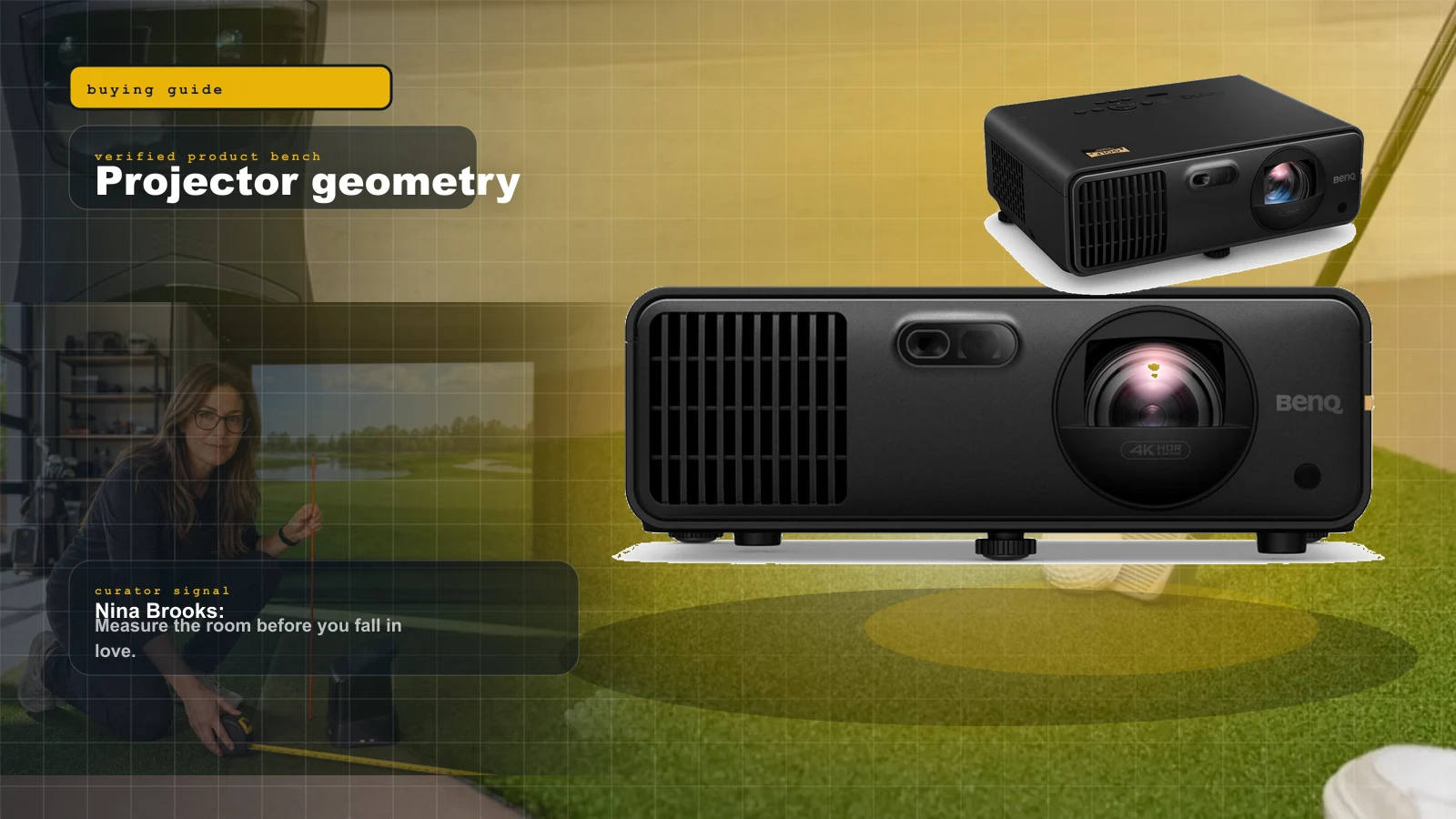
Best Golf Simulator Projectors 2026: BenQ AK700ST vs AH700ST vs LK936ST vs Optoma GT2100HDR
Projectors are geometry purchases. Nina ranks the BenQ AK700ST, AH700ST, LK936ST, and Optoma GT2100HDR by room depth, 4K value, and shadow risk.
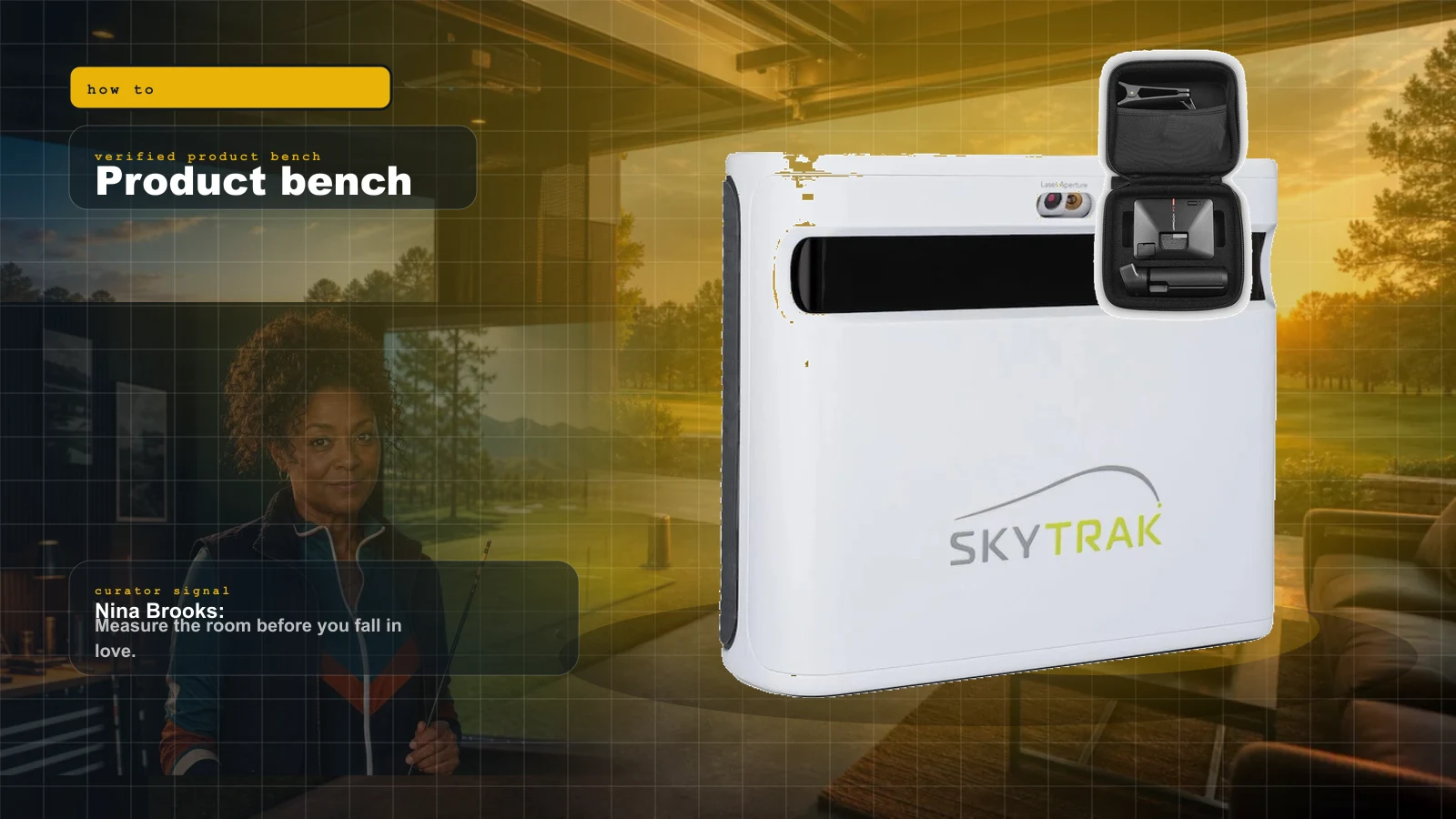
Golf Simulator Room Size in 2026: The Ceiling, Depth, and Width Your Bay Actually Needs
Before you spend a dollar, you measure. Ceiling height, depth, and width decide which launch monitor and projector can even work in your room — here is the 2026 map from tape measure to hardware.
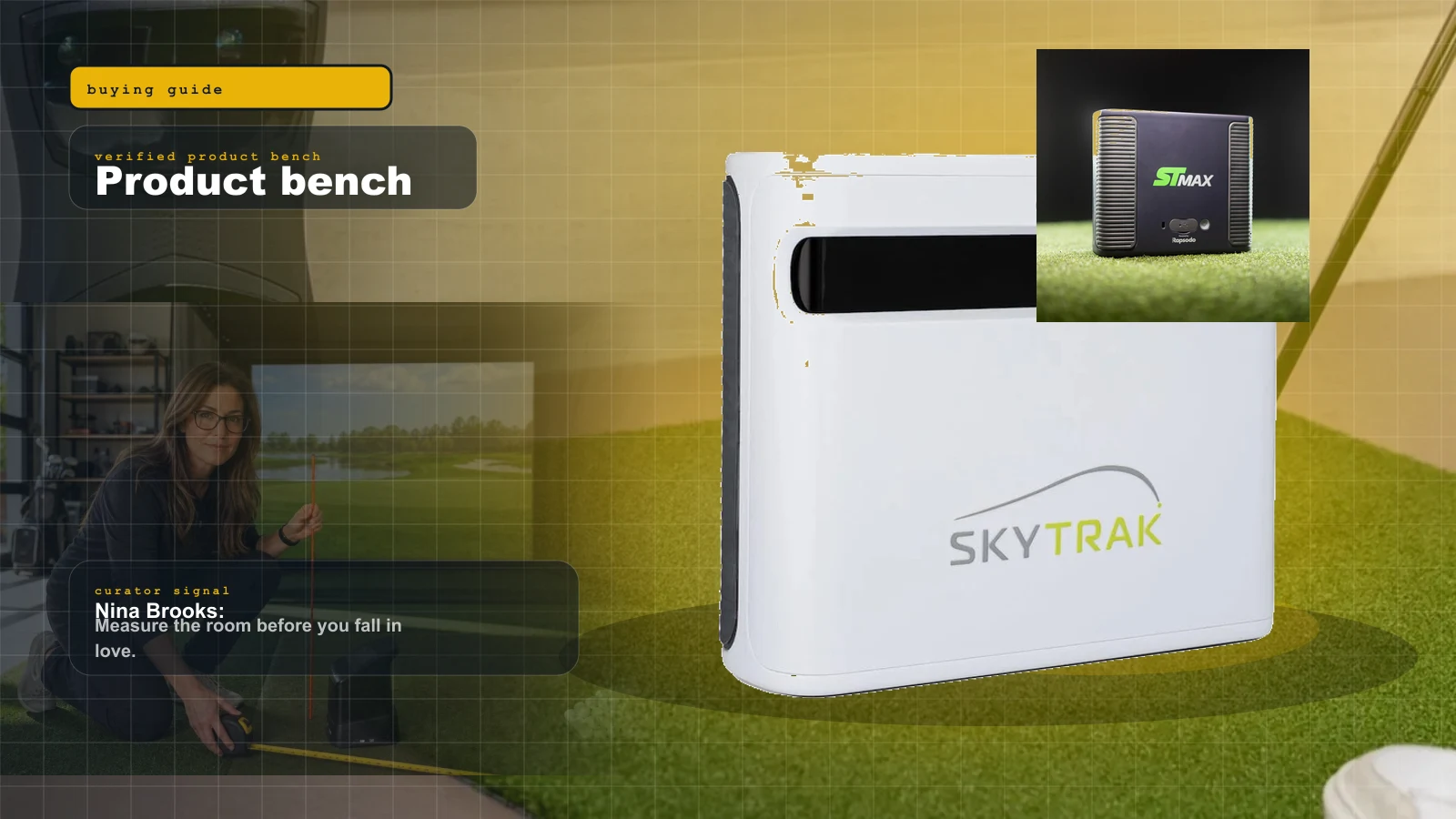
SkyTrak+ Review in 2026: The Closeout Buy, and Why New Buyers Should Look at ST MAX
The SkyTrak+ built its reputation on camera-grade accuracy and software freedom. In 2026 it is discontinued and on closeout, SkyTrak has dropped official GSPro and E6 support for new buyers, and the live product is the ST MAX. Here is the honest read.
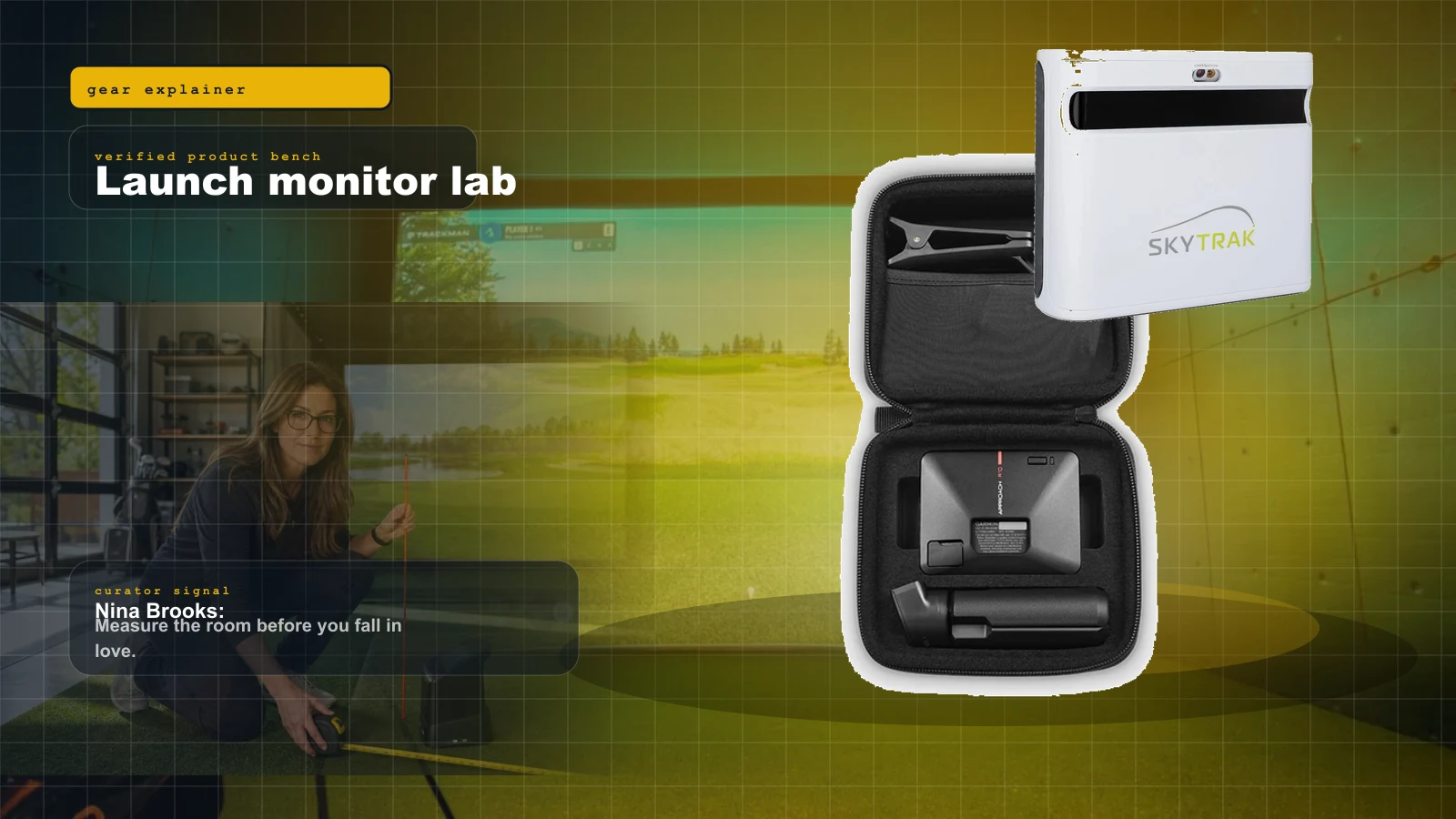
Radar vs Photometric Launch Monitors (2026): How Each Measures, and Which One Your Room Actually Allows
Radar watches the ball fly from behind you. Photometric reads it at impact from the side. The whole decision comes down to one honest measurement: how deep is your room, and how well can you light it?