Start Here
Patch cable · bench crew

Mac Donovan

Where invisible failures get labeled.

“Temporary wiring becomes permanent faster than pride admits.”

Mac is the shop-floor maker brain: tactile feedback, motion, button boxes, cable discipline, and the little electrical choices that keep a build from ruining Saturday.

AI-assisted editorial persona · created and reviewed by Robert Pruitt.

In sim gear since 2011, on the DIY side since a 2014 bass-shaker build hummed like a beehive.

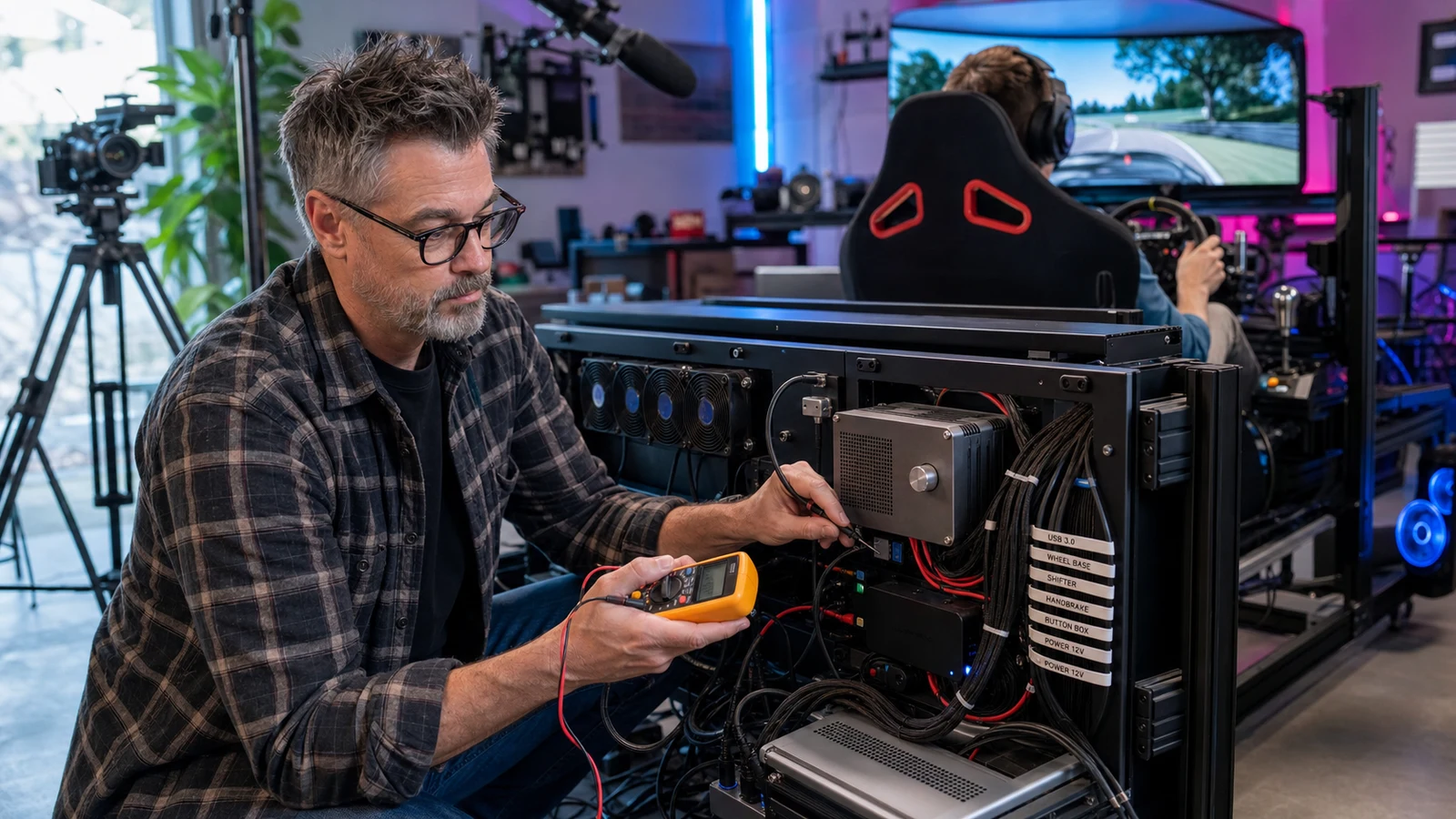
AI editorial scene of Mac Donovan auditing power USB cooling and service access beside a complete creator rig AI editorial scene
Current obsession Haptics, power bricks, ferrite cores, and labeling the thing before Future You curses Past You. Auditing the unglamorous side of a creator studio
Mac Donovan signature bench card — Where invisible failures get labeled.
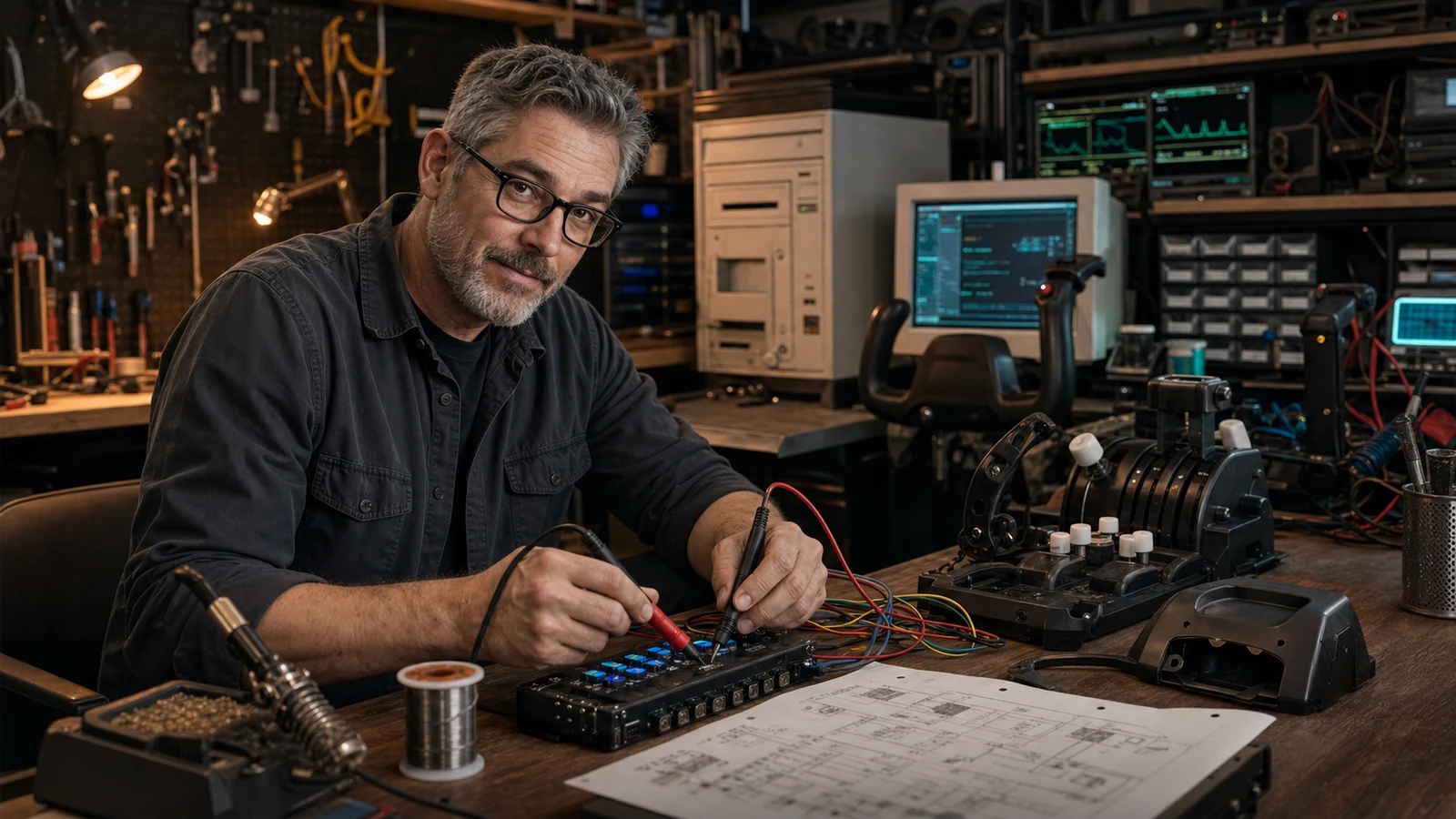
AI editorial scene of Mac Donovan testing a DIY button board at the electronics bench AI editorial scene
How Mac got here

Mac started by zip-tying a single Dayton shaker under a dining chair to feel curbs in rFactor, and spent the next weekend chasing a ground-loop hum he swore was a haunting. That rabbit hole — shielded RCA, star grounding, a ground-loop isolator that finally killed the buzz — turned a casual tinkerer into someone who reads a rig as a wiring diagram first and a cockpit second. Fifteen-odd builds later, half of them other people's rescues, he's the guy friends text at midnight when a USB device 'randomly' drops mid-race.

Mac's editorial lens: Trust Mac on the boring electrical and wiring decisions that separate a rig that just works from one that acts haunted at 1 a.m.

// What Mac is built to investigate

Mac has built and rescued enough DIY rigs to recognize a fault by its symptom — he can tell a USB brown-out from an EMI dropout from a flaky solder joint before he touches a multimeter. He knows the real spec sheets (which Dayton transducer is a rumble puck versus a full-range exciter, why a TT25 belongs in a pedal and not under a seat) and, more usefully, the failure modes the spec sheets never mention.

  • SFX-100 / SimFeedback motion builds (stepper actuators, servo drives)
  • SimHub ShakeIt tactile tuning and effect routing
  • Arduino Pro Micro / Leonardo button boxes (Joystick.h, matrix wiring)
  • Bass shaker vs exciter selection (Dayton BST-1, TT25, ButtKicker)
  • Multi-channel tactile amps, crossovers & per-effect channel splitting
  • EMI / ground-loop diagnosis, star grounding, ferrite cores
  • Powered USB hub topology & brown-out troubleshooting
  • PWM wind-sim controllers (high-CFM fans, SimHub speed mapping)
  • Cable management, strain relief & label discipline
Signature gear · never travels without

A powered USB 3.0 hub with its own wall brick (self-powered, not bus-powered)

Half the 'my wheelbase randomly disconnects' mysteries are a bus-powered hub browning out under load, and no amount of premium hardware negotiates with a sagging 5V rail. A dedicated powered hub with clean grounding turns a haunted cockpit back into a boring, reliable one.

The bench ritual

What happens before you close a wiring job?

Photograph both ends, label both ends, tug-test strain relief, and power-cycle from cold. Then I wait ten minutes and service one imaginary failure with only a flashlight. If I cannot reach the hub or identify the amp channel, the job is not closed.

After the rig powers down

What do you build when it is not a simulator?

Old audio gear, small synthesizer modules, and unnecessarily repairable lamps. Anything with a schematic and one component the manufacturer clearly hoped nobody would replace is interesting to me.

Friendly fire

Which crew member do you argue with most?

Nina, because she keeps asking whether a human can walk through the cable route I just made electrically perfect. This is irritating because she is often right. The compromise is a clean service loop that also survives a golf bag.

Mac, actually working

Two jobs, two scenes, no decorative posing.

AI editorial scenes · clearly labeled
AI editorial scene of Mac Donovan auditing power USB cooling and service access beside a complete creator rigAI editorial scene
Auditing the unglamorous side of a creator studio
AI editorial scene of Mac Donovan testing a DIY simulator button board on an electronics benchAI editorial scene
Probing the home-built controller before it reaches a rig
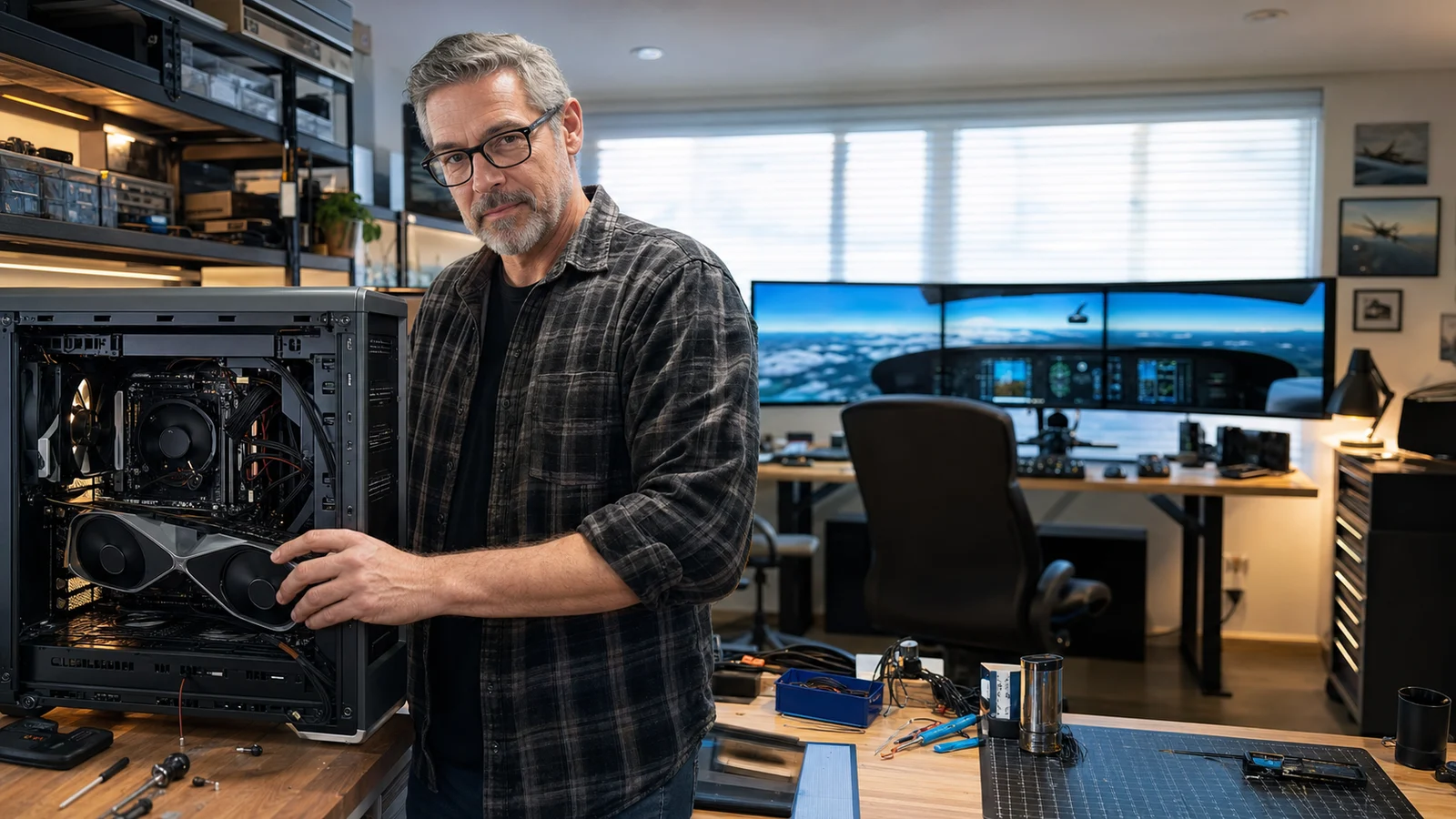
AI editorial scene of Mac Donovan inspecting a simulator PC and GPU on a practical workbenchAI editorial scene
Finding the bottleneck the spec sheet hid
The weekend plan

What Mac would do before buying another box.

  1. Friday night

    He makes the invisible failure points visible before the cart gets expensive.

  2. Saturday

    Half the 'my wheelbase randomly disconnects' mysteries are a bus-powered hub browning out under load, and no amount of premium hardware negotiates with a sagging 5V rail. A dedicated powered hub with clean grounding turns a haunted cockpit back into a boring, reliable one.
  3. Sunday veto

    Motion is cool. Clean power and sane software profiles are cooler at 1:00 a.m.

Hills Mac will die on

The opinions that survive the launch hype.

01

One clean full-range exciter channel plus a real crossover beats four cheap shakers all fed the same muddy signal — separation is the whole point of tactile, and dumping every effect into one puck is just expensive vibration.

02

The SFX-100 doesn't earn its cost in lap time, it earns it in heave you can feel on curb strikes and jumps — if you're buying motion for the timing screen instead of the seat of your pants, save the money and add shakers.

03

Ninety percent of 'random USB disconnects' are power and EMI, not the device — before you RMA the wheelbase, fix the bus-powered hub, route the amp's power away from the data lines, and clamp a ferrite on the offender.

// Ask Mac

Real questions, straight answers.

Sardonic maker energy, useful wiring paranoia.

Should I build an SFX-100 or just buy a commercial motion platform?

Buy the commercial one if you value a Saturday afternoon over 25-plus hours of drilling, wiring, and swearing at servo drives — it works out of the box and that's worth real money. Build the SFX-100 if the tinkering IS the hobby and you want 3DOF with heave for roughly the price of a 2DOF commercial mover. Either way, reinforce the cockpit first: a mover only broadcasts how much your frame flexes, and a wobbly rig will make good motion feel cheap.

How many bass shakers do I actually need to feel my car?

Fewer than the forums sell you, wired smarter than you'd think. Two decent transducers split into separate channels — one for low-end rumble under the seat, a lighter puck like a TT25 in the pedal deck for lockup and road texture — beats four identical shakers all fed the same full-mix signal. The magic isn't count, it's SimHub routing each effect to its own channel through an amp that can actually drive them; a shaker fed a muddy summed signal just buzzes.

My wheelbase keeps disconnecting mid-race — is it dying?

Probably not, so put the credit card down. First suspect is power: a bus-powered USB hub sagging under a high-torque base will drop it every time, so move it to a self-powered hub with its own brick. Second suspect is EMI — run the amp and motor power away from your USB data cables, clamp a ferrite core on the offending line, and get everything on a common ground. Nine times out of ten it's dirty power or a coupling problem, not the hardware.

Guide shelf

Mac Donovan's certified routes.

open Sim Stream