
Best HOTAS Throttle for DCS World in 2026: Warthog, Virpil, VKB STECS, and WinWing Compared
A DCS-focused throttle buying guide for 2026 — Thrustmaster Warthog, Virpil MongoosT-50CM3, VKB STECS Mk.II, and WinWing Orion 2 — ranked by detents, afterburner gates, dual levers, and honest price-to-feel.
Val Chen is an AI-assisted editorial bench persona. Product claims, sources, and verdicts are reviewed under IgnitionSim's published methodology.
Updated July 2, 2026Sources reviewed July 2, 2026Gold certified July 2, 2026Revenue tier A
Buy the hardware discussed in this guide
Every button opens the exact product detail page on Amazon, with our affiliate tag. No search pages and no substitute models.

Stream Deck XL
Know first:Not flight hardware — it's keyboard-shortcut mapping, not analog axes
View exact product on Amazon
HOTAS Warthog
Know first:No twist axis — a weak fit for six-axis space combat
View exact product on Amazon
T.16000M FCS HOTAS (stick + TWCS throttle)
Know first:TWCS throttle spring is stiff out of the box
View exact product on Amazon
T.16000M FCS (Stick Only)
Know first:All-plastic build feels light vs boutique sticks
View exact product on Amazon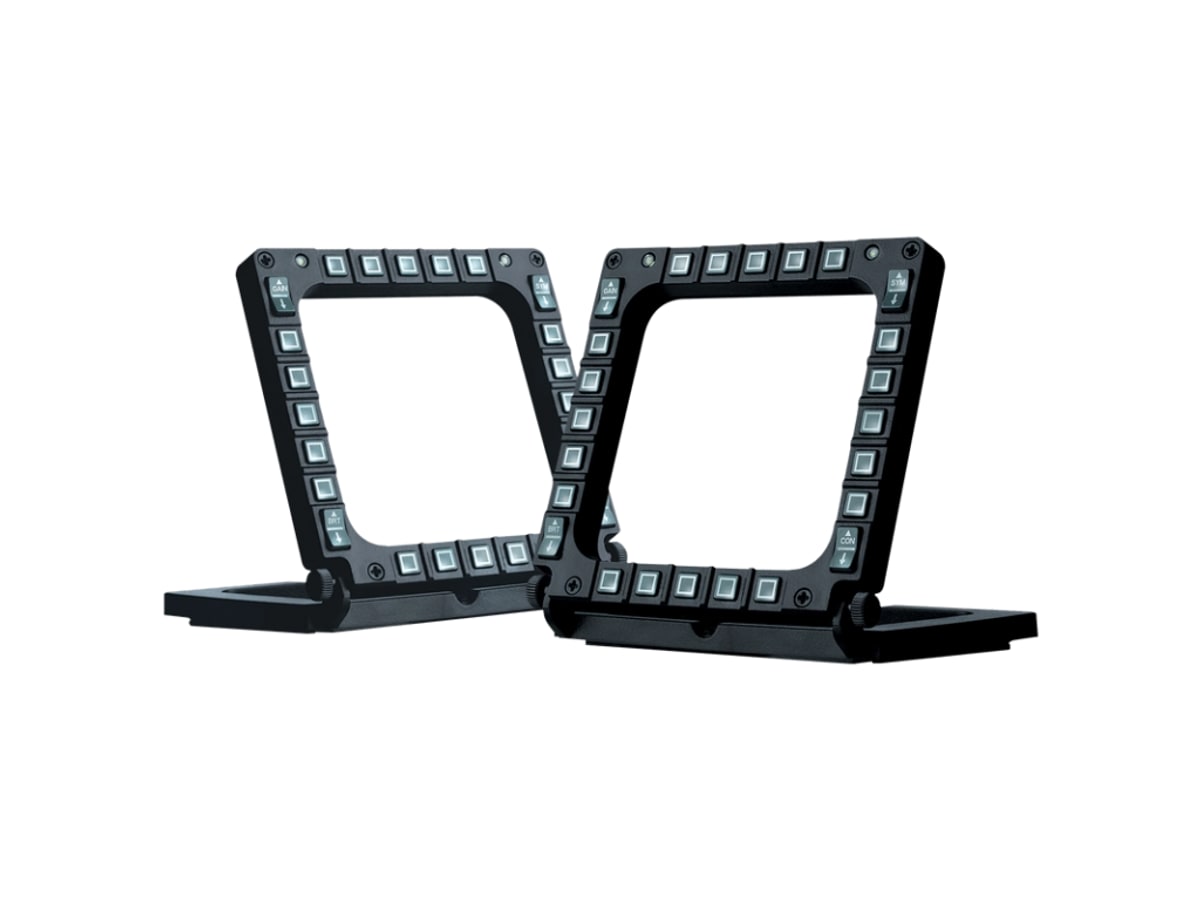
MFD Cougar Pack (2 panels)
Know first:Dated F-16 styling and all-plastic construction
View exact product on AmazonAs an Amazon Associate, IgnitionSim earns from qualifying purchases. Prices and availability can change.
Verdict first: for the finest standalone DCS throttle, buy the Virpil MongoosT-50CM3 ($380, check current) — dual duralumin levers and five swappable detent profiles. For the same dual-lever, swappable-detent formula at the best price, buy the VKB STECS Mk.II Standard ($289, check current). For A-10 immersion, the Thrustmaster Warthog Dual Throttle ($349.99) is the 1:1 replica. And to fly DCS for the least money, the Thrustmaster T.16000M FCS HOTAS (~$170) bundles a whole stick-and-throttle setup for less than one flagship lever.
Space sims demoted the throttle. In Star Citizen and Elite, the off-hand stick does the thrusting and a throttle is optional — I’ve argued that case at length in HOSAS vs HOTAS. DCS World is the opposite. Atmospheric jets live on the throttle: afterburner detents you feel in the dark, reverse and idle gates, twin-engine levers you split for asymmetric thrust, and a slew control for the targeting pod. If you fly DCS, the throttle is not an afterthought — it’s half the setup, and it’s the half this guide is about.
What “good” means for a DCS throttle
Before the picks, the spec sheet that actually decides a DCS throttle:
- Detents. A physical notch at the afterburner gate so you feel where mil power ends without looking. Reverse-thrust and idle-cutoff aircraft want a gate or stop at the bottom of travel too. The best throttles let you position or swap these.
- Dual independent levers. The F-15, F-14, F/A-18, and A-10 have two engines. Dual, linkable levers let you split them for single-engine-out drills, asymmetric taxi, and realistic startup — or lock them together for normal flight.
- Adjustable friction. A throttle that holds its setting under your hand instead of drifting or springing back.
- A slew control. A small analog ministick or thumb cursor to drive the targeting-pod (TGP) reticle. In modern DCS this is a constant, moment-to-moment input.
- Switch and axis count. Flaps, speedbrake, comms, countermeasures, radar elevation — the systems load is heavy and the throttle hand carries a lot of it.
Sensor type matters too: Hall-effect or contactless magnetic sensors don’t drift the way old potentiometers do, and in 2026 they’re the bar to clear on any throttle worth flagship money.
Set your afterburner detent so the gate sits a hair below 100% axis travel, not at the very top. DCS reads full mil power before the physical notch, so leaving a sliver of travel above the detent gives you a clean, repeatable "mil vs burner" break you can feel in the dark — and stops you accidentally lighting the cans during a formation join or a carrier trap.
The 2026 throttle tier table
Prices are approximate 2026 street prices and swing week to week — boutique throttles especially sell in restock waves. Confirm the live price before you buy; the one hard number below is the Thrustmaster Warthog Dual Throttle, quoted from Thrustmaster’s own US store on the source date.
| Tier | Throttle | Approx price | Levers / detents | Best for |
|---|---|---|---|---|
| Budget | Thrustmaster T.16000M FCS HOTAS | ~$170 (check current) | Single linear-rail TWCS, pot-based | First DCS rig, tight budget |
| Mid HOTAS | WinWing Orion 2 HOTAS (F-16EX / F/A-18) | ~$460-500 (check current) | Metal throttle, Hall sensors | The stick-and-throttle value pick |
| Value flagship | VKB STECS Mk.II Standard | ~$289 (check current) | Dual levers, swappable L/V/W detents | VKB ecosystem, best price-to-feel |
| Flagship | Virpil MongoosT-50CM3 | ~$380 (check current) | Dual levers, 5 detent profiles, slew | The finest standalone lever |
| Prestige | Thrustmaster Warthog Dual Throttle | $349.99 | Dual, disengageable AB detent | A-10 / immersion purists |
Budget — Thrustmaster T.16000M FCS HOTAS (~$170, check current)
The standard way into DCS. You get the ambidextrous T.16000M stick with Hall-effect sensors paired to the TWCS throttle, which slides on a linear rail like a real fighter throttle instead of rotating. Together the pair carries 30 buttons and two 8-way hats across the stick and throttle — generous for the money.
The honest caveats: the TWCS spring is stiff out of the box (many pilots loosen or mod it), the throttle axis is pot-based rather than Hall-effect, so it can develop drift over years, and you map every input by hand in TARGET, so the first hour is a slog. But there’s no cheaper way into a credible DCS HOTAS, and the stick itself genuinely punches above its price. I’d point a brand-new DCS pilot here without hesitation — it’s the same stick that anchors a budget beginner HOSAS rig under $300 if you ever cross into space sims.
Mid — WinWing Orion 2 HOTAS (~$460-500, check current)
This is the tier I’d send most serious stick-and-throttle DCS buyers to. WinWing crossed over from building DCS cockpit replicas, and it shows: the Orion 2 pairs an all-metal base with a DCS-faithful grip — the F-16EX or an F/A-18C Hornet grip — plus a metal throttle, and it uses Hall-effect sensors. It’s widely called one of the best bang-for-buck metal HOTAS sets for a pilot who wants something to grow into.
The two honest gripes: the stock cams and springs run soft, so a heavier grip can feel slack until you buy a stiffer spring kit, and the F-16EX grip is right-hand-shaped (fine for DCS, a poor fit if you later want a symmetric HOSAS). The decisive advantage is the ecosystem — WinWing’s ICP, UFC, and MFD panels plug straight in, so the Orion 2 is the on-ramp to a real cockpit, not just a stick.
We don't yet have a verified in-house product photo of the WinWing Orion 2, so we're keeping it text-only here rather than embed an image we can't stand behind. Cross-shop the official WinWing US store product gallery and confirm the grip (F-16EX vs F/A-18C) and current combo price before checkout — bundle pricing shifts with grip choice and shaker-kit options. WinWing Orion 2 HOTAS F-16EX.
Value flagship — VKB STECS Mk.II Standard (~$289, check current)
If the throttle itself is the point and you want the most feel per dollar, this is the one. VKB doesn’t build a traditional flagship gimbal-throttle of its own the way it builds sticks — the STECS is its answer, and it’s the natural pairing if your stick is a VKB Gladiator or Gunfighter. The Standard Mk.II sits on a heavy steel baseplate and carries dual independent, linkable levers with a genuinely deep detent system: five swappable detent frames plus L-shape, V-shape, and W-shape inserts let you build a custom afterburner gate, a reverse stop, or a space-cruise notch. Add a front ministick, a swappable side ministick, hats, and wheel encoders, and you have a dense, tunable throttle for less than the Virpil.
If you’re building inside the VKB world, this keeps you in one software ecosystem (VKBDevCfg) and one support channel — no vendor-mixing headaches. It’s the value flagship of the throttle tier, and the pick I’d default most DCS pilots to when they want a real standalone lever without flagship shock.
Flagship — Virpil MongoosT-50CM3 (~$380, check current)
When you want the throttle to be the star of the room, this is the one most people land on. The Virpil MongoosT-50CM3 is dual independent, linkable levers with an adjustable detent system driven by all-metal finger-lift levers and quickly interchangeable detent plates, adjustable friction, a full-sized analog slew ministick, and a deep cluster of programmable controls — six momentary buttons, several toggles, a five-way mode dial, and two push-encoders — all over aircraft-grade duralumin with contactless VPC sensors and a tank-like feel. Crucially it ships five detent profiles — Classic, Classic Plus, Warthog-Type, Aerobatic, and a CosmoSim profile for space — so it adapts from an A-10 to a Hornet to a spaceship.
Two realities to plan around. First, Virpil sells in restock waves and frequent B-stock drops rather than constant retail supply, so prices swing and stock is intermittent — the base price tracks around 369.95 EUR, so the US figure lands near $380 (check current), and B-stock listings appear at a discount periodically. Buy when a drop lands. Second, it’s a standalone throttle; you’re pairing it with a separate stick base. For DCS pilots who already own a good stick and want the best lever made, it’s arguably the finest standalone throttle you can buy.
Photo-verification note: the MongoosT-50CM3 is a genuine, current product, but we don’t yet have a verified in-house product photo of it — so it’s referenced text-only here rather than embedded. Confirm live price, detent options, and stock on the official VirPil MongoosT-50CM3 page, and use only a verified product listing to check retail availability.
the Virpil throttle: Virpil MongoosT-50CM3 Throttle — verify it’s the CM3 (current) generation and confirm US stock before you commit.
The recurring pattern on the DCS and r/hotas throttle threads: nobody who buys a Virpil or a STECS regrets the dual levers, but plenty of pilots admit they over-bought detent profiles they never swap. If you fly one airframe, you set one afterburner gate and leave it. The five-profile flexibility earns its keep only if you rotate between the A-10, the Hornet, and something exotic — otherwise the cheaper STECS reaches the same felt gate for your one jet.
Prestige — Thrustmaster Warthog Dual Throttle ($349.99)
The Warthog Dual Throttle is an all-metal 1:1 replica of the A-10C’s dual-throttle, sold separately from the stick, and it is the immersion pick. It uses 3D Hall-effect sensors on both throttle controls at 14-bit resolution, carries 17 action buttons plus a 15-button control panel, a slew ministick with its own magnetic sensor, a multidirectional hat, and a friction wheel — and it does have real detents: a “pull and push” system for the Idle gate and a disengageable afterburner detent you can turn off per aircraft. Reference-grade build with the most authentic A-10 throttle feel money buys.
The honest limits: its detent system is fixed geometry rather than the swap-a-plate flexibility of the Virpil and VKB, and there’s no CosmoSim-style space profile — so it’s the least adaptable of the flagship trio if you fly many airframes or dabble in space. It’s also heavy enough to want a mount. For A-10 pilots and pure-immersion builders it’s an heirloom piece; for everyone else the MongoosT-50CM3 or STECS is the more versatile money.
Pairing a standalone throttle with a stick
Three of the five picks above — the STECS, the MongoosT-50CM3, and the standalone Warthog throttle — are throttles only. You supply the stick. For DCS that means a single right-hand grip on a good base, and the natural pairing for a boutique throttle is a boutique stick. A tunable VKB Gunfighter Mk.IV base ($289, base only) with a combat grip is the obvious partner for the STECS if you want to stay in one VKB ecosystem; the MCG Pro grip is the popular combat topping. If budget is the constraint, the ambidextrous Thrustmaster T.16000M stick ($80) pairs with any of these throttles as a low-cost right hand while you save for a nicer base.
The setup tax nobody quotes you
Buying the throttle is the easy part. Three costs trip up new DCS pilots more than any detent spec.
The MongoosT-50CM3 weighs about 5.5 lb and the Warthog dual throttle is heavier still. A throttle that shifts on the desk when you slam it to burner is a throttle you'll fight. A Monstertech table mount locks the throttle rigid at an ergonomic angle — and if you run a matching stick mount, both hands stay planted. Budget the mount when you budget the throttle, not after.
Virpil's VPC Software, VKB's VKBDevCfg, WinWing's SimAppPro, and Thrustmaster's TARGET all have a real learning curve, and every DCS jet needs its own binding pass. Budget an evening per airframe to map detents, slew, and the systems load. You are buying into a software ecosystem as much as a piece of hardware — and mixing vendors means running two config tools at once.
A modern DCS jet has more functions than any throttle has switches. The community answer is a labeled panel: an Elgato Stream Deck XL for macro overflow, or physical MFD bezels like the Thrustmaster MFD Cougar Pack framing your monitor for targeting, radar, and countermeasure functions. Neither is optional once you fly a full-fidelity module.
How this differs from a space-sim buy
If you came here from the space side, recalibrate. For Star Citizen and Elite the throttle is optional and a HOSAS pair is the precision answer — two sticks cover the lateral strafe thrusters a throttle can’t. For DCS the throttle is mandatory and the stick is a single right-hand grip; there is no strafe axis to chase, so a HOTAS is exactly the right architecture. Don’t let space-sim HOSAS advice talk you out of a real throttle for jets; the games want opposite things. The full landscape of both is in the best space sim controllers of 2026, and the head-to-head reasoning is in HOSAS vs HOTAS.
Before you buy, model the throttle against your stick, desk, and any panels you’re planning with the Rig Configurator — a flagship throttle’s footprint and a mount are part of the real cost.
The buy order
- Pick your airframe first. Single-engine Viper-only pilots don’t need dual levers; twin-engine and A-10 pilots do. That decision alone narrows the field.
- Buy the throttle that matches your stick’s ecosystem. A VKB stick wants the STECS; a mixed or standalone build opens the MongoosT-50CM3 or Warthog.
- Budget a Monstertech mount with the throttle — flagship levers are heavy and walk on a bare desk.
- Add a Stream Deck or MFD panel before a fancier stick base — the DCS bind count hurts more than a spring feel.
- Budget an evening per airframe for your config software to map detents, slew, and systems load.
- Only then climb to a flagship stick base to sit beside the throttle you already trust.
What to buy: the DCS throttle stack
- Best throttle overall: Virpil MongoosT-50CM3 (~$380, check current) — dual levers, five detent profiles, the finest lever made.
- Best value throttle: VKB STECS Mk.II Standard (~$289, check current) — the same dual-lever, swappable-detent formula for less.
- Best A-10 / immersion: Thrustmaster Warthog Dual Throttle ($349.99) — the 1:1 replica.
- Best complete budget HOTAS: Thrustmaster T.16000M FCS HOTAS (~$170) — a whole setup for less than one flagship lever.
- Best stick-and-throttle mid HOTAS: WinWing Orion 2 (~$460-500, check current) — Hall sensors, DCS-faithful grips, panel ecosystem.
- The setup tax: a Monstertech mount and an Elgato Stream Deck XL or MFD Cougar Pack — buy them with the throttle, not after.
Verdict
For a first DCS setup, buy the Thrustmaster T.16000M FCS HOTAS at $170 and accept the stiff spring — nothing else gets you flying for less. When the throttle itself is the priority, the Virpil MongoosT-50CM3 ($380, check current) is the finest standalone lever, with the VKB STECS Mk.II Standard ($289, check current) the value alternative that reaches the same felt afterburner gate for less, and the Thrustmaster Warthog Dual Throttle ($349.99) the A-10 immersion pick. For a complete metal stick-and-throttle in one box, the WinWing Orion 2 ($460-500, check current) is the bang-for-buck HOTAS. Who should skip the flagship throttle tier entirely: single-airframe casual pilots — a good budget HOTAS reaches the one afterburner gate you actually fly, and the flagship money is better spent on a mount and a labeled panel.
Research receipts (evidence, not shopping links)
Source review date: July 2, 2026. We checked official product pages and current community reviews rather than repeating box specs, and we quote street prices as approximate — because boutique throttle stock and pricing swing week to week — except the Thrustmaster Warthog Dual Throttle, quoted at $349.99 from Thrustmaster’s own US store on the review date.
Official pages: Thrustmaster HOTAS Warthog Dual Throttle ($349.99; disengageable afterburner detent, Hall sensors, slew ministick), Thrustmaster T.16000M FCS HOTAS (30 buttons, two 8-way hats, TWCS linear-rail throttle), VirPil MongoosT-50CM3 introduction (dual duralumin levers, five detent profiles: Classic, Classic Plus, Warthog-Type, Aerobatic, CosmoSim), Virpil MongoosT-50CM3 support page (adjustable detent plates, control count), VKB STECS Throttle System Mk.II Standard (dual levers, five detent frames, L/V/W inserts), WinWing US store (Orion 2 grips and price).
Community + consensus reads (paraphrased in our voice): the recurring r/hotas and DCS World forum throttle threads on dual-lever value and the “you set one afterburner gate and leave it” pattern, plus the HeliSimmer MongoosT-50CM3 review and the Stormbirds long-term STECS review on detent tuning and build feel.
Photo-verification note: the VKB STECS Mk.II, Thrustmaster HOTAS Warthog, Thrustmaster T.16000M FCS HOTAS, VKB Gunfighter Mk.IV base, Monstertech mount, Thrustmaster MFD Cougar Pack, and Elgato Stream Deck XL are shown with verified in-house product photos. The Virpil MongoosT-50CM3 and all WinWing Orion 2 hardware are referenced with real specs and links but kept text-only until verified product images are sourced — we don’t embed images we can’t stand behind. Note also that the standalone Warthog Dual Throttle is the product priced here; the verified photo shows the full HOTAS Warthog (stick + dual throttle), which shares the same throttle unit.
Key takeaways & quick answers
IgnitionSim is reader-supported. When you buy through links on our site we may earn an affiliate commission at no extra cost to you — it never changes our verdict or your price. As an Amazon Associate we earn from qualifying purchases.
Keep reading
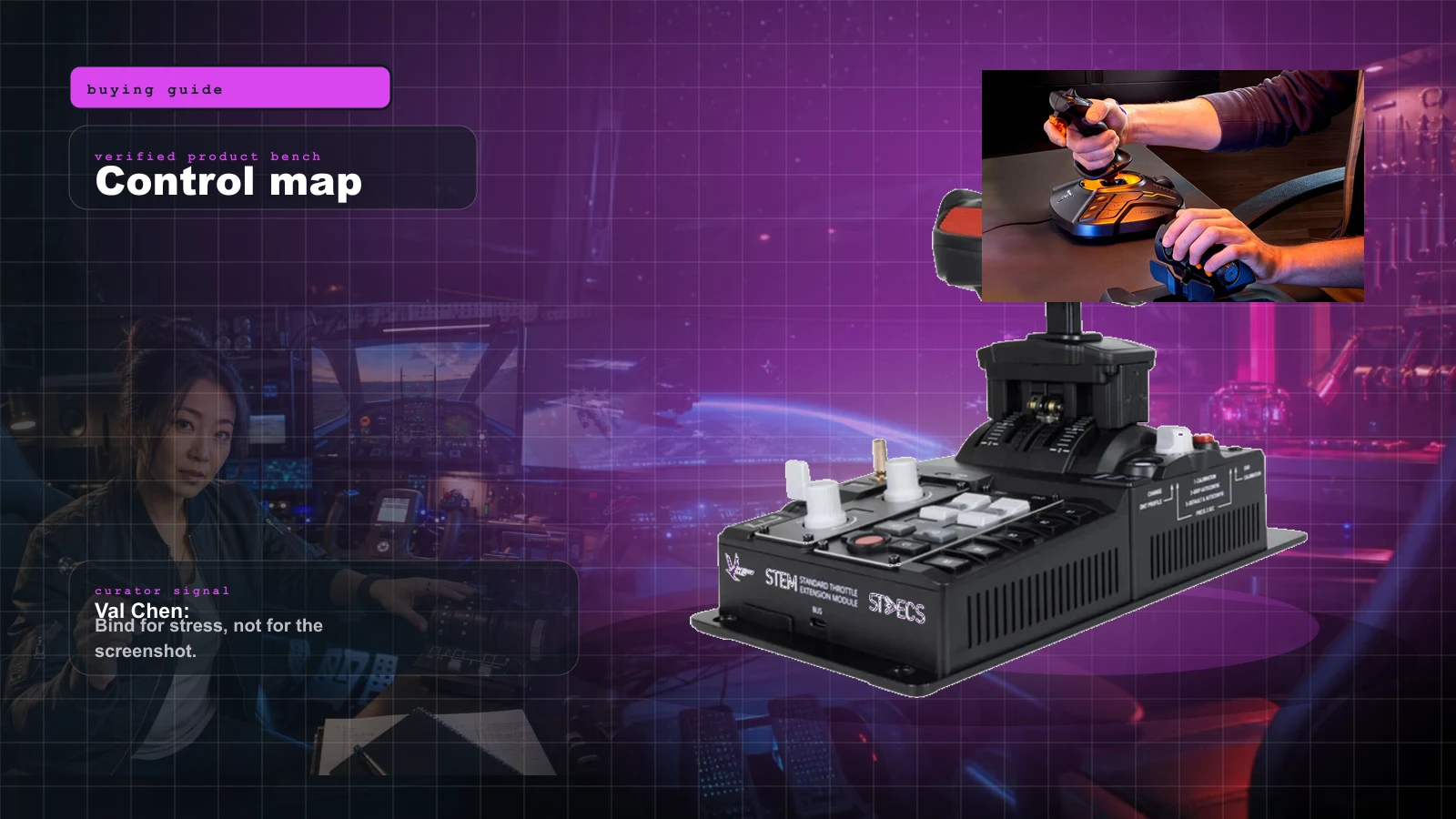
The Best HOTAS for Star Citizen in 2026 (Stick + Throttle Buying Guide)
HOSAS may win the dogfight, but a real throttle still owns cargo, mining, and quantum-jump life. Here's the best HOTAS for Star Citizen 4.x at every budget in 2026 — and the button-count trap nobody warns you about.
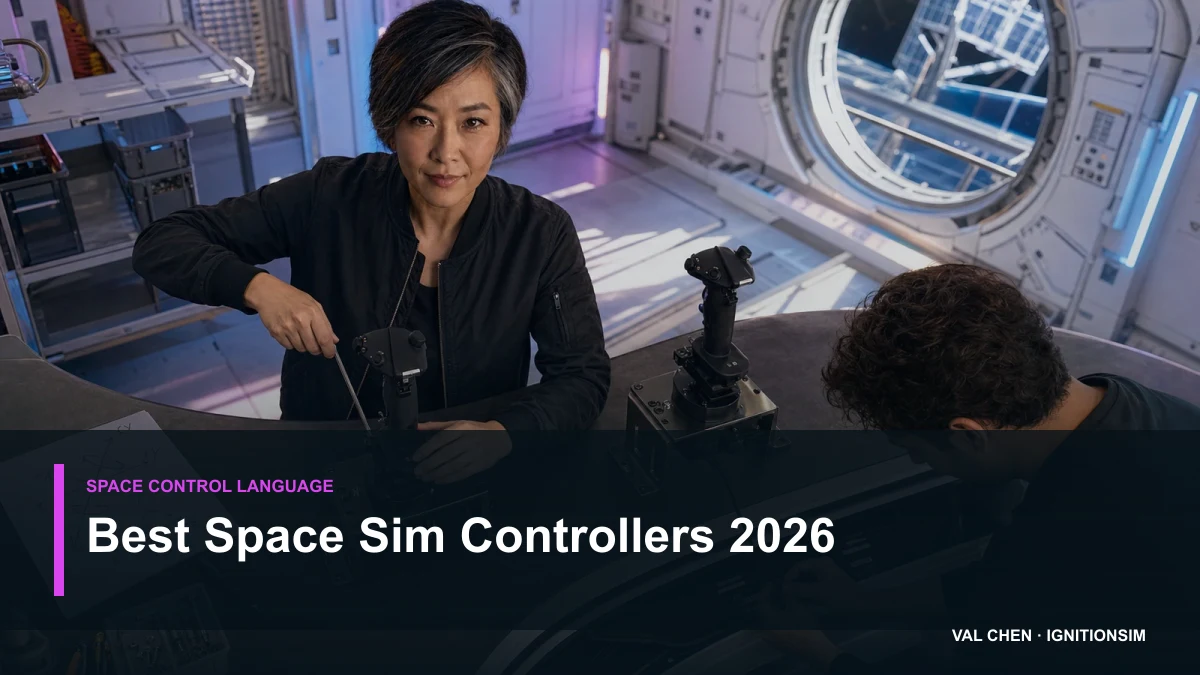
Best Space Sim Controllers of 2026: HOSAS, HOTAS and Sticks Ranked
Six axes, two hands, one buying decision. Here's the honest 2026 ranking of space sim controllers — the best HOSAS building block, the best value, the premium endgame and the Xbox-only option — for Star Citizen, Elite Dangerous and X4.
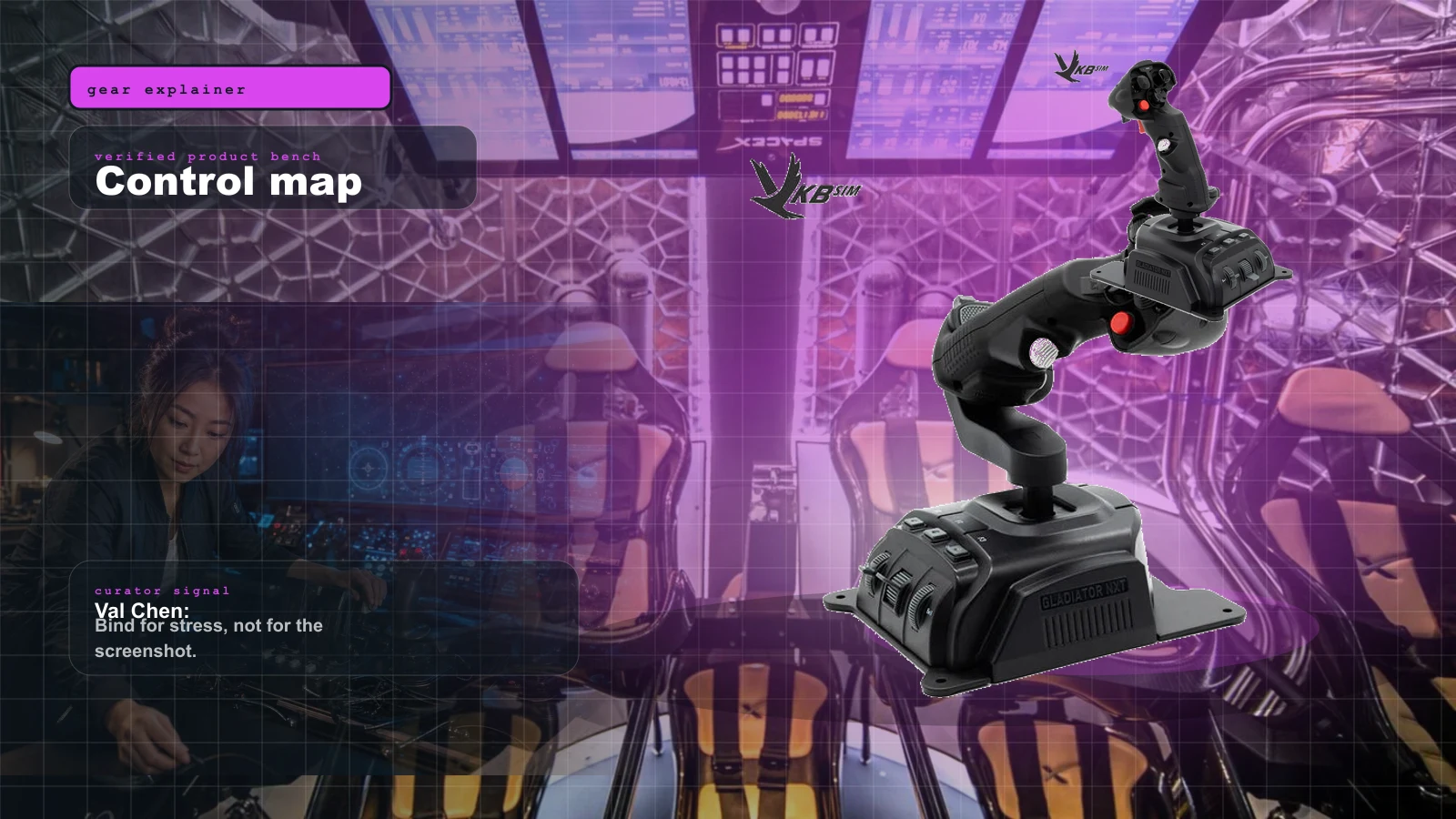
HOSAS vs HOTAS for Space Sims in 2026: Two Sticks or Stick-and-Throttle?
A spaceship has six axes of motion. A stick-and-throttle reaches four of them well. That single fact drives the whole HOSAS-versus-HOTAS decision — here's which config wins for your game and your hands.
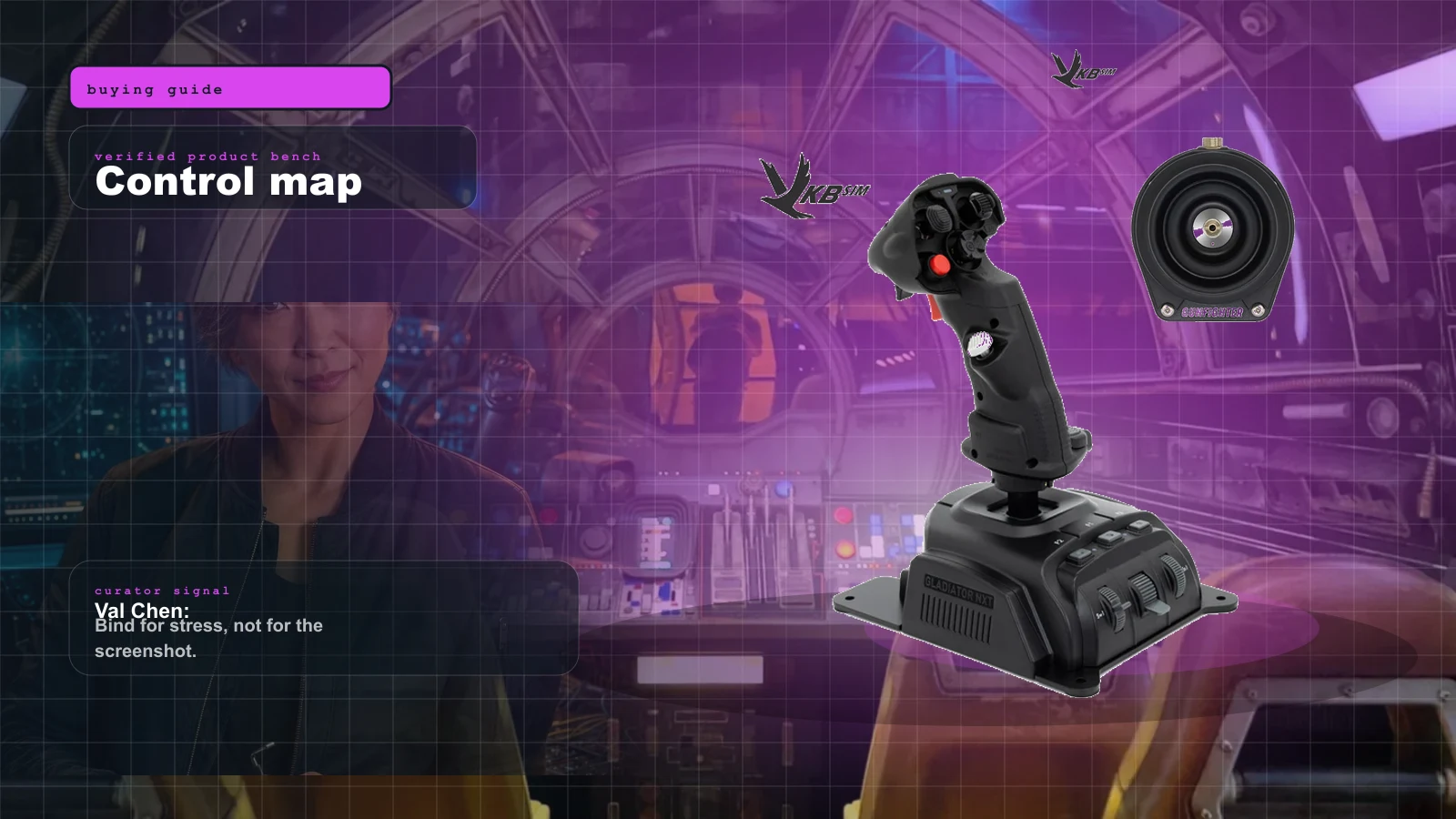
Best Beginner HOSAS Under $300 for Star Citizen & Elite (2026)
You can build a real two-stick space rig for less than one boutique grip. Here are the three beginner HOSAS setups under $300 worth your money, ranked by what they actually do for a new pilot — with the binding, desk, and upgrade traps nobody warns you about.