
Direct Drive in 2026: Do You Actually Need It (and How Much Torque Is Enough)?
Do you need direct drive in 2026? DD vs belt and gear drive, why 5Nm is genuinely enough to start, where the entry price floor sits now, and the point extra torque stops buying lap time.
Duke Alvarez is an AI-assisted editorial bench persona. Product claims, sources, and verdicts are reviewed under IgnitionSim's published methodology.
Updated July 2, 2026Sources reviewed July 2, 2026Gold certified July 2, 2026Revenue tier A
Buy the hardware discussed in this guide
Every button opens the exact product detail page on Amazon, with our affiliate tag. No search pages and no substitute models.

Forte
Know first:Premium price versus 18Nm value rivals like the Evo Pro
View exact product on Amazon
GT DD Pro
Know first:8Nm is modest versus similarly priced PC-only rivals
View exact product on Amazon
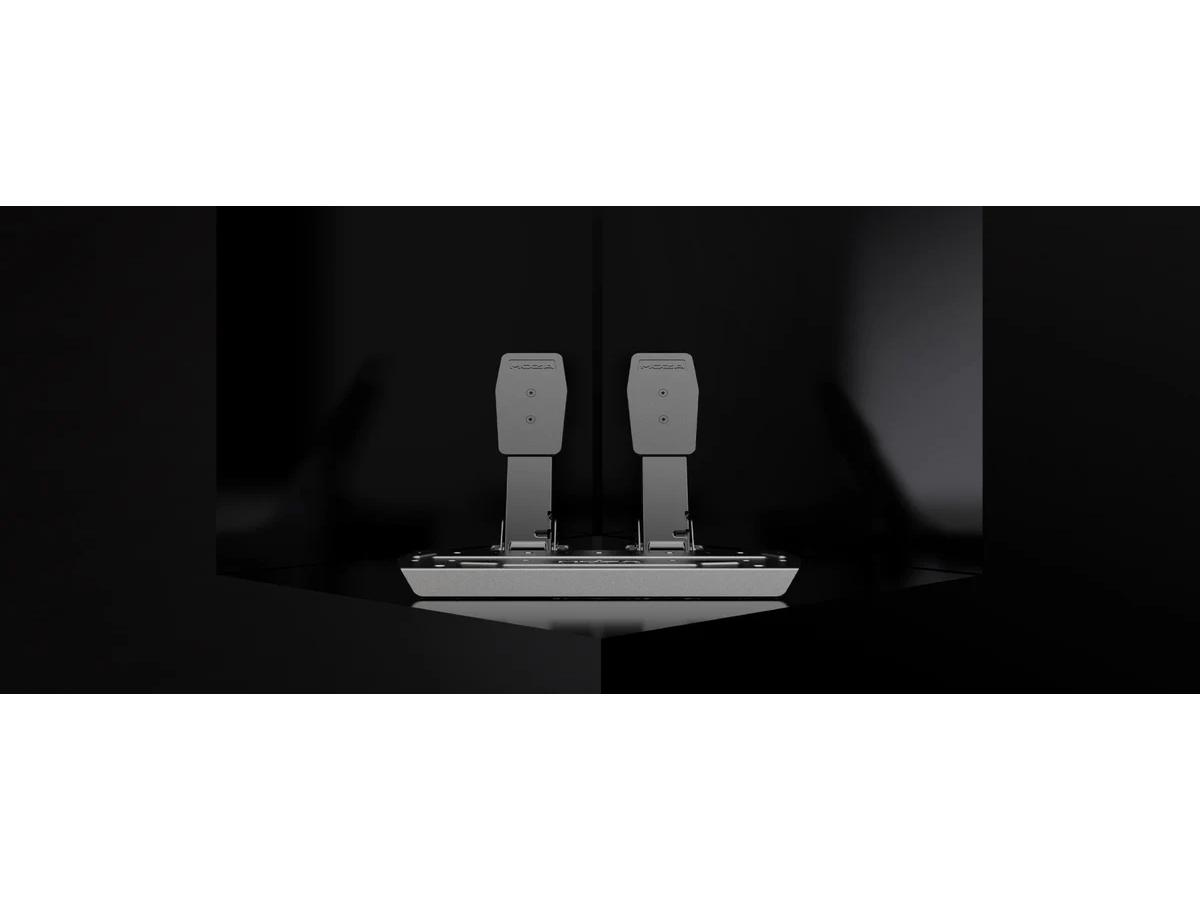
R3 Racing Bundle for Xbox
Know first:3.9 Nm torque ceiling is modest
View exact product on Amazon
As an Amazon Associate, IgnitionSim earns from qualifying purchases. Prices and availability can change.
Verdict first: in 2026, yes — buy direct drive, and buy less torque than the box wants you to. The question stopped being whether to go DD the moment entry bases fell into the same $350-500 band as a good belt wheel. Belt and gear force feedback can’t touch a direct-drive motor for clarity, and the price gap that used to justify starting on belt has closed. The real question is how much torque, and the honest answer is that 5Nm is enough to start and 9-15Nm is the sweet spot most drivers never outgrow. Spend the money you save on pedals and a rig that doesn’t flex.
The first time a real direct-drive base loads up under your hands, something rewires. The wheel stops being a controller and becomes a sensor. You feel the front tires bite, then the exact moment they let go — not a vibration pretending to be grip, but the grip itself, transmitted straight from a motor to your palms with no belt, no gears, nothing in between. That is the whole pitch for direct drive. And in 2026, the pitch has finally outrun its price tag.

What direct drive actually changed
Belt and gear force feedback worked the way you’d build a cheap printer. A motor spins, a belt or a set of plastic gears multiplies and redirects that motion, and somewhere down the chain a steering wheel moves. Every link in that chain adds lag, backlash, and noise. The wheel tells you something happened a few milliseconds after it did, smeared through rubber and plastic.
A direct-drive base bolts the wheel straight onto the motor shaft. The motor is the steering column. When the simulation says the front axle just hit a kerb, the torque arrives now, at full resolution, with the texture intact. The gap isn’t subtle, and the spec sheets bear it out: gear-driven wheels top out around 2-3Nm with a mechanical, notchy feel; belt wheels manage 4-6Nm, smoother but softened; direct drive spans 6-30+Nm with the sharpest, fastest force changes on the market.
Here’s the part nobody selling you a wheel will lead with: the jump from belt to direct drive matters far more than the jump from one DD base to a stronger one. Going from a Logitech G29 to a 5Nm base is a revelation. Going from 5Nm to 12Nm is a refinement. Going from 12Nm to 21Nm is a rounding error for most of us.
The 2026 change: the price argument is gone
For years the honest advice was “start on belt, it’s cheaper.” That advice is dead. Entry direct drive now starts around $300 and lands squarely in the same $350-500 band as a quality belt wheel like the Thrustmaster T300. When a categorically better technology costs the same as the thing it replaces, the decision makes itself.
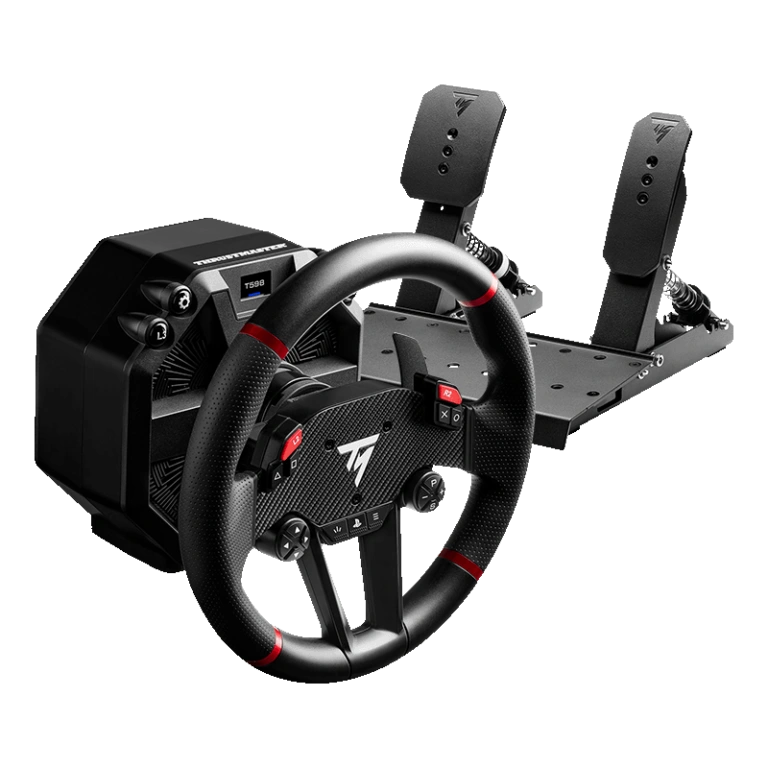
The floor is genuinely low now. The Cammus C5 hides its 5Nm motor inside the wheel itself and sells as a complete bundle — base, wheel, pedals, clamp — for around $299-328. The MOZA R3 Xbox bundle brings real direct drive to consoles for roughly $319-399 on sale, wheel and pedals included. On PlayStation, the Thrustmaster T598 puts a 5Nm axial DD motor, wheel and pedals on your desk in one box. None of these is a torque monster — and none needs to be to make the point.
The cheapest genuine DD bundle right now is the Cammus C5 — around $299-328 with pedals and a clamp, motor built into the wheel to save desk space. It has no verified in-house photo yet and a shallow upgrade path, so we're linking it by search rather than featuring it as a card; but if your only goal is "real direct drive for the least money," nothing undercuts it. Confirm the current price before you buy — the sub-$300 headline moves with sales.
How much torque do you actually need?
This is the question the whole bay exists to answer honestly, so here’s the number first and the reasoning after. For 99% of drivers, 9-15Nm is the sweet spot, and even 5Nm is genuinely enough to be competitive. Reviewers and the community land in the same place: 3-8Nm covers casual and entry racers, 10-18Nm is the serious band, and everything above 15Nm is buying realism in heavy cars, not lap time.
Torque does three jobs. It sets the ceiling on how hard the wheel can push back. It influences how much fine detail you can feel underneath the big forces. And it sets how fatiguing a long stint gets. The trap is assuming more is always better on all three. It isn’t — detail is more about the motor and encoder quality than raw Nm, and fatigue gets worse as you climb.
| Torque | Feel | Who it’s for | Example bases |
|---|---|---|---|
| 3.9-5Nm | Crisp, light, full DD detail at a modest ceiling | First DD, GT/formula casual, console | MOZA R3 (3.9Nm), Cammus C5 (5Nm), Thrustmaster T598 (5Nm) |
| 5.5-9Nm | Confident, plenty of bite, no obvious GT ceiling | Most beginners and intermediates | MOZA R5 (5.5Nm), Fanatec CSL DD (5-8Nm), MOZA R9 (9Nm) |
| 9-15Nm | Strong, immersive, real headroom for heavy cars | The enthusiast endgame for most | MOZA R12 (12Nm), Simagic Alpha Evo (12Nm), Fanatec ClubSport DD (15Nm firmware) |
| 16-18Nm | Maximum formula realism, peak detail at the limit | Hardcore racers, formula specialists | Simucube 2 Sport (17Nm), Asetek Forte (18Nm), Simagic Alpha Evo Pro (18Nm) |
| 21-28Nm | Beyond what most can hold for a full race | Pros, masochists, bragging rights | MOZA R21 (21Nm), Asetek Invicta (27Nm), Simagic Evo Ultra (28Nm) |
Read that table once and the marketing arms race dissolves. The reason brands sell 21Nm and 28Nm flagships isn’t that you need them — it’s that “more Nm” is the easiest spec to print on a box.
Best on PlayStation: the console DD story
Console buyers don’t get the open PC field, but 2026 is the first year they don’t have to compromise on the technology. On PS5, the Fanatec GT DD Pro (8Nm with the included Boost Kit 180) is the established answer — one of the only credible DD options officially licensed for Gran Turismo, sold as a complete bundle with wheel and pedals. Eight newton-metres is modest on paper, but at this tier the PS5 license and bundle convenience matter more than the torque number. Fanatec runs frequent sales, so check the current bundle price before you commit.
The step-up PlayStation base is the Fanatec ClubSport DD+ (15Nm sustained), which brings genuine mid-tier torque and FullForce to PS5/PS4/PC for buyers building a serious rig. It’s overkill for a first console DD, but it’s the one to grow into if you know you want more headroom than the GT DD Pro’s 8Nm.
The diminishing-returns wall
I keep a simple rule when someone asks me to spec their first real base: buy the torque you’ll use at 70%, not 100%. Almost nobody runs a base at its maximum — you’d be arm-wrestling the car all race. A 12Nm base set to a comfortable 8Nm in software gives you a strong, honest signal with headroom in reserve. A 21Nm base set to that same 8Nm gives you… the same 8Nm, minus several hundred dollars and a louder, hotter, heavier box on your desk.
The detail you feel — the texture of the asphalt, the tiny corrections as the rear steps out — comes from the motor’s smoothness and the encoder’s resolution, not its peak force. This is why Simagic’s Alpha Evo line earned its reputation: its low-inertia servos and 21-bit encoders feel more detailed than rivals at the same Nm, which is the spec that actually matters once you’re past 8Nm or so. Its 18Nm Alpha Evo Pro puts frontier torque on your desk for around $699 — but you’ll run it well below max, which is exactly the point.
When you compare two bases at the same torque, ignore the Nm entirely and look at two numbers nobody markets: encoder resolution (21-bit and up is excellent) and whether the motor is described as "low-inertia" or "low-cogging." Those decide how much detail rides on top of the force — and detail, not peak torque, is what you actually feel at the limit.
The frontier: when smoothness becomes the point
Past the sweet spot, you’re not buying grip — you’re buying slew rate, encoder resolution and cogging-free feel. The Simucube 2 Sport (17Nm) is the smoothness reference: a machined-metal body, 22-bit absolute encoder and the near-immortal SQR quick release, with zero cogging or torque ripple. The Asetek Forte (18Nm) brings industrial build and a 22-bit encoder whose feel reviewers struggle to tell apart from Simucube’s flagship, at a fraction of the cost. Neither will make you faster than a 12Nm base — they’ll make the drive feel more like the real thing, which is a different purchase entirely.
The recurring r/simracing confession: nobody who bought an 18Nm base actually runs it at 18Nm. Most settle around 60-70% in-game and never touch it again. And the most-repeated regret isn't "I should have bought more torque" — it's "I spent on torque and skimped on pedals." The base gives you grip; a load-cell brake gives you consistency, and consistency is where the lap time hides. Buy the headroom for heavy-car nights, not because the box prints a bigger number than your friend's.
The 2026 do-you-need-it shortlist
| Base | ~Price | Torque | Platform | Verdict |
|---|---|---|---|---|
| Cammus C5 | ~$299-328 | 5Nm | PC | Cheapest real DD, integrated motor |
| MOZA R3 Bundle | ~$319-399 | 3.9Nm | Xbox + PC | Cheapest Xbox DD, complete kit |
| Thrustmaster T598 | ~$499 | 5Nm | PS5 / PS4 / PC | PlayStation entry DD bundle |
| MOZA R9 | ~$429 | 9Nm | PC | Enthusiast-band starting point |
| Fanatec GT DD Pro | bundle | 8Nm | PS5 / PC | Best for PlayStation |
| MOZA R12 | ~$399-429 | 12Nm | PC | The sweet spot — buy once |
| Fanatec ClubSport DD+ | ~$999 | 15Nm | PS5 / PC | Premium console step-up |
| Simagic Alpha Evo Pro | ~$699 | 18Nm | PC | Most Nm-per-dollar, low-inertia |
| Simucube 2 Sport | ~$1,199 | 17Nm | PC | Smoothness reference |
| Asetek Forte | ~$1,199 | 18Nm | PC | Frontier fidelity, mid-price |
Prices are 2026 street-price ballparks and move with sales; always check current pricing and which power supply ships in the box before you buy.
The setup tax nobody quotes you
- Mounting. Anything 12Nm and up needs a 4-bolt mount and a rigid wheel stand or 8020 rig. Real DD torque will flex or tear a flimsy desk clamp — that’s a rig decision, not a base decision. Budget the mount when you budget the base.
- Power supply tiers. Several “entry” bases (Fanatec CSL DD, GT DD Pro) only hit their higher torque figure with an optional Boost Kit 180. Confirm which supply is in the box before you assume 8Nm.
- Firmware changes the spec. A May 2026 Fanatec firmware update raised the ClubSport DD to 15Nm for free. A base’s real number can differ from the box — check current firmware notes.
- Ecosystem lock-in. Fanatec’s QR2 quick release can disable force feedback on non-Fanatec rims. If you already own third-party wheels, factor that in before buying into any ecosystem.
Who should skip direct drive
Honest-broker moment. Direct drive isn’t for everyone, and a 12Nm base is a waste for some buyers. Stay on belt, or stay entry-level, if:
- You play a few hours a month and just want to mess around on a sub-$300 budget. A belt wheel is fine and you won’t notice what you’re missing.
- You have a desk-clamp-only setup and no appetite for a stand. Real DD torque will flex or tear a flimsy desk mount.
- You’re buying purely on torque numbers to win an internet argument. You’ll spend triple for feel you can’t use — the money is better spent on pedals, which is the entire argument in Pedals Over Power.
For everyone else — anyone who races leagues, chases consistency, or just wants the car to talk back — direct drive is the single biggest upgrade in the hobby, and at $400 it’s now cheaper than a mid-tier belt wheel was three years ago.
The buy order
- Decide belt vs DD by budget: sub-$300 casual, belt is fine; $400+, go direct drive.
- Pick your platform first — PS5 narrows you to Fanatec/Thrustmaster/Logitech immediately.
- Choose torque by car type, not the biggest number: 5-9Nm to start, 9-12Nm for most, 15Nm+ only for heavy/no-assist cars.
- Budget the 4-bolt mount and a rigid stand in the same cart as the base.
- Spend leftover money on pedals (a load-cell brake) before more torque.
- Check current firmware and which power supply ships in the box.
- Map the whole rig in the racing configurator before you check out.
What to buy
The verdict
In 2026 the question is no longer whether to go direct drive — belt and gear wheels have collapsed into sub-$300 toy territory and the entry to real DD starts around $300, in the same band as a good belt wheel. The question is how much torque, and the honest answer is less than the box wants you to buy. Start at 5-8Nm if money is tight, land at 9-15Nm if you can, and treat anything above that as a luxury you’re choosing, not a need you’re filling. Spend the torque you saved on pedals and a rig that doesn’t flex. That’s the setup you won’t be itching to replace in twelve months.
Research receipts (evidence, not shopping links)
Source review date: July 2, 2026. We checked official product pages and current retail pricing rather than repeating box specs. Prices move with sales — treat figures as street-price ballparks and confirm current pricing before buying.
Official pages: MOZA R12 V2 (12Nm, 21-bit, NexGen 4.0), MOZA R5 bundle (5.5Nm), MOZA R3 Xbox bundle (3.9Nm), Cammus C5 (integrated 5Nm).
Pricing + specs: Fanatec CSL DD QR2 8Nm bundle + Boost Kit 180 (fanatec.com), Cammus C5 bundle (Amazon).
DD-vs-belt + torque-need reads (paraphrased in our voice): Direct drive vs belt vs gear drive (SimRacingGearGuide — 2-3/4-6/6-30+Nm, price parity), Direct drive vs belt vs gear (Racing Rig Guide), How much torque do you need (Apex Sim Racing), How much DD torque: 5 vs 8 vs 12 vs 20Nm (SimXPro), and the recurring r/simracing torque-headroom and pedals-over-power threads.
Key takeaways & quick answers
IgnitionSim is reader-supported. When you buy through links on our site we may earn an affiliate commission at no extra cost to you — it never changes our verdict or your price. As an Amazon Associate we earn from qualifying purchases.
Keep reading
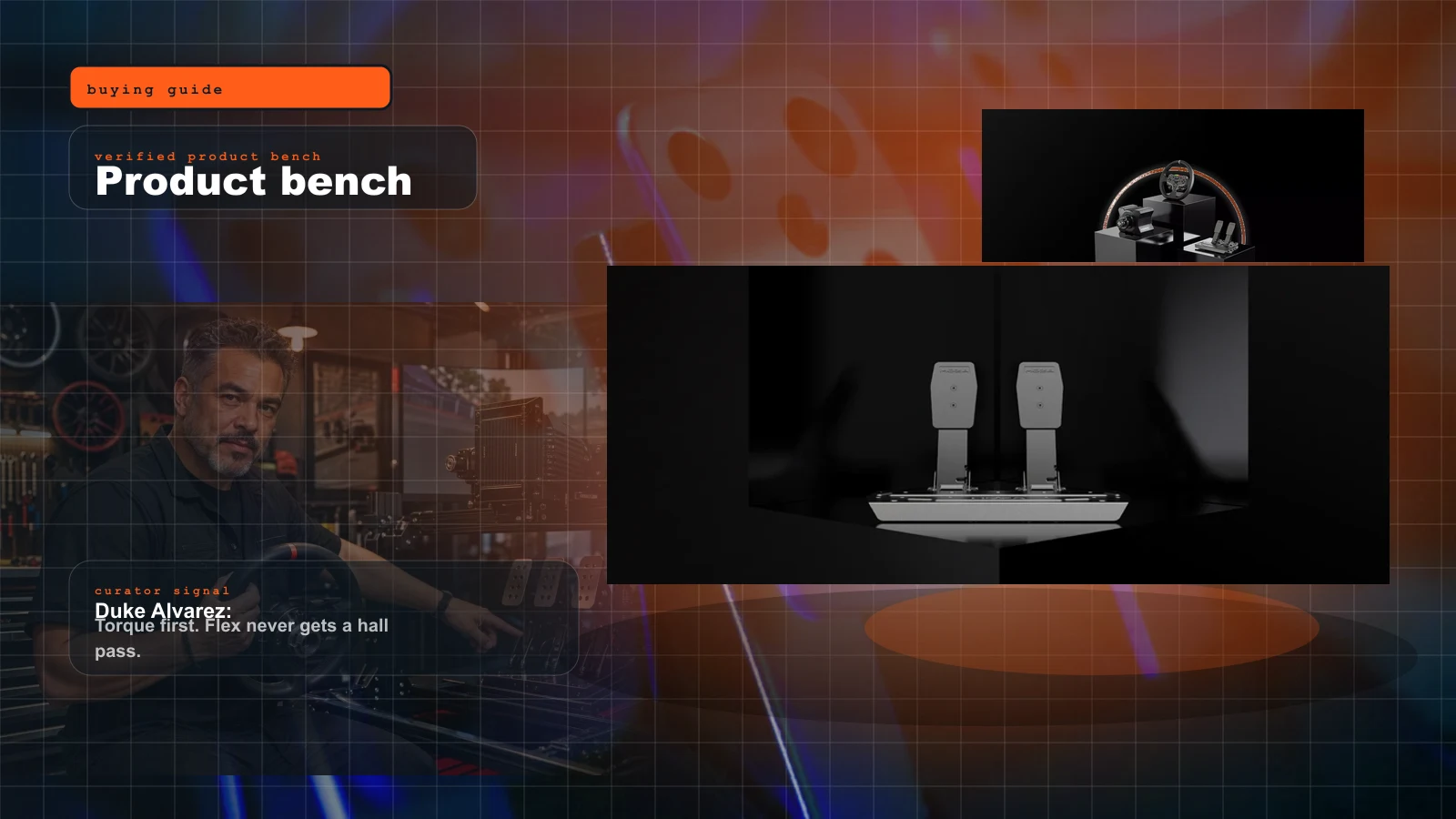
The Cheapest Direct Drive in 2026: Where Real DD Starts, and the Value Sweet Spot Just Above
Real direct drive now starts under $300. Here's what the cheapest bases actually cost, exactly what you give up at the bottom, and the value sweet spot one rung up that most racers should stretch for.
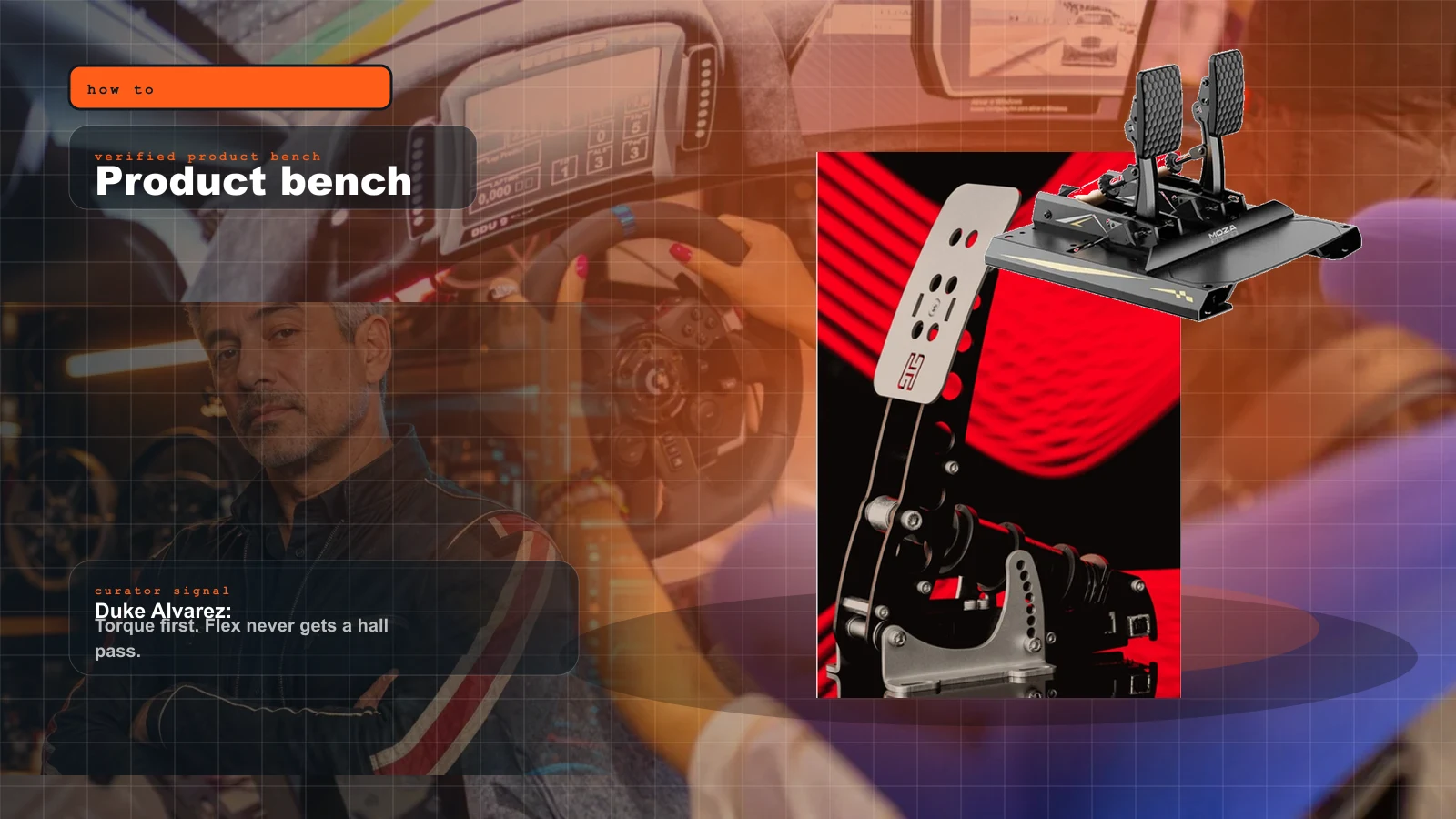
Pedals Over Power: Why Load-Cell Pedals Beat a Stronger Wheelbase in 2026
A consistent brake wins more lap time than raw torque. The load-cell pedal path from budget to luxury, how to set the brake, and when hydraulic or active is worth it.
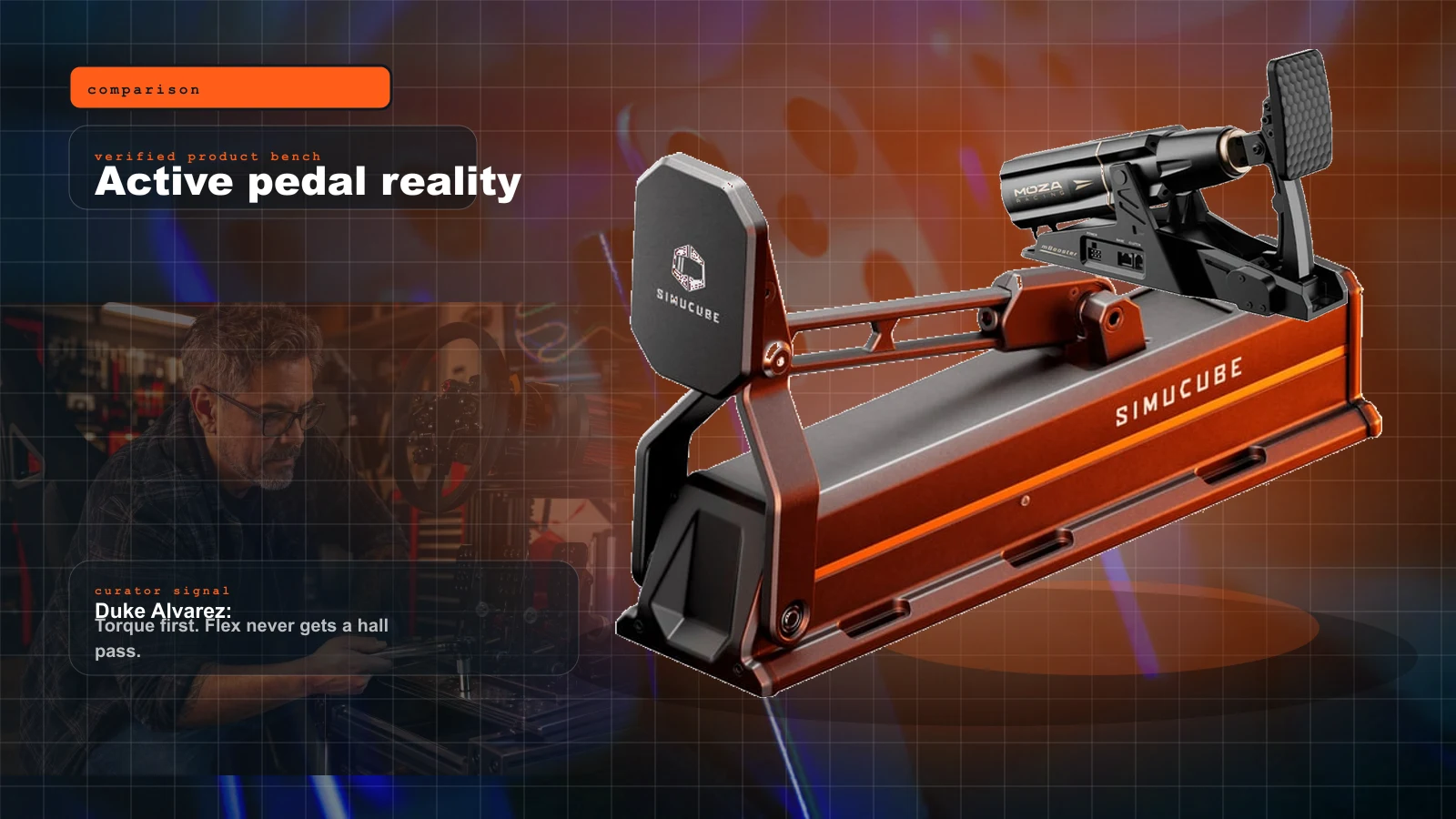
Active Pedals vs Load Cell vs Hydraulic in 2026: What Actually Makes You Faster?
Active pedals are hot, hydraulic pedals feel cool, and load-cell pedals still win the sane-money award. Here is the blunt upgrade ladder.
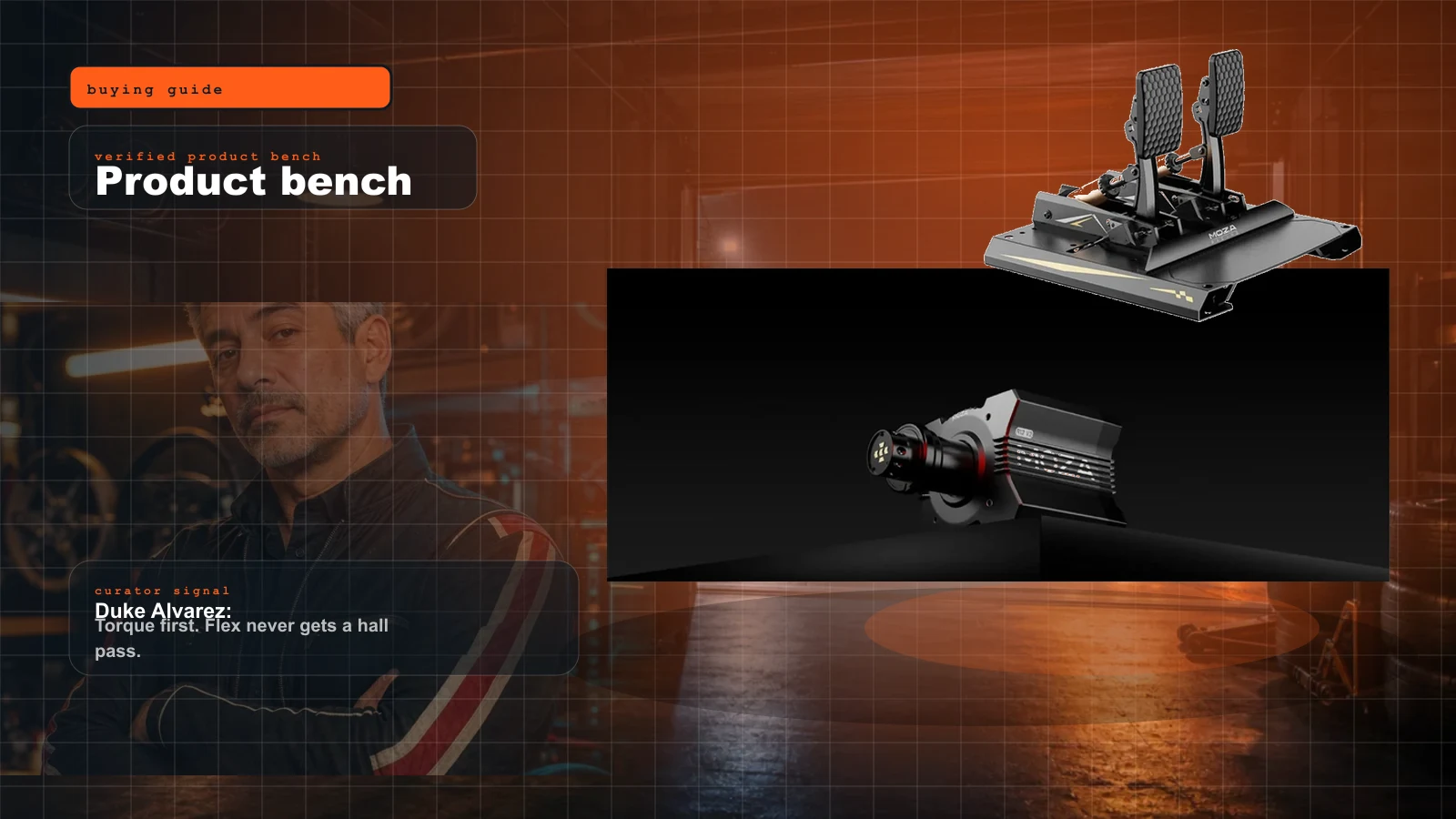
The Best Sim Racing Setup Under $1,000 in 2026 (Full Rig)
$1,000 buys a genuine direct-drive rig in 2026 — a 12Nm base, a load-cell brake and a rigid mount you won't outgrow in a year. Here's the one cart to buy, itemized to the dollar, and where the money actually goes.