
The Best Sim Racing Setup Under $1,000 in 2026 (Full Rig)
The best complete sim racing setup under $1,000 in 2026 — a real direct-drive base, load-cell pedals and a rigid mount that fit the budget, with the honest tradeoffs.
Duke Alvarez is an AI-assisted editorial bench persona. Product claims, sources, and verdicts are reviewed under IgnitionSim's published methodology.
Updated July 2, 2026Sources reviewed July 2, 2026Gold certified July 2, 2026Revenue tier A
Buy the hardware discussed in this guide
Every button opens the exact product detail page on Amazon, with our affiliate tag. No search pages and no substitute models.

GT DD Pro
Know first:8Nm is modest versus similarly priced PC-only rivals
View exact product on Amazon
Apex Cockpit
Know first:Steel tube less rigid than 8020 at high torque
View exact product on Amazon
As an Amazon Associate, IgnitionSim earns from qualifying purchases. Prices and availability can change.
Verdict first: the sub-$1,000 rig to buy in 2026 is a MOZA R12 ($399 on sale, 12Nm), a MOZA CRP2 load-cell pedal set ($369-399), and a rigid folding wheel stand (~$199) — a complete direct-drive rig around $967 that you race for years, not one you replace next season. On PlayStation, swap the PC base for the Thrustmaster T598 or Fanatec GT DD Pro bundle. The trick was never buying the cheapest of everything — it’s allocating the thousand so the money lands where feel and lap time actually come from.
A thousand dollars used to buy a belt wheel and a folding stand and not much pride. In 2026 it buys a genuine direct-drive rig — base, load-cell pedals, a rigid mount, and a little left over — that never feels outgunned online. But there’s exactly one way to blow it: spread the money evenly, or dump it all into torque. Feel and consistency come from two parts — the base and the pedals — so they get the lion’s share. The mount protects that investment. Everything else waits.
The build at a glance: where every dollar goes
Beginners blow budgets by spreading money evenly. Don’t. Here’s the target allocation, then the exact parts that hit it. Note what’s not on the list: a flagship rim, triple monitors, motion. Those are separate, later budgets.
| Component | Target spend | The pick | Why this slice |
|---|---|---|---|
| Direct-drive base | ~$400 | MOZA R12 (12Nm) | Where the force and detail live |
| Load-cell pedals | ~$370 | MOZA CRP2 (200kg) | Where consistency and lap time live |
| Rigid mount | ~$200 | NLR Wheel Stand 2.0 | Protects the FFB you just paid for |
| Shifter / extras | $0 for now | skip it | Only if you race manual/rally/drift |
| Running total | ~$967 | complete rig | Genuine DD, nothing outgrown in a year |
That’s a coherent rig, not a pile of mismatched bargains — and it clears $1,000 with room to spare. If you catch the R12 at its $399 sale price instead of the $469 list, you can even stretch the mount up toward a GT Omega Apex cockpit and still stay near budget.
Step 1: The base — MOZA R12 (~$400)
This is the heart of the rig and the easiest thing to get right in 2026. The 9-12Nm tier is the enthusiast sweet spot most drivers never outgrow, and it now sits squarely inside this budget. The MOZA R12 lands at $399 on sale ($469 list) and gives you the practical 12Nm torque ceiling, MOZA’s NexGen 4.0 algorithm with a 21-bit encoder, and the best tuning software in the business in Pit House. Buy it and you’ve also bought into a real upgrade ladder — R9, R16, R21 all share the quick release and software.
Don’t overthink the base. Torque buys headroom, not lap time, and 12Nm is a destination, not a stepping stone. The temptation to stretch to an 18Nm base and skimp on the brake is the single most common way budget builds go wrong — resist it. That’s the whole pedals-over-power argument, and it’s the most important idea in this guide.
If you find the MOZA R9 (9Nm, ~$429) meaningfully cheaper than the R12 on a given day, it’s a perfectly good anchor too — 9Nm is well inside the sweet spot. But at near-identical pricing most buyers take the R12’s extra 3Nm of headroom and its extra ports, which let pedals and a handbrake plug into the base instead of your PC.
Step 2: The pedals — MOZA CRP2 (~$370). Do not cheap out here.
This is where most budget builds fail, and where I’ll be blunt: a load-cell brake matters more than another 6Nm of base torque. Load-cell pedals sense pressure, not travel, so you brake to a consistent force every lap — and repeatable braking is the entire foundation of consistent lap times. A potentiometer brake that you press by distance sabotages you every single lap. If the build gets tight, this is the last place to economize; I’d downgrade the mount or skip a rim before I’d ship a budget rig on a non-load-cell brake.
The MOZA CRP2 is the verified value king here: a rare 200kg load cell, CNC aerospace aluminum with a carbon heel plate, and a huge damper-tuning range, for ~$369-399. It connects over USB and is brand-agnostic, so no future base switch can ever strand it. It’s near-endgame brake feel at a price that embarrasses boutique sets.
Tighter budget? Two honest load-cell brakes come in cheaper and free money for the mount. The Fanatec CSL Pedals LC bundle is $199.99 and includes a real load-cell brake plus a third pedal you can wire as a clutch. The MOZA SR-P (~$149-199 for two pedals, 100kg brake) is the other common first upgrade. Either one ends the pot-pedal wander; the CRP2 just takes you closer to never shopping for pedals again.
On a first budget, don't stretch to a bigger wheelbase and skimp on pedals. A 12Nm base feeding a good load-cell brake will out-lap an 18Nm base feeding cheap potentiometer pedals every single time. Brake feel is where the time hides — and unlike torque, it carries across every base you'll ever own.
Step 3: The mount — rigidity is a performance feature (~$200)
A 12Nm base bolted to a flexing desk throws away half the feel you just paid for. At this torque you’ve crossed the line where a desk lifts, creaks and distorts the FFB signal, so the mount is non-negotiable — the R12 uses a 4-bolt mount for a reason.
The budget-friendly answer that keeps the total under $1,000 is a quality folding wheel stand like the Next Level Racing Wheel Stand 2.0 ($199). It bolts the base and pedals to the same rigid structure, handles a 12Nm base on the stock settings, and folds away for apartments with the gear still attached. If you catch the R12 on sale and have the floor space, the GT Omega Apex cockpit ($389-449) is the bigger rigidity jump — a bolt-down steel frame with a seat in the box — and you keep the frame across every future upgrade.
Whatever you mount to, bolt the pedals to the same rigid structure as the wheel and use a solid heel plate. A load-cell brake on a plate that slides on carpet is as useless as a flexing wheel — you'll never hit the same pressure twice, which is the whole point of buying a load cell in the first place.
The PlayStation lane (~$500 base, still leaves room for pedals)
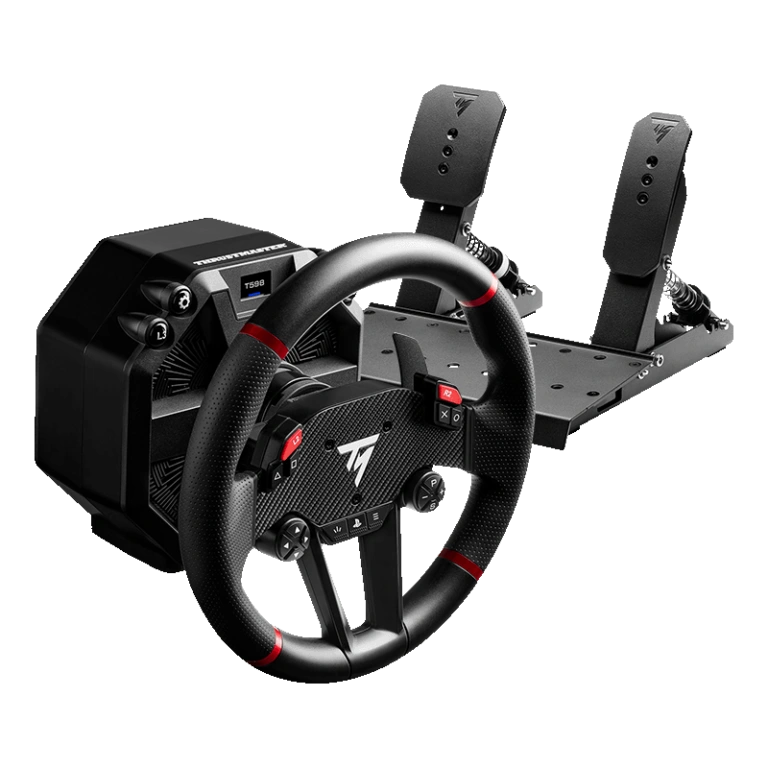
Console buyers don’t get the open PC field, and the R12 isn’t an option — it’s PC-only. On PS5, start with the Thrustmaster T598, an all-in ~$500 direct-drive bundle (Direct Axial Drive, 5Nm constant with overshoot effects) that ships with a wheel and Raceline pedals and works on PS5, PS4 and PC. It’s the modern value gateway to console DD and leaves budget for a load-cell pedal upgrade later. The established alternative is the Fanatec GT DD Pro bundle (8Nm, officially Gran Turismo licensed) — check the current bundle price, since the 5Nm kit runs ~$700 and the 8Nm ~$850 before sales.
Where the money goes (and where it doesn’t)
Here’s the honest breakdown of a $1,000 that a lot of new racers get exactly backwards:
- ~40% to the base. Twelve newton-metres of clean direct drive is the single biggest feel upgrade over any belt or gear wheel. But past 12Nm you’re paying for headroom you won’t use — every dollar above the sweet spot is a dollar stolen from the brake.
- ~38% to the brake. This is the controversial slice, and it’s the one that wins races. A pressure-sensing load cell is what makes your braking points stop drifting. It’s the upgrade that carries across every future base, so it’s the least wasteful money in the whole cart.
- ~20% to the mount. Not glamorous, but a 12Nm base on a flexing surface literally throws away FFB detail and can crack a desk. Rigidity is a performance feature, not a luxury.
- ~0% to the rim, monitors, shifter and motion — for now. The R12 ships usable, your existing monitor is fine to start, and most online racing is paddle-shift. These are real upgrades, but they’re separate budgets that don’t change your lap times on day one.
The warnings that save the build
- Don’t blow the budget on torque. An 18Nm base with $100 plastic pedals on a wobbly desk is a worse rig than a balanced 12Nm base, a load-cell brake and a rigid mount — every time. Torque is the easiest spec to oversell and the hardest to actually need.
- Pedals are not the place to save. A non-load-cell brake will cap your consistency no matter how strong the base is. If something has to give, cut the mount to a folding stand or skip the shifter — never the load cell.
- The mount is not optional at 12Nm. A desk clamp is fine for a 5Nm entry base on a heavy desk, but the R12 will flex and creak on anything less than a rigid stand or cockpit. Budget it in the same cart as the base.
- Don’t buy fake “hydraulic” pedals. Cheap Amazon clones advertised as hydraulic usually aren’t, and they’ll train your leg on the wrong force curve. A real load cell beats a fake hydraulic every time.
- Prices move — verify before you check out. The R12 swings between ~$399 and ~$469, the CRP2 between ~$369 and ~$399, and Fanatec/Thrustmaster bundles go on sale constantly. The same balanced cart can swing $100+ on timing, so check current pricing and buy on a sale.
The buy order
- Pick your platform first — PS5 sends you straight to the T598 or GT DD Pro bundle; PC opens the R12.
- Anchor on a 12Nm base (MOZA R12) — enough torque forever, none wasted.
- Put the next-biggest slice into a load-cell brake (MOZA CRP2), not more torque.
- Bolt everything to a rigid stand or cockpit, pedals included, on a solid heel plate.
- Skip the shifter, fancy rim and monitors unless the budget genuinely has room — they’re later, separate spends.
- Verify current prices and buy on a sale; map the whole rig in the Rig Configurator before you check out.
What to buy
The verdict
In 2026, the best sim racing setup under $1,000 is a balanced direct-drive build, not the strongest one part you can afford: a MOZA R12 12Nm base ($399), a MOZA CRP2 load-cell brake ($369) and a rigid folding stand (~$199), landing around $967 complete. On PlayStation, a Thrustmaster T598 bundle takes the base slot. Spend on feel and consistency, protect it with rigidity, and skip the parts that don’t change lap times. Lean on pedals over power whenever the temptation to over-spend on torque hits, verify the current prices, and you’ll build a rig you race for years — not one you replace next season.
Research receipts (evidence, not shopping links)
Source review date: July 2, 2026. We checked official product pages and current retail/sale pricing rather than repeating box specs. Prices move often — confirm current pricing before buying.
Official pages: MOZA R12 V2, MOZA R9 V3, MOZA CRP2 load-cell pedals, MOZA SR-P pedals, Fanatec CSL Pedals LC bundle ($199.99), Fanatec Gran Turismo DD Pro bundle, Thrustmaster T598 (PlayStation/PC), Next Level Racing Wheel Stand 2.0.
Pricing + review reads (paraphrased in our voice): MOZA R9 vs R12 (SimRacingSetup), MOZA CRP2 pedals review (OC Racing), Best budget load-cell pedal set (MySimRig), Thrustmaster T598 review (OC Racing), GT Omega Apex review (Racing Rig Guide), Fanatec 2026 summer bundle deals (Traxion).
Key takeaways & quick answers
IgnitionSim is reader-supported. When you buy through links on our site we may earn an affiliate commission at no extra cost to you — it never changes our verdict or your price. As an Amazon Associate we earn from qualifying purchases.
Keep reading
The Cheapest Direct Drive in 2026: Where Real DD Starts, and the Value Sweet Spot Just Above
Real direct drive now starts under $300. Here's what the cheapest bases actually cost, exactly what you give up at the bottom, and the value sweet spot one rung up that most racers should stretch for.
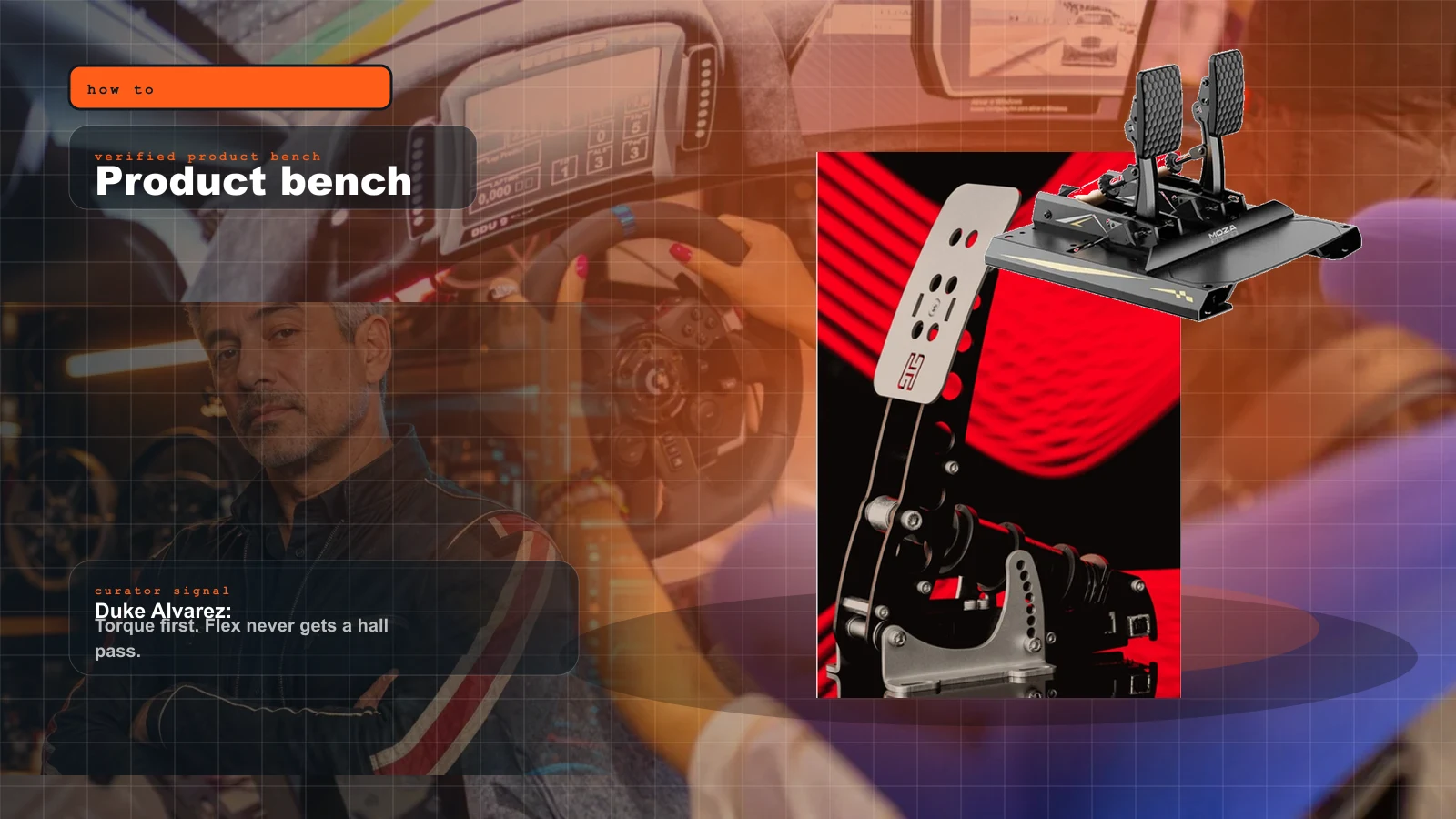
Pedals Over Power: Why Load-Cell Pedals Beat a Stronger Wheelbase in 2026
A consistent brake wins more lap time than raw torque. The load-cell pedal path from budget to luxury, how to set the brake, and when hydraulic or active is worth it.
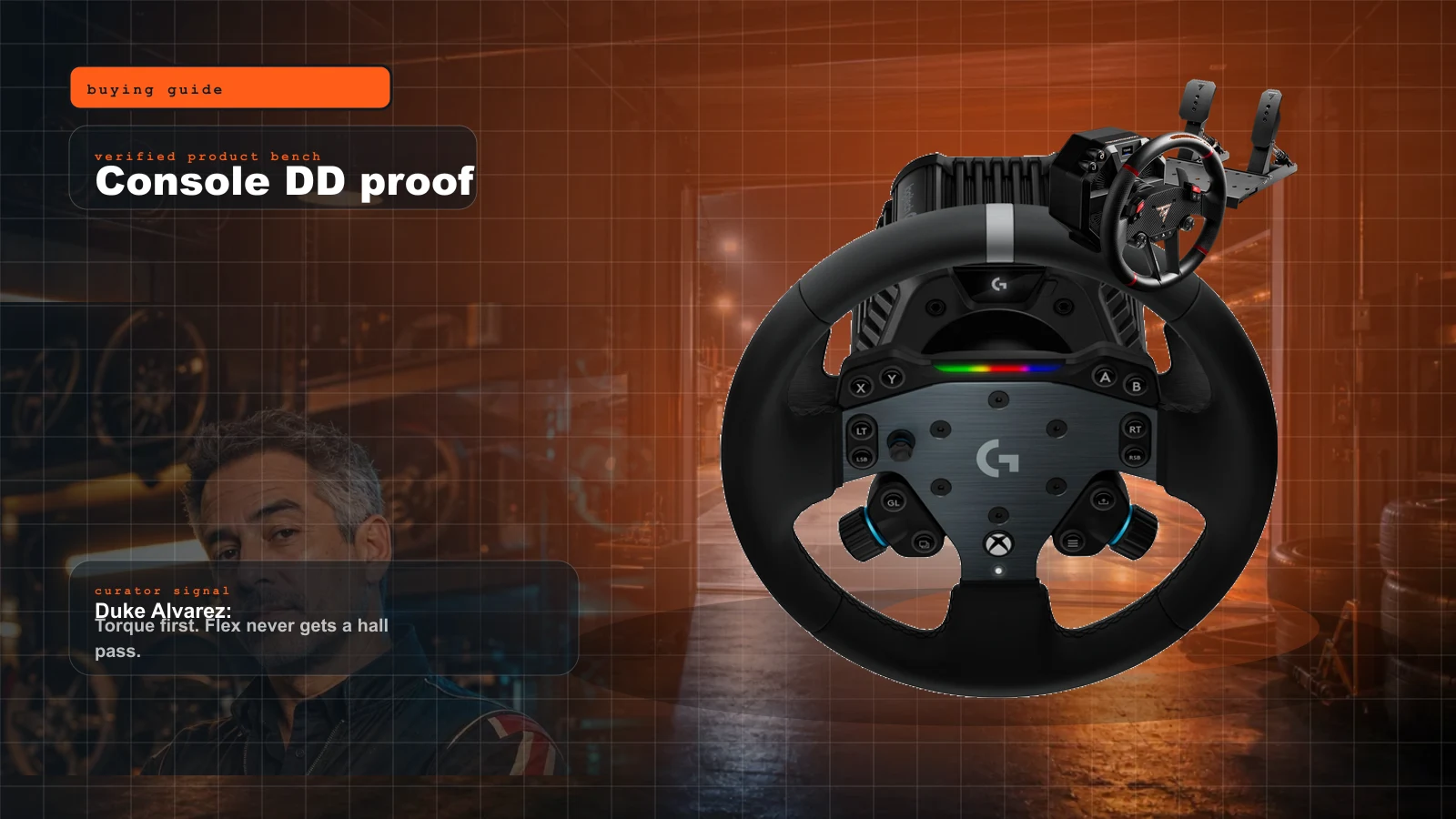
Console Direct Drive Wheels in 2026: PS5, Xbox, Fanatec, Logitech RS50, MOZA R3, T598, and the Compatibility Traps
Console direct drive is finally real, but compatibility is still the trap. PS5 buyers, Xbox buyers, and cross-platform racers need different shortlists.
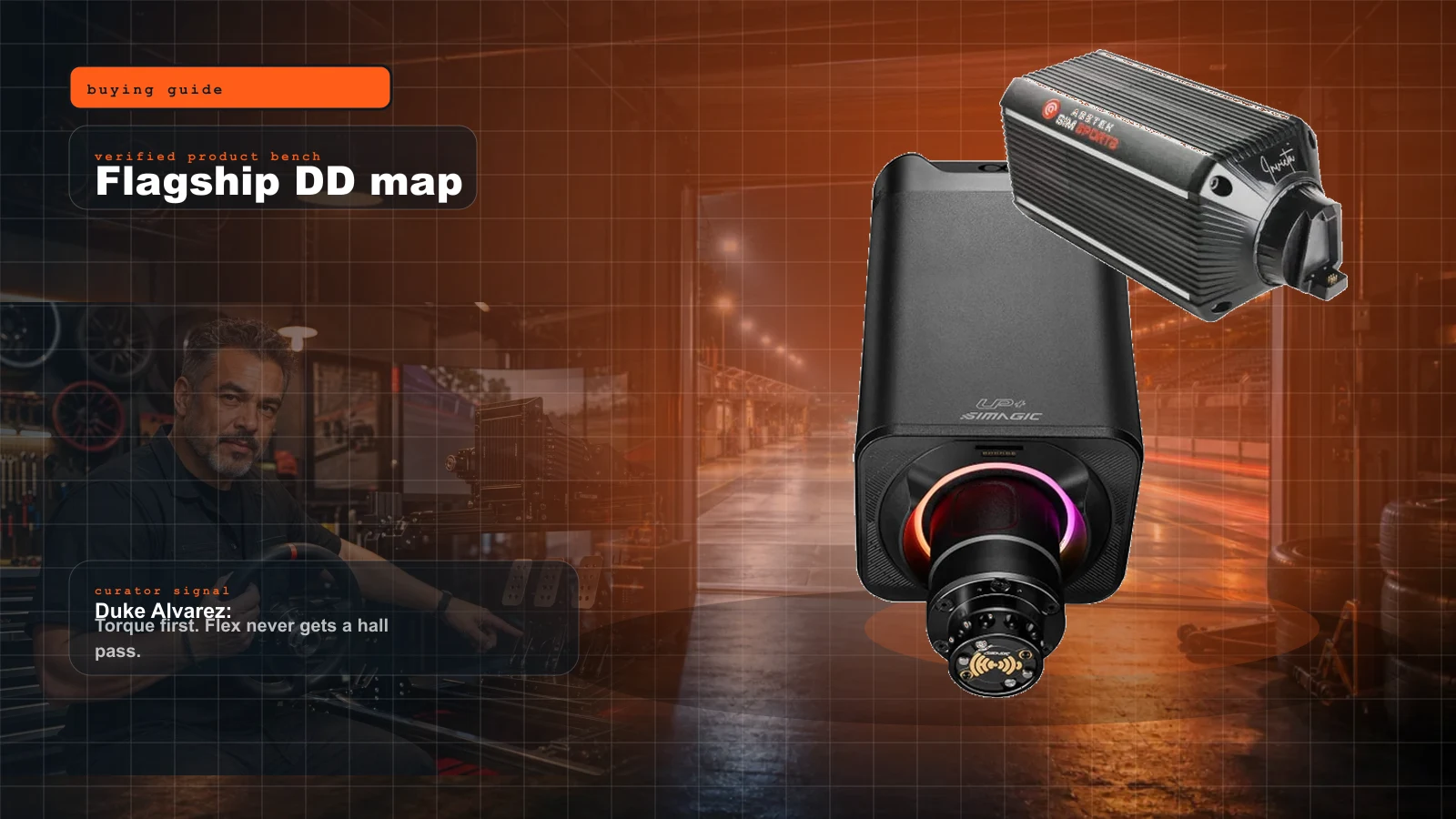
Flagship Direct Drive Wheelbase Buyer Map 2026: Simucube vs Asetek vs Simagic vs Fanatec
Past 12 Nm, torque gets cheap and clean detail gets expensive. Duke maps Simucube, Asetek, Simagic, Fanatec, and the point where you should stop spending.