Best Golf Launch Monitors Under $1,000 in 2026: The Honest Sub-$1K Field
The launch monitors that genuinely cost under $1,000 in 2026 — Garmin R10, Rapsodo MLM2PRO, and Square Golf — ranked with the real accuracy, room-depth, and subscription tradeoffs.
Nina Brooks is an AI-assisted editorial bench persona. Product claims, sources, and verdicts are reviewed under IgnitionSim's published methodology.
Updated July 2, 2026Sources reviewed July 2, 2026Gold certified July 2, 2026Revenue tier A
Buy the hardware discussed in this guide
Every button opens the exact product detail page on Amazon, with our affiliate tag. No search pages and no substitute models.
Mevo Gen 2
Know first:Radar prefers depth behind the player, so it needs room
View exact product on Amazon
Approach R10
Know first:Radar needs depth behind the player, so it struggles in shallow rooms
View exact product on Amazon
SkyTrak+
Know first:Club data leans on radar inference rather than direct camera capture
View exact product on Amazon
Launch Pro
Know first:Club data and full simulation are locked behind annual subscriptions
View exact product on AmazonAs an Amazon Associate, IgnitionSim earns from qualifying purchases. Prices and availability can change.
Verdict first: the smartest sub-$1,000 launch monitor in 2026 is the Rapsodo MLM2PRO at around $700 — fusion tech that behaves indoors, measured spin, and official GSPro direct connect — but the honest caveat is that “under $1,000” is a much smaller field than the marketing implies.
The sub-$1,000 launch monitor is still the most democratizing thing to happen to home golf. Ten years ago, real launch data meant a five-figure commercial unit. Today, three sensors under a grand give you honest numbers and connect to a real simulator. But here is the part the buyer’s guides bury: the units people remember being cheap — the FlightScope Mevo, the SkyTrak, the Bushnell — have all drifted above $1,000 in 2026. The genuinely-sub-$1K field today is three units, and the right one depends entirely on your room and your software. Let me lay out the bracket the way I’d lay it out for a buddy who just cleared a corner of the garage.

The Honest Sub-$1,000 Field in 2026
Three units genuinely own this tier today:
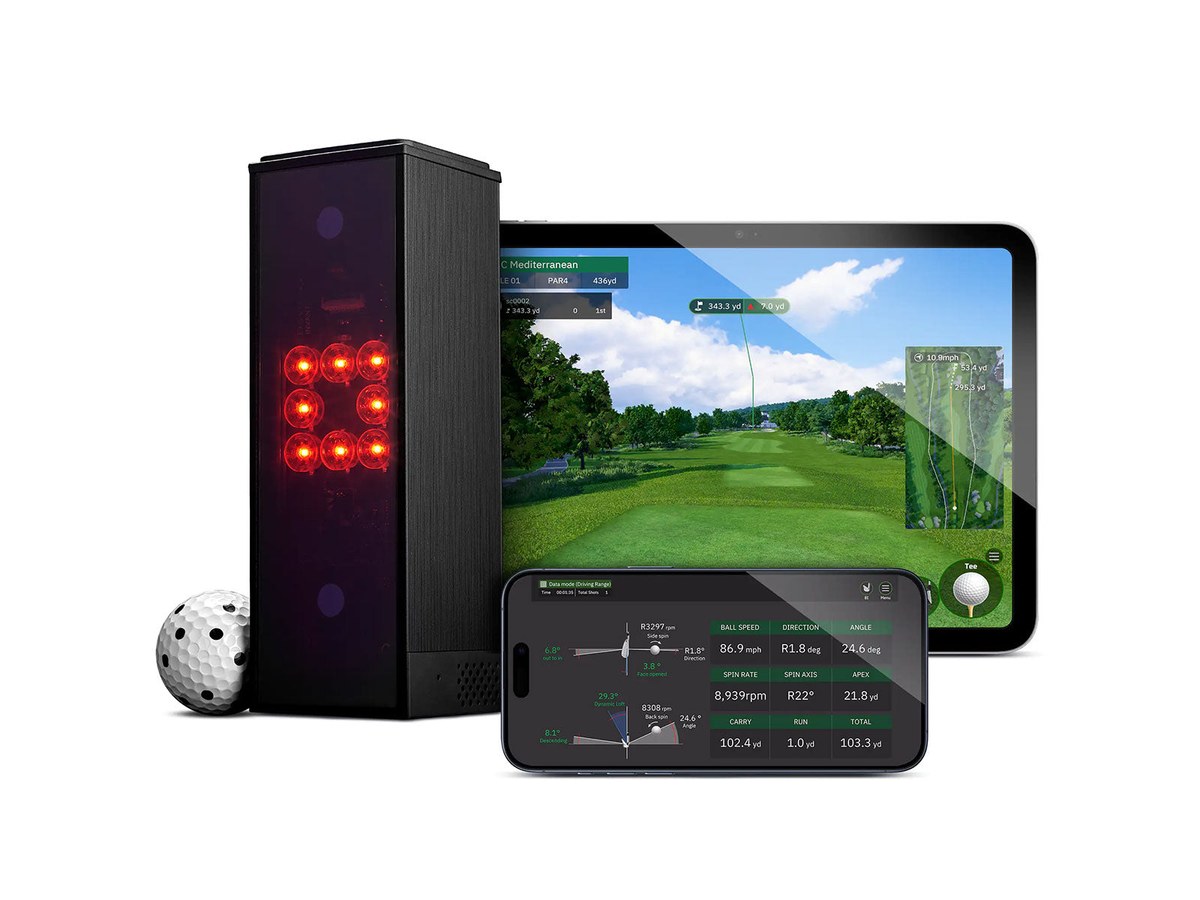
- Rapsodo MLM2PRO (~$699.99) — dual-camera fusion plus Doppler radar, measured spin with RPT balls, and official GSPro direct connect since the 2025 PGA Show. Phone-tethered, indoor and outdoor. The richest data set under a grand.
- Square Golf (~$699) — the only true photometric camera unit under $1,000. Sits beside the ball, so it thrives in shallow indoor rooms, and it’s genuinely good at putting and short game. Indoor-only.
- Garmin Approach R10 (~$500, often lower) — Doppler radar, ~16 data points, the only unit here with a true on-device simulator, and Garmin’s 43,000-course library. The cheapest credible door and the outdoor value king.
What is not here anymore, and why it matters: FlightScope killed the sub-$1K Mevo+ and its current Mevo Gen 2 starts at $1,299. The Bushnell Launch Pro is ~$2,499. The SkyTrak+ clears near $2,000 and the original SkyTrak now lives on the used market. Great gear — just not honest sub-$1,000 buys in 2026. I cover them below as step-ups so you know exactly where the line is.
Head-to-Head
| Spec | Rapsodo MLM2PRO | Square Golf | Garmin R10 |
|---|---|---|---|
| Price | ~$699.99 | ~$699 | ~$500 |
| Technology | Fusion (dual-camera + radar) | Photometric (side camera) | Radar (Doppler) |
| Spin measurement | Measured (RPT balls) | Measured | Estimated |
| Short game / putting | Chipping | Putting + chipping (strong) | Limited |
| GSPro connect | Direct (2025) | Via plug-in path | Via middleware |
| Best room | Some depth, forgiving | Shallow indoor rooms | Depth behind hitter |
| Indoor vs outdoor | Both | Indoor only | Both (radar loves outdoors) |
| Subscription | Rapsodo Premium ~$199.99/yr or ~$599.99 lifetime | No annual Square fee; course tokens | None required; Garmin Golf ~$99.99/yr |
| Best for | Richest data per dollar | Shallow indoor bays | Cheapest, most portable, range use |
Prices are approximate 2026 street prices — check current retailer pricing and subscription terms before buying, since this category moves fast.
Rapsodo MLM2PRO: The Data-Honest Pick
The MLM2PRO is the one I’d buy if I cared about measured numbers. At roughly $699.99 it adds dual-camera fusion to radar, which gets you genuinely measured spin rather than an estimate, and the camera component makes it more forgiving indoors than pure radar. The headline development is the official GSPro direct connect announced at the 2025 PGA Show — that collapsed the price of legitimately GSPro-ready hardware toward $700, which is a big deal. It also runs E6 Connect across a 30,000-plus course library and is genuinely portable, indoor and outdoor friendly.
The honest asterisks: measured spin rate and spin axis need RPT-marked balls (Callaway Chrome Soft X RPT or Titleist Pro V1 RPT), and the best software features live behind Rapsodo Premium — about $199.99/yr, or a one-time lifetime unlock around $599.99. If your room is tight and you want the best data per dollar, this is the pick.
Square Golf: The Indoor Camera Sleeper
If your room is a shallow garage or basement corner, the Square Golf launch monitor is the one nobody talks about enough. At about $699 it is the only true photometric camera unit under $1,000 in 2026, and because it sits beside the ball instead of behind it, it doesn’t demand the rear depth that radar quietly needs. It tracks putting, chipping, and flop shots — short-game data that is genuinely rare at this price — and it avoids a Square annual fee, using a token model for its own course play instead. Third-party software (GSPro, E6, Awesome Golf) is separate and worth confirming before purchase.
The honest limits: it is indoor-only, so range and outdoor buyers should look at the R10 or MLM2PRO, and it is a newer ecosystem with less long-term owner history than Garmin. But for a dedicated indoor practice corner where short game matters, it is the first budget pick I check.
The recurring r/golfsimulator confession: "I bought the radar unit, jammed it three feet off my back wall, and spent a month blaming the software." Radar isn't broken in a shallow room — it's just guessing. Give it depth, or buy the side-of-ball camera unit; don't make a radar sensor extrapolate a 300-yard flight from the first six feet.
Garmin R10: The Cheapest Credible Start
The R10 is still the unit I point most first-timers to when budget and portability come first. For around $500 — often less on sale — you get a genuinely capable Doppler radar sensor, ~16 data points, and the only true on-device simulator in this class, meaning you can get rolling without immediately committing to a gaming PC. It connects to GSPro and E6 through middleware for the big-screen experience, it is dead-simple to carry to the range, and the Garmin Golf membership (about $99.99/yr or $9.99/mo) unlocks a 43,000-plus course library and Home Tee Hero rounds.
The honest catch is radar’s nature: it wants depth behind you to read full ball flight, which is the whole radar-vs-photometric story. In a shallow indoor room it extrapolates from less data and gets less reliable. Spin is estimated, not measured. Five years on, the budget market has caught up to the R10 indoors — but for outdoor range work and the cheapest honest start, it is still the value king.
The Used-Market Wildcard: Original SkyTrak
There is a fourth path if you are willing to shop carefully: the original SkyTrak on the used market. It brings indoor photometric ball data and a side-of-ball footprint for camera accuracy, and its years-long owner history means troubleshooting knowledge is everywhere. But the “old experience tax” is real — shot delay, a small ~2-by-2-inch hitting zone, Micro-USB, and app/membership plan confusion — plus used-unit transfer risk. Only buy when the seller can show the app connected, a recent shot read, and a clean account path. A cheap SkyTrak with account trouble is not cheap.
Just Over The Line: What $1,000-$1,300 Buys
If you can stretch past a grand, the field opens up fast — and it is worth knowing the two best near-term step-ups so you can decide whether to wait a paycheck.
The FlightScope Mevo Gen 2 ($1,299 base) replaces the beloved Mevo+ with patented Fusion Tracking — 3D Doppler radar plus a synchronized camera — measured club data, 18 total parameters, and a lifetime E6 Connect bundle with zero ongoing subscription. As radar, it wants room depth behind you. It is the easiest no-fee step-up from the sub-$1K field.
And if photometric accuracy is the real goal, the next serious jump is the SkyTrak+ (clearing near $2,000) toward camera-grade data — but at that point you have left this article’s budget entirely. If you are building a full room, read the under-$10K simulator build guide before you spend on the sensor.
Warnings Before You Buy
- Radar needs room depth. The R10 (and any radar unit) wants several feet behind the hitter to read full flight. In a shallow room it guesses. Measure your depth before you buy radar — this is the single most common budget regret.
- The subscription is part of the price. GSPro is about $250/yr and needs a Windows gaming PC. Rapsodo Premium is ~$199.99/yr (or ~$599.99 lifetime). Garmin Golf is ~$99.99/yr. The sticker is the down payment, not the bill.
- “Under $1,000” is a moving target. The SkyTrak, Bushnell, and FlightScope units people assume are cheap have all crossed $1,000 in 2026. Don’t anchor on old reviews.
- Indoor camera units want consistent lighting. Square Golf and SkyTrak are photometric — inconsistent basement lighting degrades reads.
- Measured spin has a ball tax. The MLM2PRO’s measured spin needs RPT-marked balls, or your spin numbers are estimates dressed up as data.
The sticker price is the down payment, not the bill. A $500 R10 plus a $250/yr GSPro sub plus a ~$1,000 gaming PC is the real first-year number. If you'd rather not own a PC at all, the R10's on-device sim and the MLM2PRO's and Square's apps keep you playing today — just know the deepest course libraries live on the GSPro side.
The Buy Order
- Measure your room depth before you fall in love with a sensor — depth decides radar vs. camera.
- Shallow indoor-only room → Square Golf (camera, beside the ball) or a clean used SkyTrak.
- Some depth or you play outdoors too → Rapsodo MLM2PRO for the richest data, Garmin R10 for the cheapest start.
- Budget the software layer: GSPro (~$250/yr) plus a Windows PC, or lean on the free on-device paths first.
- Confirm your target simulator software supports the sensor before you check out — compatibility quietly rules units in or out.
- Buy RPT balls if you chose the MLM2PRO and actually want measured spin.
What To Buy
So Which One?
- Best measured data and GSPro-ready out of the box: Rapsodo MLM2PRO (~$700). Fusion plus direct connect makes it the data-honest choice, and it’s forgiving in tighter rooms.
- Best for a shallow indoor bay and short game: Square Golf (~$699). The only true camera unit under a grand, sitting beside the ball where radar can’t fit.
- Cheapest credible start and best outdoors: Garmin R10 (~$500). The on-device sim is genuinely unique at this price, and radar loves the range.
- Willing to shop used carefully: original SkyTrak — camera data on the cheap, if the account transfers cleanly.
- Can stretch past $1,000: the FlightScope Mevo Gen 2 ($1,299) is the no-fee step-up worth waiting a paycheck for.
Whichever you pick, remember the sensor is only half the build — match it to your room’s geometry per the radar vs photometric guide, choose your simulator software deliberately, and if a full room is the goal, size the whole thing with the under-$10K build guide.
Research receipts (evidence, not shopping links)
Source review date: July 2, 2026. We checked official and retailer pages for current pricing and specs, and cross-referenced 2026 buyer’s guides and community discussion. Prices move fast in this category — always confirm live retailer pricing and subscription terms before buying.
Useful source shelf: Rapsodo MLM2PRO official, Rapsodo MLM2PRO + GSPro integration, Rapsodo MLM2PRO Premium membership, Garmin Approach R10 official, PlayBetter Garmin R10 2026 review, PlayBetter “best launch monitor under $1,000”, Square Golf launch monitor (Shop Indoor Golf), FlightScope Mevo Gen 2 official, FlightScope 2026 launch-monitor comparison, Bushnell Launch Pro official, PlayBetter SkyTrak+ vs ST MAX, Breaking Eighty best launch monitors 2026.
Key takeaways & quick answers
IgnitionSim is reader-supported. When you buy through links on our site we may earn an affiliate commission at no extra cost to you — it never changes our verdict or your price. As an Amazon Associate we earn from qualifying purchases.
Keep reading

Best Golf Simulator Software 2026: GSPro vs E6 vs Awesome Golf
GSPro wins serious home leagues, E6 2026 wins structured practice, Awesome Golf wins family night, and FSX Play makes sense inside Foresight. The expensive part is choosing the wrong room around them.
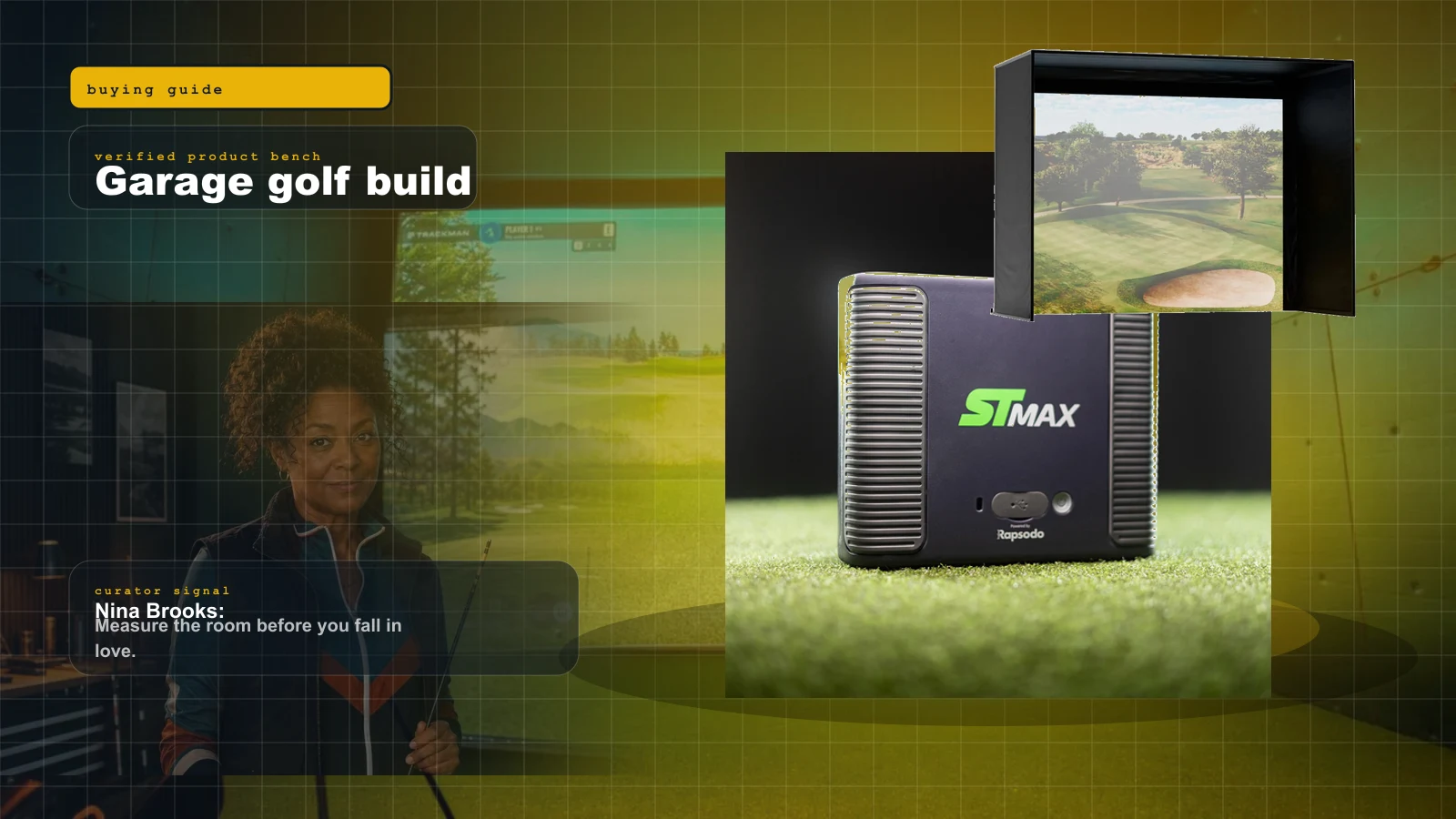
Best Home Golf Simulator Under $10,000 in 2026: The Parts That Matter, The Traps That Blow The Budget
A $10K home golf sim is very doable, but only if you stop spending like every category is the hero. Here is the build order, the budget math, and the parts worth buying.
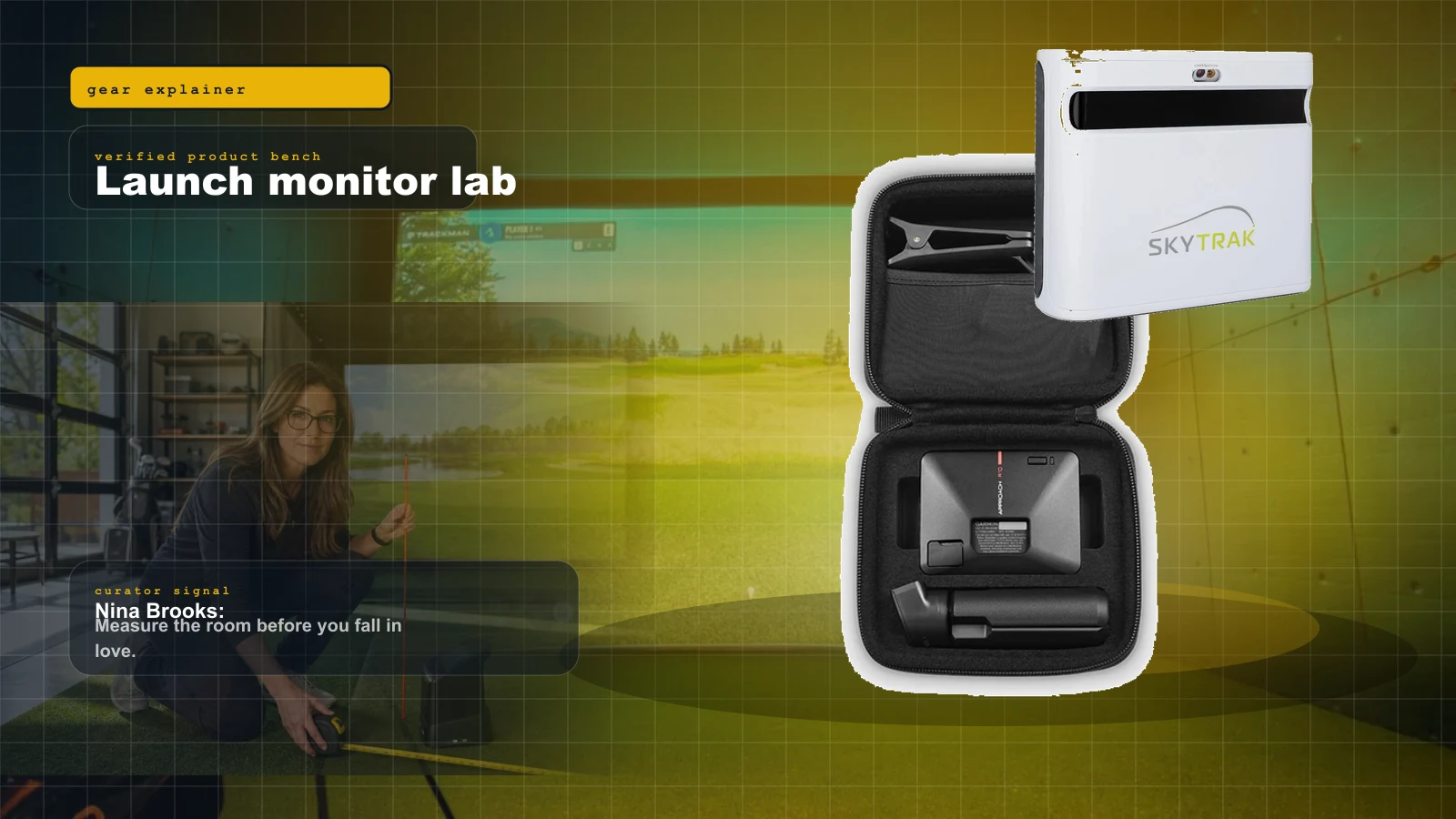
Radar vs Photometric Launch Monitors (2026): How Each Measures, and Which One Your Room Actually Allows
Radar watches the ball fly from behind you. Photometric reads it at impact from the side. The whole decision comes down to one honest measurement: how deep is your room, and how well can you light it?
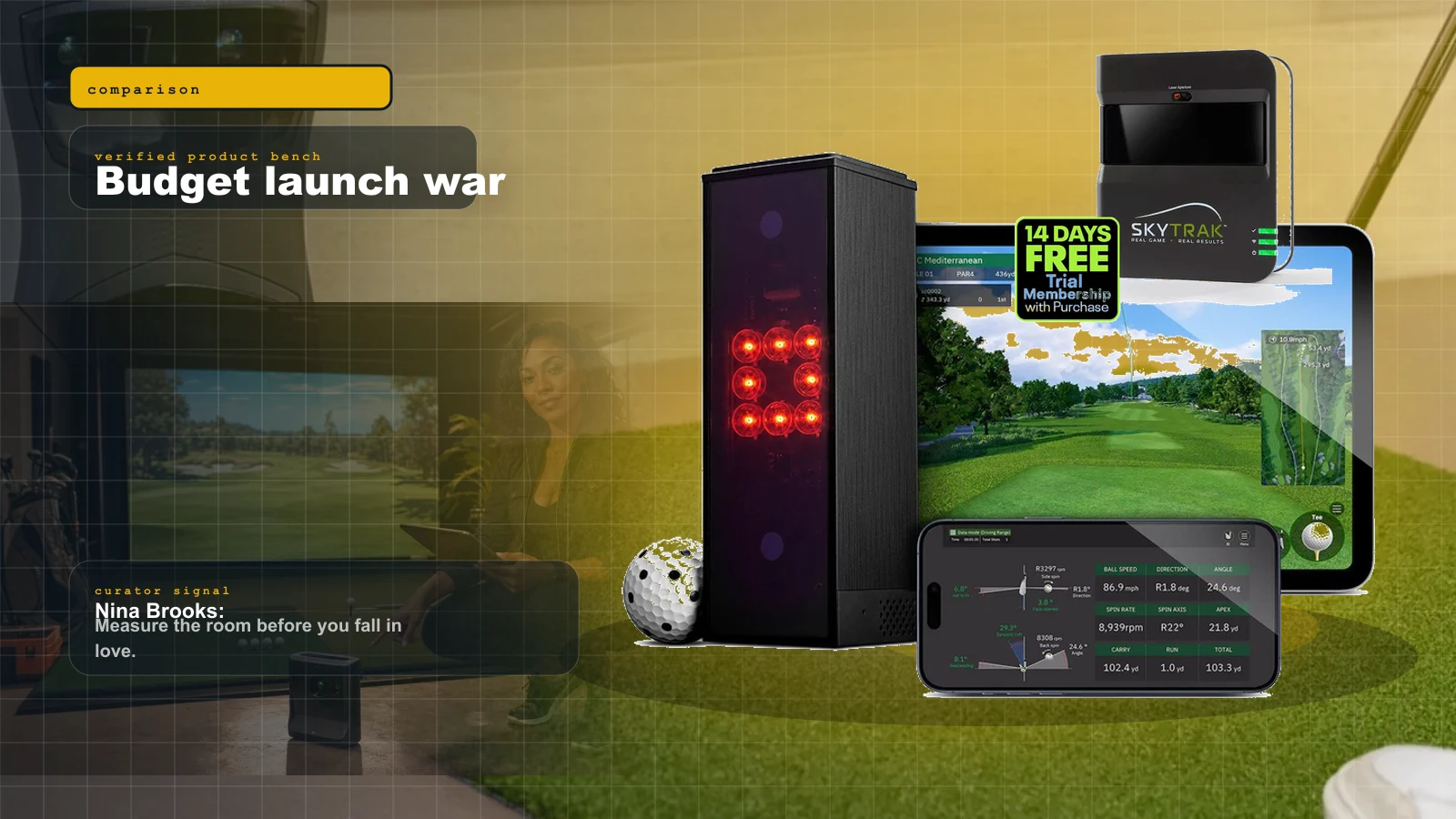
Square Golf vs MLM2PRO vs Garmin R10 vs Used SkyTrak: The Budget Launch Monitor War
The under-$1,000 launch monitor fight is no longer simple. Nina ranks Square Golf, MLM2PRO, Garmin R10, and used SkyTrak by room depth, subscriptions, software, short game, and setup pain.