Best VR Headset for Sim in 2026: Clarity vs Comfort vs Value
The best VR headset for sim racing and flight in 2026, ranked. Meta Quest 3S/3 for value, Pimax Crystal Super for clarity, Bigscreen Beyond 2 for comfort — plus the GPU each one really needs.
Updated July 3, 2026Sources reviewed July 3, 2026Gold certified July 3, 2026Revenue tier A
Verdict first: buy the Meta Quest 3S (from $349.99) or Meta Quest 3 ($599.99) to find out whether VR clicks, then graduate to the Pimax Crystal Super if you want gauge-reading clarity or the Bigscreen Beyond 2 if you want all-day comfort — and budget the GPU before you budget the headset. VR is the single biggest immersion leap in sim, racing or flight. It’s also the one purchase where the box price is a down payment: the headset is only good once you’ve got the card to feed it.
Put a headset on for the first time and the hobby changes. Lean forward to peek at threshold lights through thinning fog, or twist to check your mirror on the exit of a corner, and you understand instantly why people put up with the cables, the setup tax and the frame-rate hit. But “changes the hobby” is not the same as “right for you at this price.” The three trade-offs that decide every VR purchase in 2026 are clarity, comfort, and value — and no single headset wins all three. Here’s the honest ranking, the exact GPU each one needs, and who should buy which.
Which VR headset for whom?
Before the deep dives, the fast decision path — because the right headset is dictated less by specs than by which compromise you can live with:
- You’ve never tried sim VR and want to risk the least money. Buy the Quest 3S. It’s $349.99, works standalone or as a PCVR display, and if VR turns out not to be for you, you own a capable standalone headset anyway.
- You want the best all-round VR experience without flagship spend. The Quest 3 at $599.99 — sharper pancake optics and higher resolution than the 3S, still no base stations, still runs everything.
- You want to read every instrument label as if it were printed, and you own an RTX 5090. The Pimax Crystal Super. Nothing else in 2026 is this sharp.
- You fly or race for hours and weight is your enemy. The Bigscreen Beyond 2 at 107 grams — provided you’re willing to add SteamVR base stations to the bill.
The VR truth nobody prints on the box
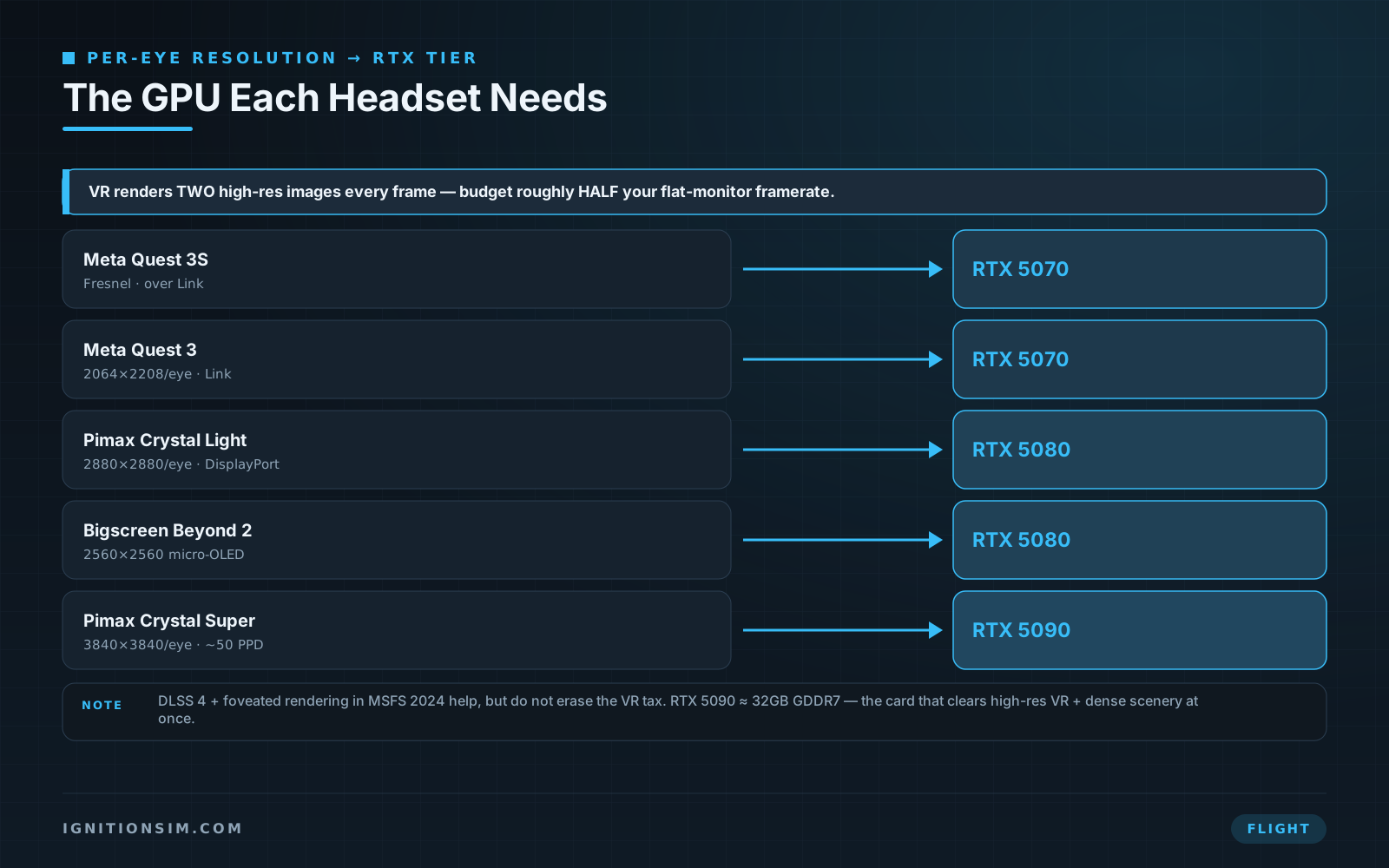
VR renders two high-resolution images every single frame and wants a high, stable refresh rate to stay comfortable. The practical consequence: plan on roughly half the frame rate you’d get on a flat monitor with the same PC. That’s not a defect — it’s physics, and it’s why the headset is only half the purchase.
So the question that actually decides your VR happiness isn’t “which headset,” it’s “which headset can my GPU feed.” A Quest 3S bottlenecked by a weak card looks worse than a monitor. A Crystal Super on anything less than a flagship card stutters until the immersion evaporates. Spend the clarity money only when you’ve got the compute to cash the check — and if you don’t, buy the value tier now and the halo headset when the GPU lands.
Best value: Meta Quest 3S (and the Quest 3 step-up)
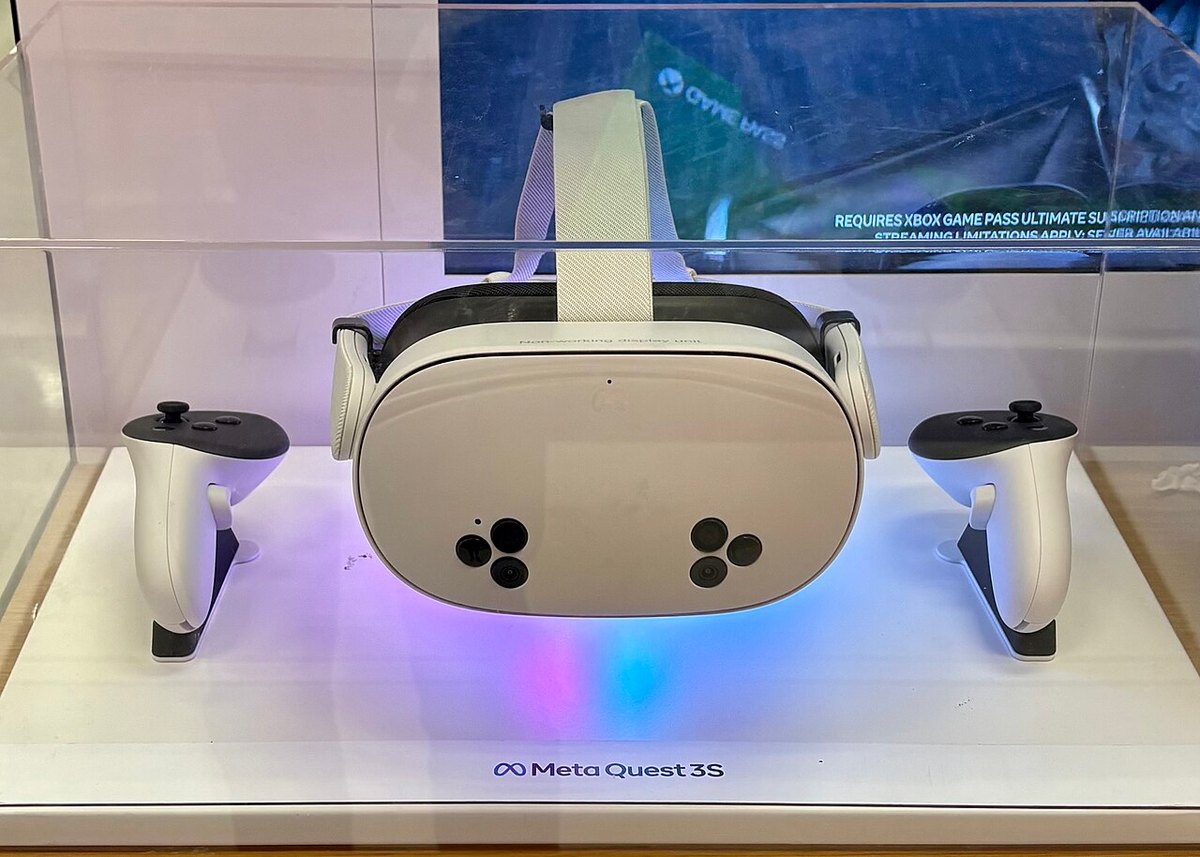
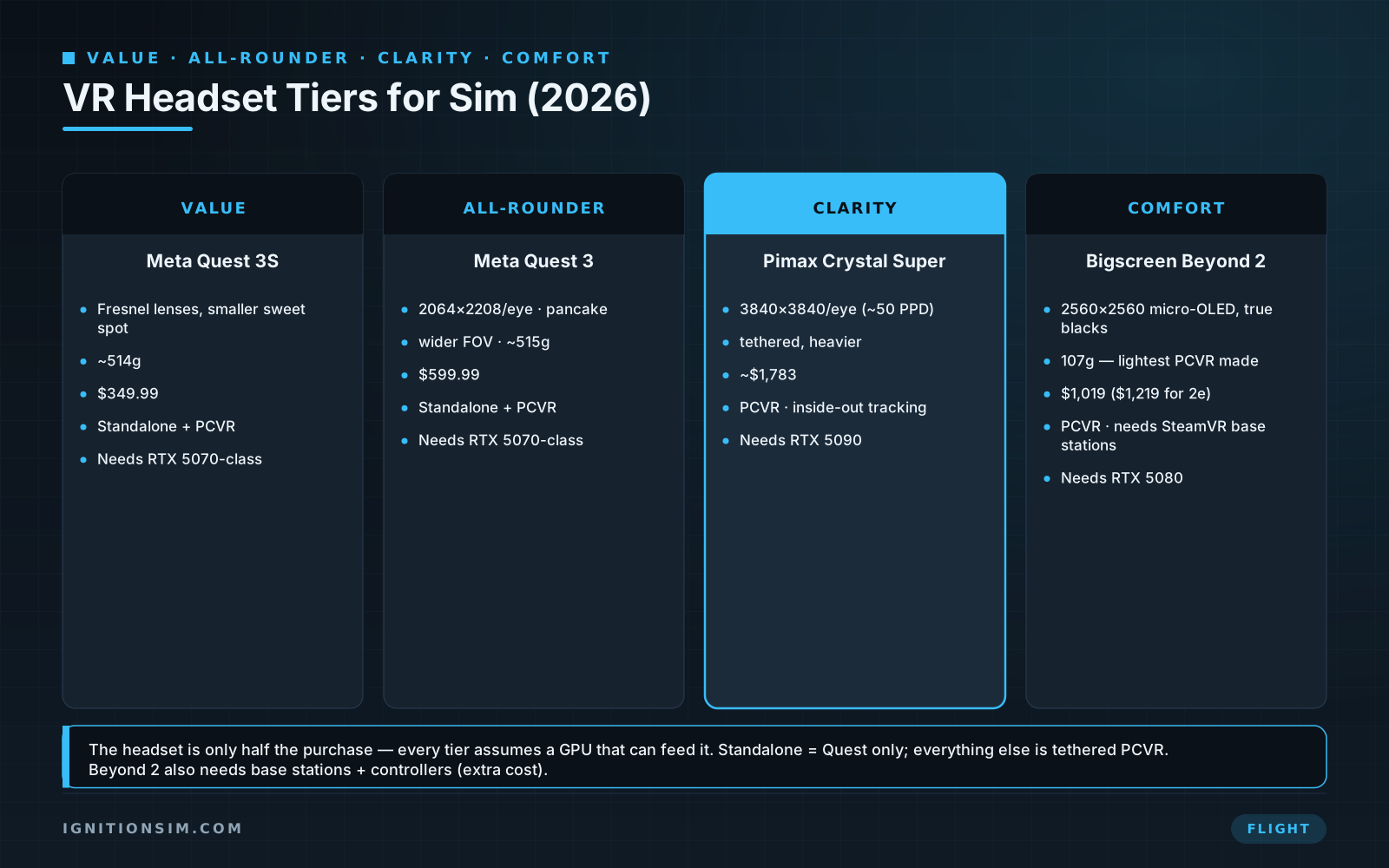
The Quest 3S is the honest answer to “should I even try VR.” At $349.99 it’s the cheapest credible entry into sim VR, it works standalone or as a PCVR display over a Link cable or Wi-Fi, and it needs no base stations or external sensors. The trade is optics: the 3S uses older Fresnel lenses with a smaller sweet spot, so small cockpit text sits right at the edge of legibility. For learning whether VR clicks — for VFR sightseeing, casual races, the sheer first-time wow — it’s more than enough.
Step up to the Quest 3 at $599.99 and you get the thing that matters most for sim: sharper pancake lenses, a higher-resolution display (2064x2208 per eye) and a wider field of view. That’s the difference between squinting at an FMC and just reading it. Both run identical PCVR links, both are standalone, and either is happy on an RTX 5070-class card — the lowest GPU bar in this guide.
The most repeated advice in every "should I get VR" thread: don't buy the flagship first. Simmers who jumped straight to a high-resolution PCVR headset without the GPU to drive it end up disappointed by stutter, while the ones who started on a Quest to learn what VR actually feels like almost never regret it. Buy the cheap headset to answer the question, then buy the expensive one to answer the next one. (Paraphrased from the recurring r/flightsim and simracingcockpit.gg VR threads.)
Best clarity: Pimax Crystal Super
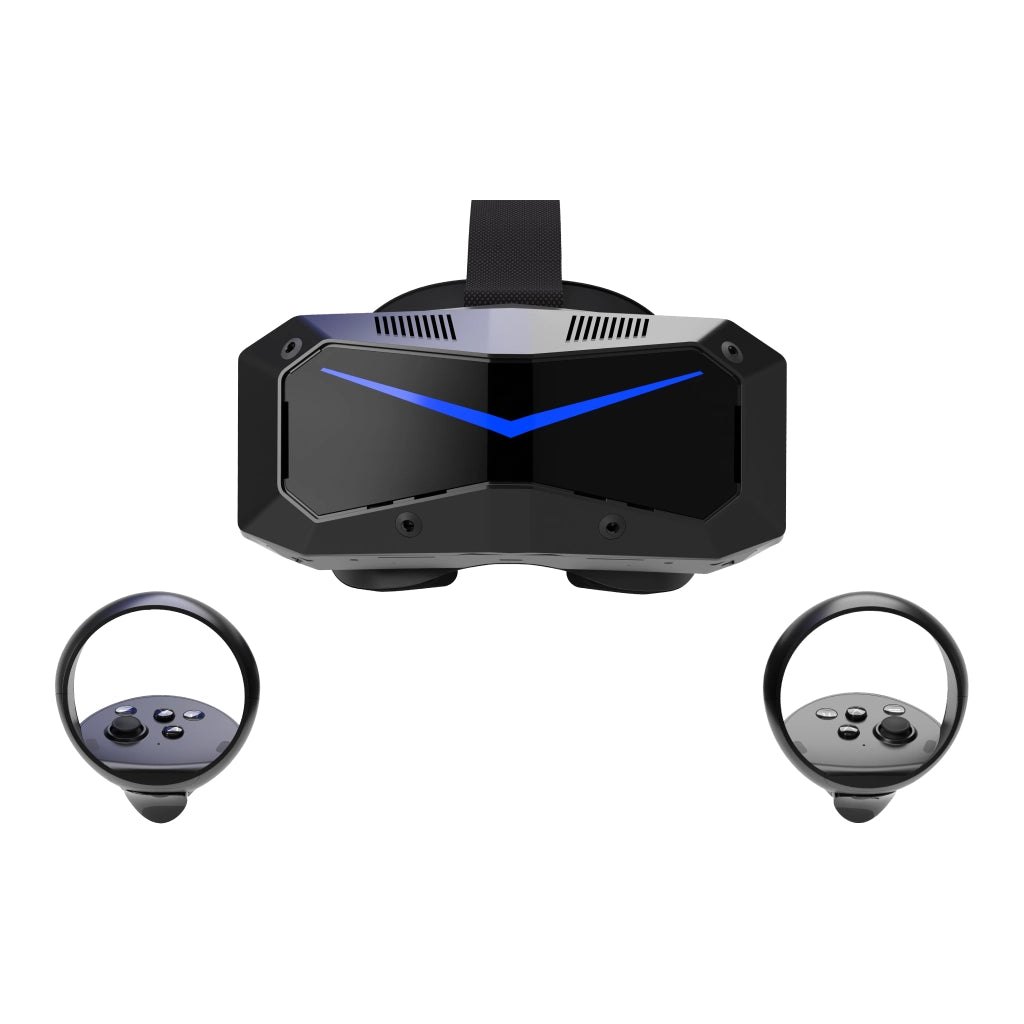
If the Quest tier is about access, the Pimax Crystal Super is about the one thing sim VR chased for a decade: making cockpit instruments come into focus without leaning in. At 3840x3840 per eye (roughly 50 PPD), it’s the 2026 clarity benchmark — the first headset where flight simmers describe reading gauges, tuning radios and scanning glass panels as effortlessly as they would on a monitor. It uses inside-out tracking, so despite being a tethered PCVR headset, there are no base stations to mount.
Now the honesty the sticker doesn’t carry. At ~$1,783 it is not an impulse buy, and — more important — it realistically demands an RTX 5090 to hold a smooth framerate at that resolution in MSFS 2024 or a dense iRacing grid. Put it on a lesser card and you’re paying flagship money to run it soft or stuttery, which defeats the entire point. This is the halo headset for the person who already has, or is buying, the halo GPU. For everyone else, it’s a goal, not a starting line.
If the Crystal Super’s price or GPU demand is a bridge too far, the Pimax Crystal Light (~$899, 2880x2880 per eye over native DisplayPort) is the same clarity philosophy one rung down — staggering in MSFS 2024, happy on an RTX 5080, and the pragmatic clarity pick for people who aren’t running a 5090.
Best comfort: Bigscreen Beyond 2
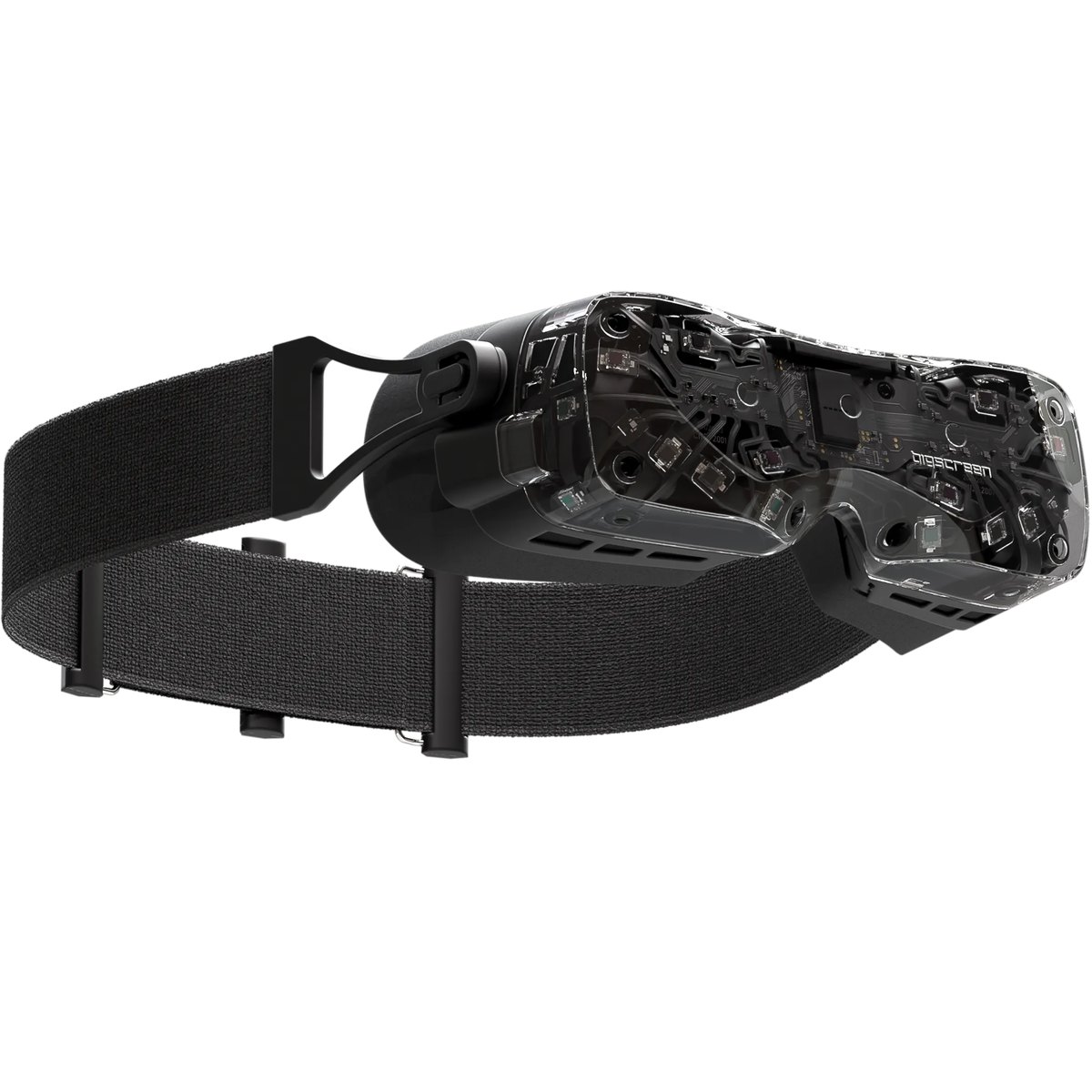
Weight is the complaint that ends more long VR sessions than anything else. A half-kilo headset that’s fine for a quick race becomes a neck brace three hours into a transatlantic leg. The Bigscreen Beyond 2 answers it more completely than anything on the market: at 107 grams it is the lightest PCVR headset made, roughly a fifth the weight of a Quest 3, with custom-fit face cushions and dual micro-OLED panels whose true blacks make night landings and dim panels genuinely legible. For endurance flyers and long-stint racers, it’s the one that disappears on your face.
The trade is setup tax and total cost. The Beyond 2 is $1,019 (or $1,219 for the eye-tracking 2e), but it is a pure PCVR headset that requires SteamVR base stations and controllers, sold separately — so the real out-the-door price is meaningfully higher than the sticker, and setup involves mounting lighthouses. It also wants an RTX 5080-class GPU to drive comfortably. Buy it when comfort over hours is the priority you’re optimizing for and you’re not allergic to a base-station install.
Comfort isn't only about headset weight — it's about balance and heat. Even on a Quest 3, the single most-recommended first upgrade is an aftermarket head strap with a rear battery: it shifts the center of mass off your cheekbones and roughly doubles session time. If you buy into the Quest tier, budget a little extra for a better strap before you blame the headset for being uncomfortable.
The 2026 sim VR shortlist at a glance
| Headset | ~Price | Per-eye res | Weight | Standalone? | GPU it really needs | Verdict |
|---|---|---|---|---|---|---|
| Meta Quest 3S | $349.99 | Fresnel, lower | ~514g | Yes (+PCVR) | RTX 5070 | Best value — try VR cheaply |
| Meta Quest 3 | $599.99 | 2064x2208 | ~515g | Yes (+PCVR) | RTX 5070 | Best all-rounder — sharper optics |
| Pimax Crystal Light | ~$899 | 2880x2880 | heavier | No (PCVR) | RTX 5080 | Clarity, one rung down |
| Pimax Crystal Super | ~$1,783 | 3840x3840 | heavier | No (PCVR) | RTX 5090 | Clarity king — gauges in focus |
| Bigscreen Beyond 2 | $1,019+ | 2560x2560 | 107g | No (PCVR + base stations) | RTX 5080 | Comfort champion — lightest made |
The setup tax nobody quotes you
- The GPU is half the purchase. A Quest wants an RTX 5070; the Beyond 2 and Crystal Light want a 5080; the Crystal Super wants a 5090. Buying the headset without the card that feeds it is the single most common VR regret. Price the whole path.
- Base stations and controllers. The Beyond 2 needs SteamVR lighthouses and controllers sold separately — real money and a mounting job on top of the $1,019 sticker. The Quest and Crystal Super are inside-out and need none.
- Comfort accessories are not optional on the Quest. Factor an aftermarket strap (and ideally a rear battery) into any Quest 3/3S purchase; the stock strap is the weak link, not the headset.
- Cable and play space. Every headset here except the standalone Quest modes is tethered PCVR. Plan a cable route to your rig and a bit of clearance so you’re not fighting the wire mid-corner or mid-approach.
- The VR frame-rate tax is permanent. Foveated rendering and DLSS 4 in MSFS 2024 help a great deal, but they don’t erase the cost of rendering two eyes at high resolution. Set expectations at roughly half your flat-screen frame rate.
The buy order
- Decide your priority first — value, clarity, or comfort. That single choice picks your headset more than any spec sheet.
- Check your GPU against the tier you want. No 5090? The Crystal Super waits. No 5080? Start on a Quest.
- Buy the value tier (Quest 3S/3) if you’ve never done sim VR — learn what the experience is before spending flagship money.
- Budget the whole kit: base stations for the Beyond 2, a better strap for a Quest, a GPU for anything high-res.
- Route your cable and clear your play space before the first session.
- Map the full rig — headset, GPU, seat, controls — in the flight configurator before you check out.
Who should skip VR entirely
If you fly long IFR procedures where crisp instrument text for hours is the whole job, or you race with streaming overlays and telemetry on-screen, a good monitor still wins — VR trades text stability and simplicity for immersion. If your GPU is below an RTX 5070, hold off; a bottlenecked headset looks worse than the screen you already own. And if head tracking would scratch the itch — leaning to spot traffic, glancing at the FMC — a TrackIR-class tracker gives you most of VR’s situational-awareness win with none of its frame-rate tax and none of this price list. VR is the best immersion upgrade in sim; it is not the right one for every simmer. For the full breakdown, see our VR vs monitor guide.
What to buy
Sources Checked
Source review date: July 3, 2026. We checked official product/store pages and current 2026 pricing rather than repeating launch-day specs, and paraphrased community consensus in our own words.
Official pages: Pimax Crystal Super, Pimax Crystal Light, Bigscreen Beyond 2, Meta Quest compare (Quest 3 vs 3S), Meta Quest pricing update.
Specs + reviews: Meta Quest 3 full specification (VRcompare), Bigscreen Beyond 2 107g review (VR.org), Pimax Crystal Super review (SimRacingCockpit).
GPU + community reads (paraphrased in our voice): Best VR flight sim setup 2026 (Gaming PC Guru), Best graphics card for MSFS 2024 (SimRacingCockpit), VR headsets for flight simulation (SimRacingCockpit), and the recurring r/flightsim and r/simracing VR-headset threads.
Key takeaways & quick answers
IgnitionSim is reader-supported. When you buy through links on our site we may earn an affiliate commission at no extra cost to you — it never changes our verdict or your price. As an Amazon Associate we earn from qualifying purchases.
Keep reading
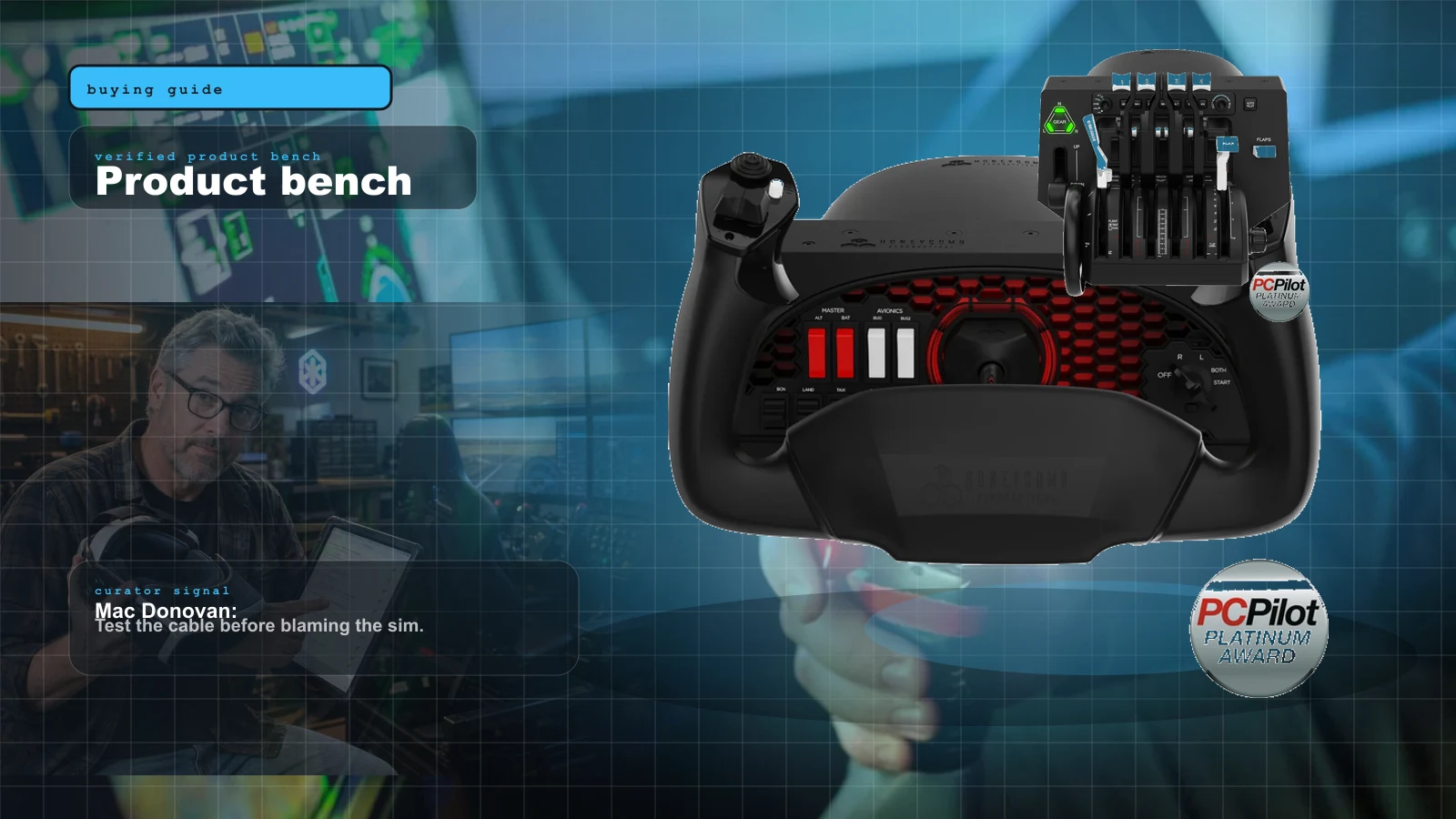
Best MSFS Flight Sim Hardware of 2026: Yokes, Throttles, Pedals, Panels and Head Tracking Ranked
The right first purchase depends entirely on what you fly. Here's the honest 2026 buy order — the one thing to buy first, then the ladder from first stick to a full airliner cockpit, matched to GA, Airbus, Boeing and combat.
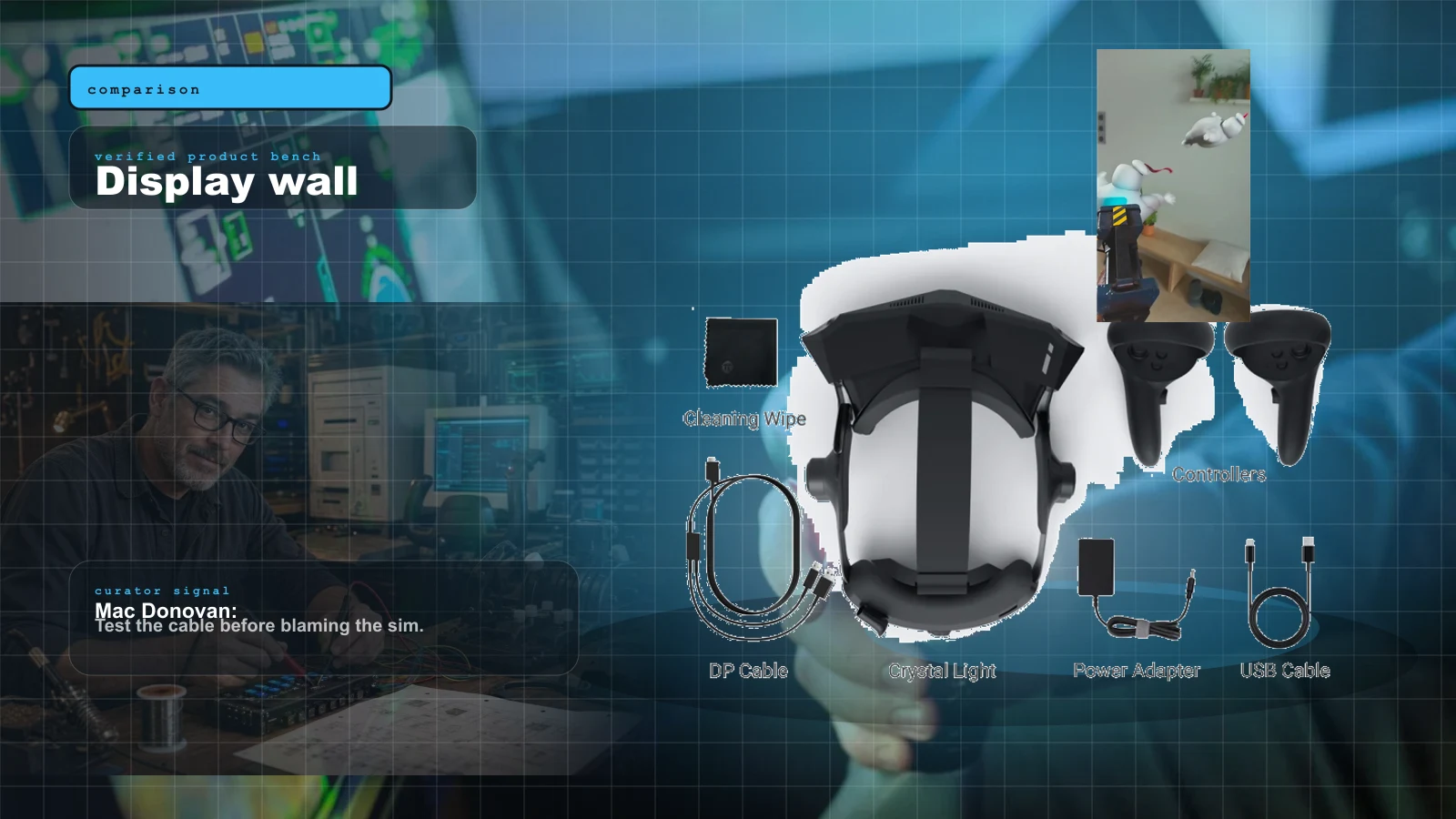
VR vs Monitor for Flight Sim in 2026: The Honest Trade-Off for MSFS 2024
VR gives you a cockpit you cannot get any other way — and asks for roughly half your frame rate to do it. Here is the honest math on headsets, performance, GPUs, and who should stay on a monitor.
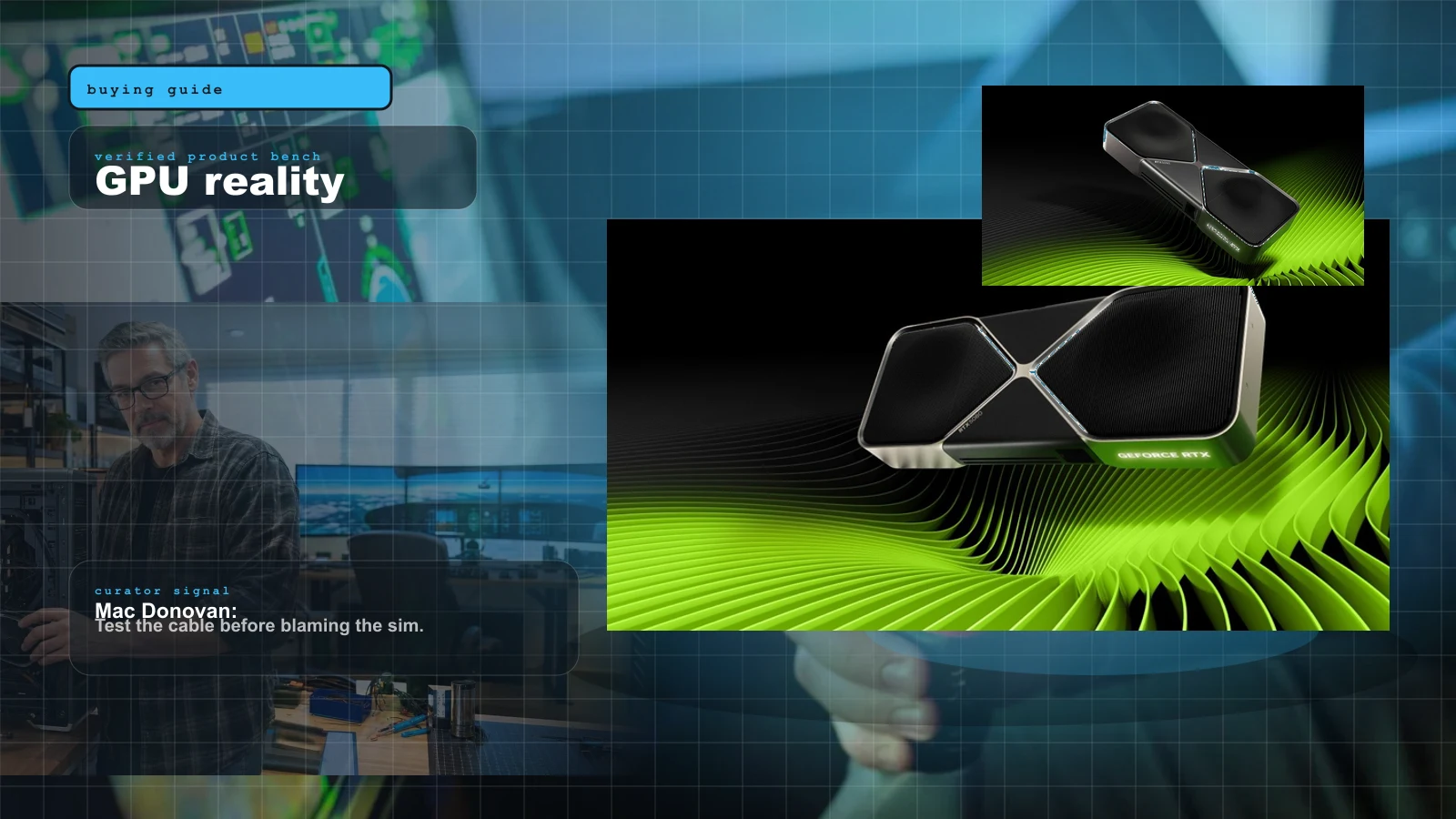
Best GPU for Sim Racing and Flight in 2026: RTX 5080 vs RTX 5090 for MSFS 2024, Triples and VR
The catalog obsesses over yokes and wheelbases and quietly ignores the one component that decides whether your triples or your VR headset work at all: the GPU. Here's the honest 2026 answer for the most demanding mainstream sim — the RTX 5080 sweet spot, the RTX 5090 no-compromise card, and exactly which one your resolution and headset actually need.
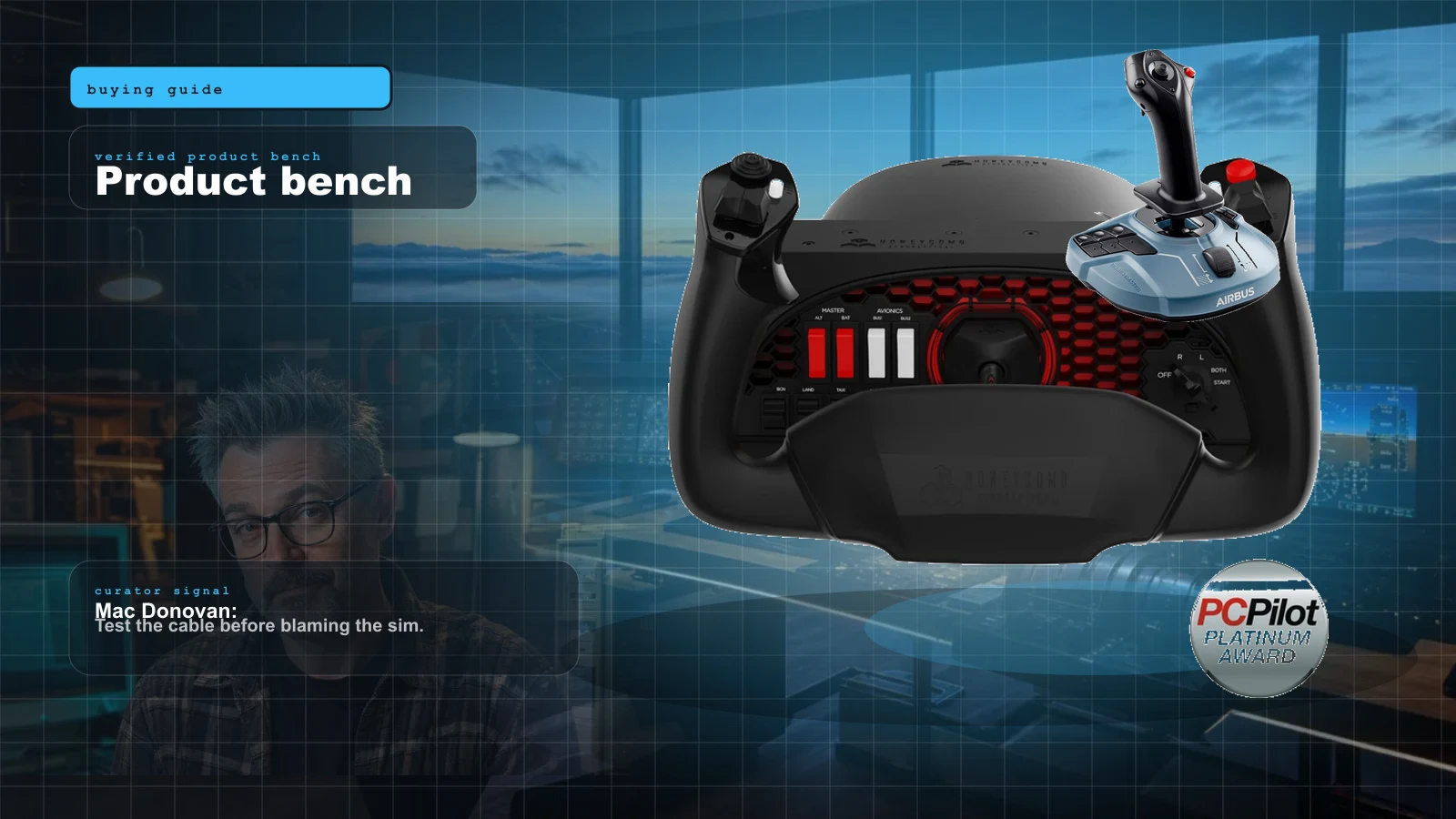
Your First Flight Sim Setup: What to Buy First for MSFS 2024
MSFS 2024 brought a wave of new pilots. Here is exactly what to buy first, what to skip, and three builds that scale from your existing gamepad to a full ~$500 GA cockpit.