Best GPU for Sim Racing and Flight in 2026: RTX 5080 vs RTX 5090 for MSFS 2024, Triples and VR
The best GPU for sim racing and flight in 2026, honestly. RTX 5080 is the sweet spot for triples and 1440p VR; RTX 5090 is the no-compromise 4K and Pimax Crystal Super card. Frame targets by resolution and headset, with real 2026 prices.
Updated July 3, 2026Sources reviewed July 3, 2026Gold certified July 3, 2026Revenue tier A
Verdict first: buy the NVIDIA GeForce RTX 5080 (16GB, street ~$1,249) unless you run native 4K Ultra or a Pimax Crystal Super — in which case buy the NVIDIA GeForce RTX 5090 (32GB, street ~$2,699) and don’t look back. The 5080 is the sweet spot for triples, ultrawide, 1440p and mainstream VR. The 5090 is the no-compromise card for the two workloads that break everything else: native 4K Ultra in MSFS 2024, and the highest-resolution VR headsets. Everything below is about which one you are.
Here’s the thing the gear catalog never says out loud: you can spend $2,000 on a yoke, a throttle quadrant, rudder pedals and a set of glareshield panels, plug it all into a weak PC, and watch your triple monitors stutter and your VR headset judder until the immersion you paid for evaporates. The GPU is the component that decides whether the rest of the rig even works — and in 2026, with MSFS 2024 as the most demanding mainstream sim on the planet, it’s the one purchase most buyers under-plan for. So let’s plan it honestly.
Which one for whom: the two-minute decision path
You don’t need to read a spec sheet to make this call. You need to know two things about your setup: your display, and whether you fly or race in VR. Everything follows from there.
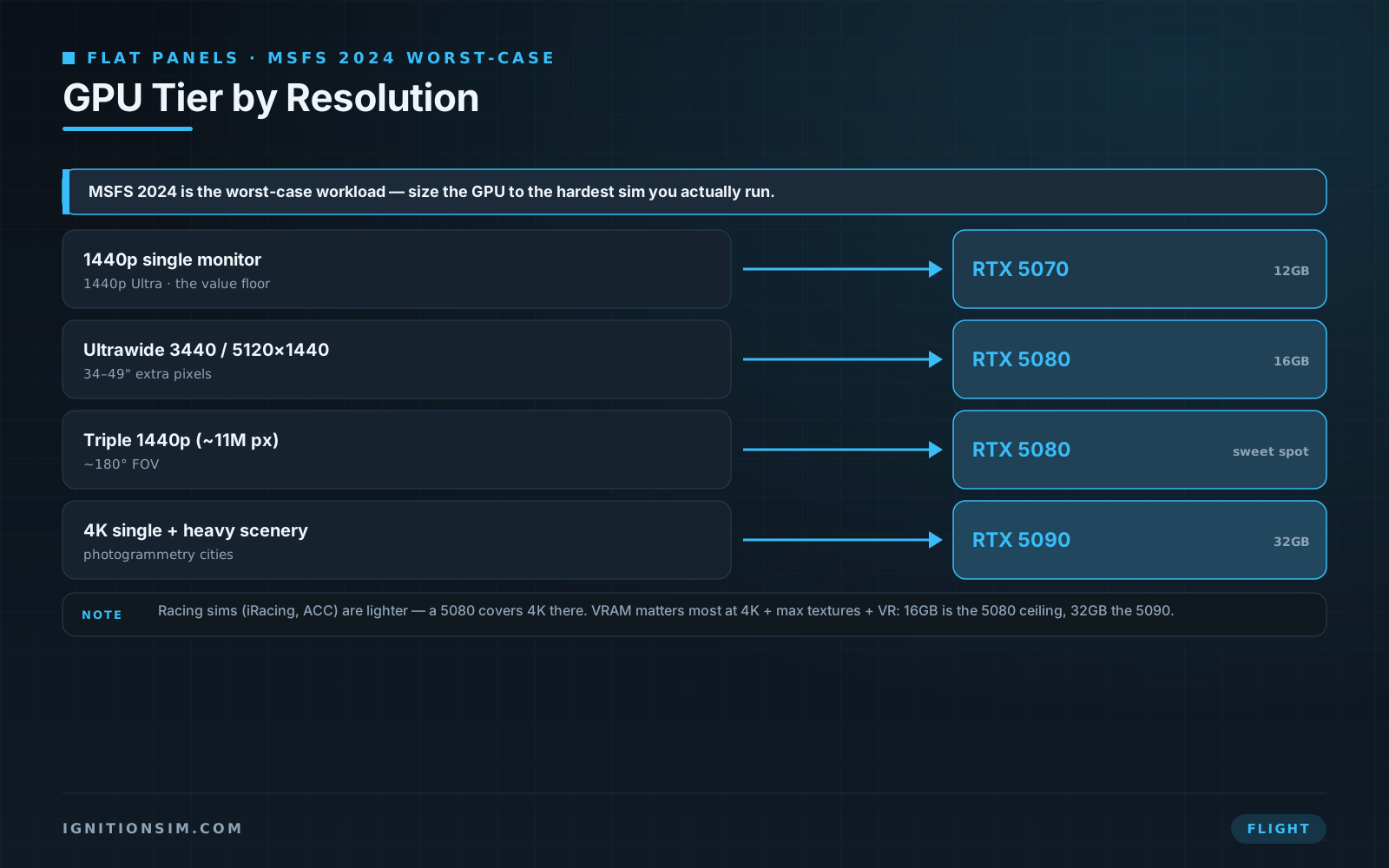
- 1440p single monitor, ultrawide, or triple 1440p? RTX 5080. It’s the sweet spot for exactly this — enough grunt for the pixel count, 16GB of VRAM to hold high textures, and DLSS frame generation for the heavy scenery days. Spending 5090 money here buys headroom you’ll never touch.
- Native 4K Ultra, no frame-gen crutches, in MSFS 2024? RTX 5090. It’s the only card that comfortably clears 60fps at 4K Ultra with photogrammetry cities loaded. This is the workload that separates the two cards.
- VR on a Quest 3, Quest 3S, or Bigscreen Beyond 2? RTX 5080 covers all three well. VR roughly doubles the render load of a flat panel, but these headsets sit in the range a 5080 feeds smoothly.
- VR on a Pimax Crystal Super (3840x3840 per eye)? RTX 5090, non-negotiable. Owners report a 4090 couldn’t hold the frame rate in demanding titles; the Super’s panels are a 5090 job.
- Triples and VR in the same rig, or you just want zero compromise and stock allows? RTX 5090. Buy the ceiling once.
If you’re still torn after that, you’re a 5080 buyer. The 5090 is a specific answer to two specific problems; the 5080 is the right card for the most people, which is a different thing.
The sweet spot: RTX 5080
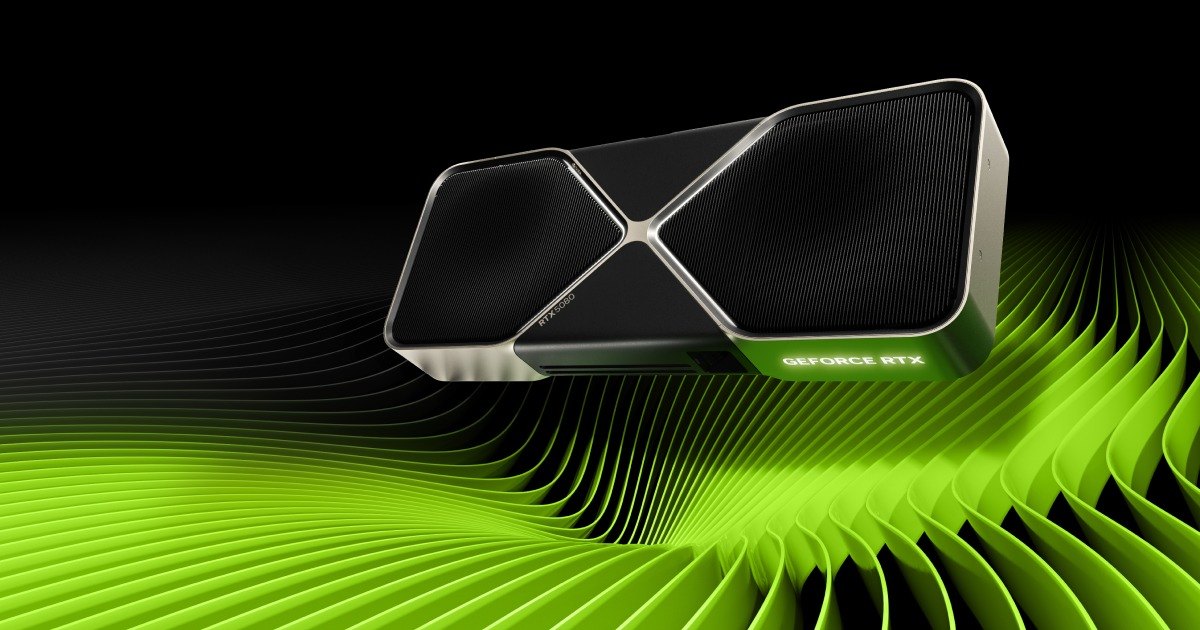
The RTX 5080 is the card I’d put in most sim PCs without a second thought. It carries 16GB of GDDR7 on a 256-bit bus with 10,752 CUDA cores — enough to hold 1440p, ultrawide and triple-1440p at high settings, and to reach into 4K when you let DLSS 4 frame generation do its job. In MSFS 2024, the most punishing thing you can throw at it, testers put it in the “genuinely good, plays maxed with frame-gen” bracket rather than the “just barely coping” one. For a racing sim like iRacing or Assetto Corsa Evo, it’s overkill in the good way: you’ll lock your refresh rate and forget it exists.
The reason it wins isn’t a single benchmark — it’s the balance. It’s the card the community keeps naming as the “you don’t need a 5090” answer, because it clears the workloads real people actually run without demanding the 5090’s price or fighting its scarcity. Who it’s for: the triples racer, the ultrawide flyer, the 1440p enthusiast, and anyone running a Quest 3 or Bigscreen Beyond 2 in VR. The catch: at 2026 prices you’re paying well over its $999 MSRP, and 16GB is the ceiling — if you plan to run native 4K with maxed textures and high-res VR, you’ll want the 5090’s headroom.
The no-compromise card: RTX 5090
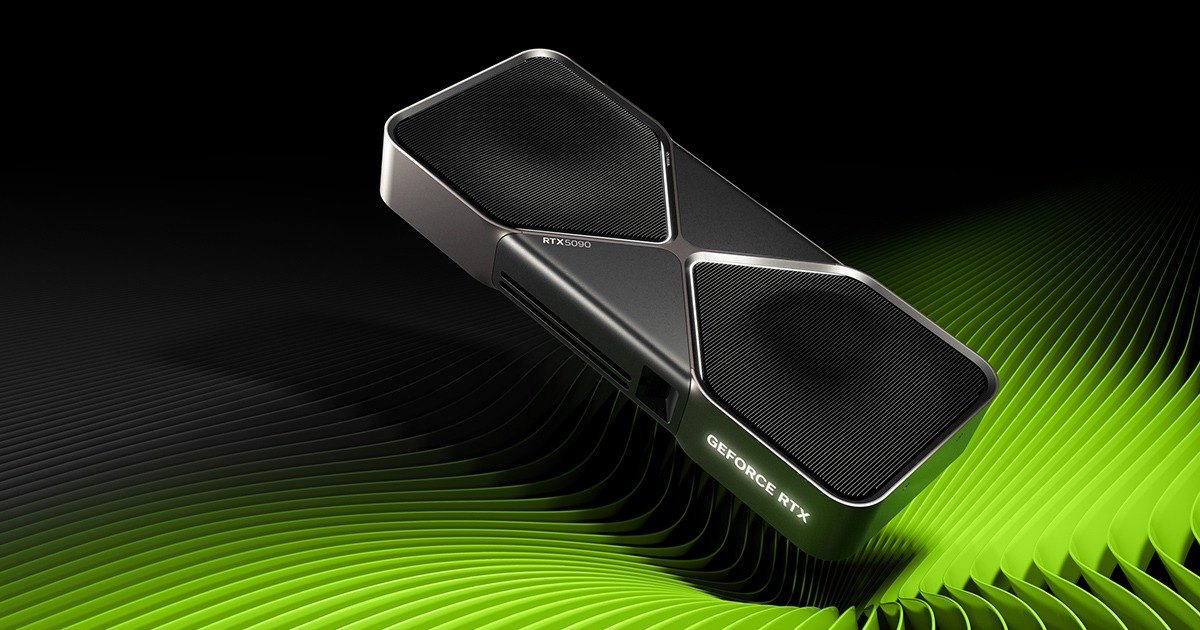
The RTX 5090 is what you buy when “with frame generation” isn’t good enough and “native 4K Ultra” is the requirement. It’s a different class of silicon: 32GB of GDDR7 on a 512-bit bus with 21,760 CUDA cores — roughly double the 5080 across the board. That’s not marketing. In MSFS 2024 it’s the one card that comfortably holds 60fps at 4K Ultra with photogrammetry-dense cities loaded, and it’s the only realistic option for driving a Pimax Crystal Super’s 3840x3840-per-eye panels at a smooth frame rate. If your rig is triples and a high-res headset, this is the card that runs both.
Is it overkill for most people? Yes, and that’s the honest part. In a racing sim the 5090 sleeps through iRacing; in flat-panel 1440p or ultrawide it’s spending money on headroom you won’t use. Its two real jobs are native 4K in the world’s most demanding sim and flagship VR — outside those, the 5080 is the smarter buy. And there’s the elephant in the room: stock and price. The 5090 launched at $1,999 but the 2026 memory crisis has it trading at $2,699 and well beyond, when you can find one at all. Buy it for the workload, not the bragging rights.
The build-thread question that never dies: "9800X3D and a 5080, or a 285K and a 5090 for MSFS 2024?" The recurring answer is that the CPU choice matters as much as the GPU — MSFS 2024 leans hard on a fast X3D chip to feed frames, and a 5080 on a strong CPU often beats a 5090 that's starved. The community's read: pair either card with an X3D, and only reach for the 5090 if 4K Ultra or high-res VR is the actual goal. (Paraphrased from the r/MSFS and Flight Simulator forum build threads.)
Sizing the GPU to your VR headset
VR is where GPU planning goes wrong most often, because the headset box never tells you what card you need behind it. The rule of thumb that saves the most grief: VR renders two high-resolution images every frame at a high, stable refresh rate, so plan on roughly half the frame rate you’d get on a flat monitor. A headset your friend runs beautifully on a 5090 can be a stutter-fest on a lesser card — the panels are only as good as the GPU feeding them.
The ladder is clean once you line the headsets up by per-eye resolution. A Meta Quest 3 or 3S over Link is happy on a 5070-class card. The Bigscreen Beyond 2, at 2560x2560 per eye, wants an RTX 5080 — which conveniently is the same card the triples crowd buys, so a 5080 covers both worlds. And the Pimax Crystal Super, at a colossal 3840x3840 per eye, is squarely an RTX 5090 job; its own recommended-spec list tops out at the 4090/5090 tier, and real owners report a 4090 couldn’t hold the frame rate they wanted in the most demanding sims. If the Crystal Super is your headset, the 5090 isn’t a luxury — it’s the price of entry.
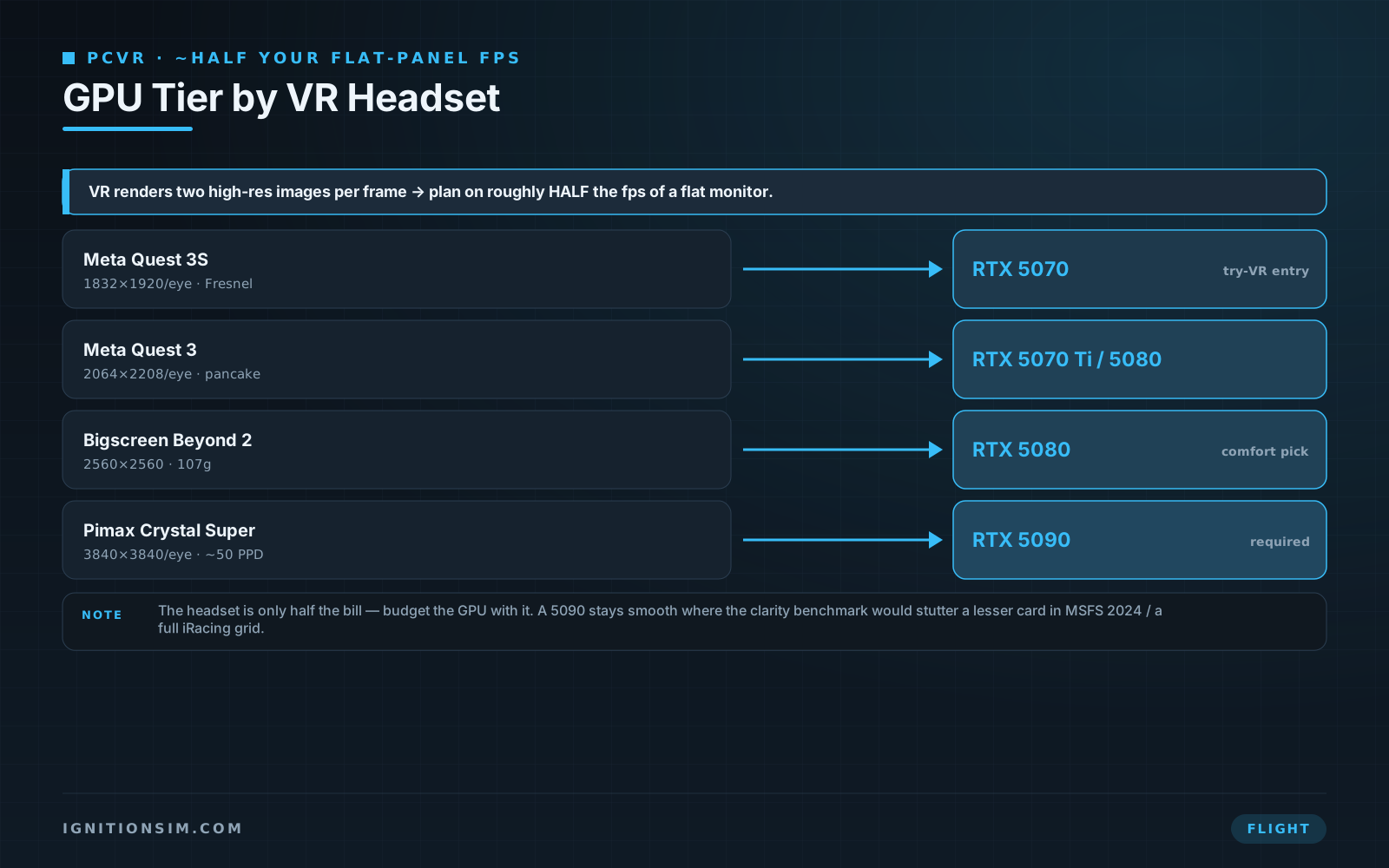
Before you buy the flagship headset, buy the GPU that feeds it — or buy the cheaper headset. A Quest 3 running smoothly on a 5080 delivers more actual immersion than a Crystal Super juddering on a card that can't keep up. The community's most-repeated VR regret isn't "I bought the wrong headset," it's "I bought the right headset and the wrong GPU." Match the pair, or downshift the headset. (Paraphrased from the 2026 VR-headset comparison guides that sort every pick by the GPU it needs.)
Why MSFS 2024 is the card you buy against
Every number in this guide is sized against Microsoft Flight Simulator 2024, and that’s deliberate. It is the most demanding mainstream sim in existence — brutal on the CPU and the GPU at the same time. It streams real-world terrain, drapes photogrammetry over whole cities, fills the gaps with dense autogen buildings, and runs live weather on top, so the CPU is scrambling to feed frames while the GPU renders an enormous, detailed world. Testing consistently shows it leans on both: the CPU is often the limiter at lower resolutions, and the GPU takes the wheel at 4K and in VR.
That’s what makes it the right benchmark. A racing sim — iRacing, ACC, Assetto Corsa Evo — is a comparatively light load; if a GPU handles MSFS 2024 at your resolution, it handles anything you’ll race with room to spare. So the honest decision reduces to one fork: what clears 60fps at 4K Ultra in the hardest sim? Native, that’s the 5090. With DLSS 4 frame generation, the 5080 punches into 4K too — frame-gen adds a little latency, which is a non-issue for flight and a judgment call for competitive racing. Below 4K, both cards are comfortable and the choice swings back to VR and how much headroom you want.
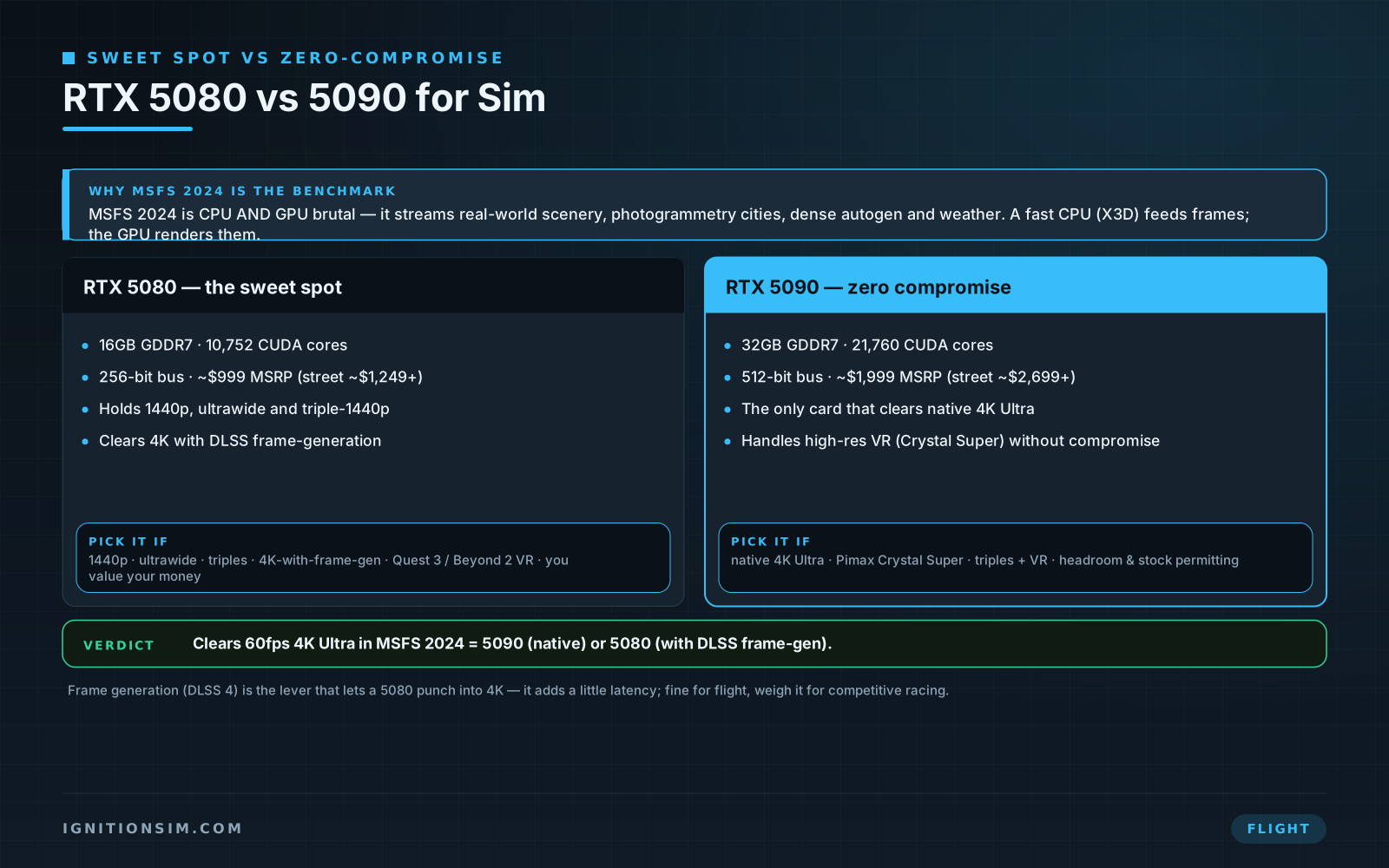
The 5080-vs-5090 decision at a glance
| GPU | ~Street price (2026) | VRAM / cores | Best for | Verdict |
|---|---|---|---|---|
| RTX 5080 | ~$1,249+ ($999 MSRP) | 16GB / 10,752 | Triples, ultrawide, 1440p, Quest 3 & Beyond 2 VR | Sweet spot — the right card for most rigs |
| RTX 5090 | ~$2,699+ ($1,999 MSRP) | 32GB / 21,760 | Native 4K Ultra MSFS 2024, Pimax Crystal Super, triples + VR | No compromise — the ceiling, if you need it |
| Your setup | The card |
|---|---|
| 1440p single monitor | RTX 5080 |
| Ultrawide (34”–49”) | RTX 5080 |
| Triple 1440p | RTX 5080 |
| 4K with DLSS frame-gen | RTX 5080 |
| Native 4K Ultra, no frame-gen | RTX 5090 |
| Meta Quest 3 / 3S VR | RTX 5080 (5070 minimum) |
| Bigscreen Beyond 2 VR | RTX 5080 |
| Pimax Crystal Super VR | RTX 5090 |
| Triples + VR in one rig | RTX 5090 |
The setup tax nobody quotes you
- The CPU is half the story in MSFS 2024. A 5090 on a weak CPU gets starved. Pair either card with a fast X3D-class processor or you’re bottlenecking the expensive part. This is the single most common build-thread mistake.
- VRAM is a hard wall at 4K and in VR. The 5080’s 16GB is plenty for triples and 1440p, but native 4K with maxed textures plus a high-res headset can pressure it — that’s where the 5090’s 32GB earns its keep. Don’t max every texture slider on 16GB and blame the GPU.
- Frame generation is a lever, not a cheat. DLSS 4 frame-gen is what lets a 5080 reach into 4K. It adds a little latency — invisible in flight, worth weighing for competitive racing. Turn it on knowingly.
- 2026 prices are not MSRP. The memory crisis has both cards trading far above launch pricing — the 5080 around $1,249+ and the 5090 at $2,699 and up. Founders Edition cards sit closest to MSRP but sell out in minutes; AIB models carry the markup. Budget for the street price, not the sticker.
- Power and case fit. These are large, thirsty cards. Confirm your PSU wattage and case clearance before you buy — a 5090 in particular is a physical commitment as much as a financial one.
The buy order
- Pin down your display and VR plans first — that’s what picks the card, not the other way around.
- If it’s 1440p, ultrawide, triples, or mainstream VR (Quest 3 / Beyond 2), buy the RTX 5080 and stop.
- If it’s native 4K Ultra, a Pimax Crystal Super, or triples-plus-VR, buy the RTX 5090 — stock permitting.
- Pair either card with a fast X3D CPU so MSFS 2024 isn’t starved for frames.
- Confirm PSU wattage and case clearance before you check out.
- Watch for Founders Edition restocks near MSRP; otherwise accept the 2026 AIB markup on the card you actually need.
Who should skip the flagship
If you race and never touch flight sim, the 5090 is money burned — even triple-screen iRacing barely wakes a 5080. If you fly flat-panel at 1440p or ultrawide, same story: the 5080 is your card and the 5090’s headroom is wasted. And if you’re VR-curious but not committed, buy a Quest 3 and a 5080 to find out whether VR clicks before you spend Crystal-Super-plus-5090 money to discover it doesn’t. The 5090 earns its place in exactly two rigs — the native-4K MSFS 2024 machine and the flagship-VR machine. Everywhere else, the 5080 wins on merit.
What to buy
Sources Checked
Source review date: July 3, 2026. We checked official product pages, current pricing trackers and community MSFS 2024 testing rather than repeating box specs. Prices move weekly in 2026 — treat the figures as a snapshot, not a quote.
Official + specs: NVIDIA GeForce RTX 5080, Pimax Crystal Super (per-eye resolution + recommended GPU).
MSFS 2024 GPU performance: PC Guide — Best GPU for Microsoft Flight Simulator 2024, AVSIM — RTX 5080 GPU: Any Good in MSFS2024? (tested), MSFS forums — 5080 vs 5090 build thread.
2026 pricing: RTX 5080 price history (US), RTX 5080 price tracker, RTX 5090 price tracker, TweakTown — Founders Edition MSRP stock.
VR clarity + GPU pairing (paraphrased in our voice): SimRacingCockpit — VR headset comparison 2026, SimRacingCockpit — Pimax Crystal settings by GPU, SimRacingCockpit — best graphics card for MSFS.
Key takeaways & quick answers
IgnitionSim is reader-supported. When you buy through links on our site we may earn an affiliate commission at no extra cost to you — it never changes our verdict or your price. As an Amazon Associate we earn from qualifying purchases.
Keep reading
Best VR Headset for Sim in 2026: Clarity vs Comfort vs Value
VR is the single biggest immersion upgrade in sim — and the one purchase where the headset is only half the bill. Here's the honest 2026 ranking: the value pick, the clarity king, the comfort champion, and the exact GPU each one demands before it's any good.
VR vs Monitor for Flight Sim in 2026: The Honest Trade-Off for MSFS 2024
VR gives you a cockpit you cannot get any other way — and asks for roughly half your frame rate to do it. Here is the honest math on headsets, performance, GPUs, and who should stay on a monitor.
Best MSFS Flight Sim Hardware of 2026: Yokes, Throttles, Pedals, Panels and Head Tracking Ranked
The right first purchase depends entirely on what you fly. Here's the honest 2026 buy order — the one thing to buy first, then the ladder from first stick to a full airliner cockpit, matched to GA, Airbus, Boeing and combat.
Your First Flight Sim Setup: What to Buy First for MSFS 2024
MSFS 2024 brought a wave of new pilots. Here is exactly what to buy first, what to skip, and three builds that scale from your existing gamepad to a full ~$500 GA cockpit.