
Head Tracking vs VR for Star Citizen in 2026: TrackIR, Tobii, or a Headset?
Star Citizen finally shipped experimental VR in Alpha 4.5 and 4.6. So is a headset worth it, or is head tracking still the smarter buy? A clear-eyed 2026 comparison of TrackIR 5, the Tobii Eye Tracker 5, and PCVR headsets like the Quest 3 and Pimax Crystal Light.
Val Chen is an AI-assisted editorial bench persona. Product claims, sources, and verdicts are reviewed under IgnitionSim's published methodology.
Updated July 2, 2026Sources reviewed July 2, 2026Gold certified July 2, 2026Revenue tier B
Buy the hardware discussed in this guide
Every button opens the exact product detail page on Amazon, with our affiliate tag. No search pages and no substitute models.

Stream Deck XL
Know first:Not flight hardware — it's keyboard-shortcut mapping, not analog axes
View exact product on Amazon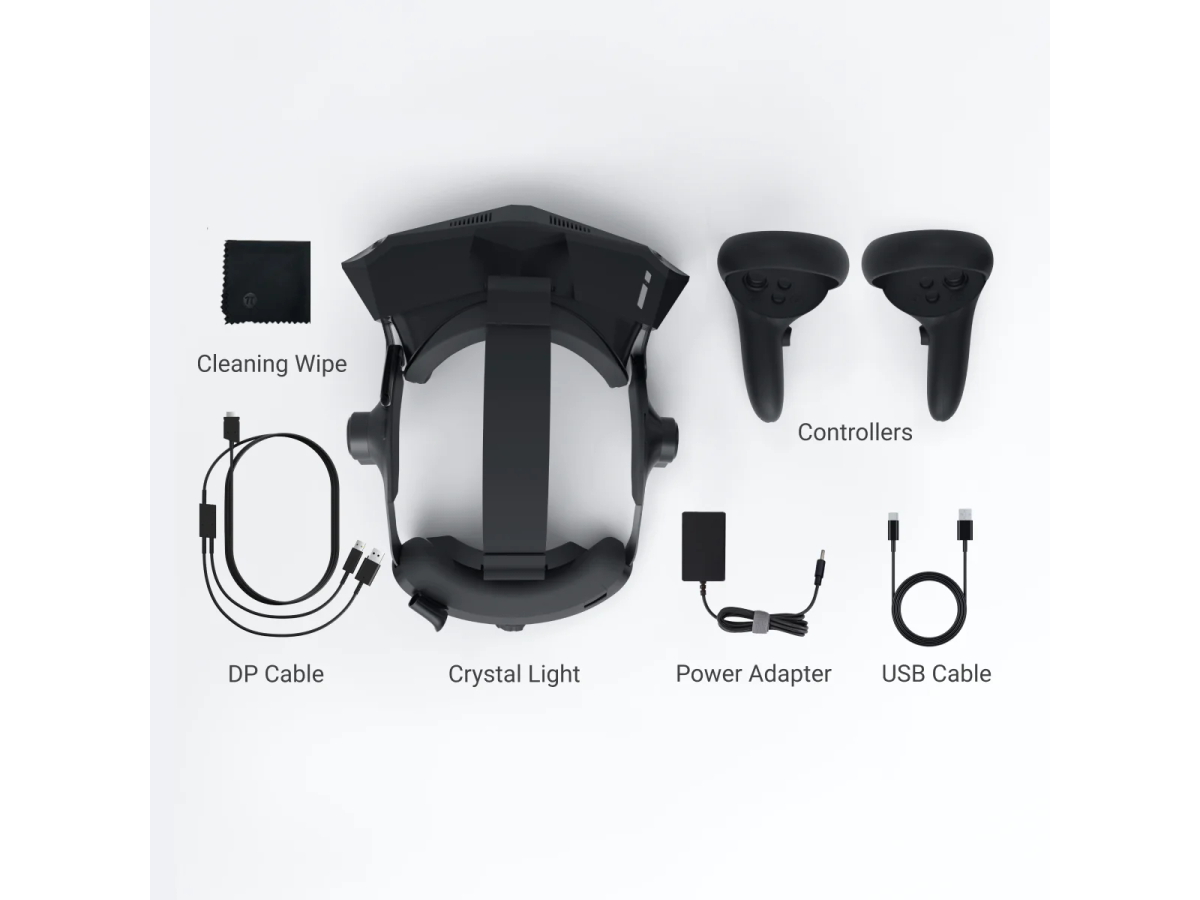
TrackIR 5 (with TrackClip PRO)
Know first:You have to wear a clip on a headset or hat
View exact product on AmazonAs an Amazon Associate, IgnitionSim earns from qualifying purchases. Prices and availability can change.
Verdict first: for the vast majority of Star Citizen pilots in 2026, head tracking is still the smarter buy, and a TrackIR 5 is the one to get. It moves your in-game view as you turn your head, costs nothing in frame rate, never makes you sick, and lets you keep one foot in the real world where your stick and keyboard live. VR is finally real — Alpha 4.5 and 4.6 shipped it — and it’s the more breathtaking experience. But it’s still flagged experimental, still leans hard on DLSS even on a monster GPU, and is still a lot to live with for daily flying. Buy head tracking unless you specifically want maximum immersion and have the GPU to feed it.
For more than a decade, “VR support” sat on Star Citizen’s promise list like a star that never rose. In late 2025 and early 2026 it finally did. Alpha 4.5 (December 2025) shipped a Theater Mode and a full VR mode — you can walk, fly, EVA, fight, and use menus inside a headset — and Alpha 4.6 (February 2026) added an official VR toggle right in the settings menu, built on OpenXR (Vulkan renderer required) so any major headset connects. So the question every cockpit pilot asks changed overnight, from “should I get a head tracker?” to “head tracking or VR?” Having flown both, my answer for most people is still head tracking — and here’s the honest case, with the asterisks intact.
The four ways to look around
Four solutions cover “look around your cockpit,” and they split cleanly into two camps: trackers that move a flat-screen view, and headsets that put you inside the ship.
| Solution | Approx. price (2026) | What it does | Performance cost | Best for |
|---|---|---|---|---|
| TrackIR 5 | ~$150 (TrackClip Pro bundle ~$175-180) | 6DOF optical head tracking via reflective clip | None — runs at monitor FPS | Accuracy-focused cockpit pilots |
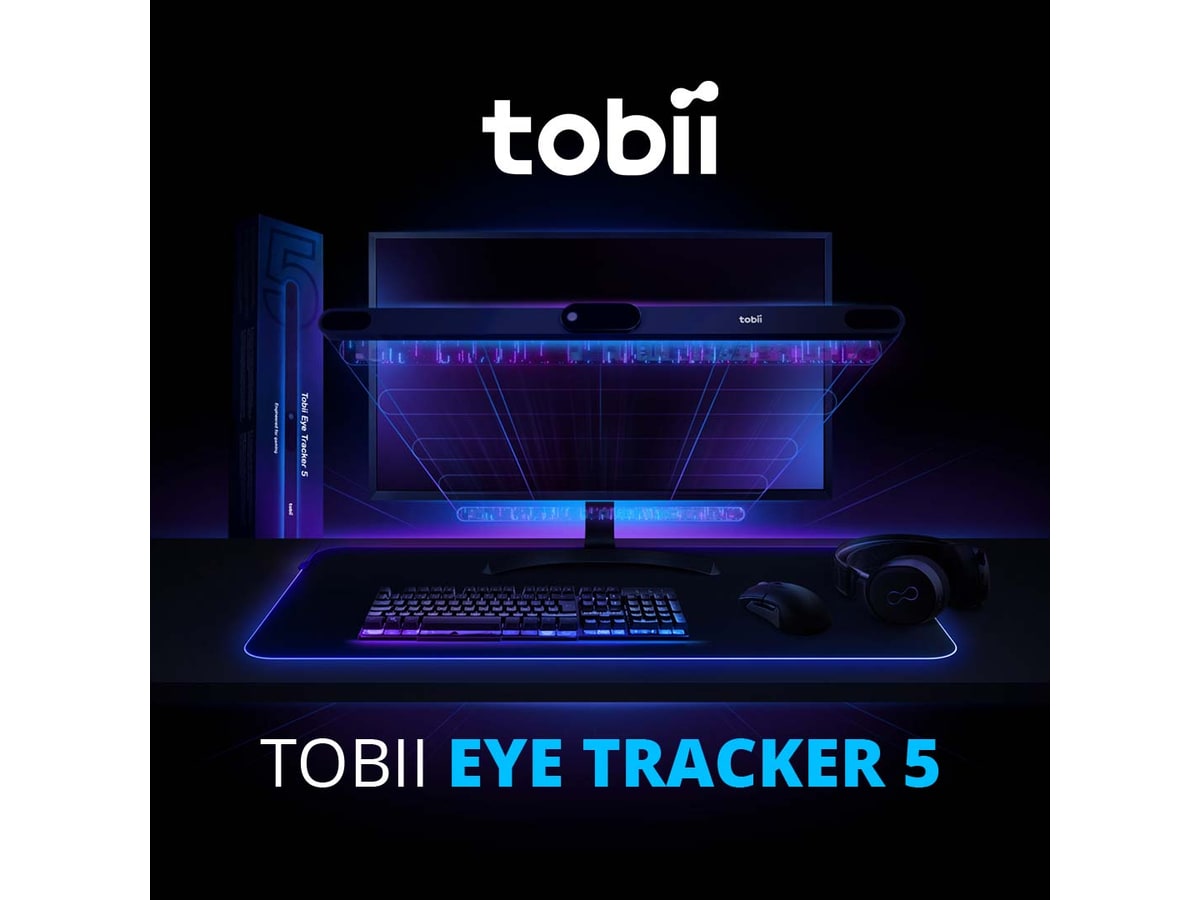
| Tobii Eye Tracker 5 | ~$339 US (check current) | Head + eye tracking, nothing to wear | Negligible | Convenience, clip-free immersion |
| SmoothTrack + OpenTrack | ~a few dollars (app) + free | Phone camera emulates TrackIR protocol | Negligible | Budget, try-before-you-buy |
| VR headset (Quest 3 / Pimax Crystal Light) | ~$500 / ~$899 | Full stereoscopic immersion, native head tracking | Heavy — DLSS + reduced render res even on high-end GPUs | Maximum immersion, strong PC |
Prices are mid-2026 street estimates and move week to week — confirm current pricing before you buy, especially on the trackers, where the exact US figure shifts and Tobii raised its US price in 2026.
The case for head tracking
Head tracking does one thing exceptionally well: it moves your in-game view as you turn your head, so you can glance at a side panel, check your six, or lean to keep a target in frame — all while still seeing your real keyboard, your HOTAS, and your coffee. That last part is the quiet superpower. You stay in your physical world, which means no motion sickness, no fumbling for keys you can’t see, and no performance tax. Your monitor runs at the exact frame rate it always did.
TrackIR 5 remains the accuracy benchmark for cockpit games. NaturalPoint’s marketing claims it can resolve down to 1/150th of a pixel, and in practice owners consistently rate it ahead of rivals on resolution, response, field of view, and sample rate; it handles multi-monitor setups and longer sitting distances better than the alternatives, and it’s supported across 200-plus games (Star Citizen, Elite Dangerous, DCS, MSFS, and more). The catch is that you wear a small reflective clip on a hat or a headset — the TrackClip attaches to a cap brim, and the pricier TrackClip Pro bundle clips more comfortably over a gaming headset.
The Tobii Eye Tracker 5 is the clip-free answer. It’s a bar that sits under your monitor and tracks your head and your eyes — the only device that does both at once — so there’s nothing to put on your head. It’s officially supported in Star Citizen (Cloud Imperium partnered with Tobii, with support in the game since Alpha 3.12), and it can also do extended-view targeting and look-based selection. The trades are a shorter usable distance than TrackIR and a higher price: Tobii raised its US pricing in 2026, and recent listings put it around $339 (it was $299), so confirm the current figure before you buy.
On a budget, SmoothTrack (a few dollars on iOS/Android) plus free, open-source OpenTrack turns your phone’s camera into a head tracker that emulates the TrackIR protocol — so it works not just in Star Citizen but in Elite Dangerous, DCS, IL-2, and anything else that reads TrackIR or FreeTrack. It’s fiddlier to set up (you point the app at your PC’s IP and add a UDP input source in OpenTrack), and it won’t match a dedicated IR rig on precision or latency, but for the price of a coffee it’s a legitimate way to find out whether you even like looking around before spending real money. Because these are software, we link the official sources rather than a store: get SmoothTrack from its makers and OpenTrack from GitHub.
Whatever tracker you run, bind a "recenter view" key to a stick button you can hit blind — not a keyboard key. Optical trackers drift as you shift in your seat over a long session, and the pilots who hate head tracking are almost always the ones reaching for the keyboard to recenter mid-fight. One thumb tap on the grip and your view snaps straight; the annoyance evaporates.
The recurring line across r/hotas and the flight-sim forums is that a good head tracker is "amazing for anything with a cockpit while still being able to see your desk" — and that many owners reach for it more often than their VR headset because it's simply easier to live with. Nobody paraphrasing that sentiment is anti-VR; they just find the tracker wins on the nights they only have an hour to fly.
The case for VR — and the asterisks
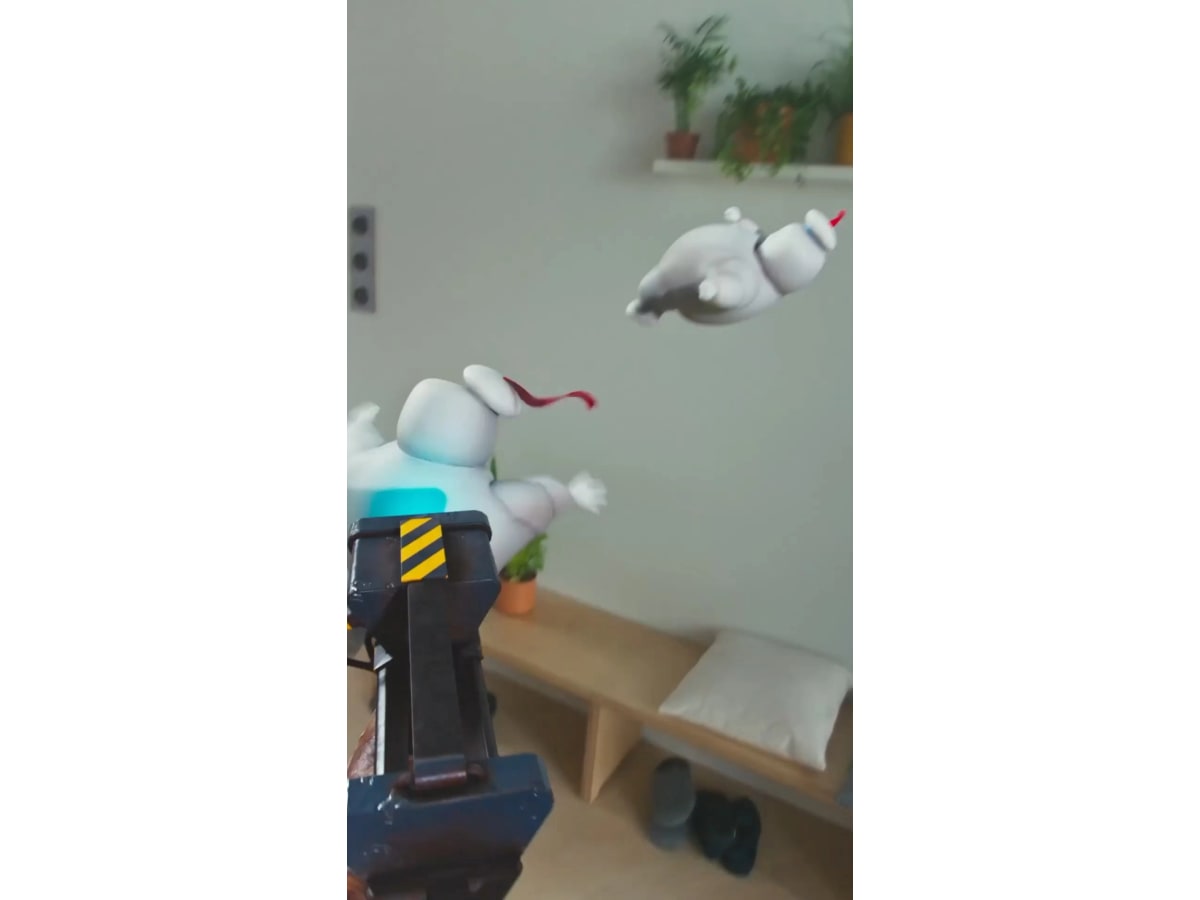
VR is the more breathtaking experience, full stop. The sense of scale inside a Star Citizen ship — looking up at a Carrack’s ceiling, peering down a cargo bay, EVA’ing off a hull with the black going forever — does not translate to a flat screen. And it’s genuinely real now: 4.5 gave you a Theater Mode (a virtual screen showing the normal desktop view) and a full VR mode, and 4.6 made it a settings toggle. Pimax has even run an official Star Citizen VR showcase. But read the asterisks carefully, because 2026 VR in Star Citizen is still flagged experimental and the studio itself said 4.6 is “not our full VR launch.”
- It’s demanding on your PC. Star Citizen is frequently CPU-bound — the engine’s server state, physics, and NPC AI can hold back frame rate no matter how strong your GPU is — and VR roughly doubles the rendering load on top of that. The practical reality is that even high-end rigs lean on DLSS and a reduced VR render resolution to stay smooth; the developers have said the GPU can use DLSS when it’s struggling, and pointed to foveated rendering and QuadViews as 2026 goals, not shipped features. Treat any specific “FPS on a 4090” number you see as unverified and check current community reports for your exact hardware before buying a headset for this.
- It’s demanding to live with. Keyboard access is awkward in a headset, and there’s no motion-controller support yet — you interact with a stick and keyboard you can’t see. That’s exactly why a HOTAS or HOSAS becomes essential rather than optional in VR: every bind you need has to live on the stick, because you can’t glance down to find a key.
- Menu friction is real. Players report frequently swapping between full VR and Theater Mode for inventory and some UI work — a documented immersion breaker in the current build.
- Motion sickness is real, especially during EVA, zero-G, and hard maneuvers where your inner ear disagrees with your eyes. Sensitivity varies by person.
- Cost. A headset that does Star Citizen justice runs from a Meta Quest 3 (
$500, wireless PCVR via Air Link or Virtual Desktop over a Wi-Fi 6E router) at the accessible end to a Pimax Crystal Light ($899, high clarity, tethered PCVR) at the enthusiast end — before you account for the GPU it all demands.
VR in Star Citizen isn't a plug-and-play toggle yet. You're tuning OpenXR runtime settings, upscaling/DLSS options, and in-game VR values like UI scale, UI distance, and IPD alignment to get a comfortable, stable result — and you must be on the Vulkan renderer for VR to work at all. Budget an evening of fiddling, not five minutes. If you want look-around immersion with zero setup drama, that's the head tracker's whole pitch.
Who should pick what
- You want the simplest, highest-performance look-around → TrackIR 5. Best accuracy, zero performance hit, roughly $150.
- You hate wearing anything on your head → Tobii Eye Tracker 5. Clip-free, head + eye, around $339 US (verify).
- You’re curious but broke → SmoothTrack + OpenTrack for a few dollars, then upgrade if you love it.
- You have a strong PC and crave maximum immersion → a Quest 3 (
$500) to dip in cheaply, or a Pimax Crystal Light ($899) for clarity — both with eyes open about the experimental state, the DLSS reality, and the no-motion-controllers caveat. - Who should skip all of this: flat-monitor players who don’t feel constrained looking around with a hat switch. Head tracking and VR are quality-of-life and immersion upgrades, not requirements — your HOTAS hat switch already covers basic glancing.
TrackIR/Tobii and VR are mutually exclusive. A headset does its own head tracking, so you only ever run a desktop tracker on a flat screen. Don't buy both expecting to use them together — pick the tracker if you play on a monitor, the headset if you play in VR, and choose per session.
The buy order
- Decide monitor or headset first. If you play on a flat screen, you want a tracker; if you’re committing to VR, you want a headset. They don’t combine.
- On a monitor, start with the tracker that fits your face. TrackIR 5 if you don’t mind a clip and want the best accuracy; Tobii if you refuse to wear anything; SmoothTrack + OpenTrack for a few dollars if you’re not sure you’ll like it.
- Before VR, fix your inputs. No motion controllers means every bind must live on a HOTAS or HOSAS — sort that out before the headset, or you’ll be blind-fumbling for keys.
- Budget an evening for VR setup. OpenXR, DLSS, and in-game VR tuning are the real cost of entry, on top of the headset price.
- Buy the headset for your GPU, not your dream. Quest 3 to start cheap; Pimax Crystal Light for clarity if your PC can feed it. Confirm current community performance reports for your exact hardware first.
What to buy: the pragmatic stack
For most pilots on a monitor, the whole “look around” question is answered by one purchase — a TrackIR 5 — plus one thing VR players in particular can’t skip.
Verdict
In 2026, head tracking is the smarter pick for the vast majority of Star Citizen pilots, and TrackIR 5 is the one to buy — it costs around $150, adds zero performance overhead, never makes you sick, and lets you keep one foot in the real world where your stick and keyboard live. If you refuse to wear a clip, the clip-free Tobii Eye Tracker 5 is the officially-supported alternative at a higher price. VR is the more jaw-dropping experience now that 4.5 and 4.6 made it real, and if you have the PC for it, a Quest 3 is a cheap way in — but it’s still experimental, still leans on DLSS, still has no motion controllers, and is still a lot to live with for daily play. If you do fly in a headset, make sure your inputs all live on your HOTAS or HOSAS first — and if you mount that rig, lock it down properly, because reaching blind for a sliding stick in VR is its own special misery (our Monstertech mounting guide has the fix).
Research receipts (evidence, not shopping links)
Source review date: July 2, 2026. We checked official product pages, Star Citizen patch coverage, and current community reads rather than repeating box specs, and we quote street prices as approximate because tracker and headset pricing swings week to week — verify the current figure before you buy.
Star Citizen VR: Road to VR — Star Citizen VR in 4.6, Star Citizen Wiki — Virtual reality, Star Citizen Wiki — DLSS, and MMOPixel — Experimental VR in 4.5.
Trackers and headsets (official pages): NaturalPoint TrackIR 5, Tobii Eye Tracker 5 and Tobii’s US price-increase notice, Tobii × Star Citizen support, OpenTrack (GitHub), SmoothTrack, Pimax Crystal Light, and Quest 3 PCVR reads via VRRare’s 2026 Quest 3 review.
Community + consensus (paraphrased in our voice): the recurring r/hotas and flight-sim-forum pattern that a head tracker is “amazing for anything with a cockpit while still seeing your desk,” and the Star Citizen community’s repeated caution that VR is CPU-bound, DLSS-dependent, and still experimental in the live persistent universe. Treat any hard “FPS on a specific GPU” claim as unverified — check current reports for your exact hardware.
Photo-verification note: the TrackIR 5, Tobii Eye Tracker 5, Meta Quest 3, Pimax Crystal Light, and Elgato Stream Deck XL are shown with verified in-house product photos. SmoothTrack and OpenTrack are software and are linked to their official sources rather than pictured. We don’t embed images we can’t stand behind. Exact current US pricing for the TrackIR 5 and Tobii Eye Tracker 5 was not cleanly confirmable at review time and is quoted as an approximate street figure with a check-current flag.
Key takeaways & quick answers
IgnitionSim is reader-supported. When you buy through links on our site we may earn an affiliate commission at no extra cost to you — it never changes our verdict or your price. As an Amazon Associate we earn from qualifying purchases.
Keep reading
HOSAS vs HOTAS for Space Sims in 2026: Two Sticks or Stick-and-Throttle?
A spaceship has six axes of motion. A stick-and-throttle reaches four of them well. That single fact drives the whole HOSAS-versus-HOTAS decision — here's which config wins for your game and your hands.
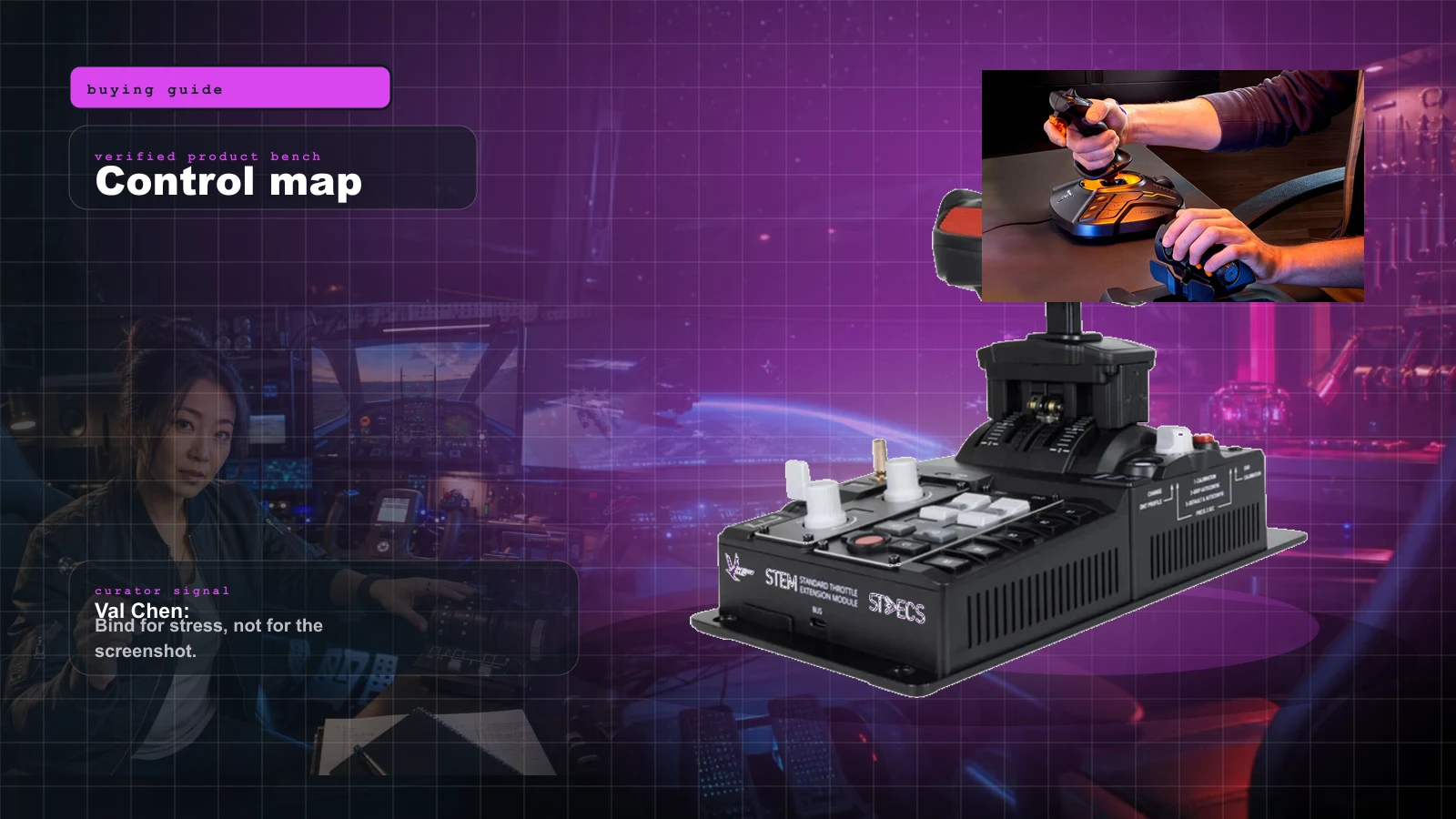
The Best HOTAS for Star Citizen in 2026 (Stick + Throttle Buying Guide)
HOSAS may win the dogfight, but a real throttle still owns cargo, mining, and quantum-jump life. Here's the best HOTAS for Star Citizen 4.x at every budget in 2026 — and the button-count trap nobody warns you about.
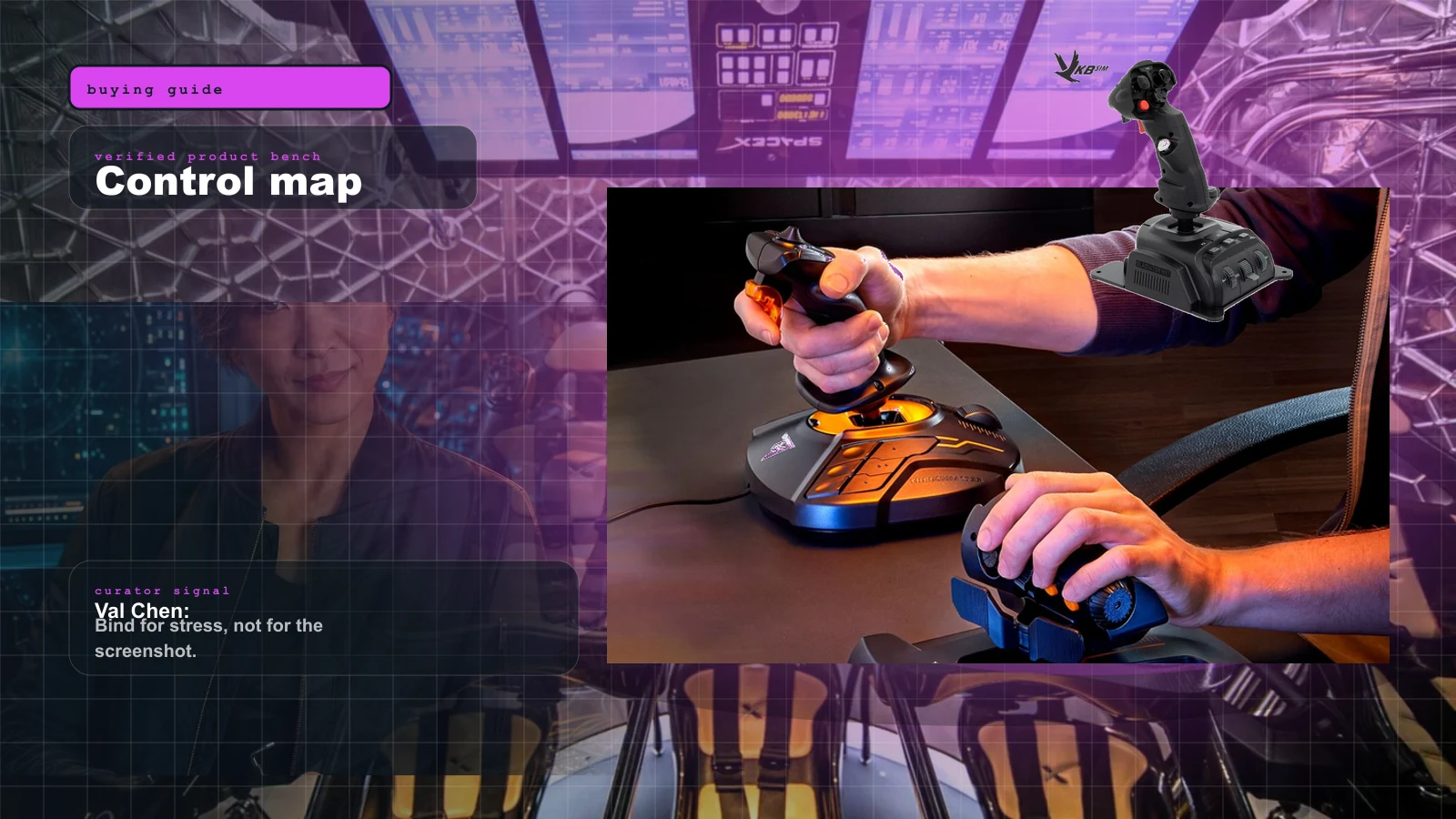
Best Controls for Elite Dangerous in 2026 (HOSAS vs HOTAS vs Gamepad)
FA-off combat wants two sticks, exploration wants a throttle, and the 2026 Operations update now wants a gamepad on the desk for the on-foot fights. Here is the best control setup for Elite Dangerous in 2026, matched to how you actually play.
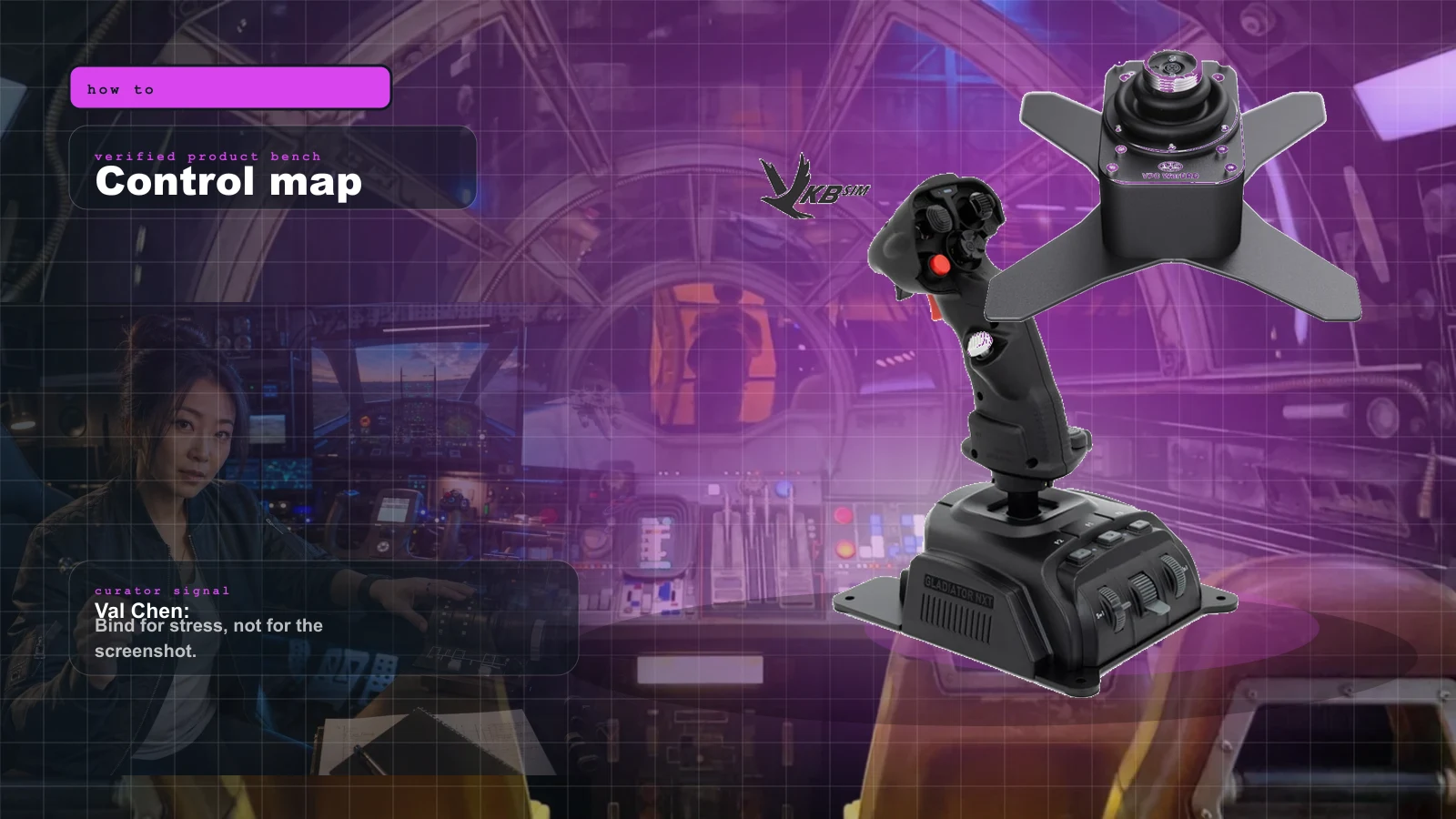
Mounting Your HOSAS in 2026: Monstertech vs Foxx vs Virpil (and Why Your Sticks Slide)
Your sticks aren't the weak link in your rig — the surface they sit on is. Here's why baseplates slide under combat input, and how Monstertech, Foxx Mount, and Virpil clamp arms lock a HOSAS down at the angle your wrists actually want.