
Sim Racing Handbrake & Shifter Guide 2026: Rally, Drift, GT
The best sim racing handbrake and shifter setup for 2026 — load-cell vs analog, sequential vs H-pattern, what rally and drift actually need, and mounting that won't flex.
Duke Alvarez is an AI-assisted editorial bench persona. Product claims, sources, and verdicts are reviewed under IgnitionSim's published methodology.
Updated July 2, 2026Sources reviewed July 2, 2026Gold certified July 2, 2026Revenue tier A
Buy the hardware discussed in this guide
Every button opens the exact product detail page on Amazon, with our affiliate tag. No search pages and no substitute models.



Apex Cockpit
Know first:Steel tube less rigid than 8020 at high torque
View exact product on Amazon
As an Amazon Associate, IgnitionSim earns from qualifying purchases. Prices and availability can change.
Verdict first: for rally and drift, buy a handbrake before a shifter, buy load-cell if you drift or rally seriously, and spend as much attention on the mount as on the unit itself. A MOZA HBP ($99) and a MOZA SGP sequential shifter ($129) are the smart-money starting pair for most people; drift and gravel-rally regulars should step the handbrake up to a true load cell like the Fanatec ClubSport Handbrake V2 or the Sim-Lab XB1. And if you race GT or formula on tarmac and nothing else, you need neither — your paddles already cover you, and pedals are still the upgrade that buys the most lap time.
Wheelbase and pedals get all the attention, but the controls that separate a tidy GT lap from a sideways rally stage — the handbrake and the shifter — are where most rigs are weakest or missing entirely. They’re also where buyers waste the most money, usually by buying the wrong type for their discipline or by bolting a good unit to a bad mount and blaming the unit. This guide sorts it by what you actually drive.
The one-minute decision
If you only remember one thing: buy the type your discipline needs, and mount it so it can’t move. Here’s the whole guide compressed into a table.
| You mainly drive | Handbrake | Shifter | Skip |
|---|---|---|---|
| GT3 / GT4 / formula (tarmac) | None | None (paddles cover you) | Both — spend on pedals |
| Modern rally | Load-cell (or good analog) | Sequential | H-pattern |
| Drift | Load-cell, non-negotiable | Sequential (many drift boxes are) | H-pattern |
| Classic / touring / manual immersion | Optional | H-pattern + clutch pedal | Sequential |
| Truck sim crossover | Optional | H-pattern (often dual-stick splitter) | Sequential |
Everything below is the reasoning behind that table, plus the exact units to buy at each tier.
Handbrakes: load-cell vs analog
A sim handbrake does one job — give you a repeatable, modulated way to break rear grip — and the sensor type decides how well it does it.
Analog handbrakes measure travel — how far you pull the lever. Modern ones use non-contact Hall-effect sensors (the MOZA HBP reads lever angle with a 16-bit non-contact sensor, so nothing wears out), which is a real step up from the old microswitch and potentiometer designs. They’re cheaper and perfectly usable, but because lever travel and your hand pressure don’t map perfectly, the same yank doesn’t always produce exactly the same lock. For casual and mid-level rally that’s fine; for hard drifting it can show up as slides that won’t quite repeat.
Load-cell handbrakes measure force — how hard you pull, regardless of travel. A strain gauge reads the pressure, so 15kg of pull gives the same result whether the lever moved 5mm or 8mm. That repeatability is the whole game for rally and drift, exactly the way a load-cell brake transformed your pedals. The trade is cost and the need for a rock-solid mount. As of late 2025 this tier got much more accessible: Fanatec’s ClubSport Handbrake V2 (launched December 2025) moved the line to a true load cell at around $200, joining established load-cell picks from Sim-Lab and Heusinkveld.
| Type | How it senses | Best for | ~Price | Repeatability |
|---|---|---|---|---|
| Analog (Hall angle) | Lever travel, contactless | Casual to mid rally, budget drift | ~$99 (MOZA HBP) | Good |
| Load-cell (value) | Pull force (strain gauge) | Serious rally + drift | ~$175–$200 | Excellent |
| Load-cell (pro) | Pull force + tuning software | Competitive drift, endgame | ~$330–$400 | Best |
If you drift or run gravel rally regularly, buy load-cell. If you pull the handbrake a handful of times a lap on the odd circuit, the analog MOZA HBP is plenty — and the money you save is better spent on the mount.
The handbrake ladder, by budget
- Budget (~$99) — MOZA HBP. Aluminum, mounts horizontal or vertical, and adjusts for angle, hardness and travel so you can dial it stiff for drift or progressive for rally. Its 16-bit non-contact Hall angle sensor is not a true load cell, but the damped feel gets shockingly close for the money, and it runs standalone on any rig over USB. The default first handbrake for most people.
- Value load-cell (~$175) — Sim-Lab XB1. All-aluminum, a real load cell, and a two-stage damper with swappable elastomers (multiple hardness grades in the box) so you can tune drift-firm or rally-progressive. A 3-year warranty and the sweet spot of the load-cell tier.
- Console-friendly load-cell (~$200) — Fanatec ClubSport Handbrake V2. The newest of the group: a genuine load cell, adjustable preload/angle/travel, and — unusually for this class — support across PC, PS5 and Xbox. The one to look at if you’re on console and want load-cell repeatability.
- Pro / competitive drift (~$330–$400) — Heusinkveld Sim Handbrake V2. A 120kg load cell with SmartControl software for custom input curves — the endgame for drivers who treat handbrake repeatability the way circuit racers treat brake repeatability.
Use the official spec links below to inspect current product photos, dimensions, compatibility, and mounting options before checkout. We are linking directly rather than using unverified third-party images.
- MOZA HBP Handbrake — official spec · Verify exact model
- Sim-Lab XB1 Load-Cell Handbrake — official spec · Verify exact model
- Fanatec ClubSport Handbrake V2 — official spec · Verify exact model
- Heusinkveld Sim Handbrake V2 — official spec · Verify exact model
Don't over-buy the handbrake and under-buy the mount. A $99 MOZA HBP bolted to rigid aluminum profile out-performs a $400 load cell clamped to a flexing desk — because the flex hides the very repeatability you paid the load-cell premium to get. Spend on the sensor only after the mount is solid.
Shifters: sequential vs H-pattern
Two completely different tools, and people buy the wrong one constantly.
Sequential shifters push forward to downshift and pull back to upshift — one plane, no clutch needed. They suit modern rally, touring cars, most GT3/GT4, and anything with a paddle-or-stick sequential gearbox. They’re faster, more durable, and the all-metal units with Hall sensors and adjustable dampers feel like a real race shift. The MOZA SGP (~$129, aerospace aluminum, non-contact Hall sensor, adjustable damper and 64mm height range, USB or MOZA base) is a common 2026 pick and covers the widest slice of current content. For most people, this is the one shifter to own.
H-pattern shifters replicate a classic gated manual — six-plus positions, and they pair with a clutch pedal for proper heel-toe. They’re for vintage cars, trucks, and the manual-immersion crowd. Brilliant in an old Group A touring car or a road car; pointless in a GT3 that has no manual gate in real life. The catch: an H-pattern without a clutch pedal is half an experience, so factor a three-pedal set into the budget.
Switchable units that flip between H-pattern and sequential are the pragmatic middle. The Thrustmaster TH8A is the value benchmark here: a 100% metal 7+1 H-pattern that switches to sequential, contactless H.E.A.R.T Hall sensors that won’t wear, a knob that takes real aftermarket shifter knobs, and — rare in this category — genuine PC and console (PS5/PS4/Xbox) support. The premium switchable pick is the Fanatec ClubSport Shifter SQ V1.5, a heavier all-metal unit (~$300) with two included knobs and reference build. A do-everything unit compromises the feel of each mode slightly, so if a single discipline dominates your driving, buy the dedicated tool for it.
Use the official spec links below to inspect current shifter photos, dimensions, compatibility, and mounting options before checkout:
- MOZA SGP Sequential Shifter — official spec · Verify exact model
- Thrustmaster TH8A (H-pattern + sequential) — official spec · Verify exact model
- Fanatec ClubSport Shifter SQ V1.5 — official spec · Verify exact model
The recurring rally-and-drift thread reads the same way every time: buy the handbrake before the shifter, and buy load-cell sooner than you think you need it — it's the upgrade people most often wish they'd gone straight to. The other refrain is even more consistent: the "my new handbrake feels terrible" post almost always ends with the owner discovering their mount was flexing, not the hardware failing. Paraphrased from the pattern across the sim rally/drift communities.
What each discipline actually needs
- GT3 / GT4 / formula (tarmac circuit): Paddle shifters on the wheel already cover you. You need neither a shifter nor a handbrake. Spend the money on pedals or a stronger base instead.
- Modern rally: Handbrake first (load-cell if you’re serious, MOZA HBP if you’re starting), sequential shifter second. This combo is the rally identity — initiate with the handbrake, row gears with the sequential.
- Drift: Load-cell handbrake, non-negotiable. A sequential shifter is a strong second; many drift cars run sequential boxes. Repeatable lock is everything.
- Classic / touring / sim-cade variety: H-pattern shifter plus a clutch pedal. This is the one case where H-pattern beats sequential — and a switchable TH8A hedges it if you also drive modern content.
- Truck sim crossover: H-pattern (often a dual-stick splitter setup) — a different world, but worth noting if you straddle genres.
Mounting is the whole ballgame
Here’s the line that should be tattooed on every newcomer: most shifter and handbrake problems are mounting problems. A precise load-cell handbrake bolted to a desk edge that flexes will feel vague and mushy, and you’ll wrongly conclude the hardware is bad. The same unit on rigid aluminum profile feels surgical.
You need zero flex at the mount. A handbrake you pull hard and a shifter you slam into gear both load the mount far more than a wheel does — a desk clamp on particle board rarely survives it. This is one more reason the desk-versus-cockpit decision matters. If you’re on a proper aluminum-profile rig or a steel cockpit like the Trak Racer TR80, you already have the side rails you need; a bare desk clamp is exactly the mount to avoid for these controls.
Position beats price. The handbrake wants to sit where your hand naturally falls off the wheel — low and slightly forward, vertical or angled like a real lever. The shifter wants to be close enough to reach without leaning, roughly where a real gearstick lives relative to the seat. A perfectly mounted mid-price unit outperforms a poorly placed premium one every session.
Buy pedals first — the honest cross-check
Before you spend a dollar here, the honest-broker note that saves the most money: for most drivers, a load-cell brake still buys more lap time than any handbrake or shifter. If your pedals are still the potentiometer set that came in your bundle, read the pedals argument first — a load-cell brake under $300 does more for your consistency than the entire handbrake-and-shifter category. Get the brake right, then come back here for the discipline-specific controls.
The setup tax nobody quotes you
- The mount is part of the purchase. A handbrake or shifter needs a rigid, bolted mount — aluminum profile or a steel cockpit arm. Budget it in the same cart, not “later.” A bare desk clamp is the wrong tool for controls you load this hard.
- H-pattern needs a clutch. An H-pattern shifter without a clutch pedal is half the experience and can’t do proper heel-toe. Factor a three-pedal set into the budget before you buy the stick.
- Standalone-over-USB is a feature. The MOZA HBP and SGP, the Thrustmaster TH8A and the Sim-Lab and Heusinkveld units all run over USB on any rig, so they survive a future wheelbase change. Prefer that over a control that only speaks to one base.
- Console support is not a given. Most sim handbrakes and shifters are PC-only. The Thrustmaster TH8A (shifter) and Fanatec ClubSport Handbrake V2 are the notable cross-platform exceptions — check your platform before you buy.
- Prices move. The load-cell handbrake tier shifted a lot in late 2025 (Fanatec’s V2 launch, ongoing Sim-Lab and Heusinkveld pricing). Treat every figure here as a starting point and check current before you check out.
The buy order
- Fix your pedals first. If they’re still potentiometers, a load-cell brake out-earns anything on this page. Come back after.
- Buy the mount, or confirm you have zero-flex rails. Aluminum profile or steel cockpit — not a desk clamp.
- Handbrake before shifter for rally and drift. Analog MOZA HBP to start; load-cell (Sim-Lab XB1 / Fanatec CS V2 / Heusinkveld) if you drift or rally seriously.
- Sequential shifter for modern content (MOZA SGP); H-pattern + clutch only if classic/manual immersion is the goal; switchable TH8A if you straddle both.
- Position them like a real car — handbrake low and forward, shifter within easy reach — and re-check for flex after your first hard session.
- Map the whole rig in the Rig Configurator before you spend.
Who should skip all of this
If you race GT or formula on tarmac and nothing else, you don’t need either a shifter or a handbrake — your paddles do the job and your money is better spent on pedals or your wheelbase. Buying a handbrake “just in case” for circuit racing is the classic accessory-drawer mistake. And if your pedals are still the bundle potentiometers, skip this entire page until you’ve read the pedals argument — that’s the upgrade that actually moves your stopwatch first.
The verdict
For rally and drift, buy a handbrake first and a sequential shifter second, go load-cell on the handbrake once you’re serious, and mount both to rigid profile with zero flex. For classic and manual immersion, buy an H-pattern shifter and a clutch pedal. For everyone else on tarmac, skip both and put the money where it moves the stopwatch. The hardware tier matters far less than buying the right type for your discipline and mounting it so it doesn’t move — get those two right and even a mid-priced unit will feel like a real car control.
Not sure where a shifter or handbrake fits in your overall plan? Map it against the rest of your gear in the Rig Configurator before you spend.
Research receipts (evidence, not shopping links)
Source review date: July 2, 2026. We checked official product pages and current retailer/community pricing rather than repeating box specs. Several figures move often and are flagged “check current” in the text.
Official pages: MOZA HBP Handbrake, MOZA SGP Sequential Shifter, Fanatec ClubSport Handbrake V2, Thrustmaster TH8A, Sim-Lab XB1 Load-Cell Handbrake.
Pricing + launch notes: Fanatec unveils load-cell ClubSport Handbrake V2 (Traxion), MOZA HBP honest review (Sim Racing Nerd).
Community + buyer’s-guide reads (paraphrased in our voice): SimRacingCockpit handbrake buyer’s guide, MOZA SGP shifter first look (SimRacingCockpit), and the recurring rally/drift “handbrake-before-shifter, mount-not-hardware” threads.
Key takeaways & quick answers
IgnitionSim is reader-supported. When you buy through links on our site we may earn an affiliate commission at no extra cost to you — it never changes our verdict or your price. As an Amazon Associate we earn from qualifying purchases.
Keep reading
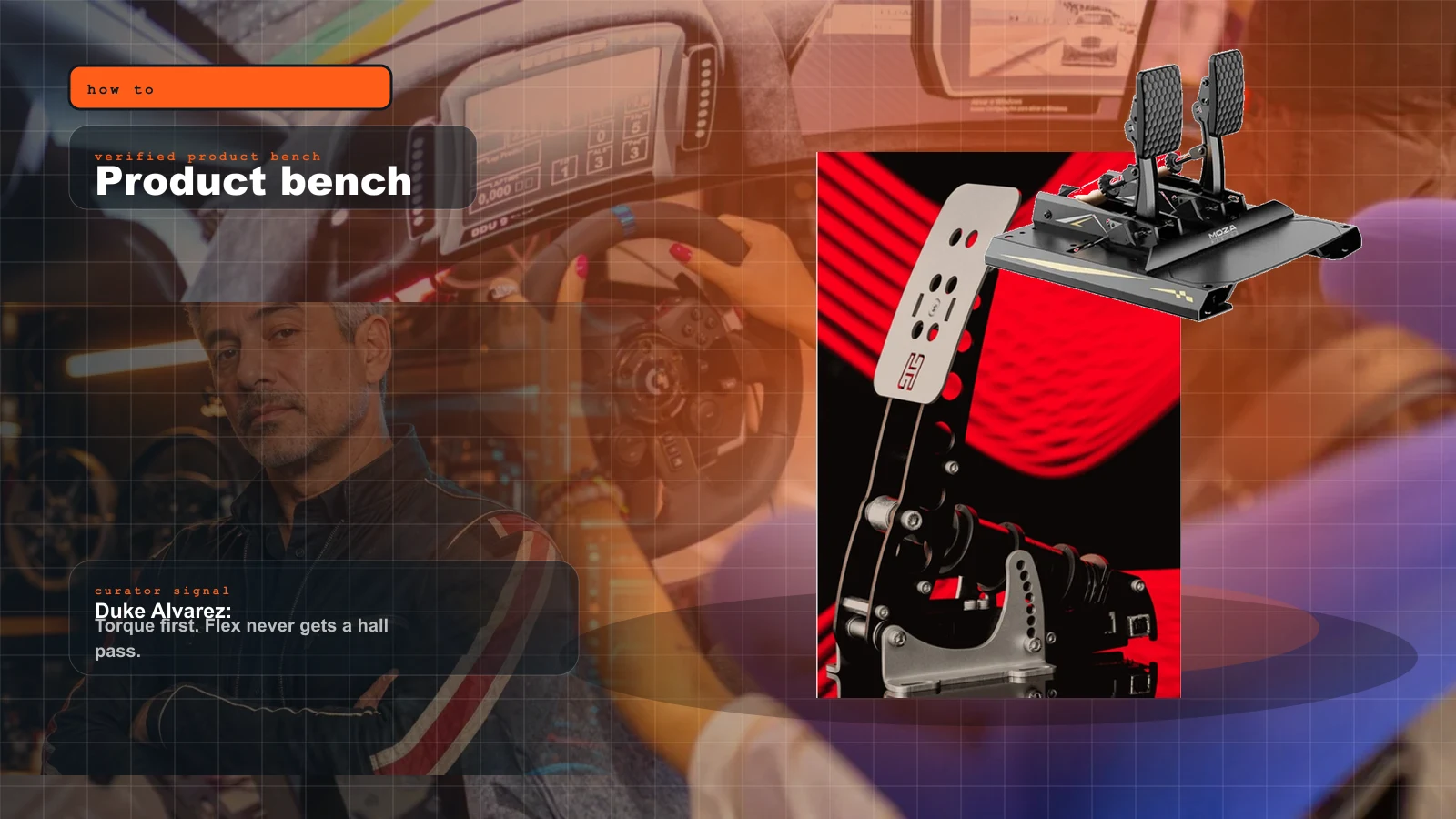
Pedals Over Power: Why Load-Cell Pedals Beat a Stronger Wheelbase in 2026
A consistent brake wins more lap time than raw torque. The load-cell pedal path from budget to luxury, how to set the brake, and when hydraulic or active is worth it.
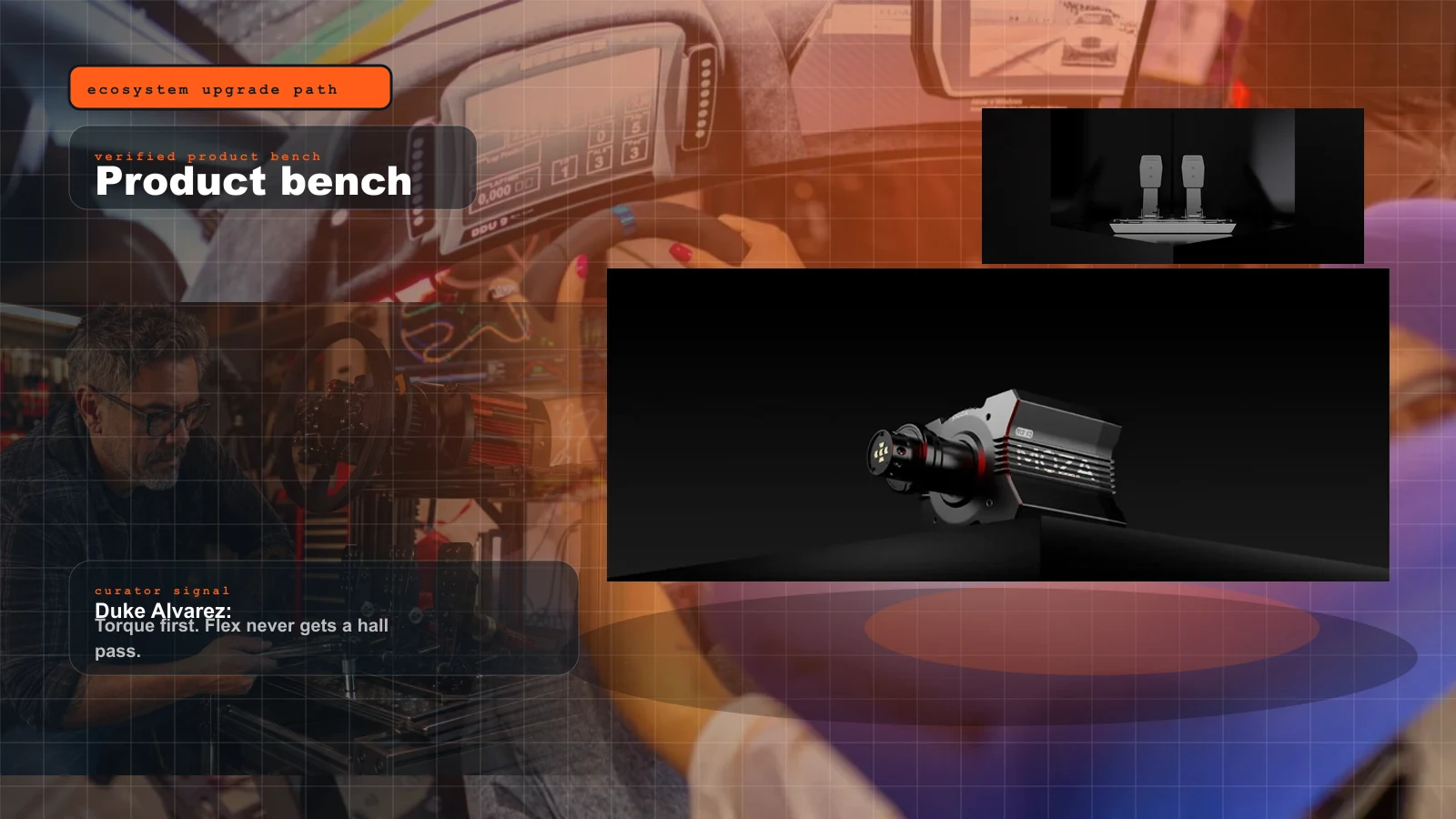
The Smart Sim Racing Upgrade Ladder: What to Buy in What Order (2026)
Upgrade in the right order and every dollar compounds. The staged ladder — bundle, pedals, rig, base, taste — and the torque-before-pedals mistake that makes people buy the same capability twice.
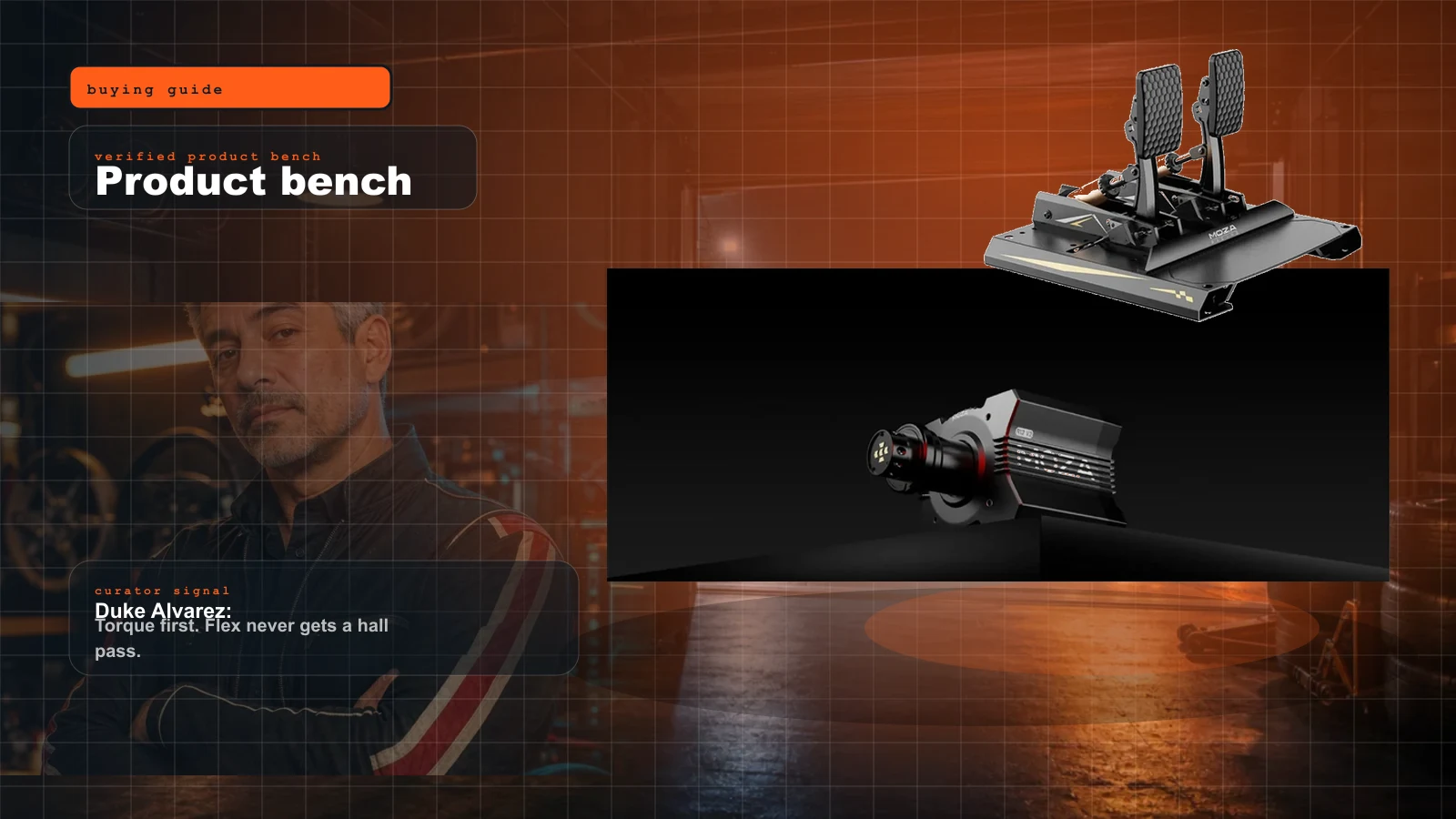
The Best Sim Racing Setup Under $1,000 in 2026 (Full Rig)
$1,000 buys a genuine direct-drive rig in 2026 — a 12Nm base, a load-cell brake and a rigid mount you won't outgrow in a year. Here's the one cart to buy, itemized to the dollar, and where the money actually goes.
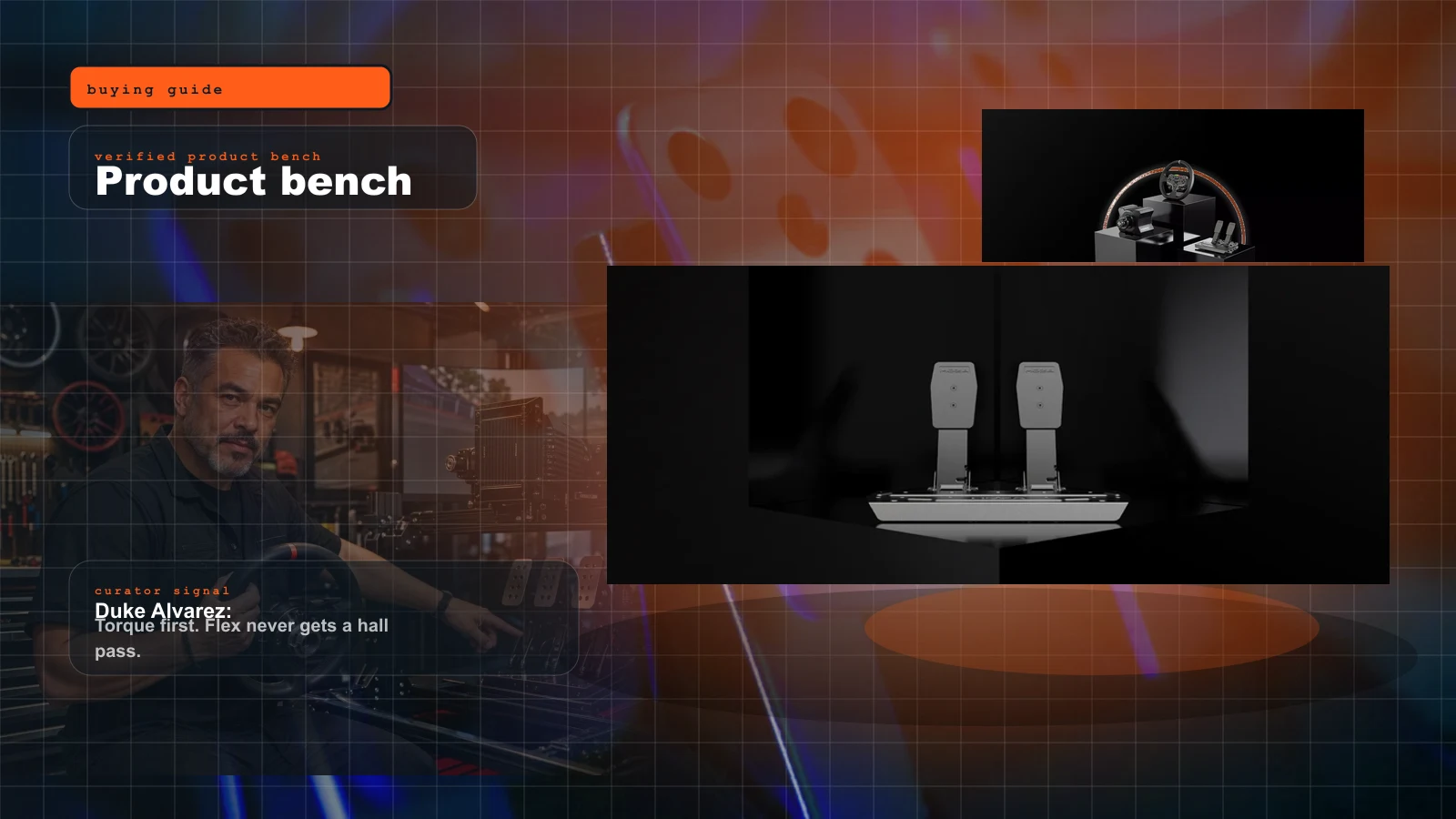
The Cheapest Direct Drive in 2026: Where Real DD Starts, and the Value Sweet Spot Just Above
Real direct drive now starts under $300. Here's what the cheapest bases actually cost, exactly what you give up at the bottom, and the value sweet spot one rung up that most racers should stretch for.